
We overnighted in Valletta and started our second day there with a tour of Mdina and Mosta. Since Malta we a British colony until 1954, they drive on the wrong side of the road. We were warned to look both ways when crossing since we are only used to looking to the right. We learned that there are 4 desalination plants that provide the water for Malta and that the government subsidies water and electricity for everyone. All bus transportation is free as well as all schooling through university.
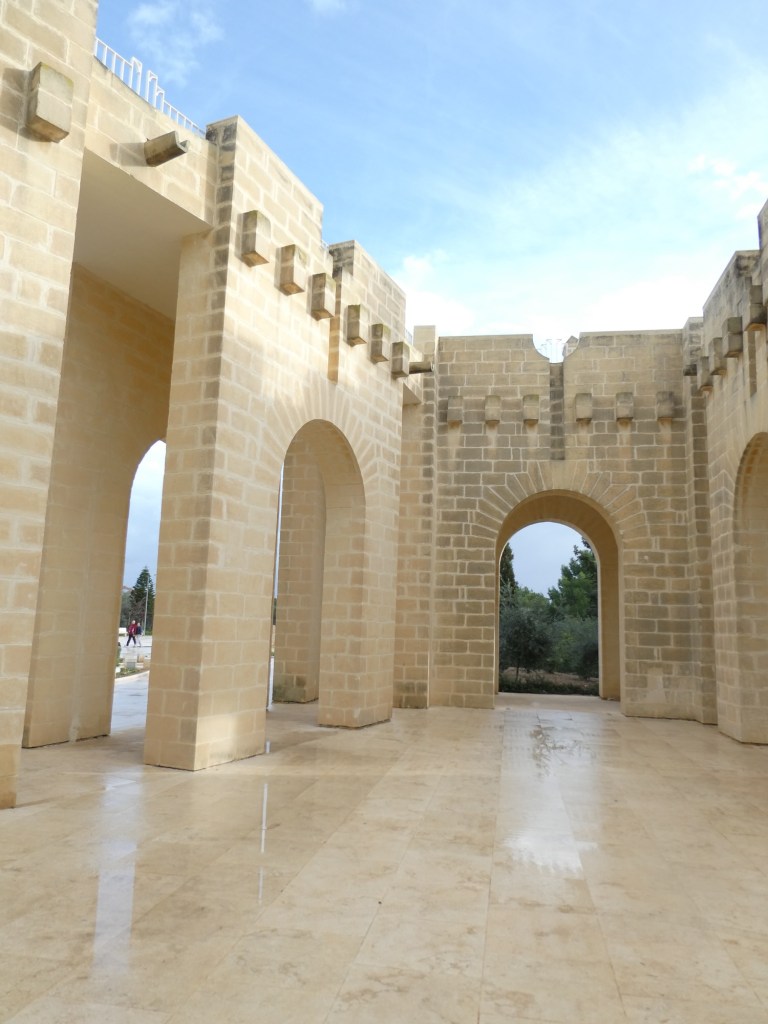
Our first stop was at a glass blowing factory. This is one of the main industries of Malta, brought to them by the Phoenicians. Unfortunately the glassblowers were not at work when we were there. Across the street from the glass factory which was in an old RAF hanger was Malta National Park. Bob and I walked around for a while. It was very nice with gardens, fountains, picnic areas, playgrounds and hiking area.


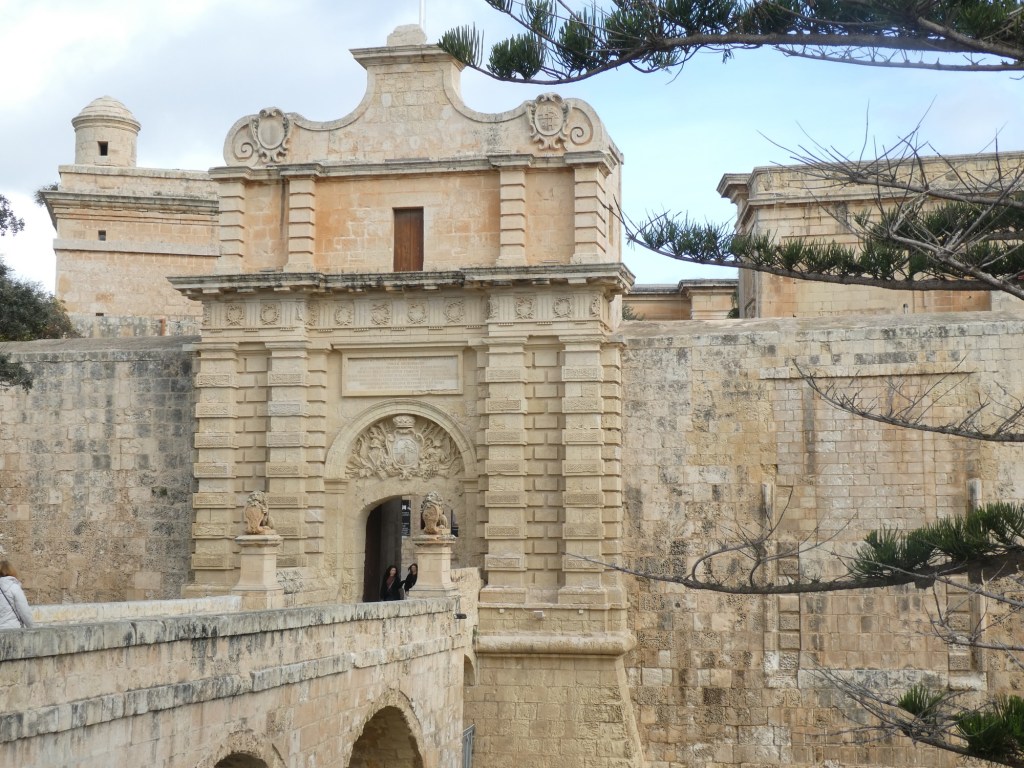
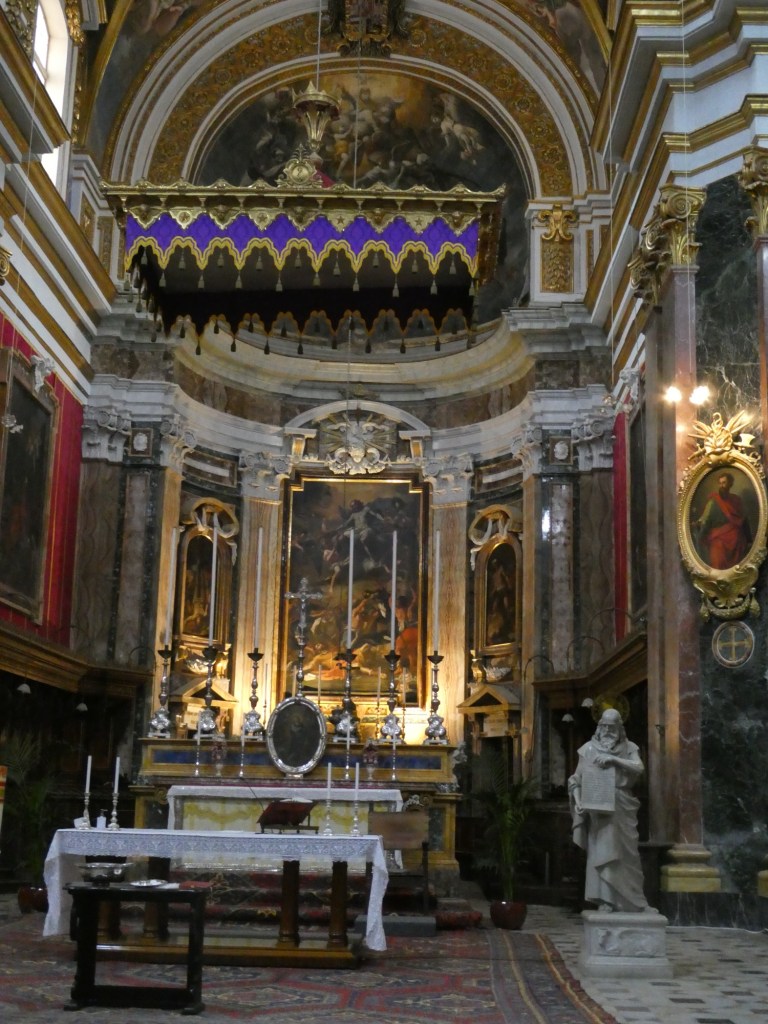
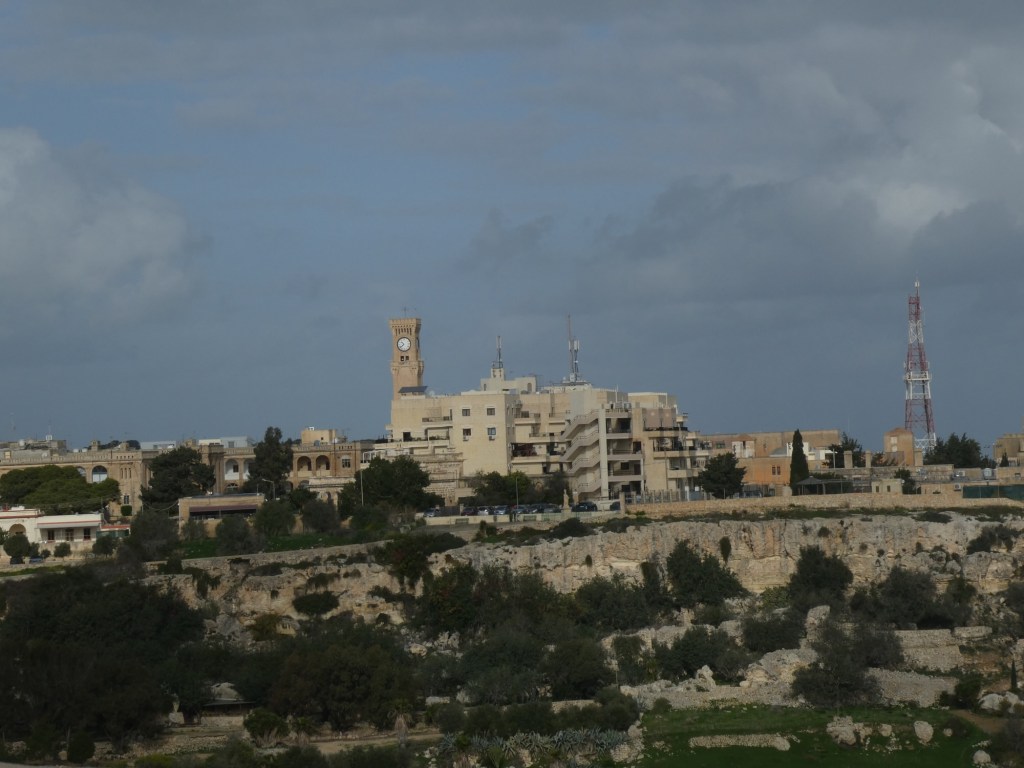
Our next stop was the walled city of Mdina, called the silent city. There are only 74 people who live here currently. Mdina was the original capital of Malta. It is built in both a medieval style and a Baroque style. Part of the city was destroyed by an earthquake in 1693. Mdina is the seat of the Bishop of Malta. The cathedral is dedicated to St. Paul who landed in Malta after a shipwreck. The church is in the Maltese Baroque style, which is a calmer interior design. The families who still own property here are nobles, because they have the money to maintain these old properties. Some are turning them into boutique hotels to help pay for maintenance.



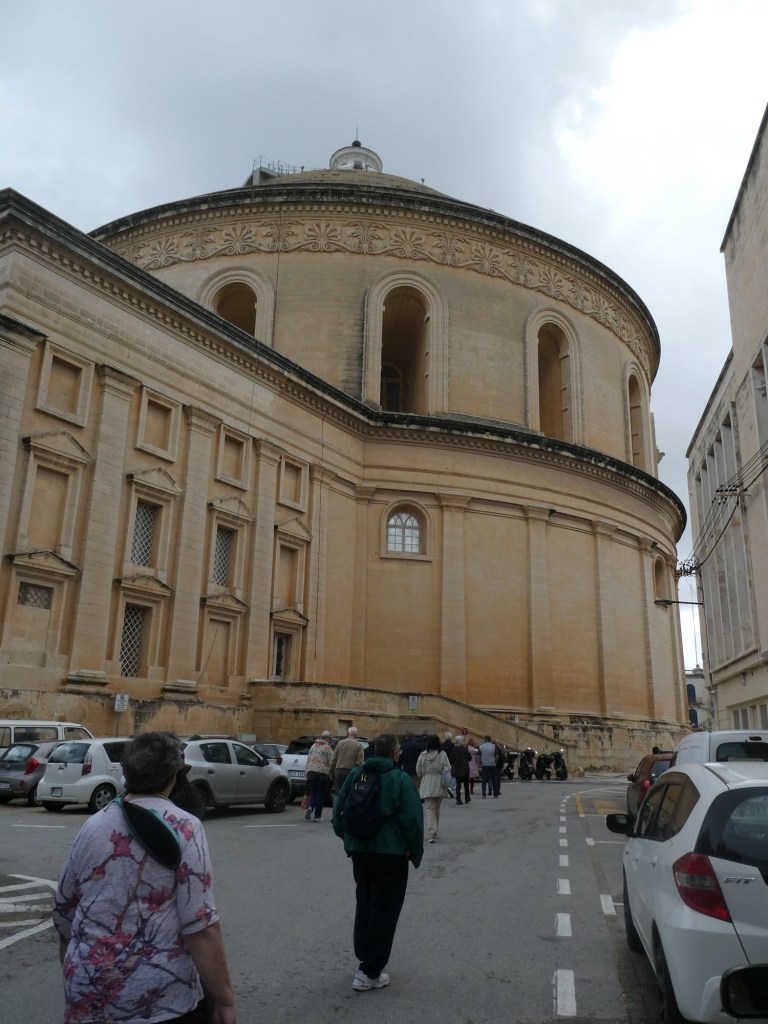
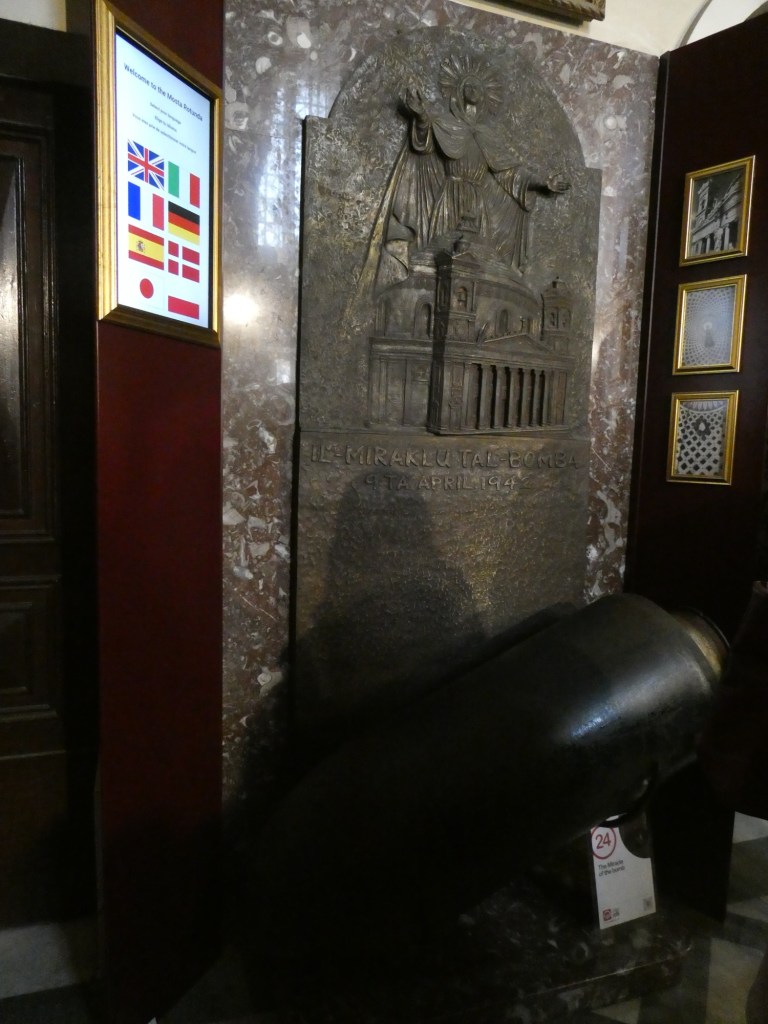
Our next stop was in the city of Mosta. It is in the middle of the island of Malta. The church we visited here is a huge round church that resembles the Parthenon in Rome. The priest’s family that provided the money for the church wanted it designed this way. It took 33 years to build and is dedicated to the Virgin Mary. It is neo-classical in style. It is colored in the 3 colors that represent the Virgin Mary, blue, white and gold. The various arches hold chapels. On April 9, 1942, 3 bombs were dropped on the town of Mosta. 2 fell outside of the church and did not detonate. One pierced the dome and it too did not go off. The locals call this the miracle of the bomb.


 Bette and Bob See the World
Recent Comments