Monthly Archives: April 2025

On the way to Madrid, Spain – April 25

We left the ship around 8 AM and began our drive to Madrid. We did have a stop in the town of Salamanca. Upon arrival we had a light lunch before we began our tour.

The country of Spain has a population of around 48 million. It is approximately the size of Texas. It is broken in 17 provinces, like our states. While driving the landscape changed to more plains like and the primary agriculture looked to be cattle raising. There were still vineyards and olive groves, but lots of cattle. We saw many stork nests, since this is their breeding season.

Salamanca is most famous for its Cathedral and its University. The Cathedral was begun in 1525 and took 200 years to finish. It is Gothic in style with 18 chapels surrounding the main part. They were putting out chairs because they were going to have a mass during the Pope’s funeral and they expected a great many people would attend. The cupola is 226 feet high.
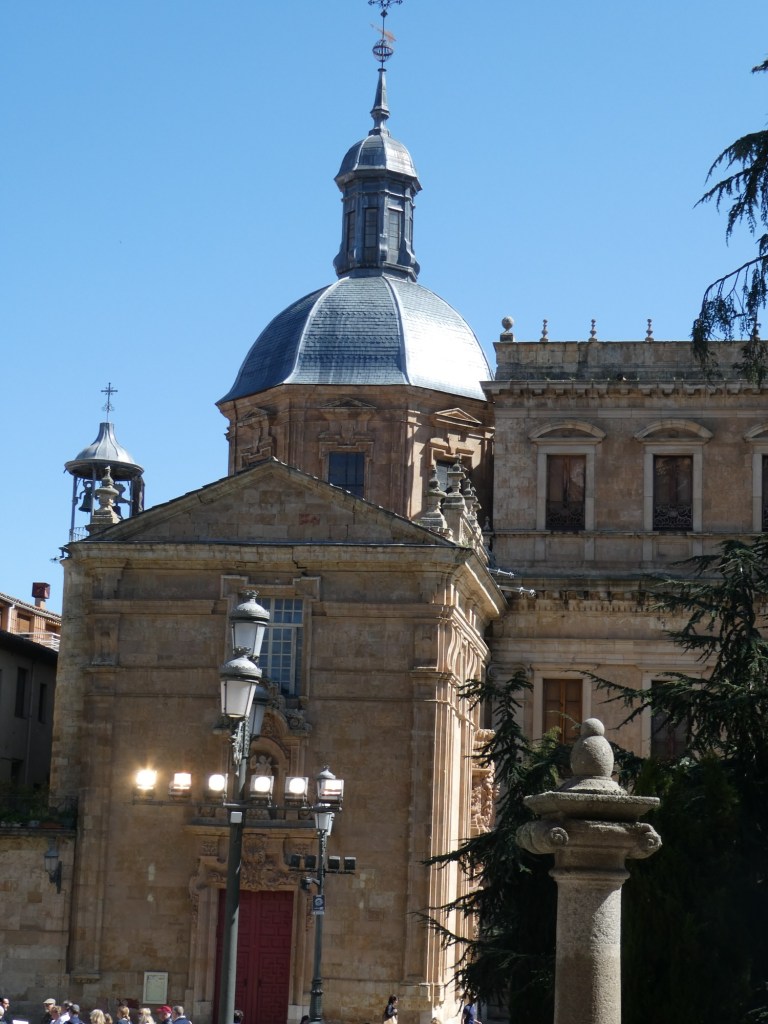
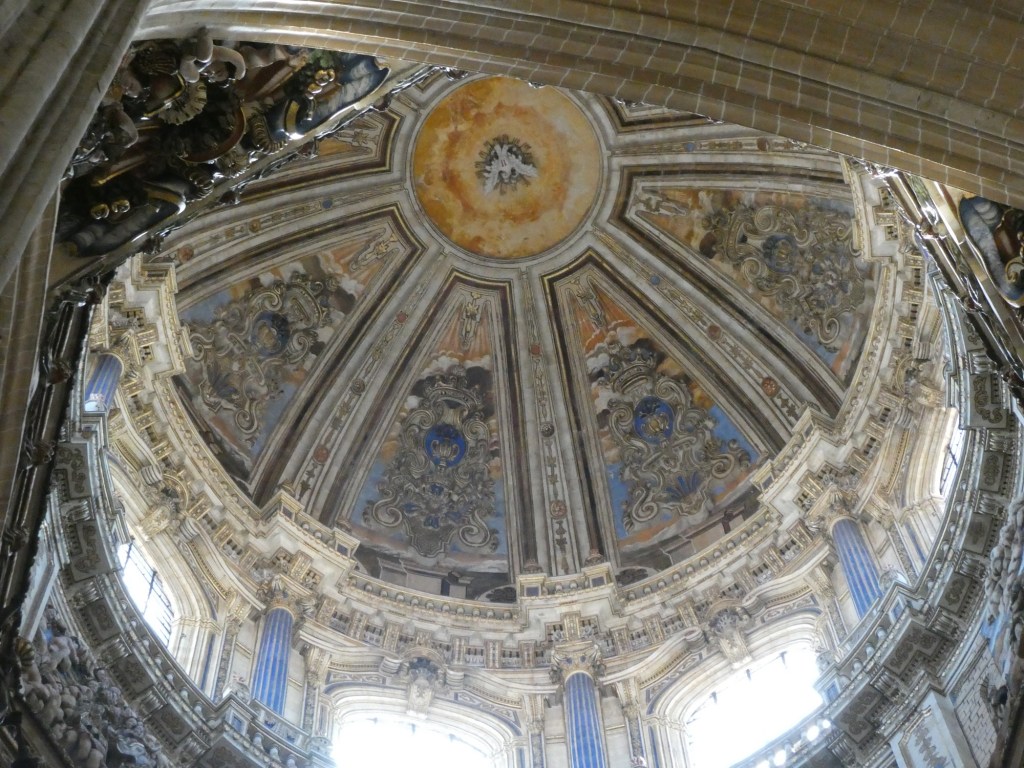
After the Cathedral we walked to the University. It was founded in 1218 by one of the kings. The original languages used to study were Latin, Spanish and Hebrew. The original classrooms did not have desks or chairs or much light. The rich men who were attending the university usually had many servants with them and they would sit on the cold stone floor to warm it for their master. We saw a classroom that was over 600 years old. Currently the university has 55,000 students. In the Great Hall of the University were paintings by Goya. The first professors were monks and priests.
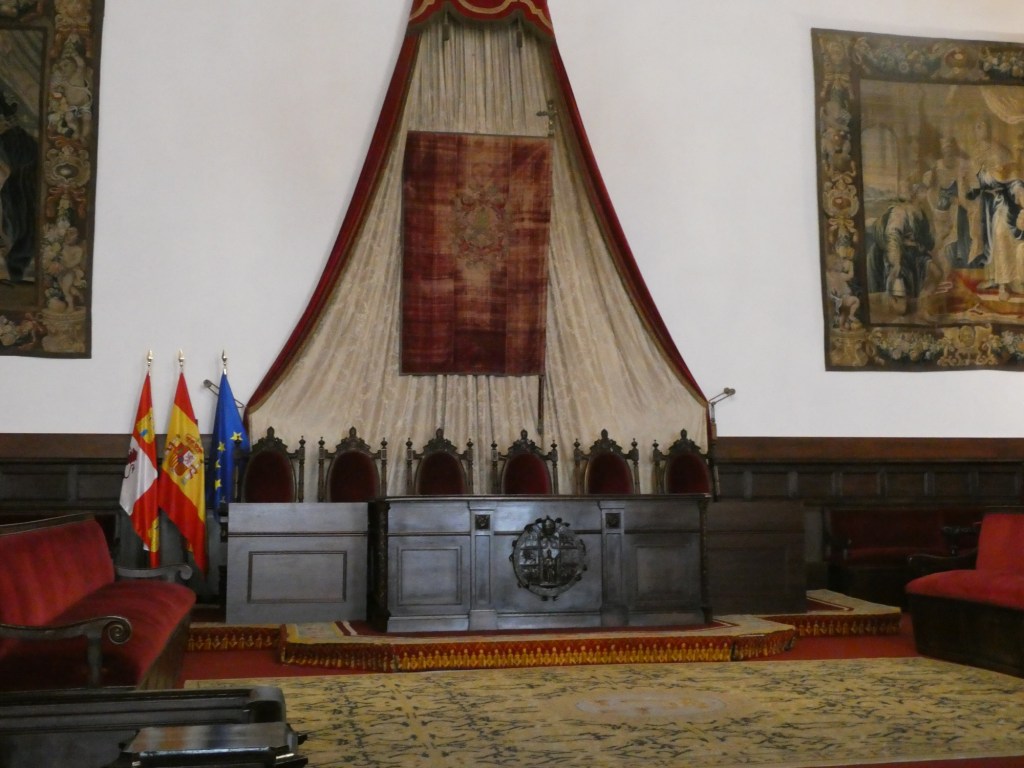
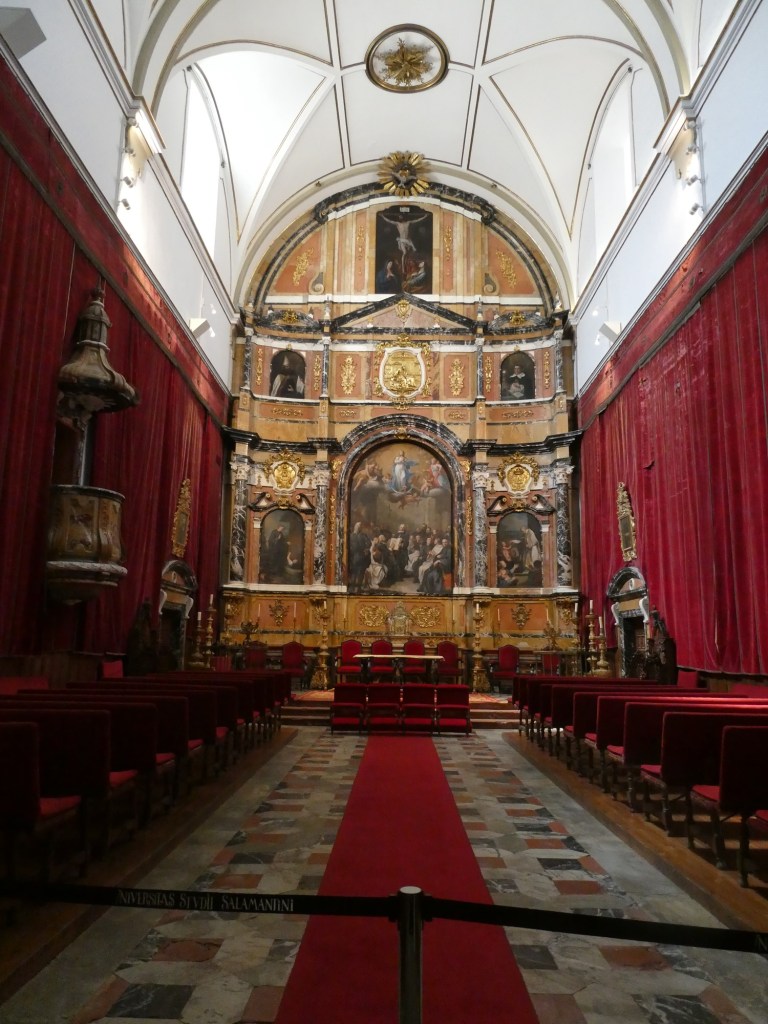
The great hall
The chapel
Frog on a skull

One of the symbols of the University is the frog. Incoming freshman have to locate it on the intricately carved entrance to one of the buildings.

We saw the seashell building which is now the public library. It was built in the 16th century honoring the wife whose coat of arms had seashells.
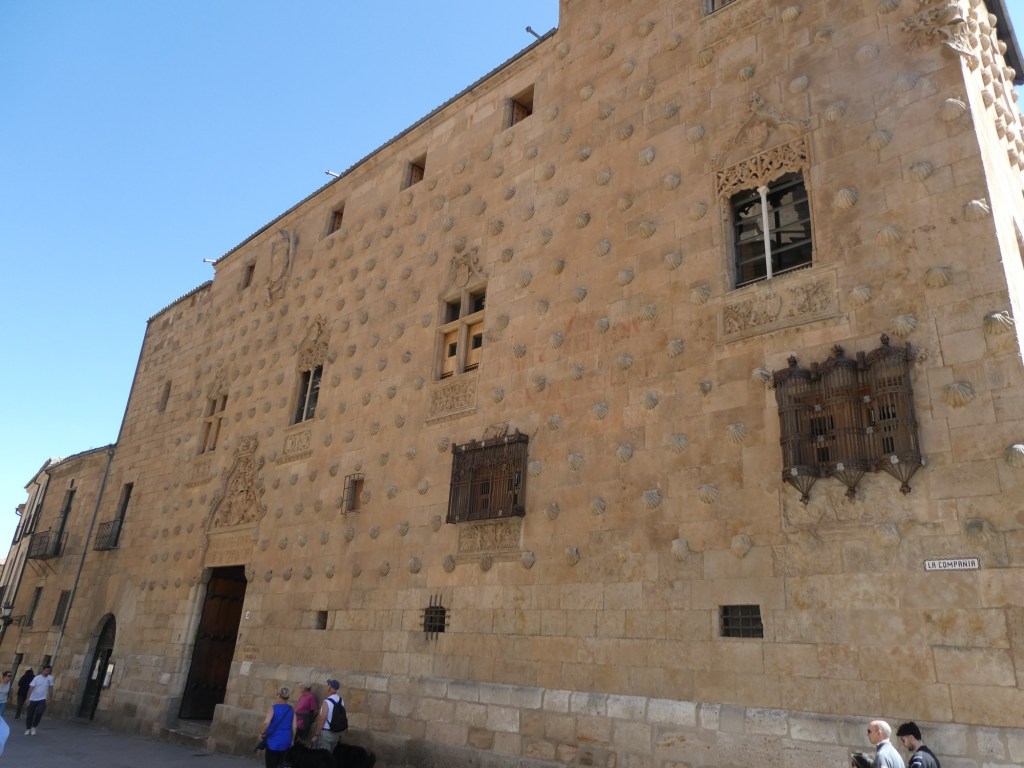
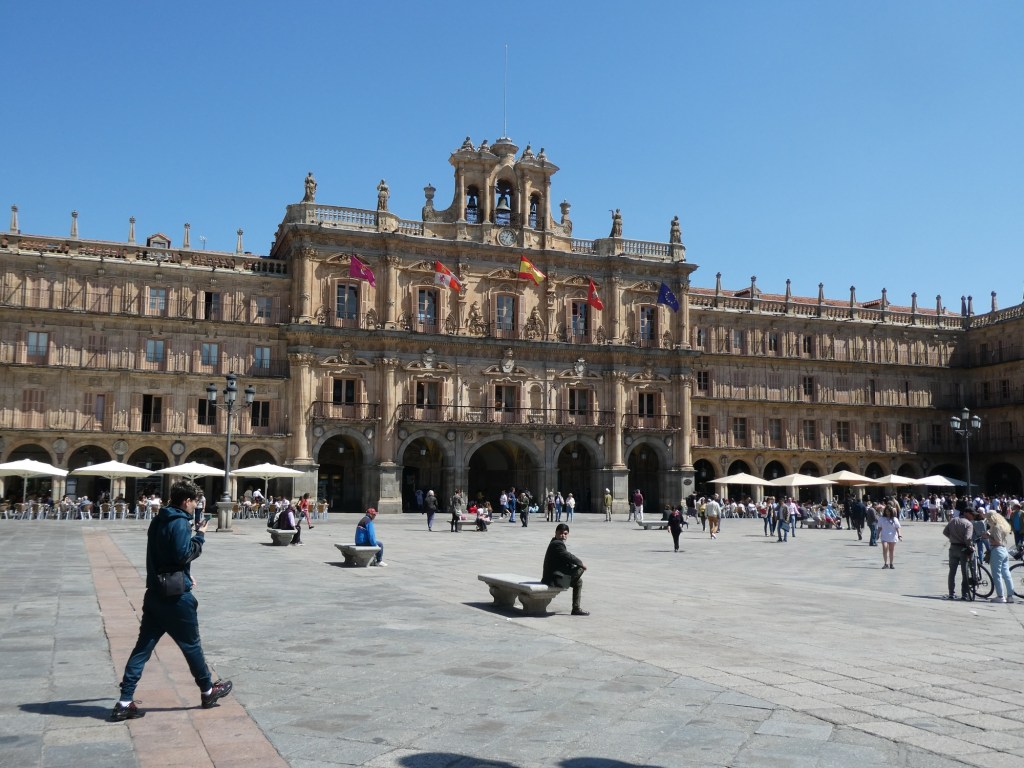
We then had free time to wander around the town and also saw the Plaza Major, center of town.
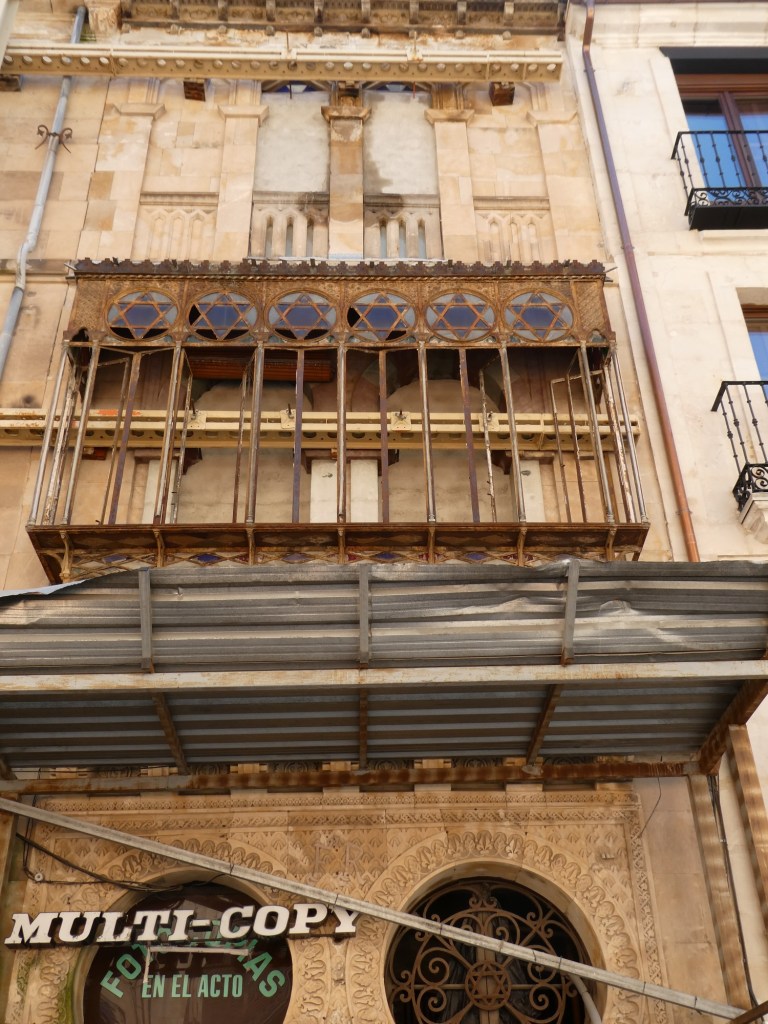
We then finished our ride to Madrid. When we arrived we had about 30 minutes before we left on a Tapas Tour. Our first stop had us drinking Spanish vermouth, a delicious drink like a sweet red wine, nothing like the vermouth used in the US for martinis and croquettes. Our second stop had us eating amazing shrimp cooked in olive oil and garlic and peppers cooked in a similar manner.

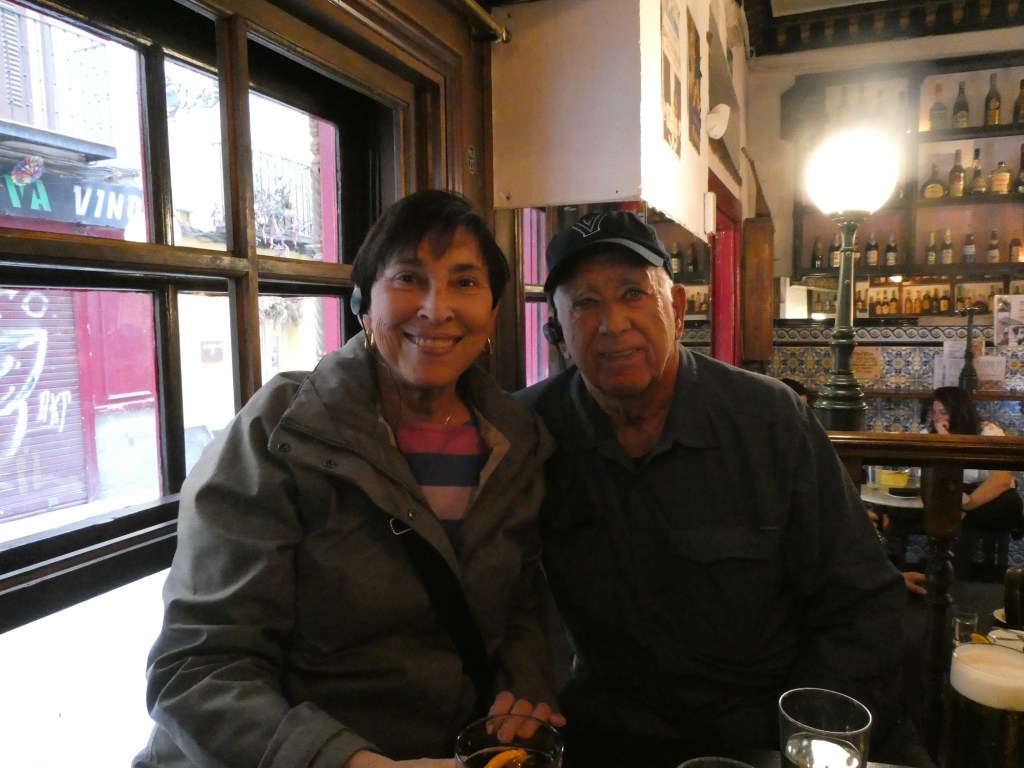
It was a long day and we were glad to get back to the hotel for some rest.

Categories: Uncategorized | Leave a comment

Pocinho, Portugal – April 24

Today was one of the best on this trip. As I explained we were supposed to be here for 2 days getting to do 2 different tours, one each day. We had done enough wine and port tastings and opted to go to the Cóa Museum.

We had to drive up into the mountains to get to the museum. It was a pretty drive and got to see some different landscapes. There were still vineyards but there were also areas planted with olive trees, almond trees and cork oak trees.

Around 1991, the EU was helping the Portuguese and Spanish people build a dam that would provide water for both countries. As the digging and infrastructure was beginning a small discovery was made, Paleolithic rock art. There were many protests once this discovery was made public, because if the dam was built this area of the Cóa Valley would be flooded and these antiquities would be lost. Fortunately enough noise was made, the dam was stopped and this wonderful museum was built to show the rock art and tell the story of how it was discovered. By 1996 the area became a National Park and in 1998 it was a UNESCO site. It happened so quickly because of the uniqueness of the discovery.

The building was very unique built into a mountainside with an interesting entrance, sort of like walking into a deep cave. We had an excellent guide. The art that was found is not like the art in the caves in France, which were paintings on the walls of the caves. These are etchings, into the shale. They appear white when viewed from a distance. They have dated them back to 25,000 years. The people who made them were hunters and gatherers. So far 4,000 drawings have been found on 600 rocks and the area is still being explored for more.

During Paleolithic times there were about 30 – 50,000 people in the European area. They believe these people were nomadic and several theories about the rock carvings exist. Some archaeologists think these drawings were spiritual symbols, some think they may have been maps or the 4 main animals – oryx, horse, ibex and deer – represented clans. These however were not the animals that these people used for food.

Looking out from the bottom of the entry
Looking down the entry
Representation of where rock and cave art is found around the world
An enlarged representation of the oryx
An enlarged representation of the ibex
An enlarged representation of a horse
An enlarged representation of a deer
What a natural rock would look like, this one had 10 animals, the biggest example had 84 animals in total

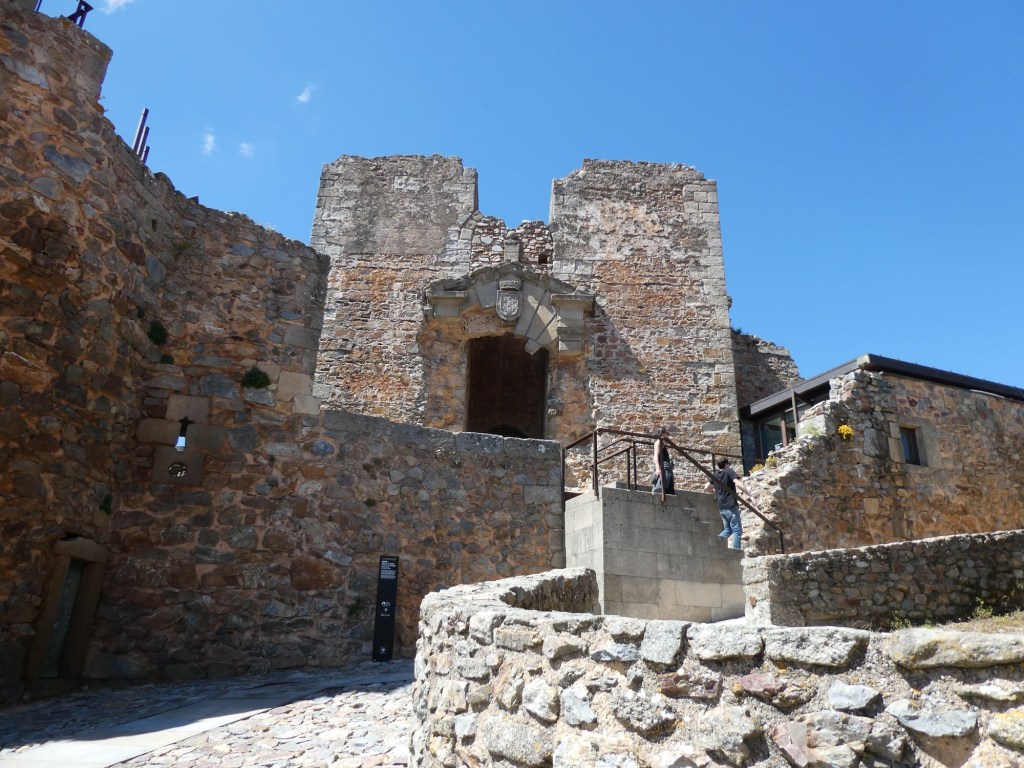
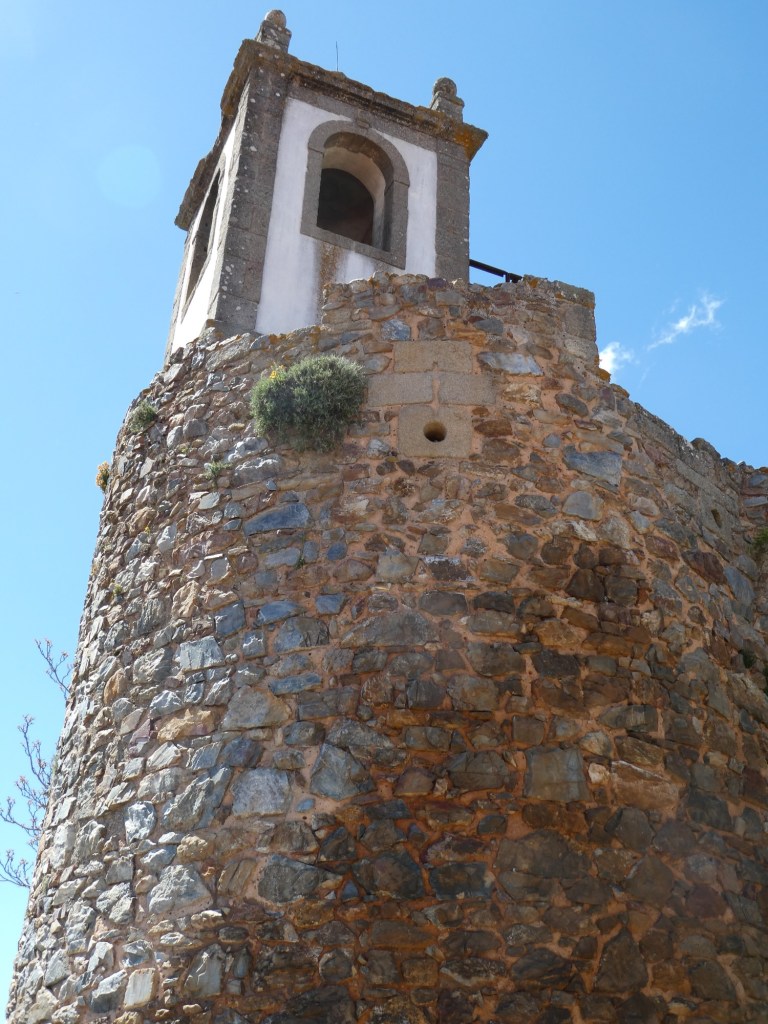
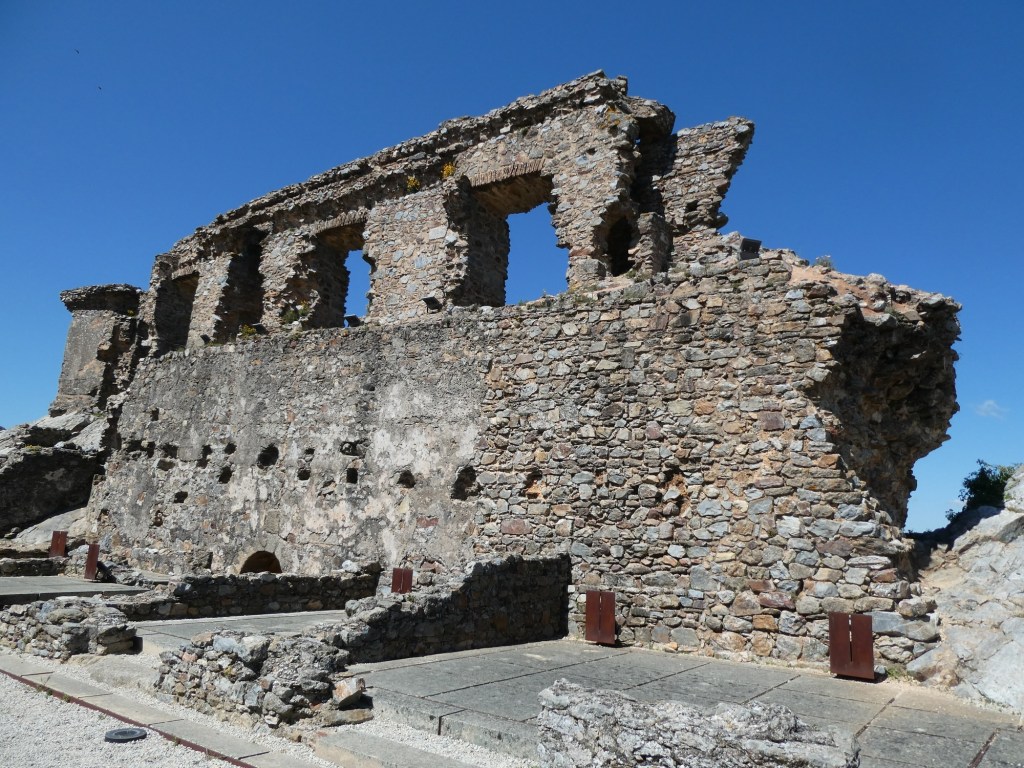
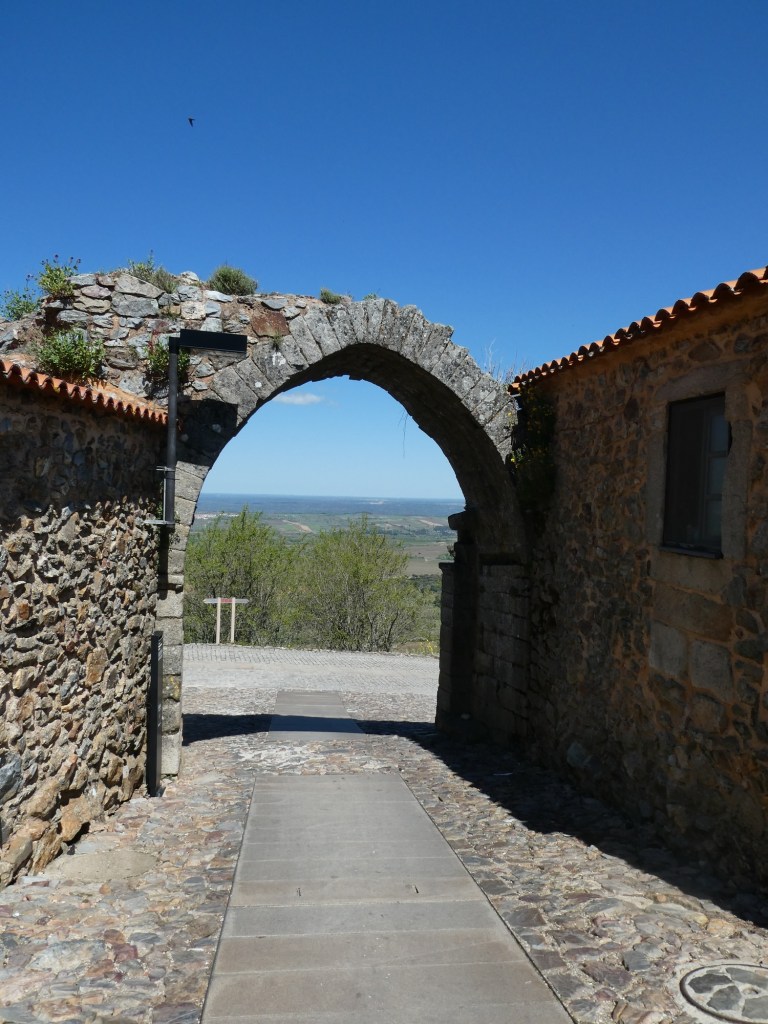
When we returned to the boat we set sail for Vega de Terran, on the border of Portugal and Spain. We had an afternoon tour of Castelo Rodrigo, a medieval town where the country of Spain began. There was a fortress and castle on the top of the hill. There were many well preserved homes as well. Many years ago, the EU agreed to fund 90% of any restoration work in this town. They brought in water and electricity, but it is all buried in the ground so it looks very much like it did in the 9th century when it was established. About 50 people currently live in the town. There were some small tourist shops selling wine, olive oil and cork products. There was a large Jewish community here until 1497, when the Jews were expelled from Spain.

We had our farewell dinner on the ship and a flamenco show. Tomorrow we are on our way to Madrid.

Categories: Uncategorized | Leave a comment

No idea where we are – April 23

This morning we were supposed to sail for a few hours crossing through the Lock of Valeria and the Gorge of the Douro River. We learned the night before that we would not be able to leave as planned in the early morning because the river was too high and we could not use the lock.

The cruise director also decided to cancel the tours, even though they could transport us by bus to them because the bus ride was 2.5 hours there and they were not certain that the ship would move and then there would be a long bus ride back.

We were able to walk around the town and did start to sail around noon because we were given notice that the lock was now operational.

It was a lovely day, so we sat on the deck and had lunch there. We went slowly down the very scenic river and when we went through the gorge one of the tour directors narrated. It was mostly huge granite rocks and tall cliffs.

The original plan for the afternoon was for half the group to do a tour to Quinta da Ervamoira with a wine tasting and the other half to Cõa Museum. Then the next morning we would switch and everyone would do both excursions. Since we did not get to our port of Pocinho until evening we only were going to be able to do one tour the next morning.

We had a special Chef’s dinner. It was the only time we did not have choices other than the main course. We had 5 courses! The food was very good. I forgot to take photos.

Approaching another lock

Categories: Uncategorized | Leave a comment

Pinhão, Portugal – April 22

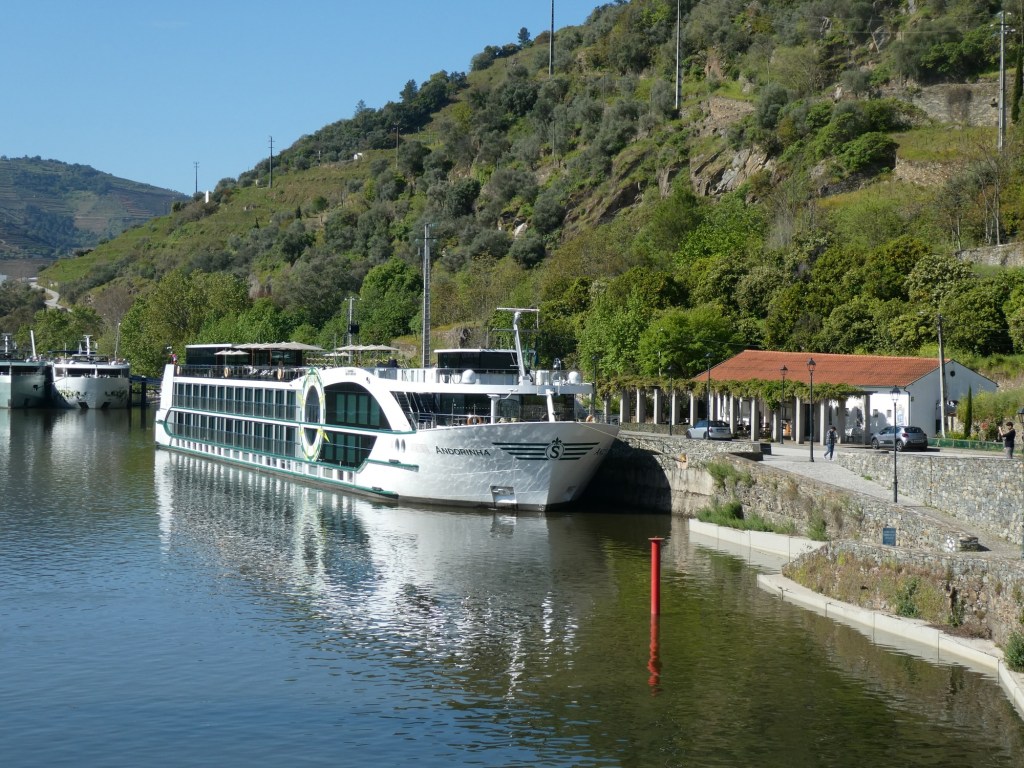
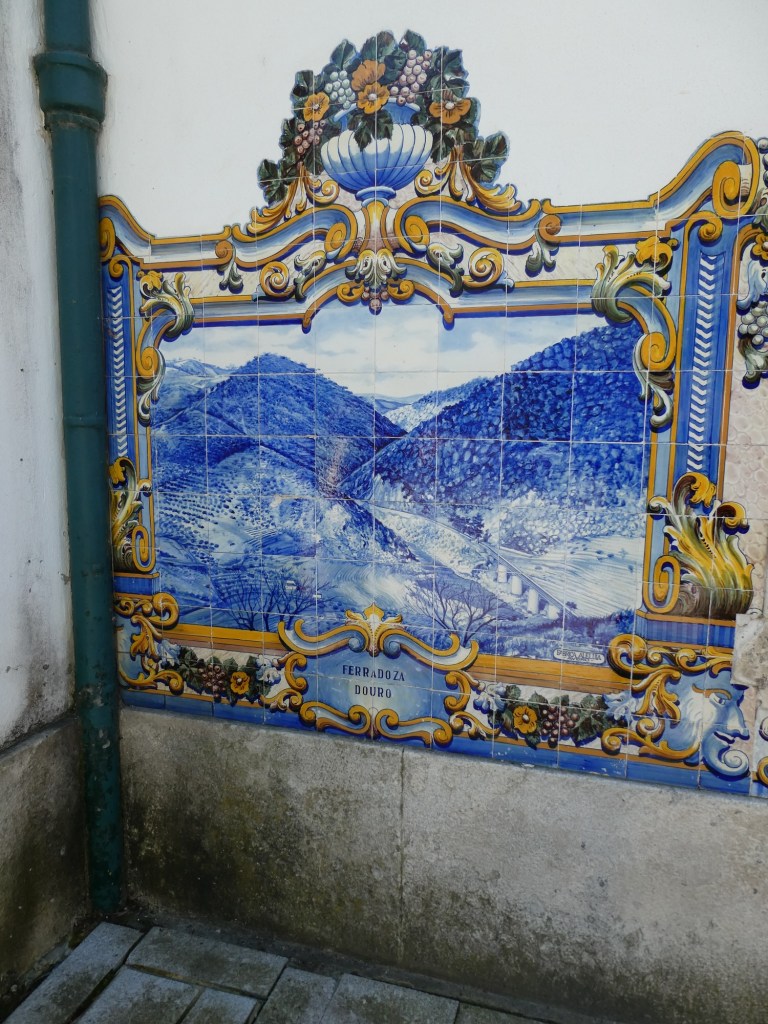
Once again our sail in the morning was only about an hour to our next location of Pinhão. This is the first time we were actually docked in a small town. We had a walking tour of the town stopping at the train station to see the decorations of the tile murals. Then we were on our own to wander. Tauck had a clever option for us. We had a map of the town, we had 3 colored poker chips and the map had 3 colored stars. If we went to the colored stars we got treats. One was chocolate cake and choice of drinks. A second was hotdogs and beer. The third was port wine and chocolates.

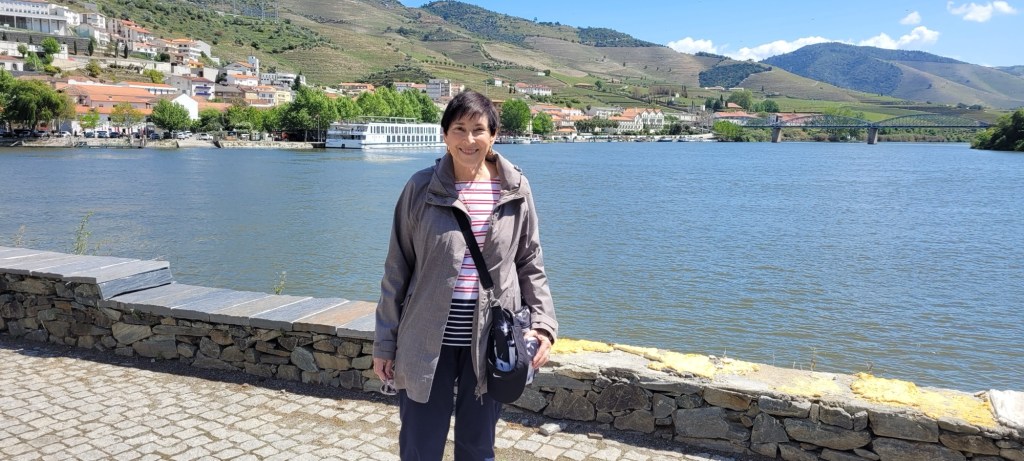
Since the town was right on the convergence of the Pinhão River and the Douro we had some nice riverside areas to walk along.

After lunch we got to go to an Oil Museum. It was an old place where they used to make olive oil. They had all the old equipment and told us how it used to be made. They now produce the olive oil and wines at another facility. It takes 5 to 8 liters of olives to make 1 liter of oil. It was high up in the hills above the town and the views were amazing. The road was very narrow and twisty and turny. We had to go in vans because the big coaches could not do this road.

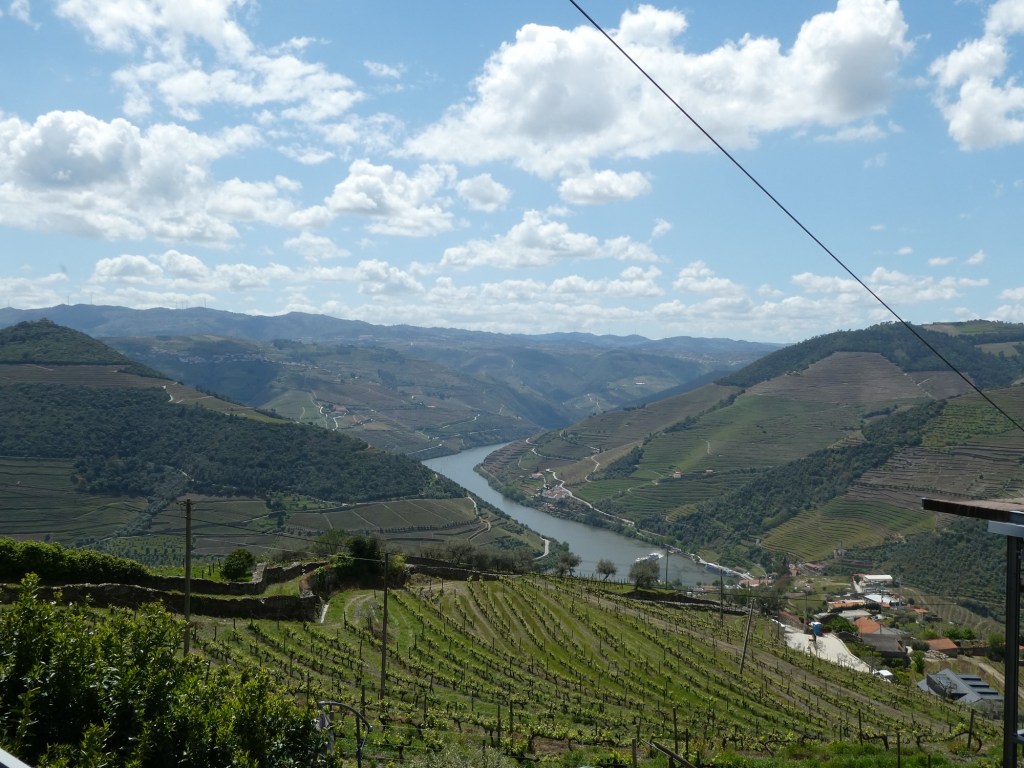
From the top of the mountain at the Oil Museum, the town of Pinhão and our boat at the very bottom.
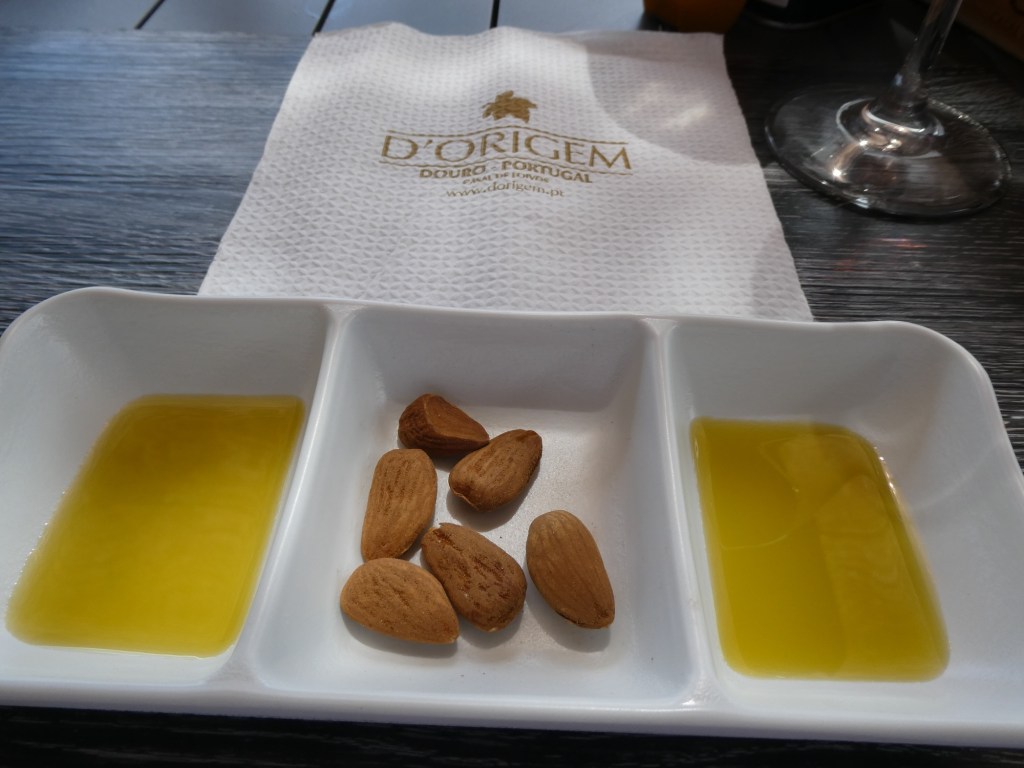
We tasted 2 different olive oils
He who did not taste olive oil 😉

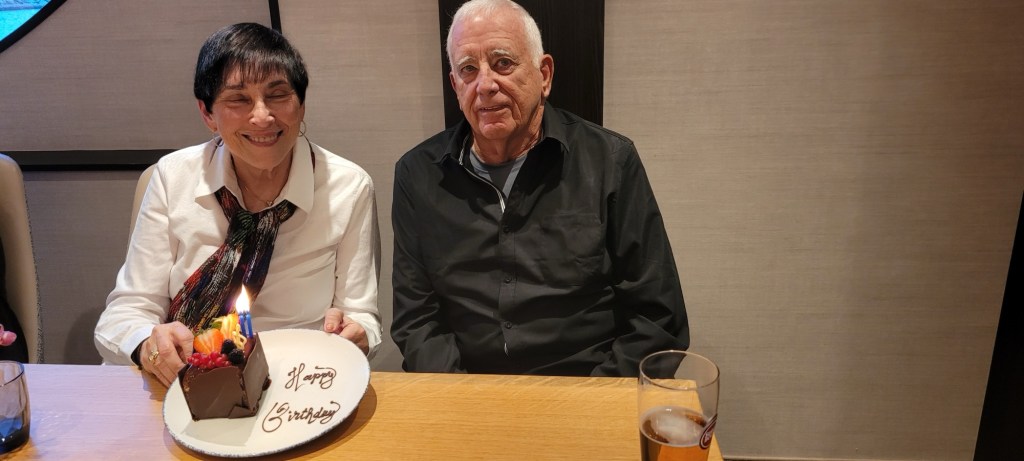
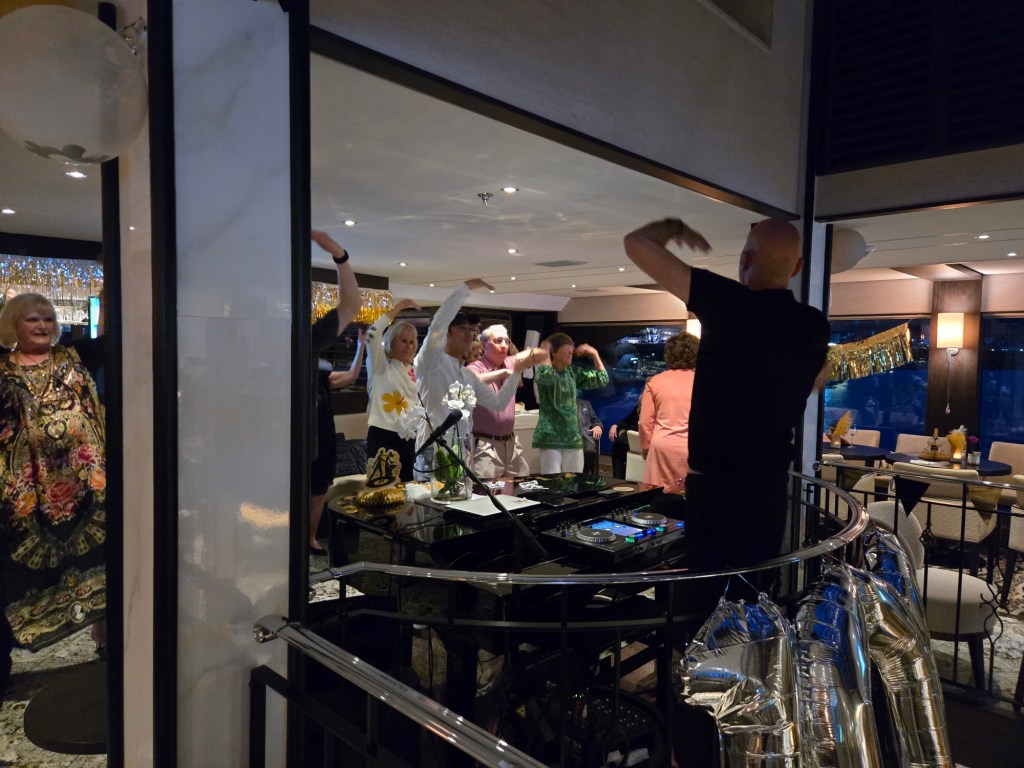
Then in the evening we had a “roaring ‘20s” party to celebrate Tauck’s 100th birthday and my 79th. Not planned for me but nice to have a big celebration on my birthday. After dinner they turned the lounge into a disco and we danced and even the crew came to join the party. It was fun.

Happy birthday Bette
The dance party
Gifts from the ship

And on to more adventure in the morning. Thanks to all who contacted me with birthday wishes and greetings.

Categories: Uncategorized | 1 Comment

Peso da Régua, Portugal – April 21

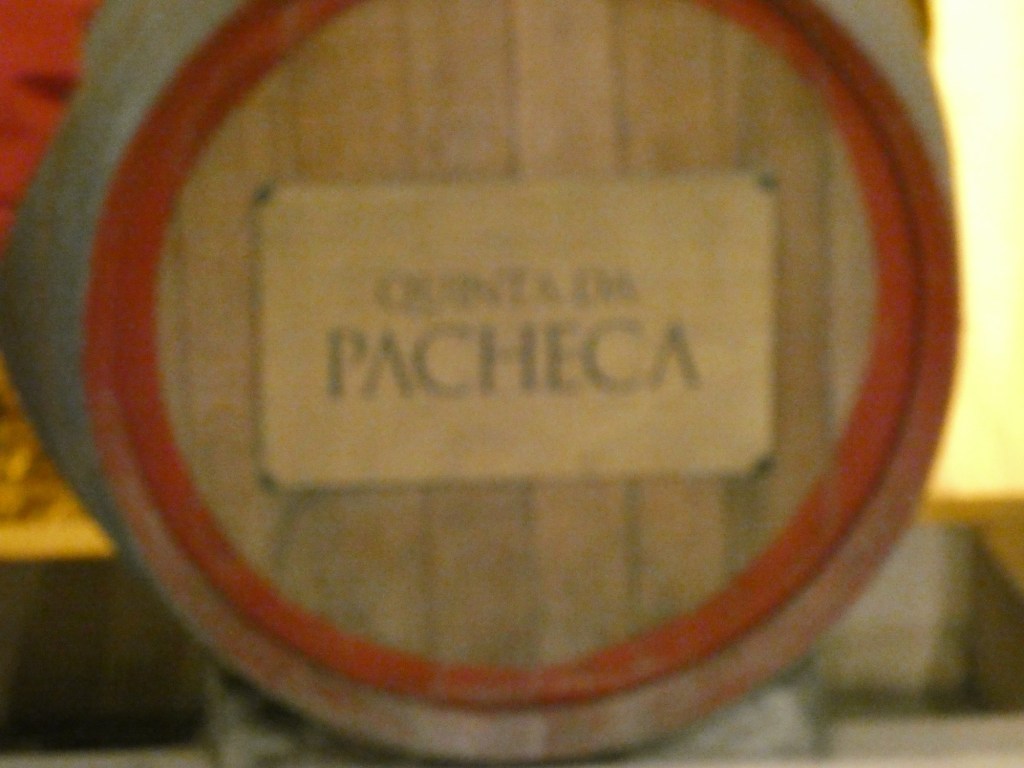
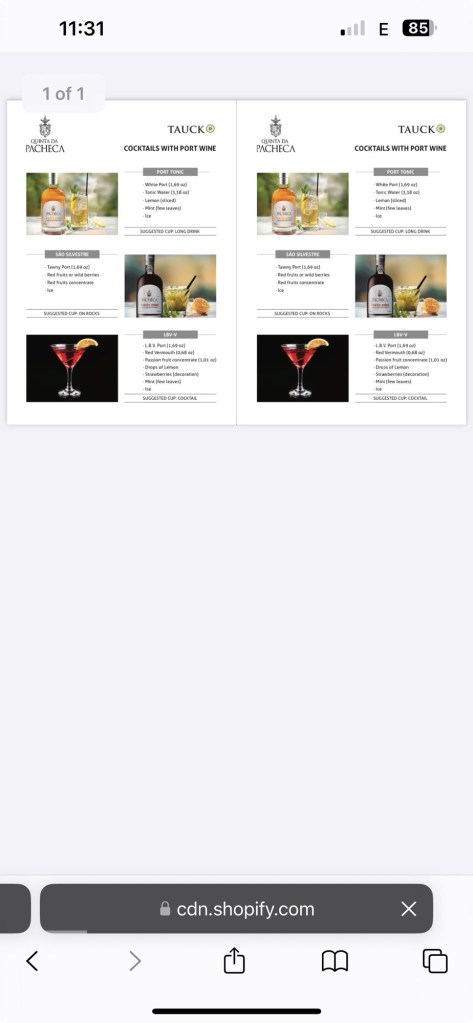
We had a very short sail from where we docked overnight in Lamego to Peso da Régua. There was a small village here but we were on our way to a winery, Quinta da Pacheca, and a port cocktail making class.

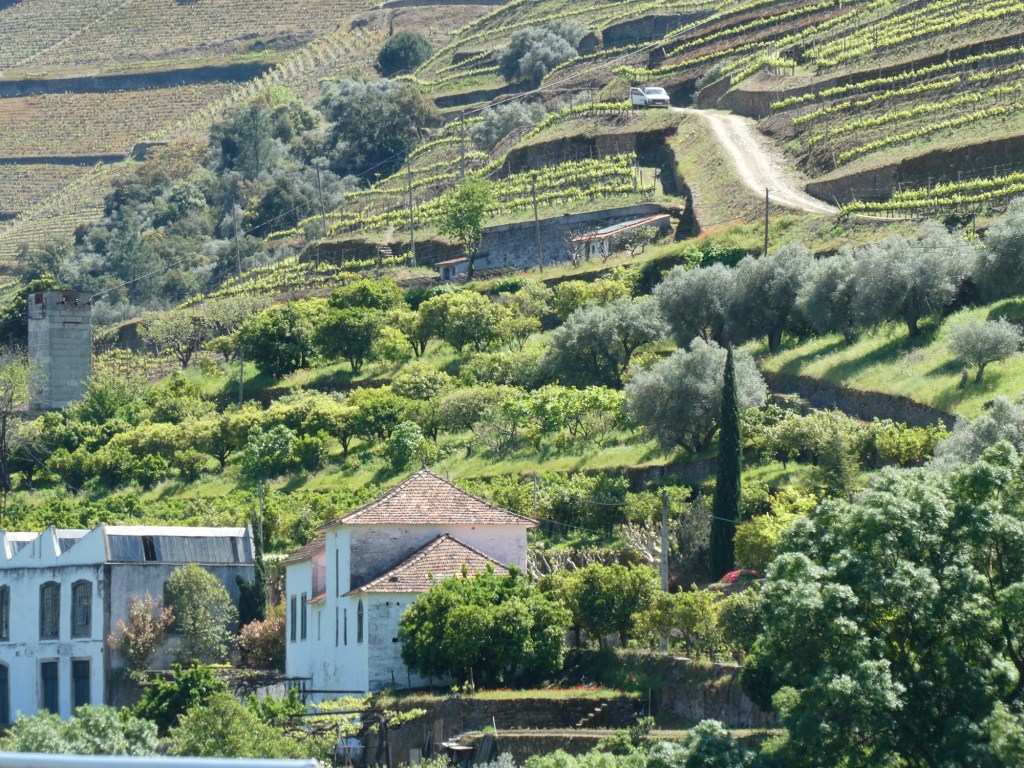
The winery was established in 1738 with a small acreage. Now it covers 170 acres. Of their production 30% is port wine and the remainder red and white wines. We learned that the quality of the wine is dependent on the altitude, soil and direction of the land. There are 115 different types of grapes grown in the Douro Valley. It is called “the region of the blends” because almost none of the wines produced here come from only 1 grape. The port wine is made up of 4 to 12 grapes using the best from the harvest.
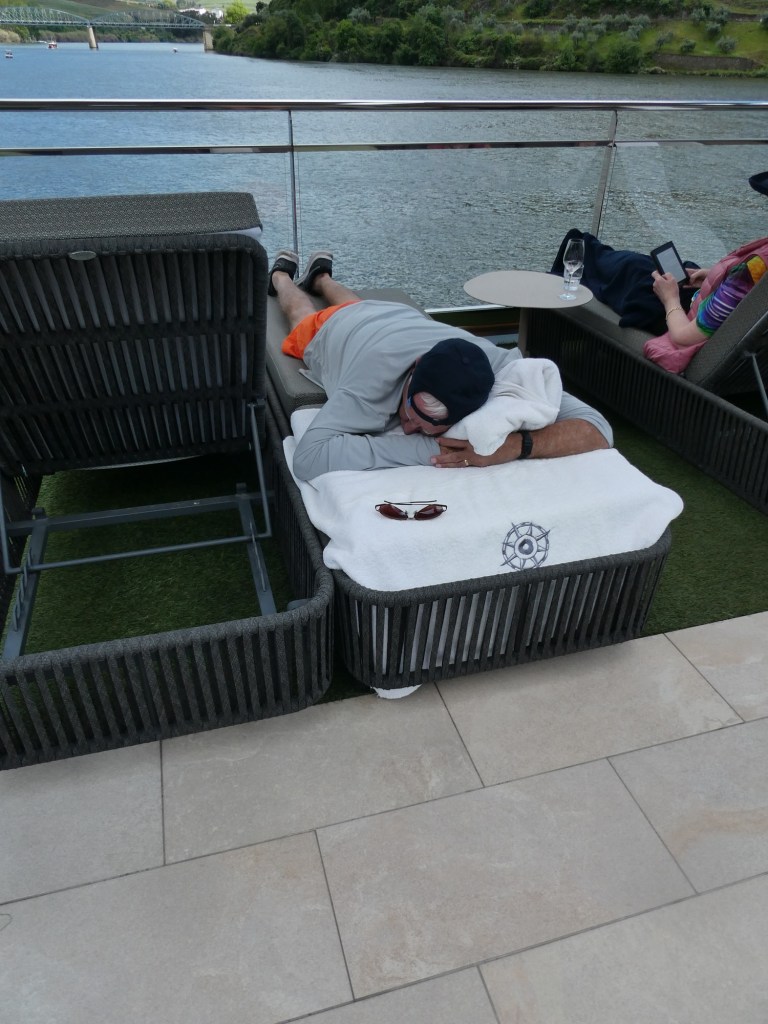
The grapes are harvested by hand in August to September. In the entire area there are 100,000 acres of grapes. Even the large companies harvest by hand. Once harvested the grapes are put into a lagar, which is a large square concrete structure. Then 10 people get inside and stomp the grapes with their feet. There is a certain pattern they follow and each group does this for 3 hours.
The lagar, with our guide explaining the process to us.

The fermentation for port is only 3 days. Then aguardente (firewater) which is 77% alcohol is added to the wine to stop the fermentation and made the final product about 20% alcohol. There are actually 4 kinds of port wine, white, pink, tawny and ruby. By law the winery must keep a third of its production in reserve. This is in case there is a bad year, they will still be able to produce the wines. Here is a link to their website with photos and information about their history.

https://quintadapacheca.com/pages/our-history

We then went into the storage area and on to a room to make our cocktails.

We then sailed on. The countryside was beautiful, hilly with terraced vineyards. We had a cooking demonstration of a famous Portuguese sandwich, francesinha, a heart attack on a plate – 2 slices of bread, bacon, ham, steak, sausage, several layers of cheese, a sunny side up egg and a spicy sauce. It is surrounded by a huge amount of fries.

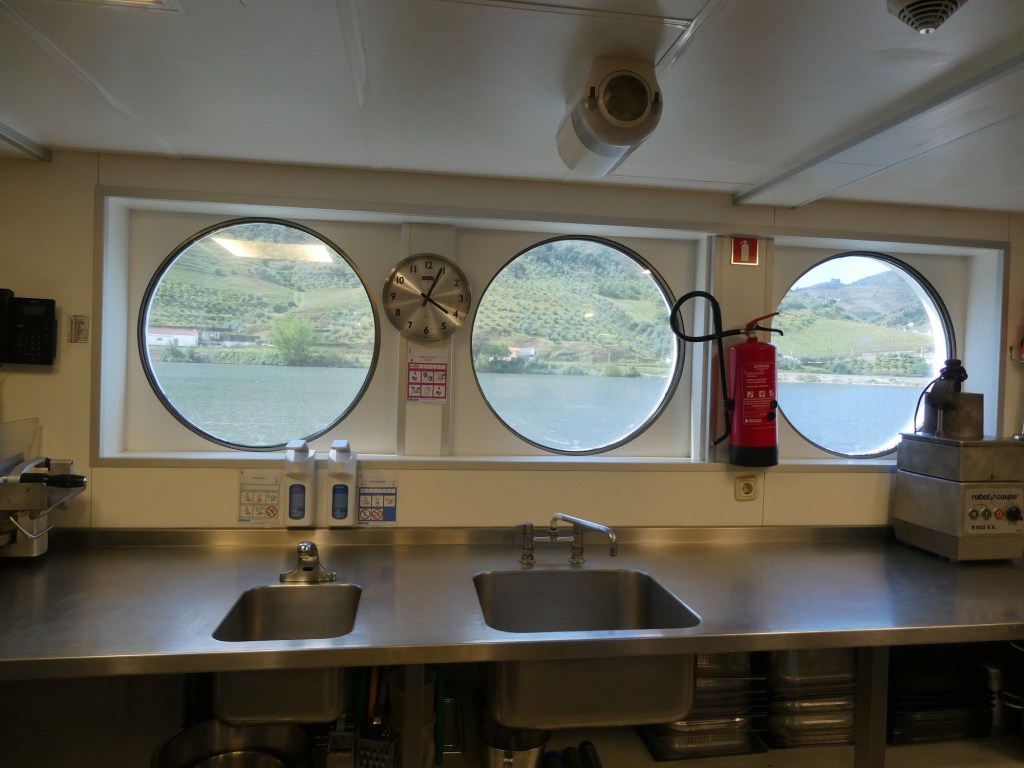
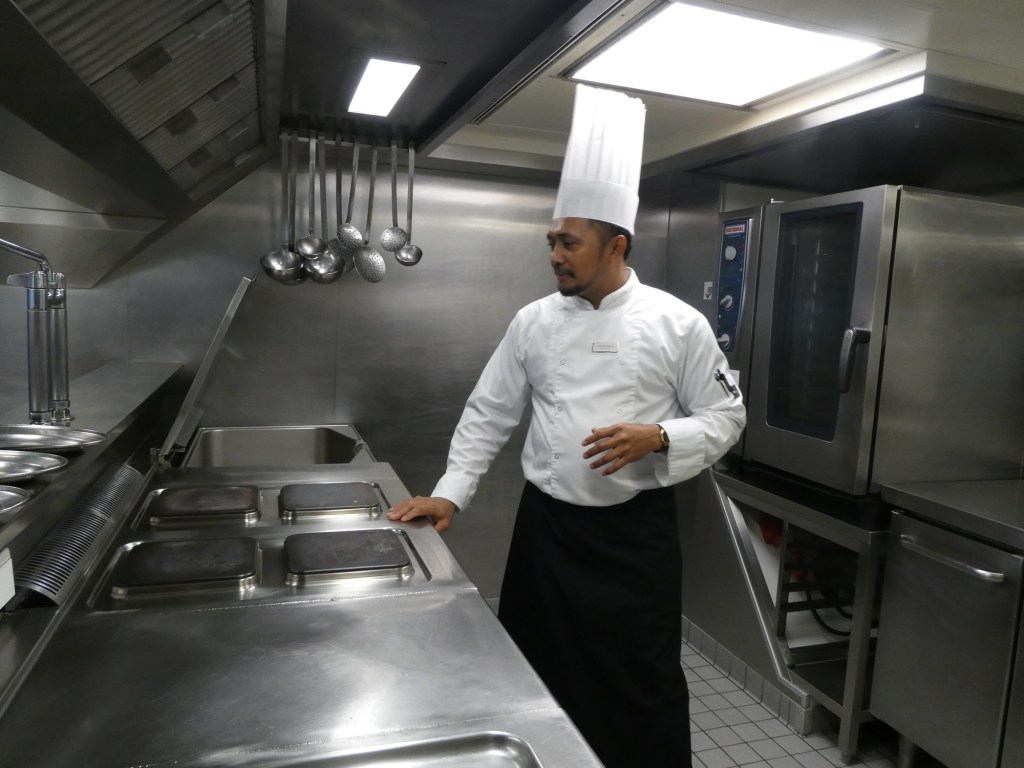
The chef gave a galley tour. We could go into the galley because our dinner that evening was off the ship in a Michelin starred restaurant, DOC.

At the restaurant, on their terrace

Finally had blue skies in the afternoon and a promise of nice weather, although some questions about being able to move further along the river due to high waters from all the rain.

Categories: Uncategorized | Leave a comment

Guimarães, Portugal – April 20

We left the boat this morning by bus to go to the town of Guimarães. While we were gone the boat moved from where we were docked to another area farther up the river.

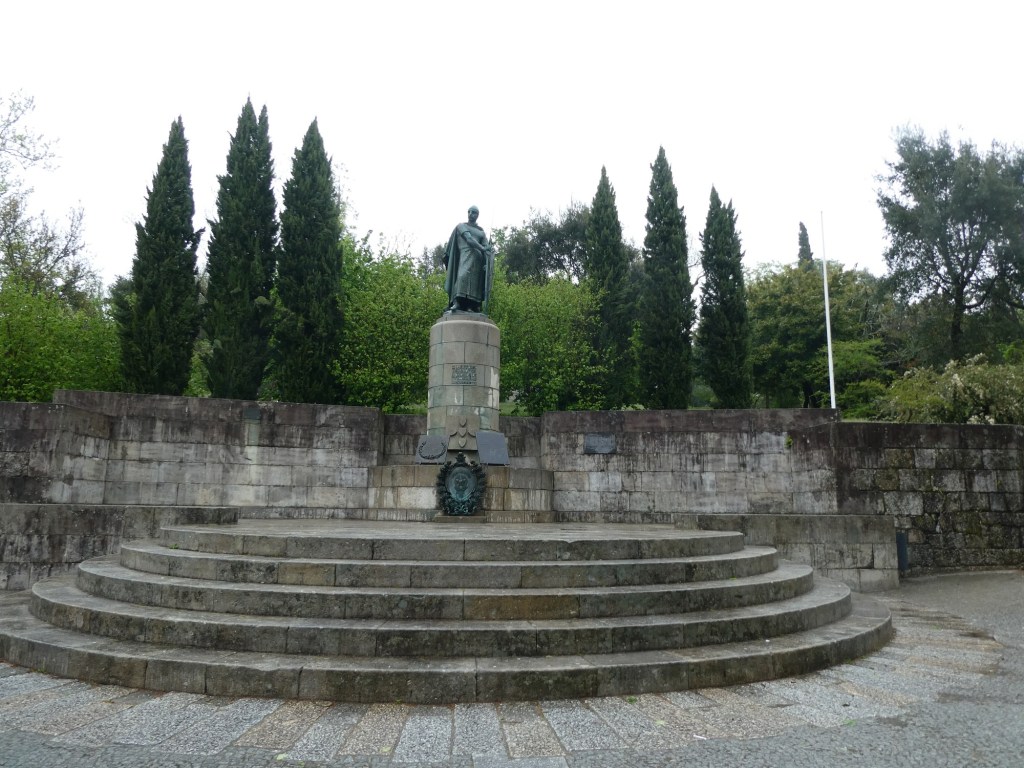
Every time we get a new guide we find out new facts. The Romans named Portugal from the words Porto (port) and Calle (trade). The Romans were here for about 500 years – 200 BC and 300 AD. They traded wine with all areas of the Mediterranean. The Iberian peninsula was conquered over the centuries by Visigoths and Moors. Many of the names in Portugal begin within”Al” which are names from Moorish times. The French helped expel the Moors with crusades. The new king of Portugal came to live in Guimarães. This was the first capital of Portugal.

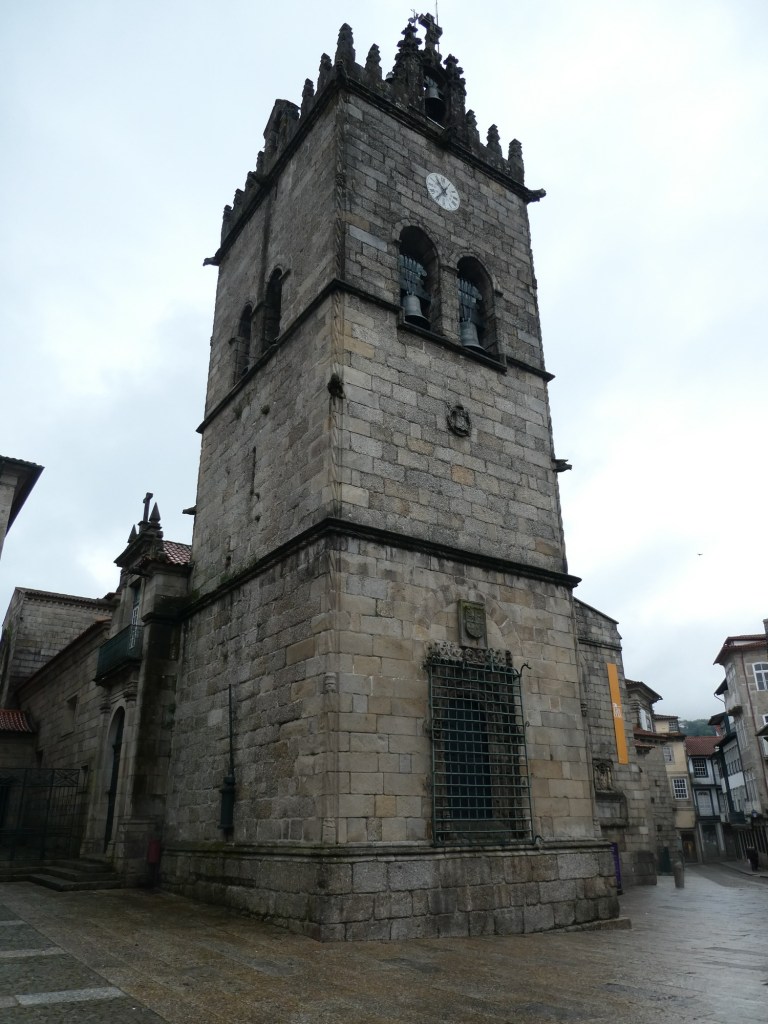
We again had a rainy morning. Guimarães is a UNESCO world heritage site since 2001, because it is a well preserved and authentic example of a medieval settlement. We saw some of the original walls that had surrounded the city. Some of it had been taken down over the years to build houses, churches and other buildings.
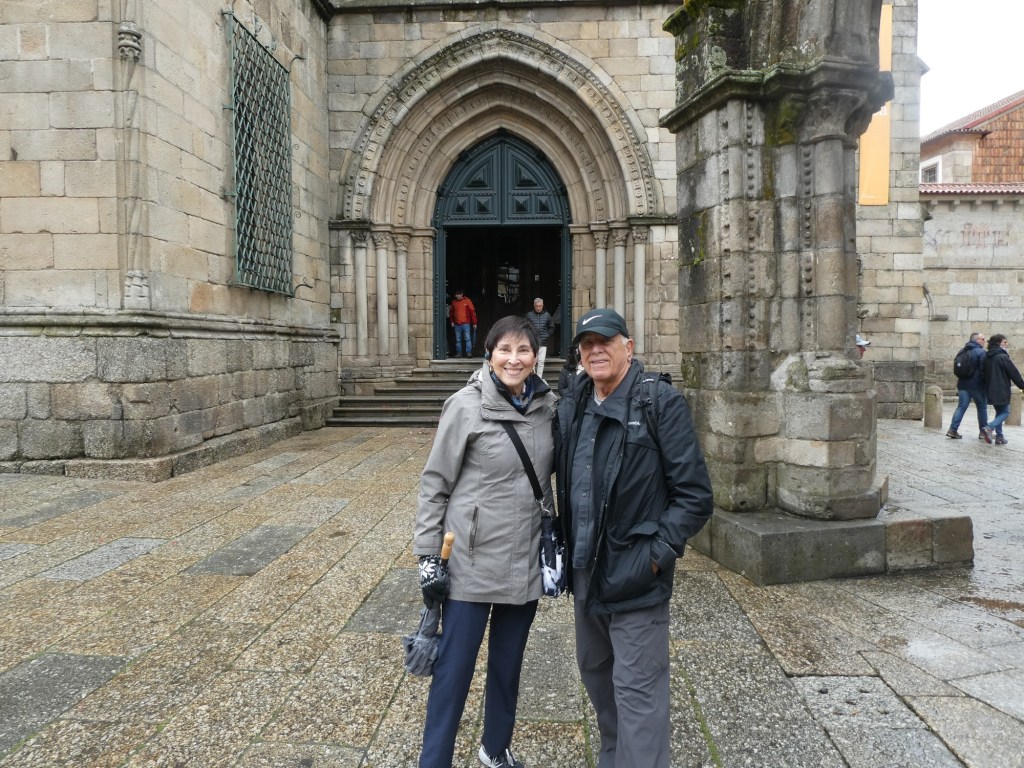
We walked to the top of a hill to see the outside of the castle/fort. We also saw the church where the first king of Portugal was baptized. Unfortunately they were closed because it was Easter.

The palace/fort
The church where first king was baptized – Church of San Miguel

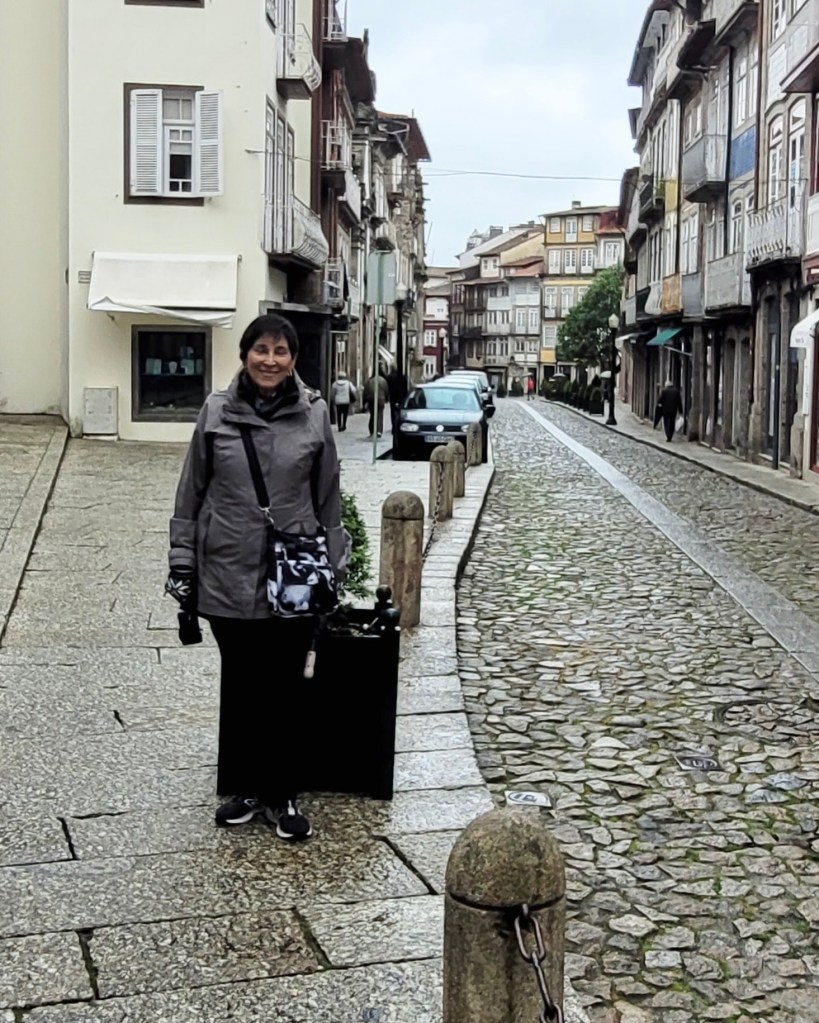
We walked through the town which was very quiet. It was mid morning so we were surprised. Our guide said that because it was Easter the people did not go to church, but the priests came to their homes to bless them there. To show that they wanted the priest to stop at their home they lined the walk in front of their house with flowers. There were lots of church bells ringing to let the people know that the priests were on their way and then there were small processions with a priest in front with a cross, followed by young men with red capes and at the end a young man ringing bells. Quite a sight to see.

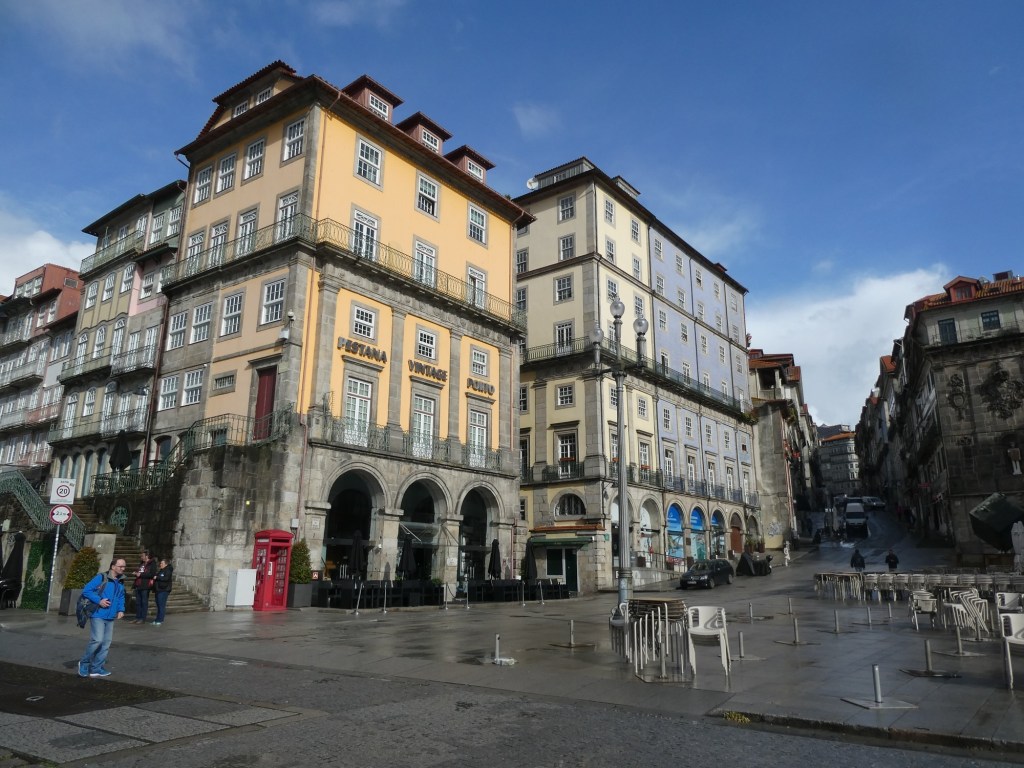
Here are some other photos from around the town.

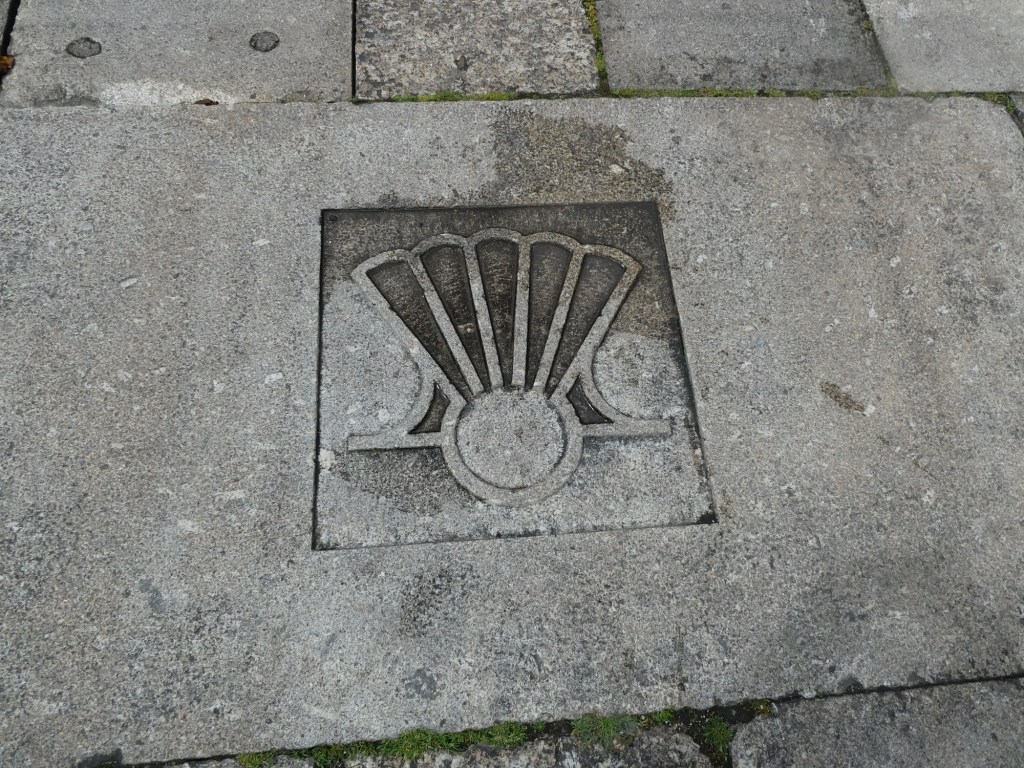
The symbol of the Camino

We then had lunch in a restaurant. And when we came out the streets were filled with lots of people and the sidewalk cafes were bustling.

The restaurant

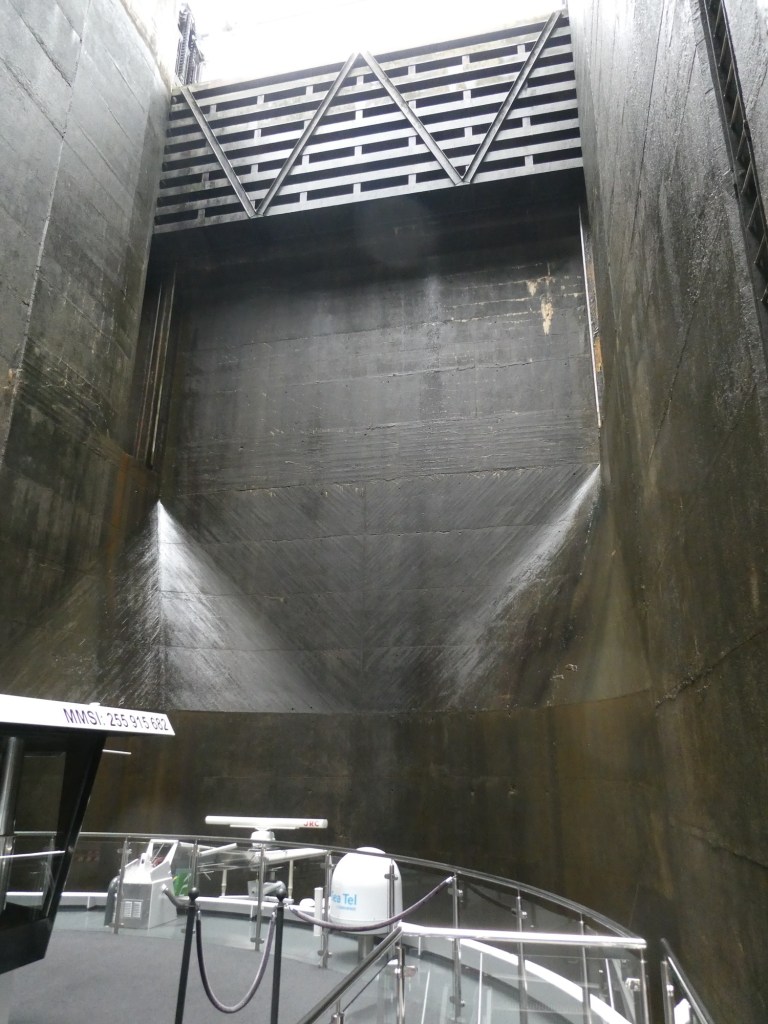
We then were returned to the ship and we sailed for about 1 hour before coming to our first lock, Lock of Carrapetelo. It is the biggest we will pass through over 100 feet. It was finally not pouring rain, just spitting, but too cold to be out on deck for very long.

Hopeful for better weather as we move on.

Categories: Uncategorized | 3 Comments

Porto, Portugal – April 19

Happy birthday to Bob!

As I explained in the prior blog we were not in Porto. We were farther up river. Once on the ship we learned that the place that the Tauck riverboats berth are close to the river’s mouth and the Atlantic Ocean. There was severe weather forecast and the captain decided that it was not safe to bring the ship there.

So, in order to get to Porto for our tour we had to take a bus to another pier where a local boat was waiting for us. True to our not so great weather, it did not rain while we were on the bus but poured as we walked to the boat and poured for the whole 20 minute ride. It was interesting to arrive by boat to the main area of the town.

Our guide started our walking tour with lots of information about Porto and the area. The name for the Douro River comes from the Roman times and means “heart” and difficult to navigate. We actually only move during the daytime because of the difficulty in navigating even in these times.

The city center was declared a UNESCO world heritage site in 1996. There are strict rules about renovations and keeping the exteriors historic. Porto has a population of approximately 220,000. Directly across the river is the town of Gaia which has a population of 350,000. It is in Gaia that all the port companies have there storerooms, tasting rooms and commercial facilities. The reason is because Gaia faces south and is better for aging the port wines.

Portugal is one of the major cork producers in the world. Portugal became a kingdom in 1143.

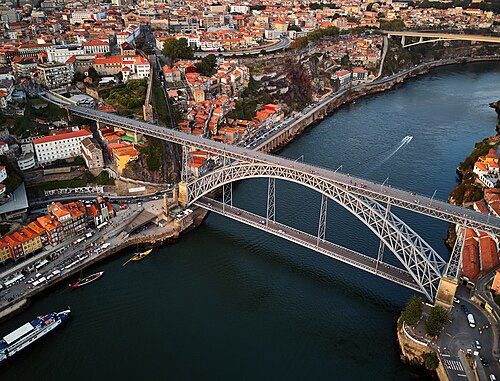
There are currently 6 bridges connecting Porto and Gaia, with a 7th under construction. As we started on the Porto side of the river, we crossed one of the bridges to continue our tour on Gaia side. In case you were wondering, it was raining on and off for this part of the walk.

Once on the Gaia side we saw the different buildings for the various port companies. Then we walked to the gondola to take us up to the top of the cliffs. While on the gondola it rained hard. Then we got to walk across the top of the steel bridge. As we started over it began to rain, then hail, then lightning and thunder. Scary to be on this bridge in this crazy weather.

We walked across the bottom level from Porto to Gaia and then across the top level from Gaia to Porto in a hail storm.

Our next stop was a local shop to sample, mackerel and sardines and of course some sparkling wine.

Our next stop was the local market. There were all kinds of kiosks. You could even order prepared foods to eat at tables. It was very colorful and busy as people were shopping for the Easter holiday.

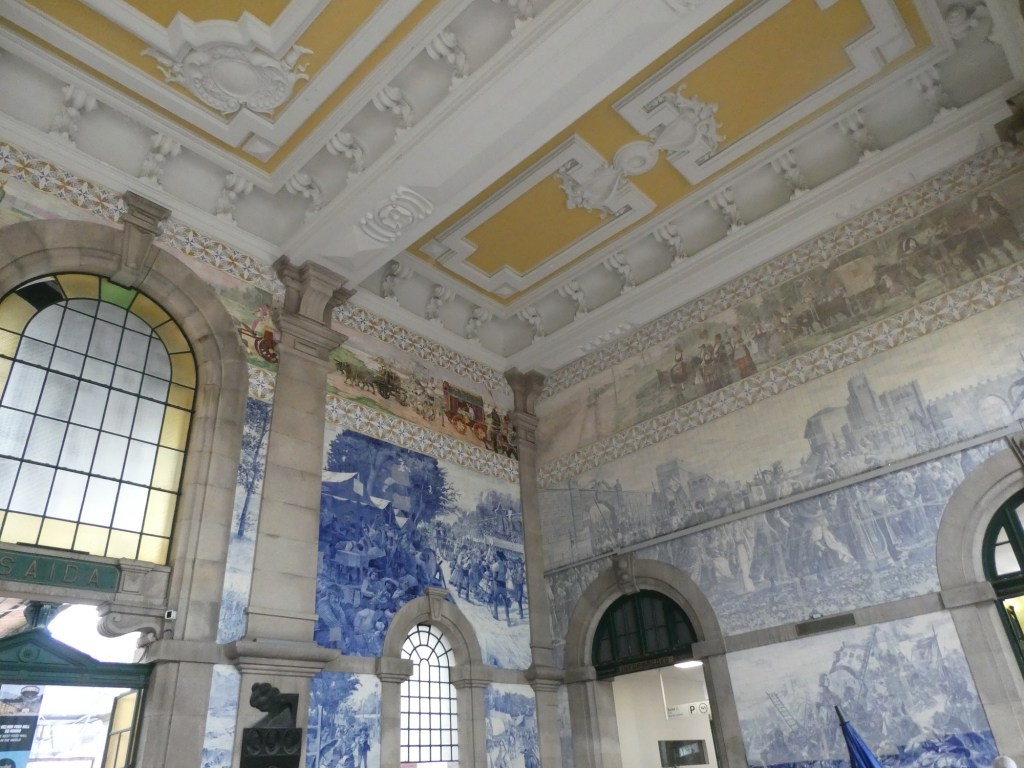
Our final stop was the train station to see the tiled murals. It was originally a convent. We had to duck into a subway station on the way to again avoid being hit with hail.

Some of the murals with 20,000 tiles.

We did not get many photos of the streets and surroundings because of all the rain.

Categories: Uncategorized | Leave a comment

On the Way to Porto – April 18

Leaving Lisbon to get to Porto to pick up our riverboat we had a stop in the town of Coimbra. Coimbra was the capital of Portugal until 1260. It was one of the favorite places for the Kings and Queens to spend time between their homes in Lisbon and Sintra.

We learned a lot about King Alfonso, who wanted to marry his son, Pedro, to a princess from Galicia (Spain) to tie the countries together for political purposes. When Pedro was introduced to Constansia, he noticed her lady in waiting, Inez, and it was love at first sight. Pedro married Constansia, but also had a home with Inez. He had children with both. Eventually King Alfonso, moved Inez to Coimbra and subsequently arranged for her to be killed. Constansia died 6 years into the marriage during childbirth. Although Inez was dead, Pedro had her coronated as Queen. Weird story.

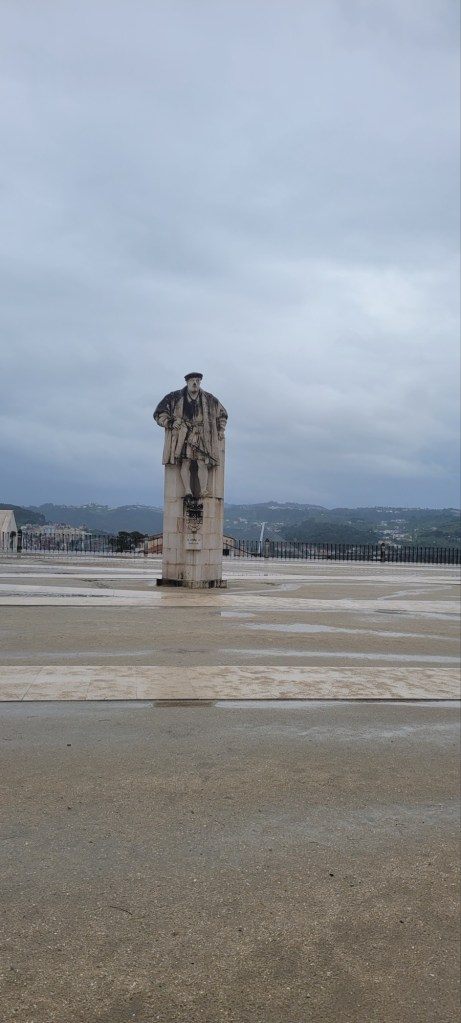
Coimbra was originally a Roman settlement. The town is now known for its university. We toured the university grounds but our main attraction was the library. King Joao established it. Until 1910 it was the only University in Portugal. The city has a population of about 150,000 with 22,000 being students. Currently the university has 50 majors. For Portuguese students the tuition is 1250€ a year. For students from other places it is 5 to 7000 €. We were told there is a staircase of 125 steps that for orientation the freshmen have to climb several times, but when done they are rewarded with beer. Apparently many things at this university are rewarded with beer. They even have a huge party the week before exams to celebrate the end of the year. Our guide said they do it this way since not everyone can celebrate after exams 😉.

Coimbra University is one of the oldest in Europe and one of only five in the world listed as a World Heritage Site . It was founded in 1290, and occupies its current building since 1544. It’s the former royal palace, but very little remains of the royal residence, as it was remodelled and extended over the centuries, and especially in the 1700s.

The library, which is recognized as one of the world’s finest, dates from that period, and was a gift of King João V, who, thanks to the gold from the colony of Brazil, was one of Europe’s richest monarchs. The gold-covered library is filled with 40,000 books, and is accessed through a room that was the Academic Prison from 1773 to 1834. In order to preserve the books from insects, the library has two small colonies of bats, which come out at night. All the books are in Latin. There is a current project to digitize 30,000 of the books. The oldest book is an 11th century bible.

In order to enter we had to wait. We were only allowed in 2 different areas for 10 minutes each. This is to control the temperature and humidity of the rooms. We entered through the university jail and were able to see a floor for studying and we could take photos. The Noble floor with the collection of these rare books covered in intricate carvings and gold was unbelievable. No photos but I got one from the internet so you could see it too.

The study room
The Noble floor
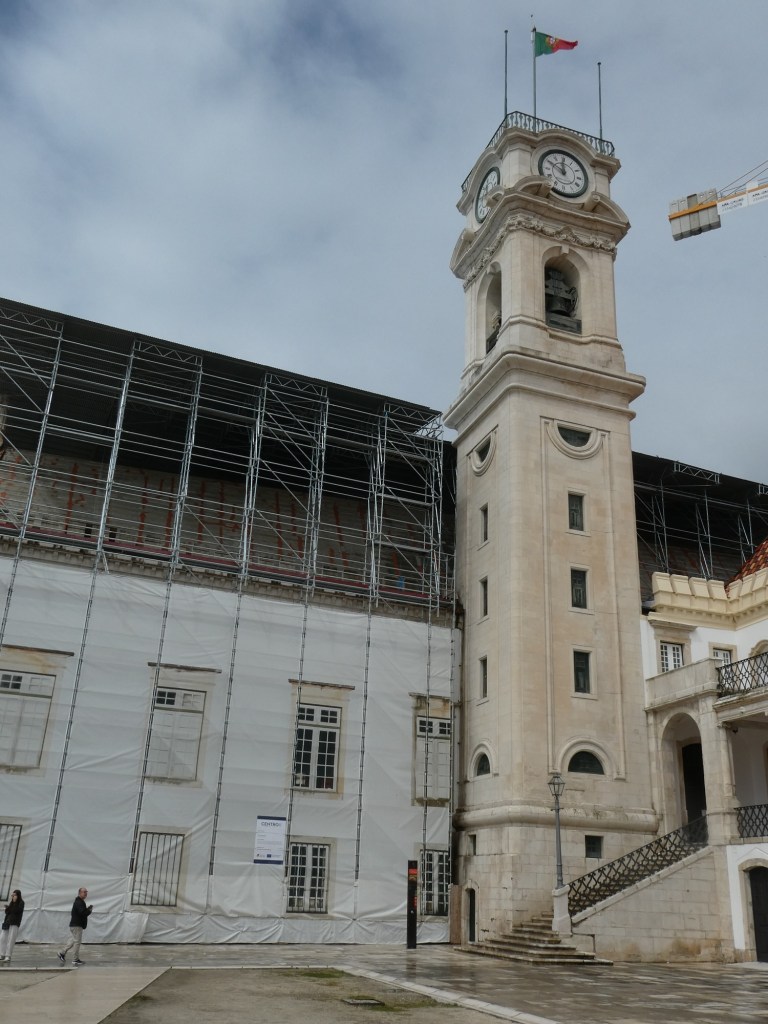
University square with classrooms in these buildings

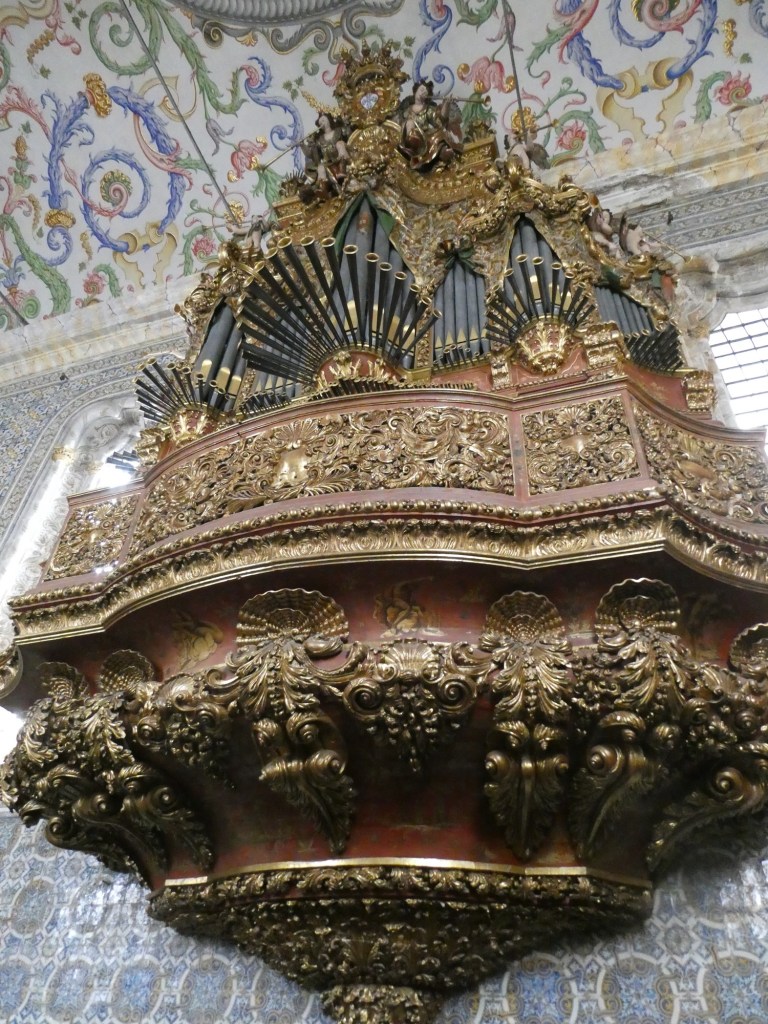
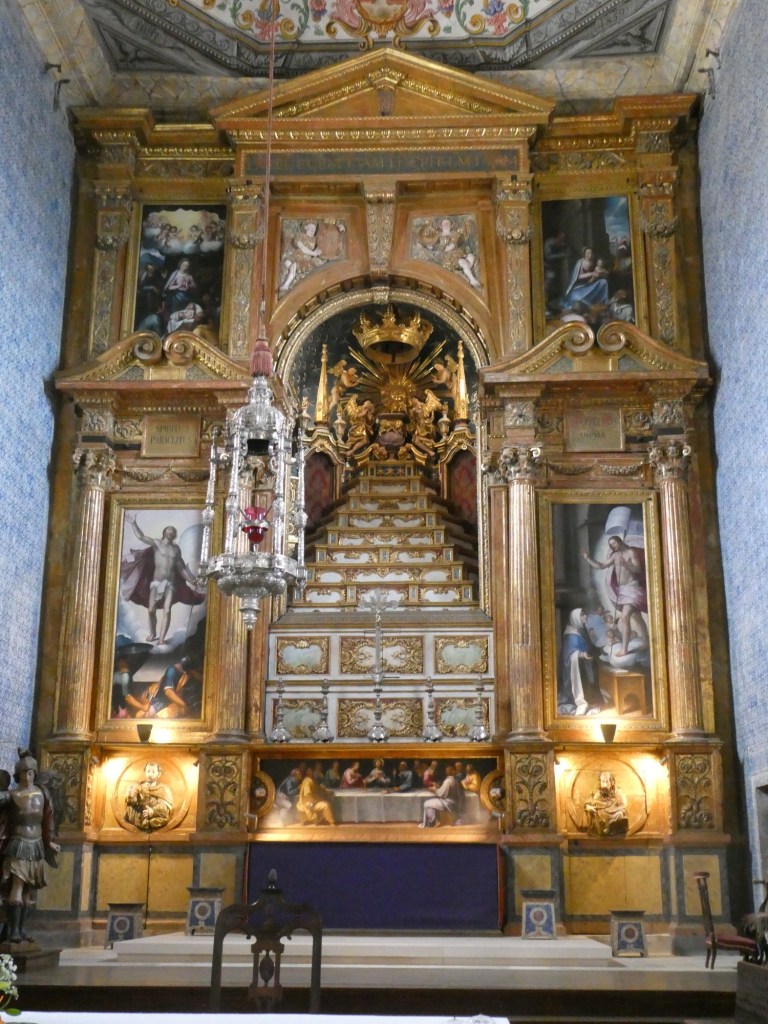
We also went into St. Michael’s Chapel. It had a very beautiful pipe organ.

The altar

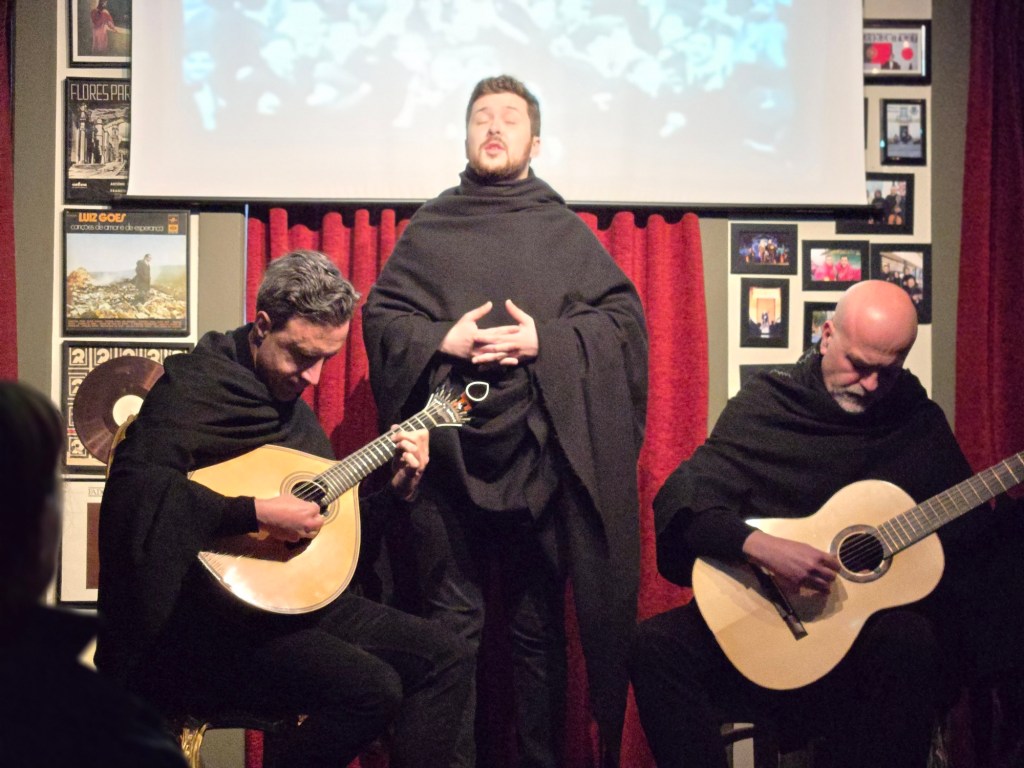
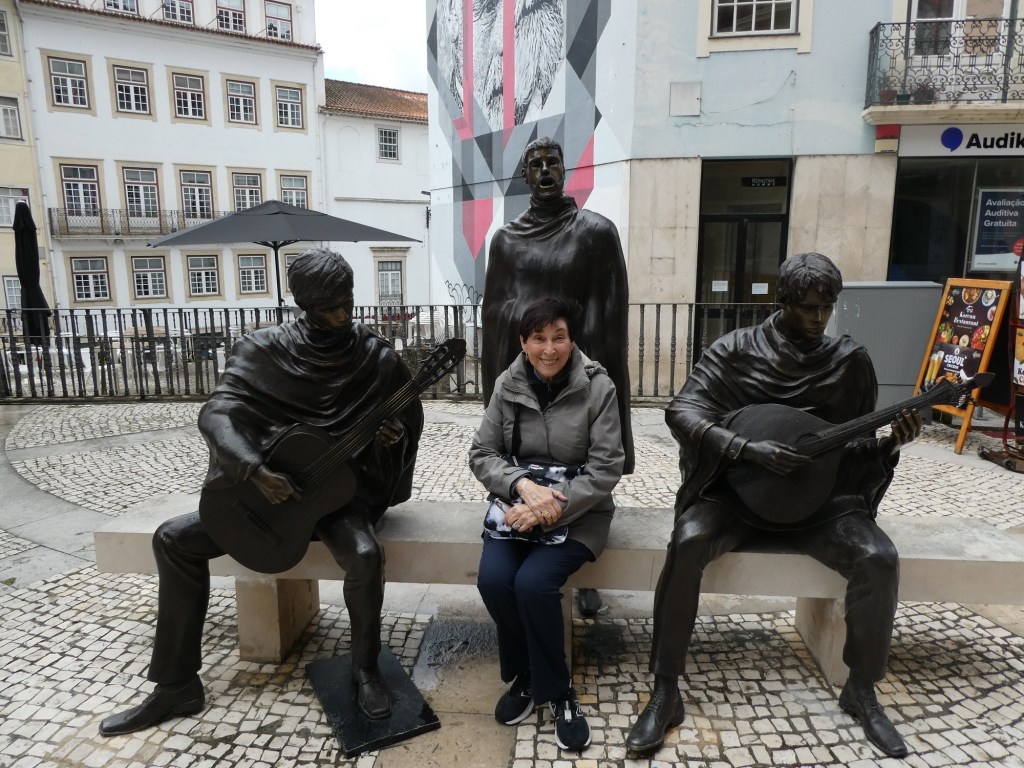
After leaving the University we went into town where we had a Fado performance. Fado is a type of singing, with a special guitar.

After this we finally reached our ship, however it was not in Porto. Apparently the dock that Tauck uses in Porto is near the mouth of the river and there is bad weather there. We are about 30 miles from Porto in a safe spot to dock.

Categories: Uncategorized | 3 Comments

Lisbon, Portugal – April 17

Today was our first official touring day with Tauck and the rest of the travelers on this trip. There were several touring options and we chose to go to Sintra and Cascais (pronounced cash-quiche). It took about 40 minutes to get from central Lisbon to Sintra.

Lisbon has a population of about 2.8 million including the surrounding suburbs. On November 1, 1755 the city was destroyed by an earthquake estimated to be almost 9 on the Richter scale. Not only was there an earthquake, but a tsunami and a huge fire. Almost 60,000 people lost their lives. Because of this great disaster the current city center was developed in a grid pattern.

Lisbon is the 3rd most expensive city in Europe, behind London and Rome. We drove through Parc of Monsanto, the large park, the lung of Lisbon, to get on to the highway. All the trees were planted in the 1930s. 15% of the city is the park. It has hiking trails and other things for the people to use to get back to nature.

We saw the aqueduct that was used to bring water to the city until the 1950s. It looked like a Roman one although it had been built in the 1700s. It is over 11 miles long, getting water from the mountains to Lisbon.

Sintra sits on the top of a mountain that is 1700 feet high. It was established by the monarchy as their summer retreat. Once the King and his court came here, the other wealthy also built mansions here. Portugal was a monarchy until 1910. Some of the pastimes was hunting fox, boars and bears. The royals also came to this area in the higher elevations to avoid the plague in the 1500s. In 1994, Sintra was protected as a National Park and a UNESCO site.

About 300 people live in the village, but 400,000 live in the general area.

Our tour was of the Sintra Palace. It was built over many hundreds of years. Some parts are from the 1500s.

The ceiling of the room dedicated to the Queen
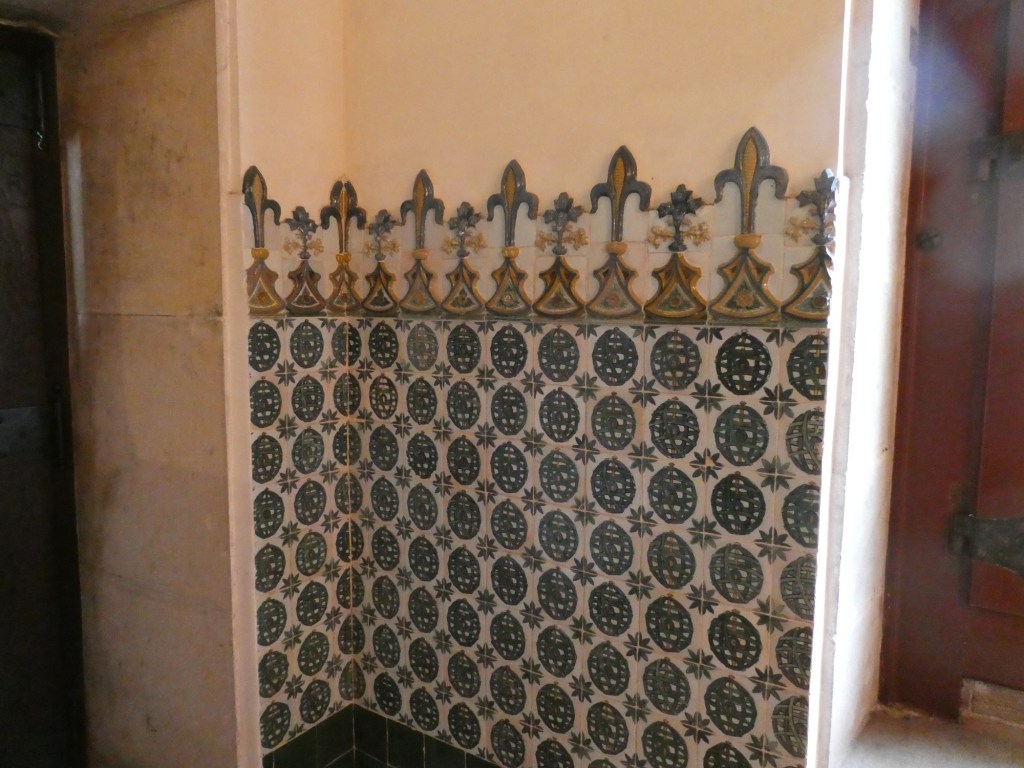
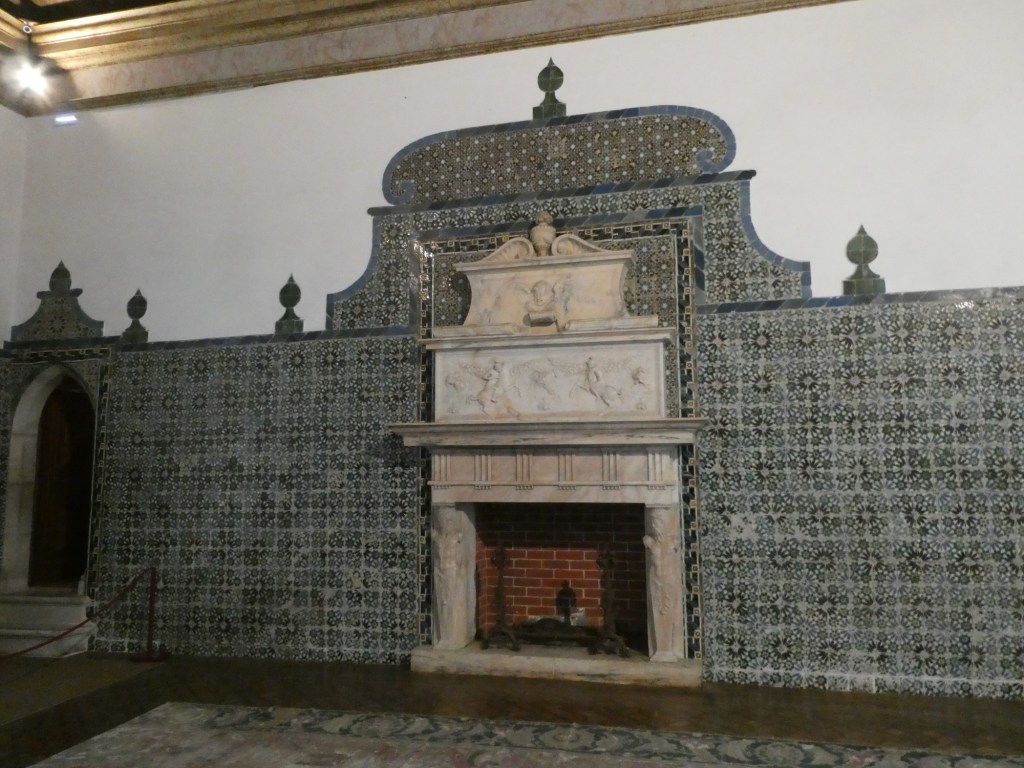
Lots of tile work in one of the rooms
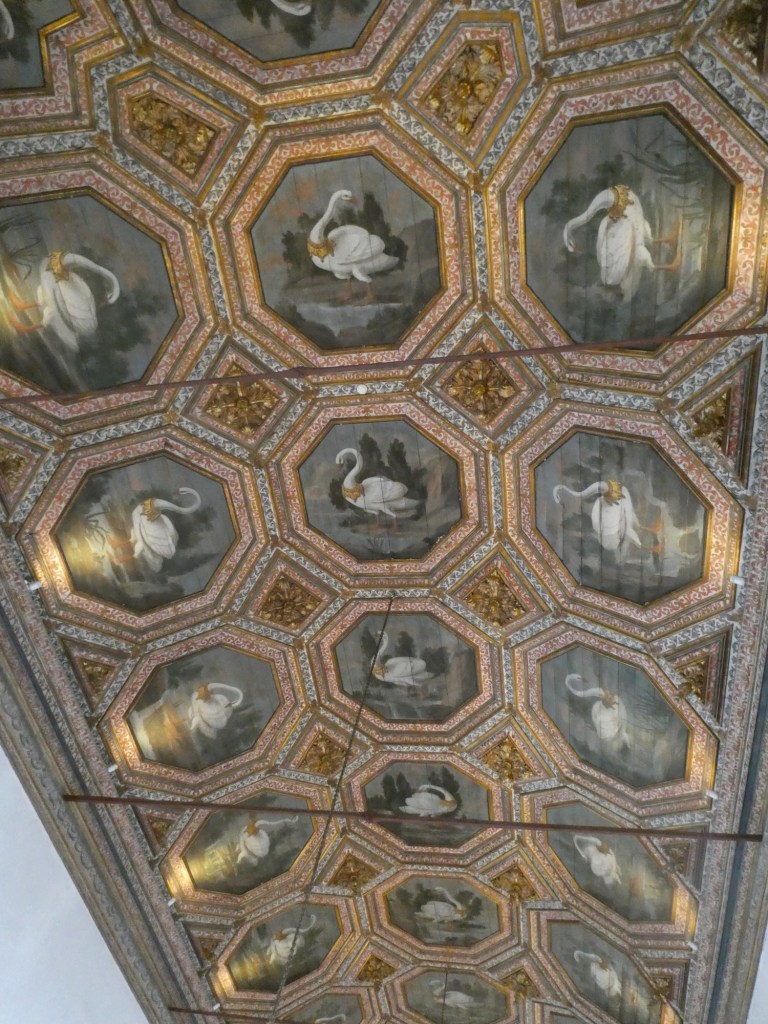
The magpie ceiling
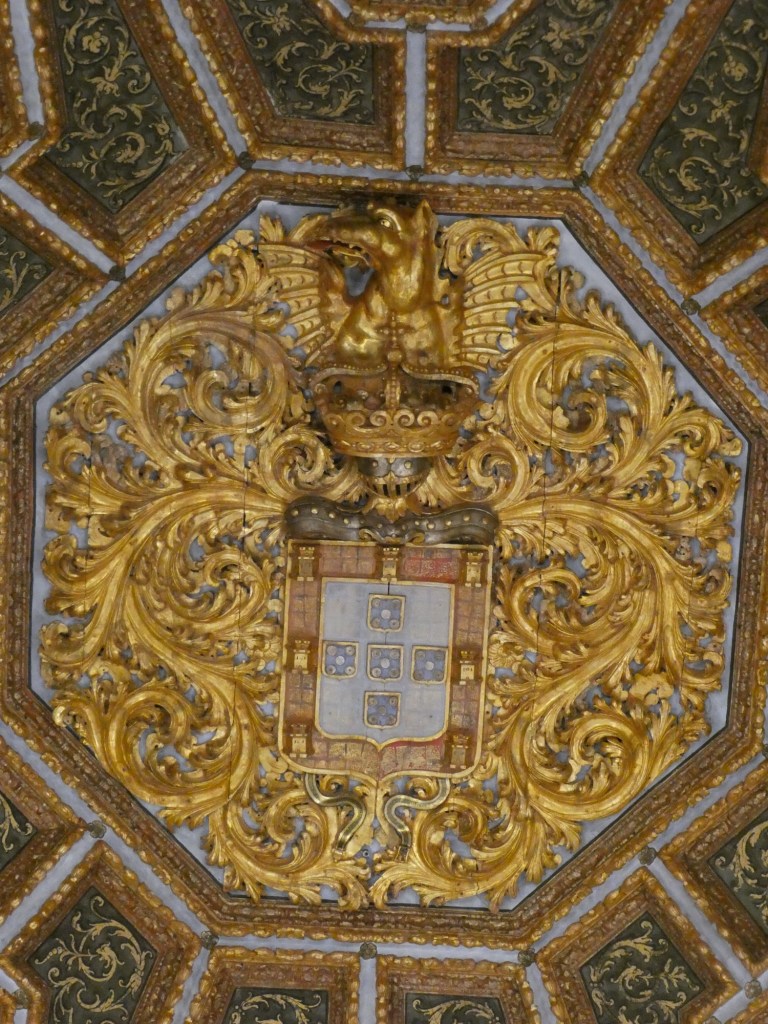
The royal crest

When we left Sintra we drove along the Atlantic coast passing the Cape of the Rocks, which is the most western point on mainland Europe. There are many lighthouses along the coast because it is rocky with very few beaches.

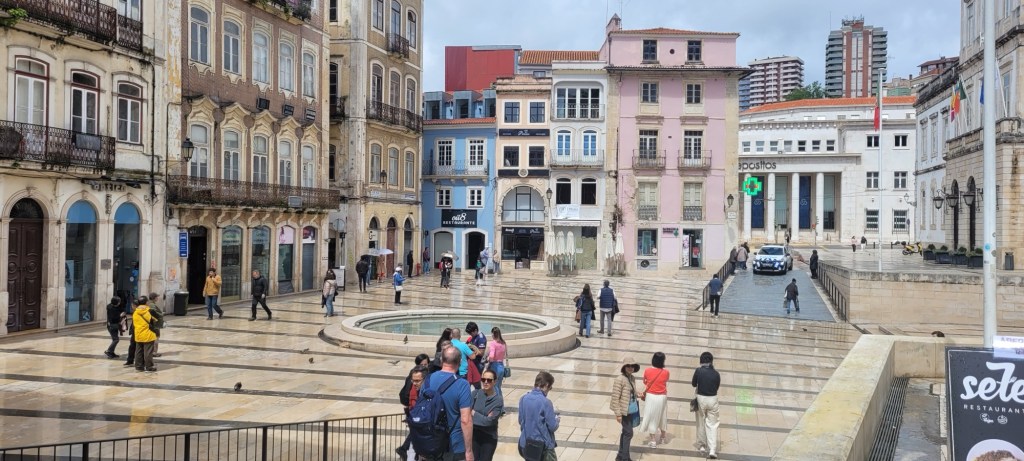
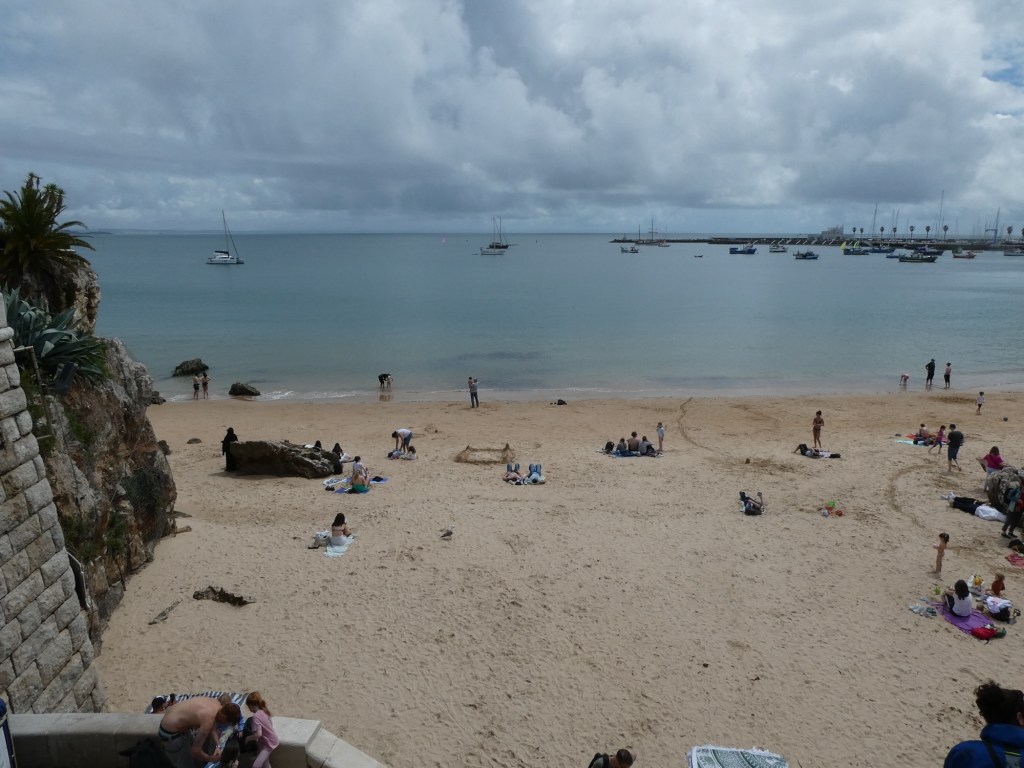
The town of Cascais comes from the word “seashell”. It was the first public beach in Portugal. It is a high end beach town. We had some time to walk around and have lunch.

The beach at Cascais

One of the industry’s in Portugal is paper making. Many years ago they imported eucalyptus trees from Australia. They thrived and the clever Portuguese found they could make paper from the pulp. There are companies who specialize in this paper and it is quite unique.

In the evening we went to a very local restaurant. We had an enormous amount of food, a salad big enough for 4, a whole chicken accompanied by large plates of rice and fries. Bread and drinks too. We tried the famous “piri piri” sauce and nearly died it was so hot. Our whole bill was under 35€.

Then we had to pack to get to our riverboat, bags ready at 6:30 AM.

Categories: Uncategorized | Leave a comment

Lisbon, Portugal – April 15 and 16

We started our trip on April 14. We flew to Boston where we had a 9 hour layover. We took a room at the Hilton so we could relax. Jennifer was able to join us for dinner.

We were happy to see our luggage when we arrived in Lisbon.  We were concerned that a 9 hour layover might jinx us in having our bags with us.

We were met by the Tauck team and transferred to our hotel.  Of course, our room was not ready, but after a short wait we got our room.  We went out to walk and about half way to the city center the winds picked up and it began to rain, so we returned to the hotel and rested.

After a quick dinner at the hotel we were ready for bed. End of our first day in Lisbon.

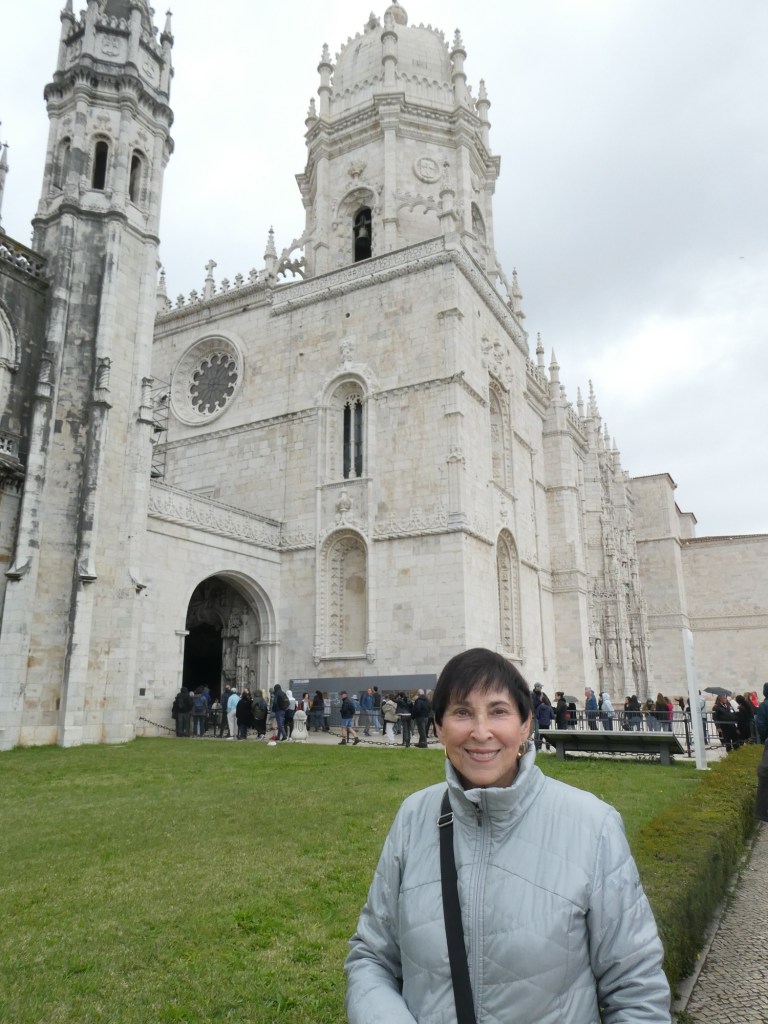
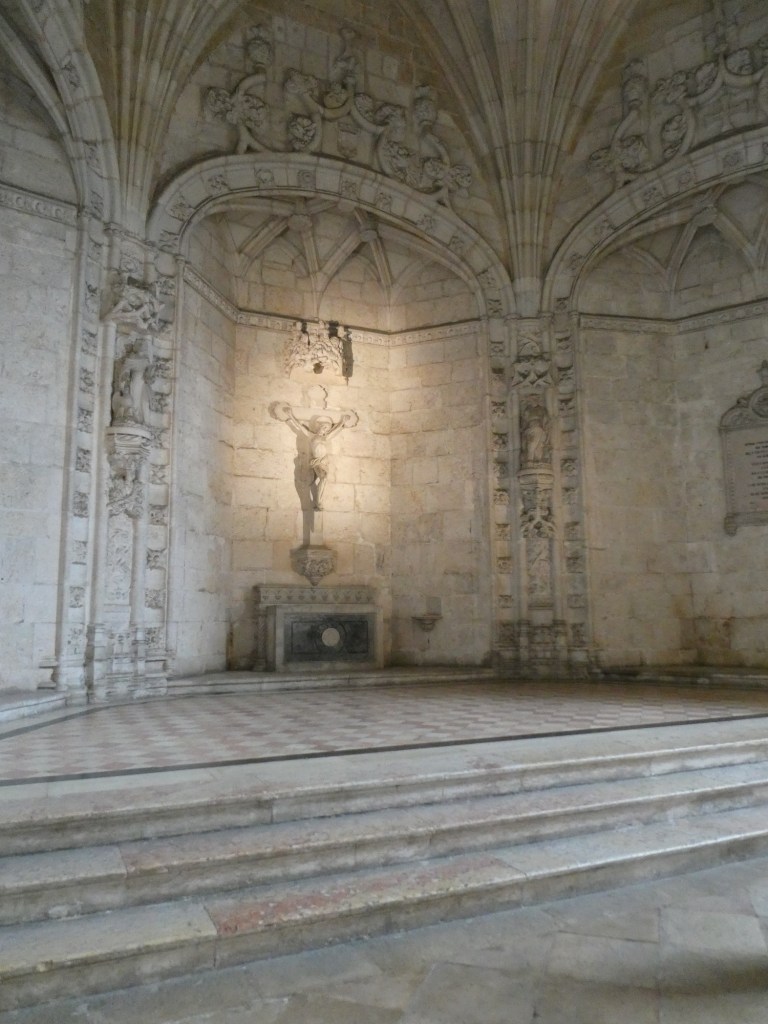
We had purchased tickets to see the Jeronimous Monastery and the Belem Tower. Uber brought us to the Monastery and to a very, very, very long line. It took over an hour to finally get into the monastery. The stone carvings were beautiful, and we walked around the cloisters and into the chapels that were open for viewing. We also visited the church attached to the monastery but it was heavily scaffolded for renovation. While we stood in line it rained on and off.

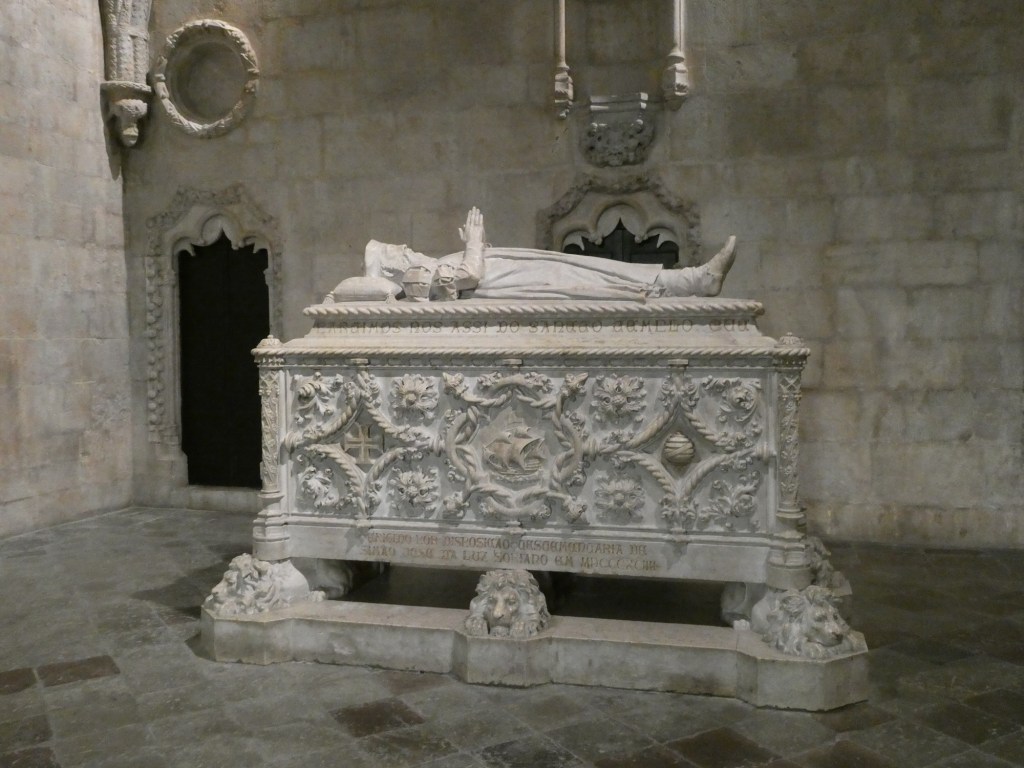
The Tomb of Vasco de Gama

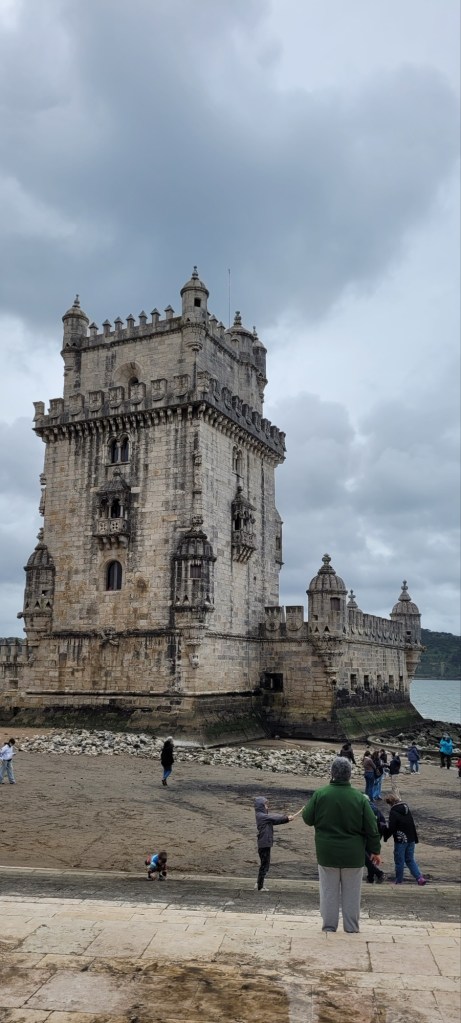
We then walked to the Monument of the Discoverers. It was very windy being right on the Tagus River. By now it was raining hard but we walked on to the Belem Tower. The line there was very long and we were not inclined to stand in heavy rain to wait to get in. So only a photo from outside.

Monument to the Discoverers
Belem Tower

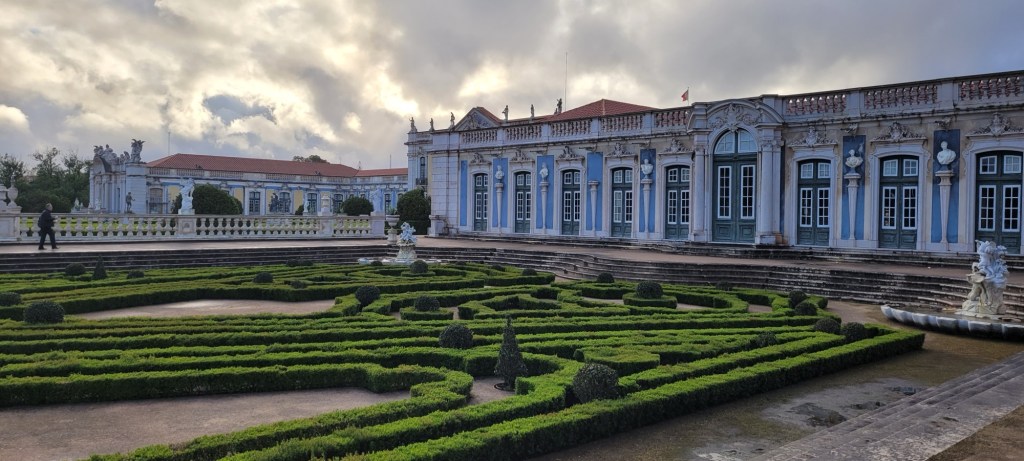
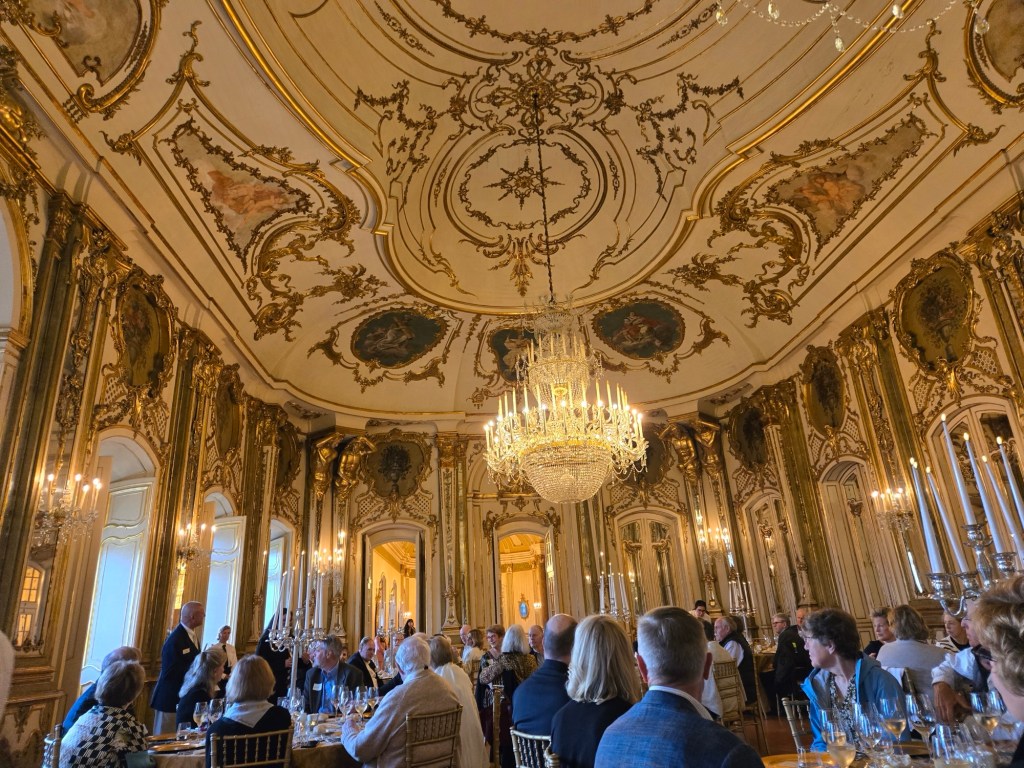
In the evening we had the welcome reception for our trip. We went to Queluz Palace and had drinks and dinner. The gardens were beautiful and the room for our dinner elegant.

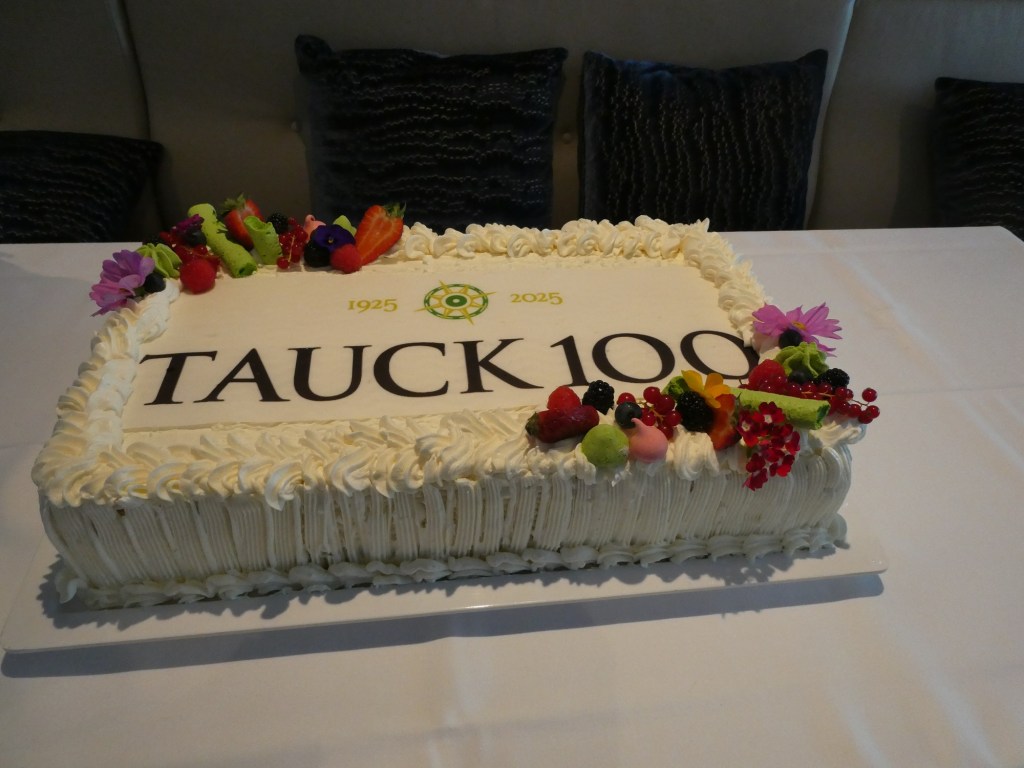
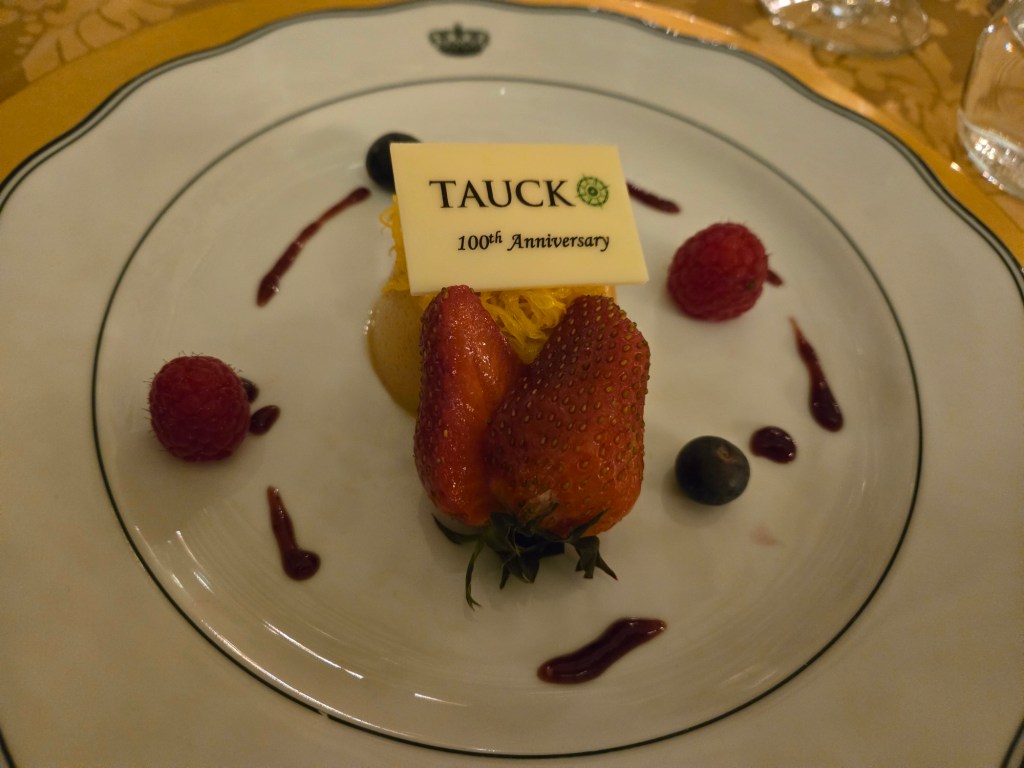
Our dessert celebrating the company’s 100th anniversary
Categories: Uncategorized | Leave a comment

Blog at WordPress.com.