
Today was our first official touring day with Tauck and the rest of the travelers on this trip. There were several touring options and we chose to go to Sintra and Cascais (pronounced cash-quiche). It took about 40 minutes to get from central Lisbon to Sintra.
Lisbon has a population of about 2.8 million including the surrounding suburbs. On November 1, 1755 the city was destroyed by an earthquake estimated to be almost 9 on the Richter scale. Not only was there an earthquake, but a tsunami and a huge fire. Almost 60,000 people lost their lives. Because of this great disaster the current city center was developed in a grid pattern.
Lisbon is the 3rd most expensive city in Europe, behind London and Rome. We drove through Parc of Monsanto, the large park, the lung of Lisbon, to get on to the highway. All the trees were planted in the 1930s. 15% of the city is the park. It has hiking trails and other things for the people to use to get back to nature.
We saw the aqueduct that was used to bring water to the city until the 1950s. It looked like a Roman one although it had been built in the 1700s. It is over 11 miles long, getting water from the mountains to Lisbon.
Sintra sits on the top of a mountain that is 1700 feet high. It was established by the monarchy as their summer retreat. Once the King and his court came here, the other wealthy also built mansions here. Portugal was a monarchy until 1910. Some of the pastimes was hunting fox, boars and bears. The royals also came to this area in the higher elevations to avoid the plague in the 1500s. In 1994, Sintra was protected as a National Park and a UNESCO site.
About 300 people live in the village, but 400,000 live in the general area.
Our tour was of the Sintra Palace. It was built over many hundreds of years. Some parts are from the 1500s.

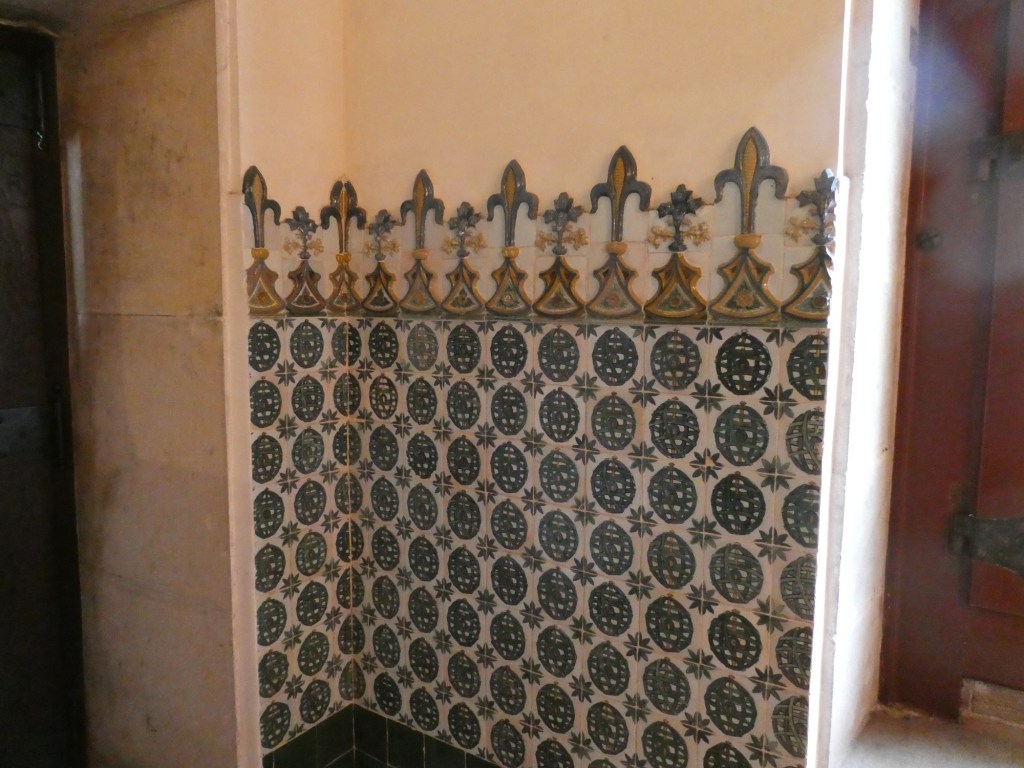
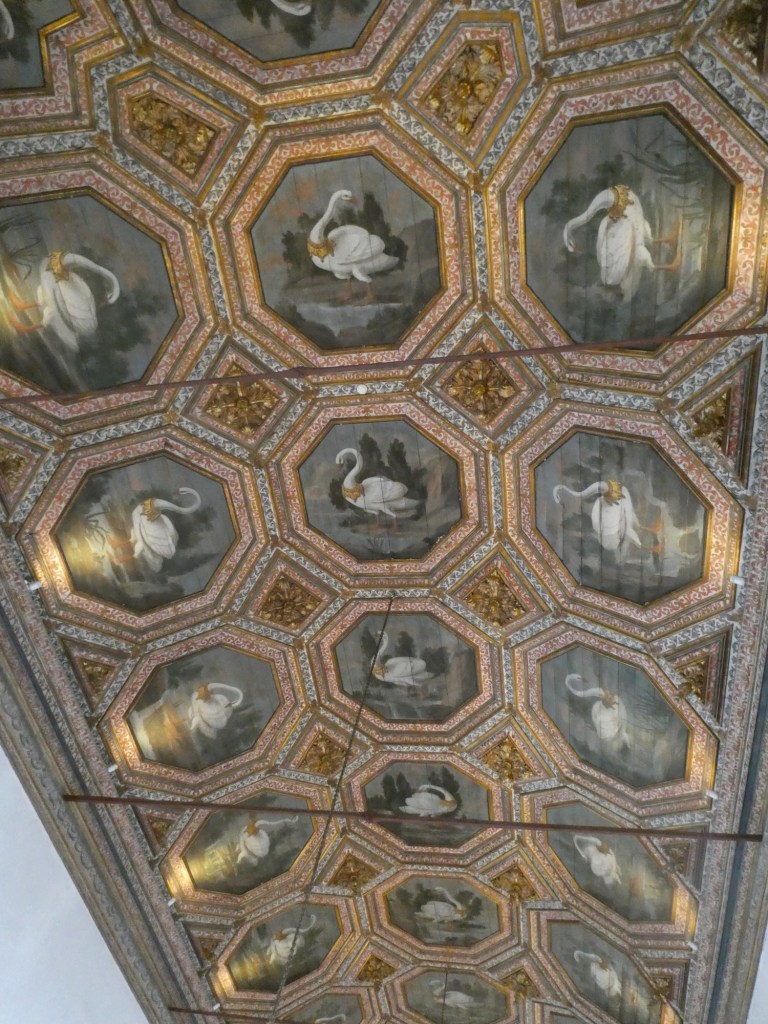
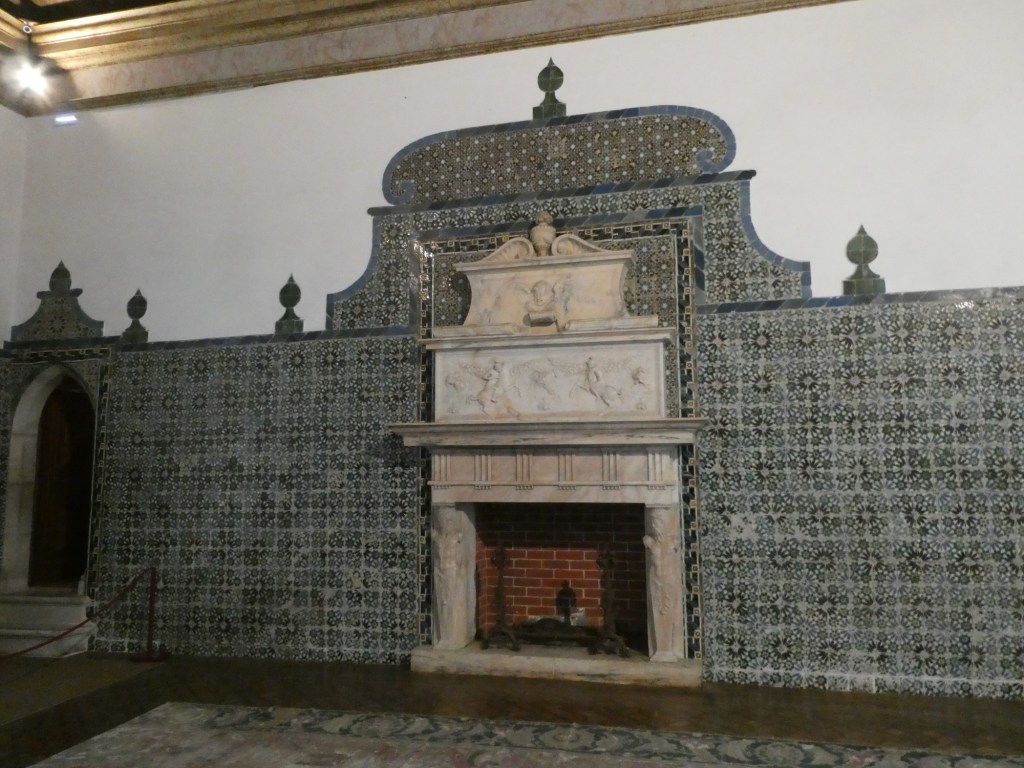


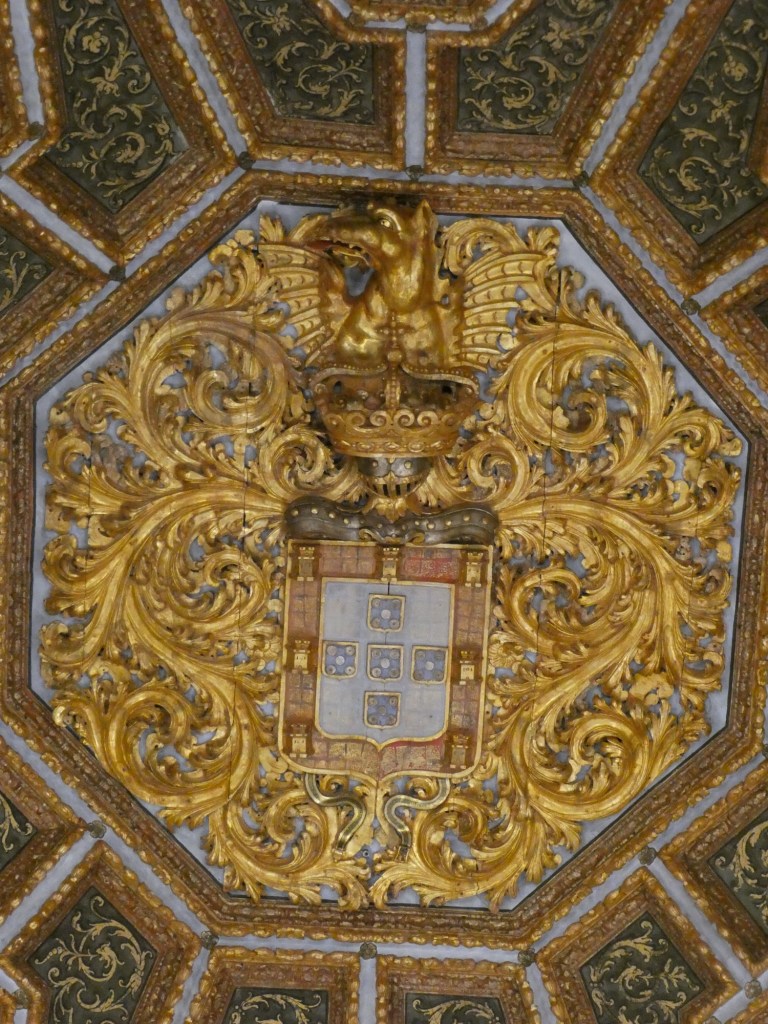

When we left Sintra we drove along the Atlantic coast passing the Cape of the Rocks, which is the most western point on mainland Europe. There are many lighthouses along the coast because it is rocky with very few beaches.
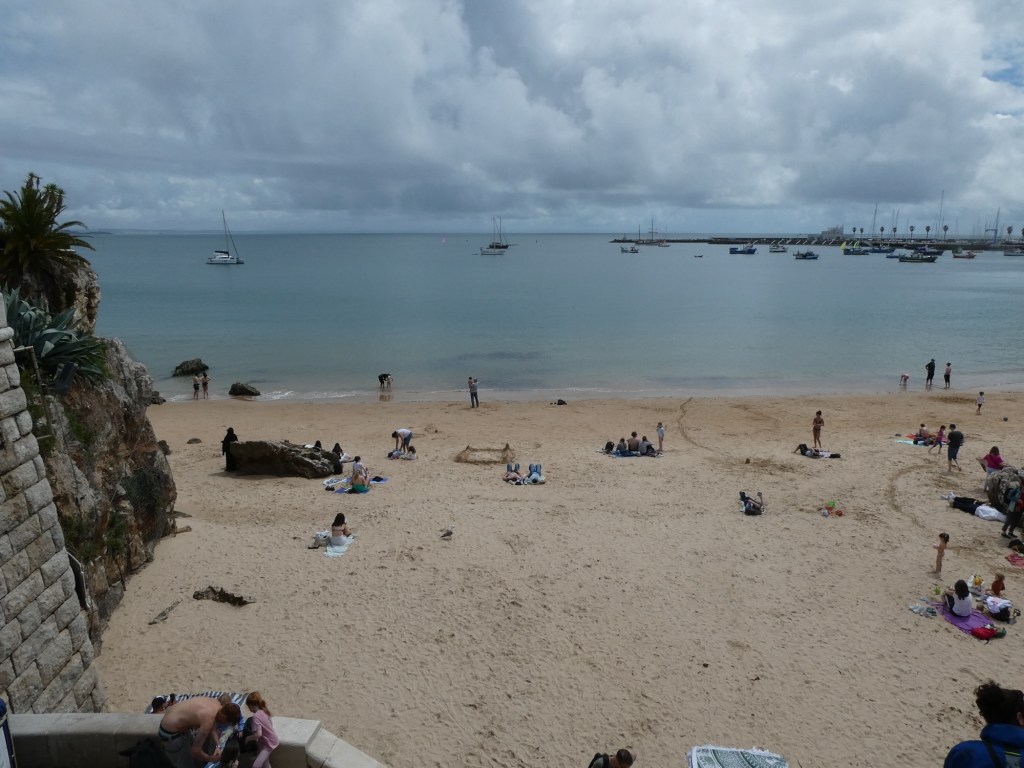
The town of Cascais comes from the word “seashell”. It was the first public beach in Portugal. It is a high end beach town. We had some time to walk around and have lunch.
One of the industry’s in Portugal is paper making. Many years ago they imported eucalyptus trees from Australia. They thrived and the clever Portuguese found they could make paper from the pulp. There are companies who specialize in this paper and it is quite unique.
In the evening we went to a very local restaurant. We had an enormous amount of food, a salad big enough for 4, a whole chicken accompanied by large plates of rice and fries. Bread and drinks too. We tried the famous “piri piri” sauce and nearly died it was so hot. Our whole bill was under 35€.
Then we had to pack to get to our riverboat, bags ready at 6:30 AM.
 Bette and Bob See the World
Recent Comments