
Nestled at the foot of dramatic mountain slopes on a spit of land at the end of a fjord, Ísafjördur was founded in the 9th century by the Viking Helgi Magritte Hrólfsson. Foreign merchants arrived in the 16th century and set up trading posts here. Today, Ísafjördur is home to one of the largest fisheries in Iceland and, despite its remote location and small size, boasts a cultural scene rich in music and drama. The oldest house in Iceland is here, built in 1734, as is the country’s largest concentration of old timber frame houses.

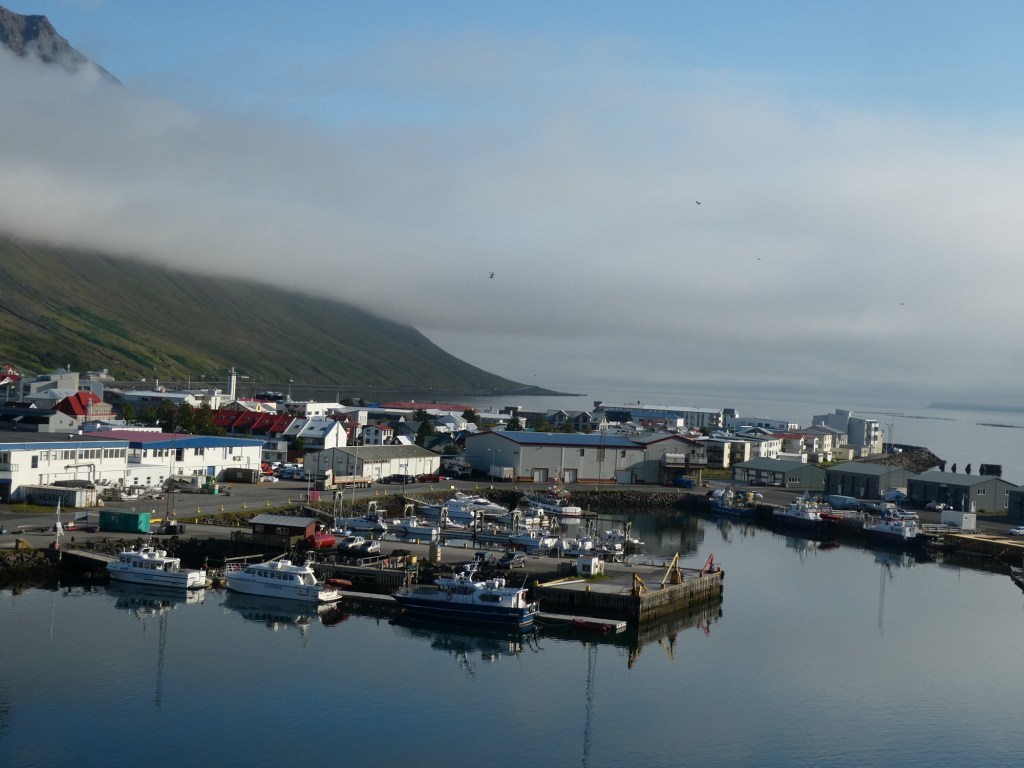
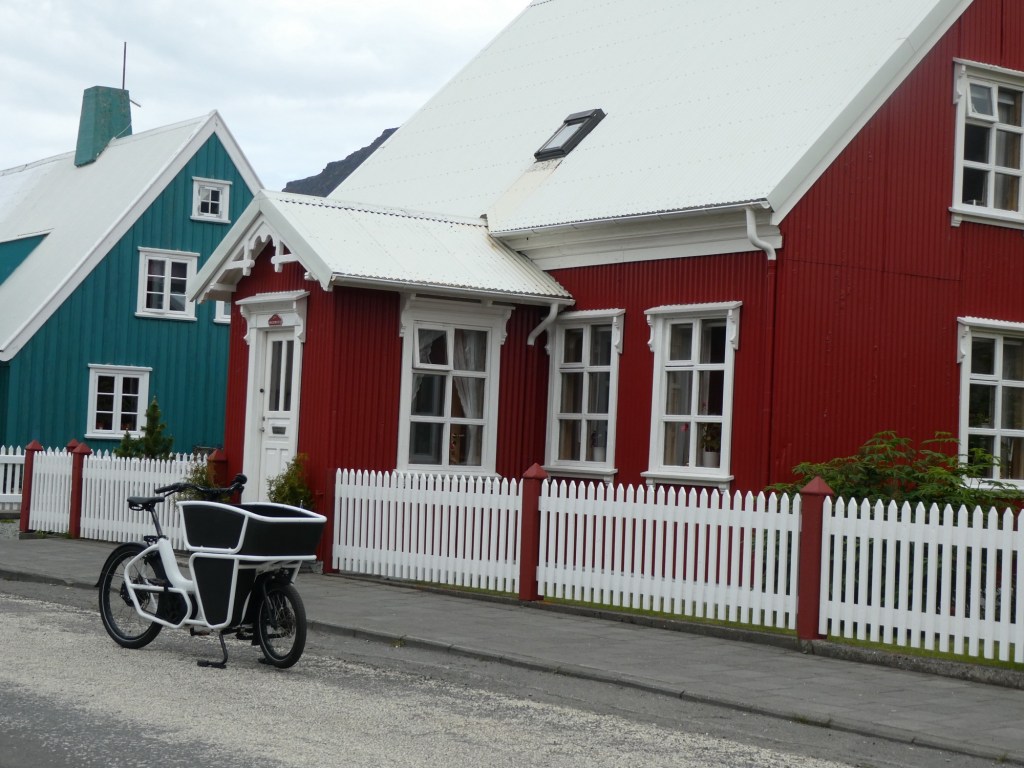
Our excursion took us from the port, down the coast to the fishing town of Bolungarvik, one of Iceland’s oldest fishing villages. Ísafjördur is the capital of the Westfjords and about 4,000 people live in this town. In all of the Westfjords the population is 7,500. Ísafjördur has one of the best harbors in Iceland.
The fjord is about 100 kilometers in length and 140 meters deep. They get a great many whales and dolphins in the area. They have recently started to do fish farming in the fjord, with very strict rules about the number of fish being raised. Currently the fish being raised are salmon and trout.
Across the fjord from the town are mountains and behind the mountains is the largest glacier in the Westfjords. This area has very extreme light and dark times of the year because of the mountains. From mid October to mid February they do not see the sun and from mid May to mid August there is no darkness. Also across the fjord is a large nature preserve where there is a large population of arctic fox, which is the only native animal in Iceland.
We learned that in this very remote and not highly inhabited area a new company has developed using fish skin for medical purposes. The name of the company is Kerecis and it is used for burn victims and others that need skin grafts.
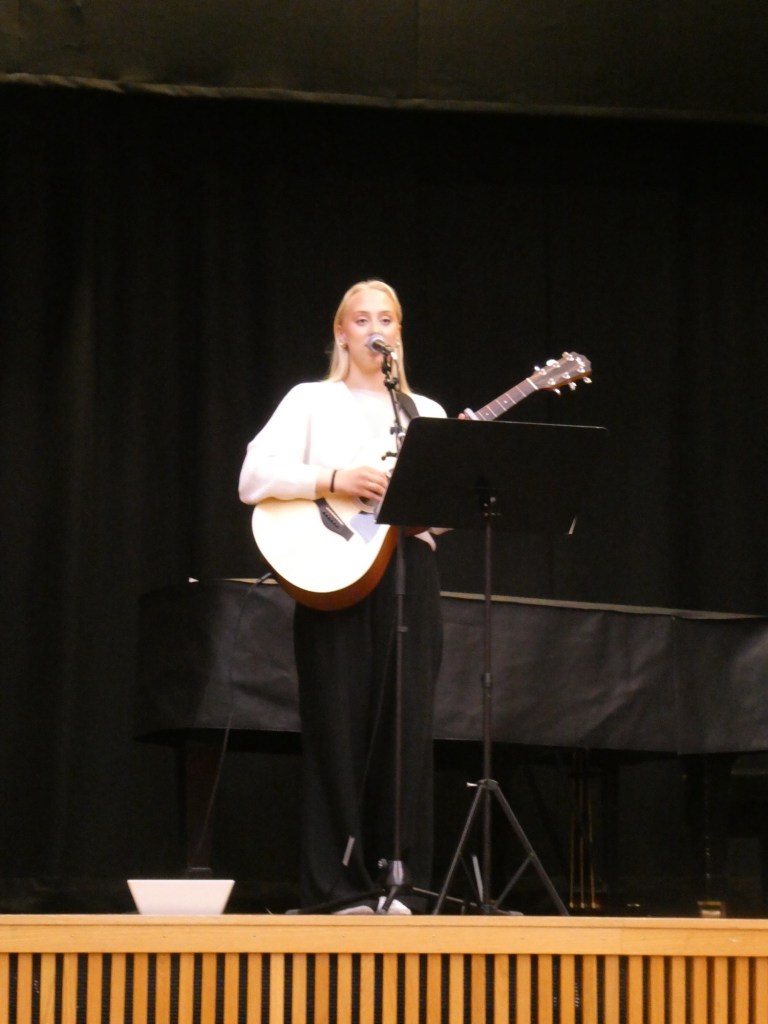
We drove to the village of Bolungarvik going through a tunnel going through the mountain. It was about 3 miles long and took them 1 year to go through the mountain and then an additional year to complete the fitting out of the tunnel. Our first stop was at the town hall where we had a concert. Our entertainer was a local college student who sang and played the guitar. She had a lovely voice and sang traditional Icelandic songs. They have a large music festival in this area each year which features 1 special song which all the attendees learn and sing together. It has been going on for 113 years.
We then learned about the fishing industry in this area of Iceland. The original fishermen used oared boats, went out for 4 days and could catch a ton of fish. Now they use bigger boats that have electric equipment and in the 4 days they are out they can catch almost 100 tons of fish. The fish caught in these waters are cod, halibut and wolffish. When they return to port the fish are salted and then shipped out to the rest of the world.


Our final stop was at a waterfall in the town of Ísafjördur. Our guide dipped water from the river and we got to drink the clear cold water.


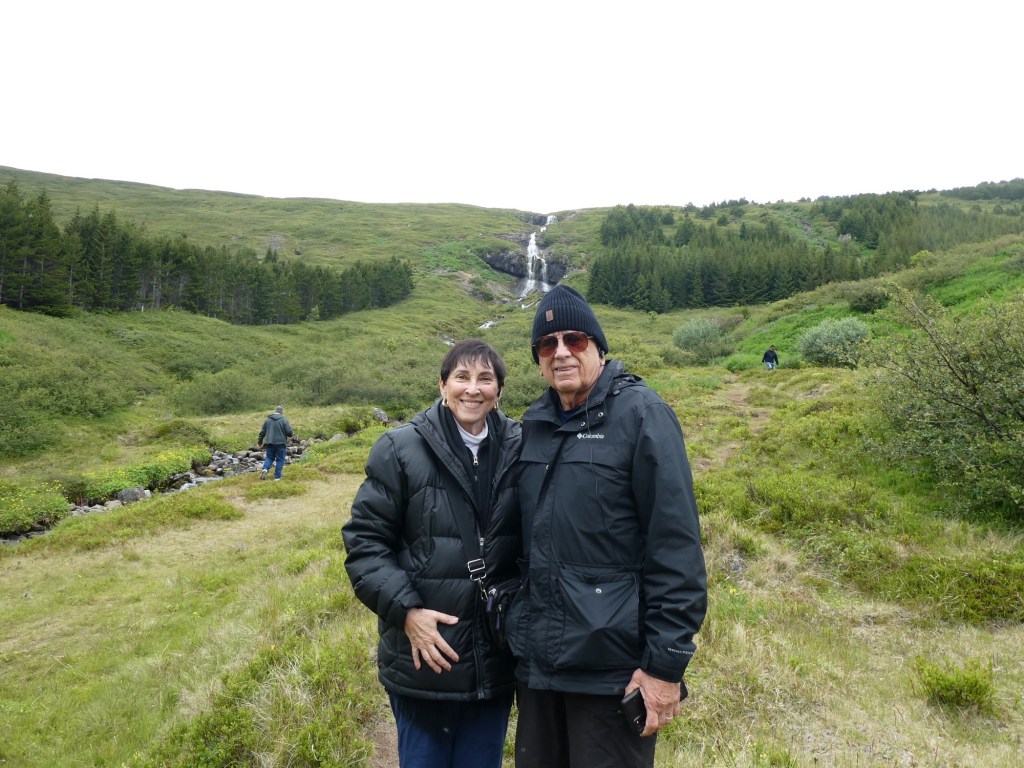

There are no volcanoes in this part of Iceland. The mountains are all flat topped because of the glaciers and various ice ages.


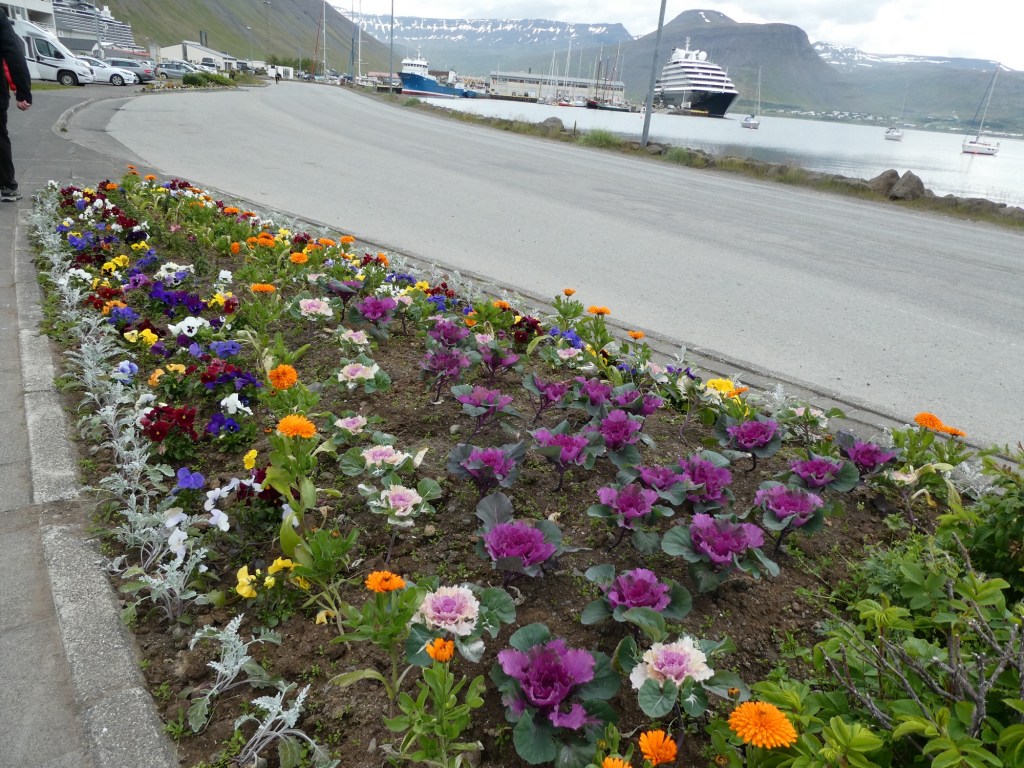
Our day turned out perfect with a mild sunny morning for all of our activities. It clouded up somewhat in the afternoon but we were prepared for all kinds of weather.
 Bette and Bob See the World
Recent Comments