
The next town we went to in Newfoundland was Corner Brook. Corner Brook became a city in 1956 and has a current population of 20,000. The area population is around 40,000. The city is surrounded by mountains and they are part of the Appalachian Mountain belt. Most people are employed by the hospital system or the pulp and paper mill. There are 3 college campuses in the area.
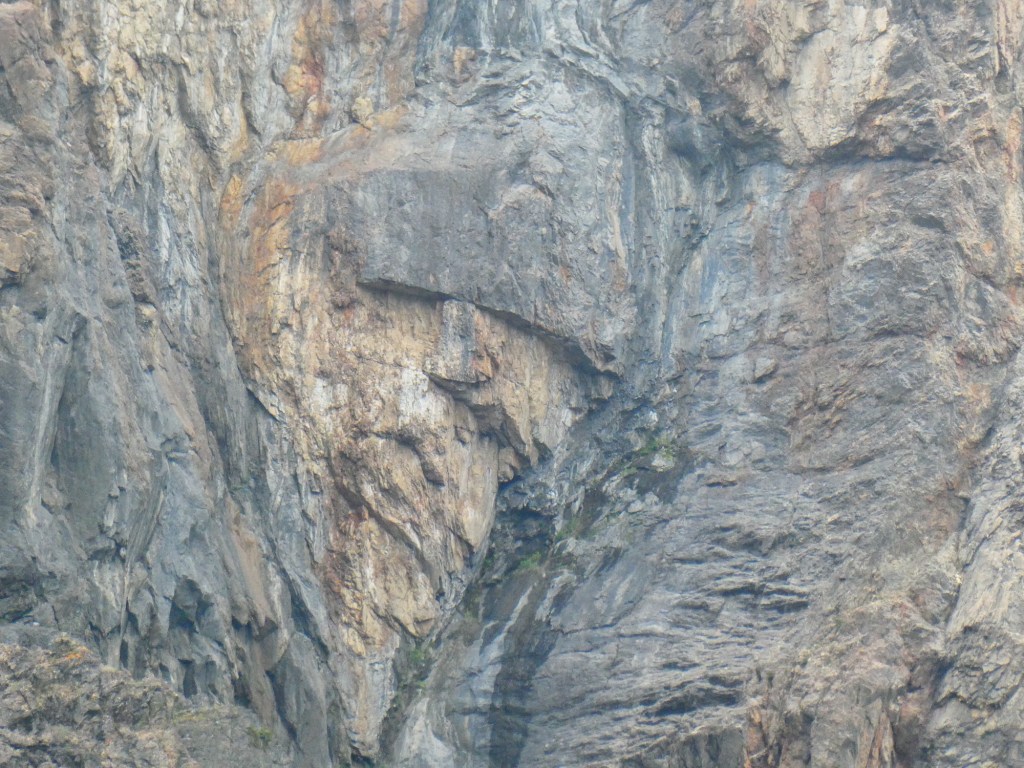
The Humber River runs along the edge of town and is fished for the Atlantic salmon. Atlantic salmon are multi year salmon, they do not die after they spawn. Our first stop was to see The Man in the Mountain, a face in the side of the mountain. Fortunately our guide had a photo to show us where to look to see the face. Once you see it, it is easy to see, but trying to look on your own is not easy to find it.


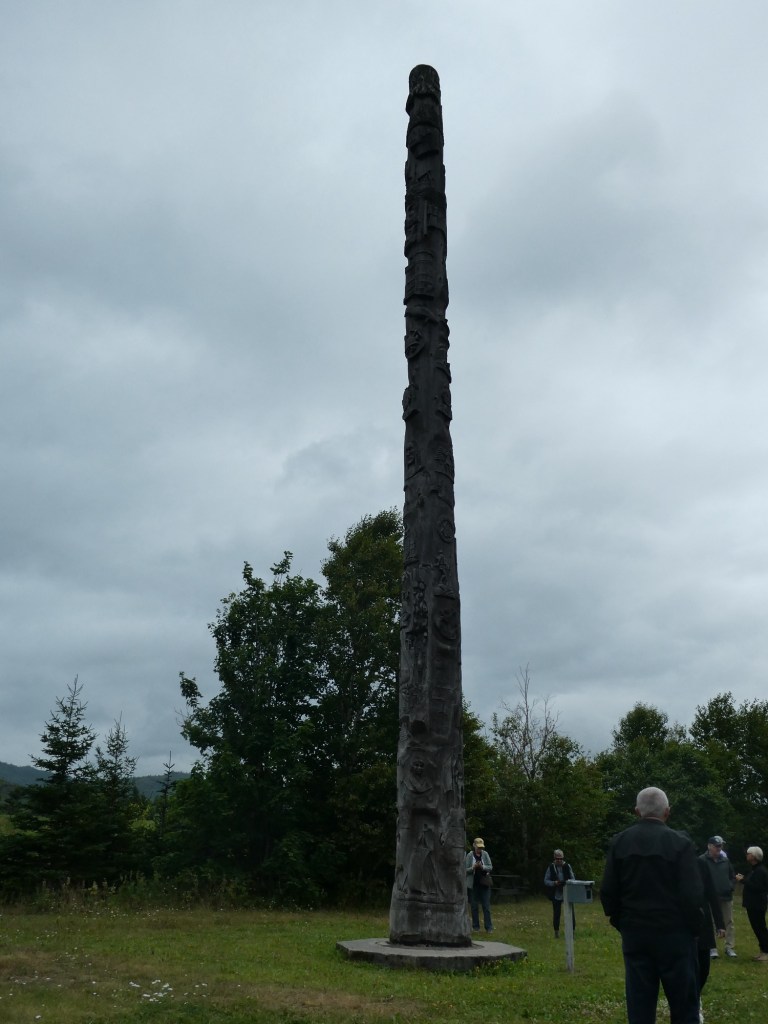
Our next stop was at the Marble Mountain Ski area to see the Heritage Tree. It is 50 feet tall and carved with many designs telling the story of the area from the oldest of times. It was erected during Canada’s centennial.
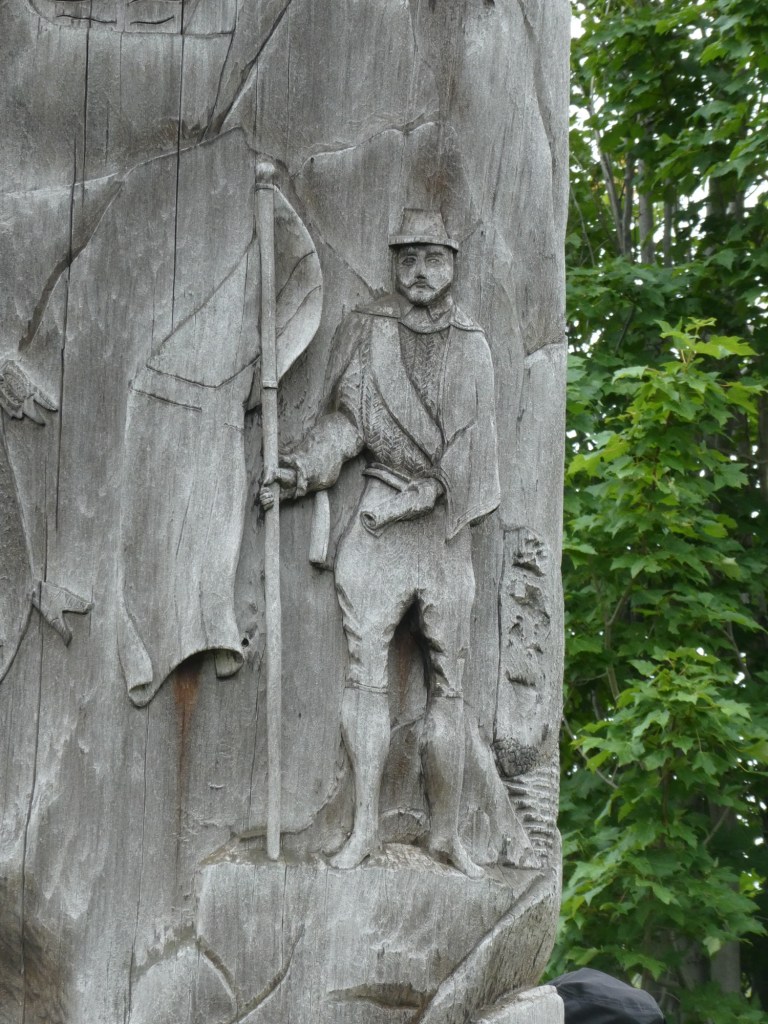

We then went to the Captain James Cook Monument. In 1767, the famous British explorer and cartographer surveyed the Bay of Islands and was the first to map the area. His maps were so accurate that they were used until the 20th century. He also sailed the world and mapped many other areas.

Our final stop in Corner Brook was at the Margaret Bowater Park. The park is an oasis in the center of the city with playgrounds, walking/hiking trails and a natural swimming pool made by damming the river that runs through the park. It was donated to the city by Sir Edward Bowater who owned the paper mill and named for his daughter.

Our next small city was Sept-Íles which is in the province of Quebec. It was named by Jacques Cartier, a French explorer. The main source of industry is iron, either the manufacture of or the transportation of. Because of this they built a huge seaport and the town grew quickly because of all the work done in building that and then for the production of iron products. The population of the city is about 28,000. The town of Sept-Íles did not get electricity until 1947.
Our tour centered on the combining of the Native people and the explorers from France and then England. The Native people were either Innu or Inuit. They used the rivers in the area to travel between their summer homes along the river and their winter homes in the mountains.
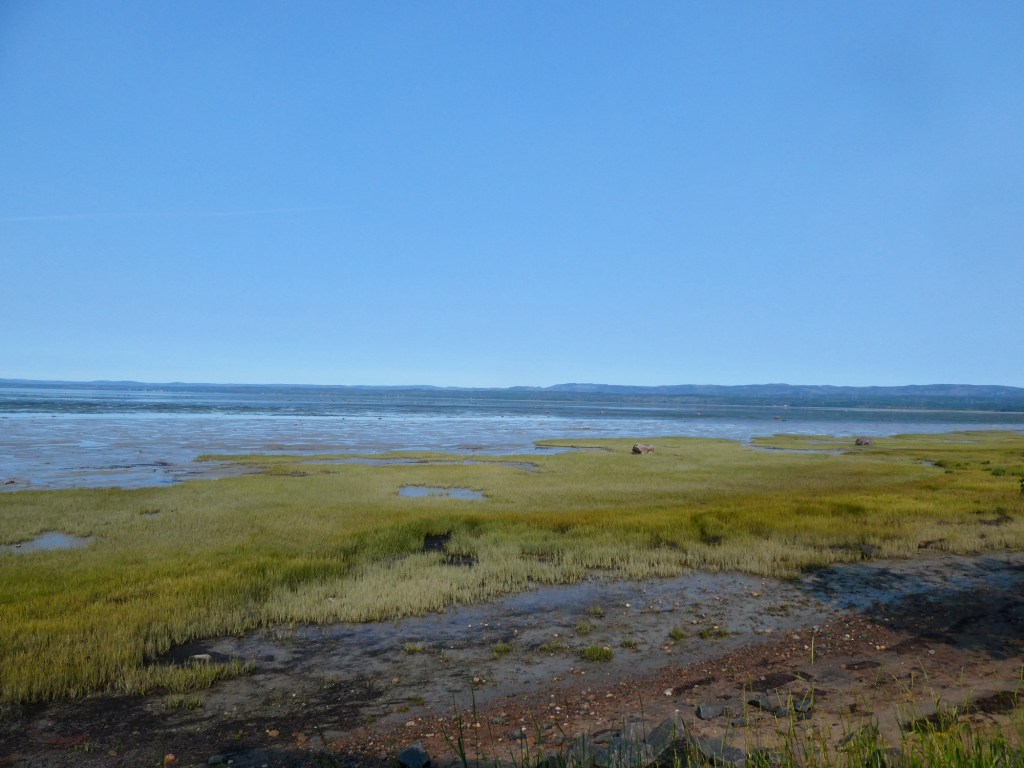
We stopped at a garden/park along the river to see what the landscape was like.

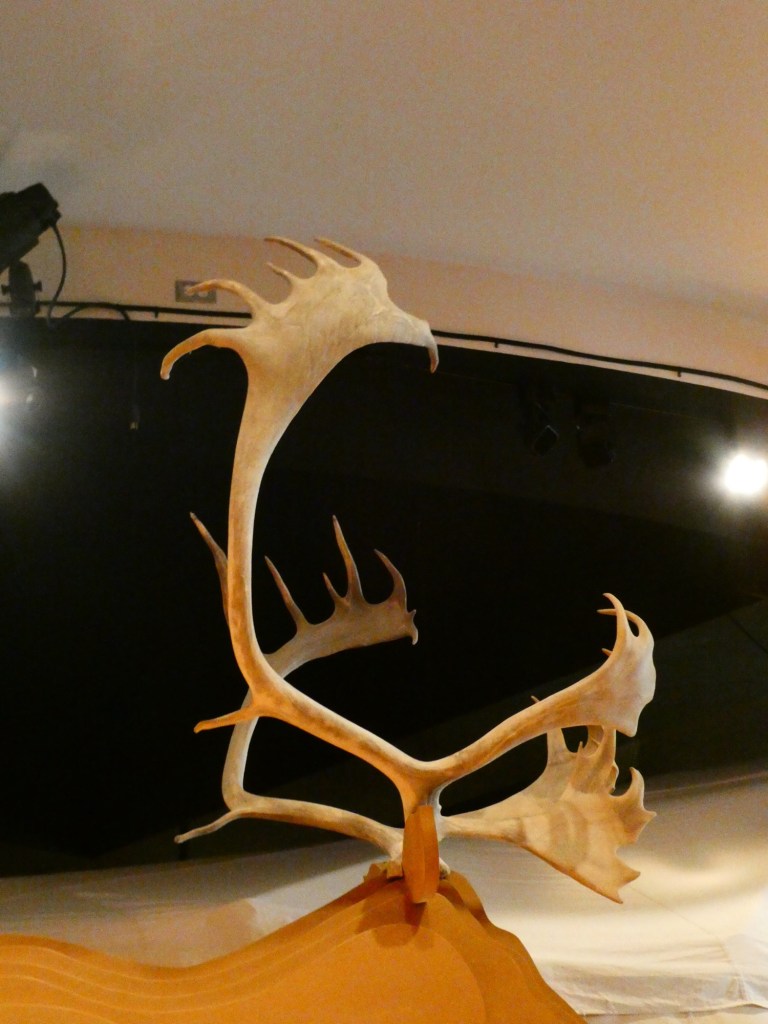
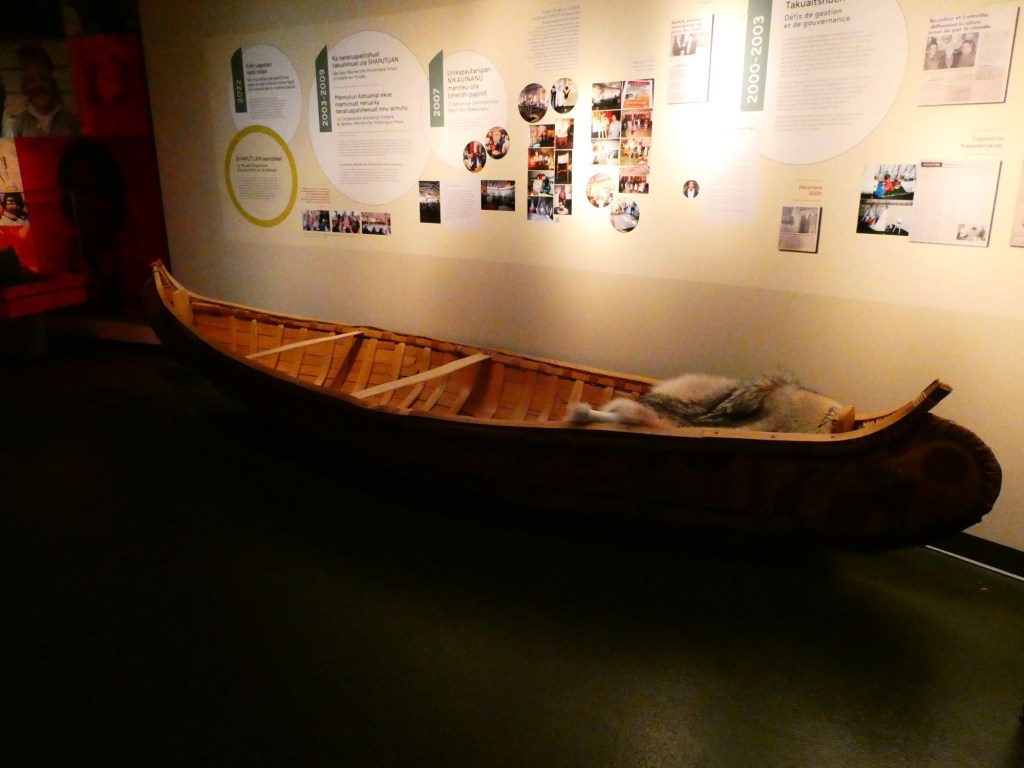
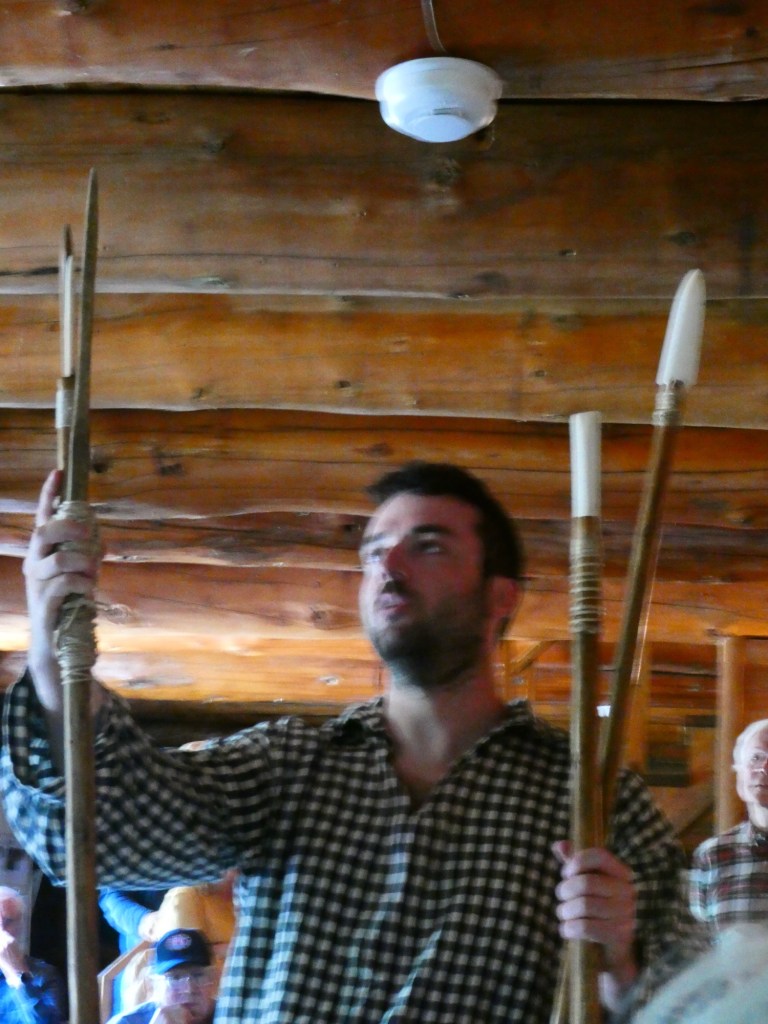
Then we went to the museum that told the story of how the Native People lived. We saw representations of how each season was used in their lives. There was also a movie that showed them hunting for caribou and then using their skills to use every part of the animal. We saw fishing techniques and finally a meeting of various families that occurs each spring when they come down from the mountains and camp by the rivers. Our guide in the museum was a young man who was interesting to listen to. After his talk, I asked if there were many who still lived in the traditional ways and he said no, not many. It is sad that this way will be lost, but the schools in the area teach the native languages so that part of the culture will not be lost.


Our last stop was at the recreation of the Old Trading Post. In 1673, the French came to the area and established a series of trading posts in this area, calling it New France. Eventually the French were conquered by the British around 1759. These posts were all part of the Hudson Bay Company, which actually closed down this year. The trading was beneficial to both the Europeans and the Native People. The Native people were able to trade their furs, the beaver being the most valuable fur, and getting in return tools made with iron, like hatchets, knives, cooking pots and even foods. The furs were highly coveted in Europe by the rich for their extravagant clothing, hats and shoes.


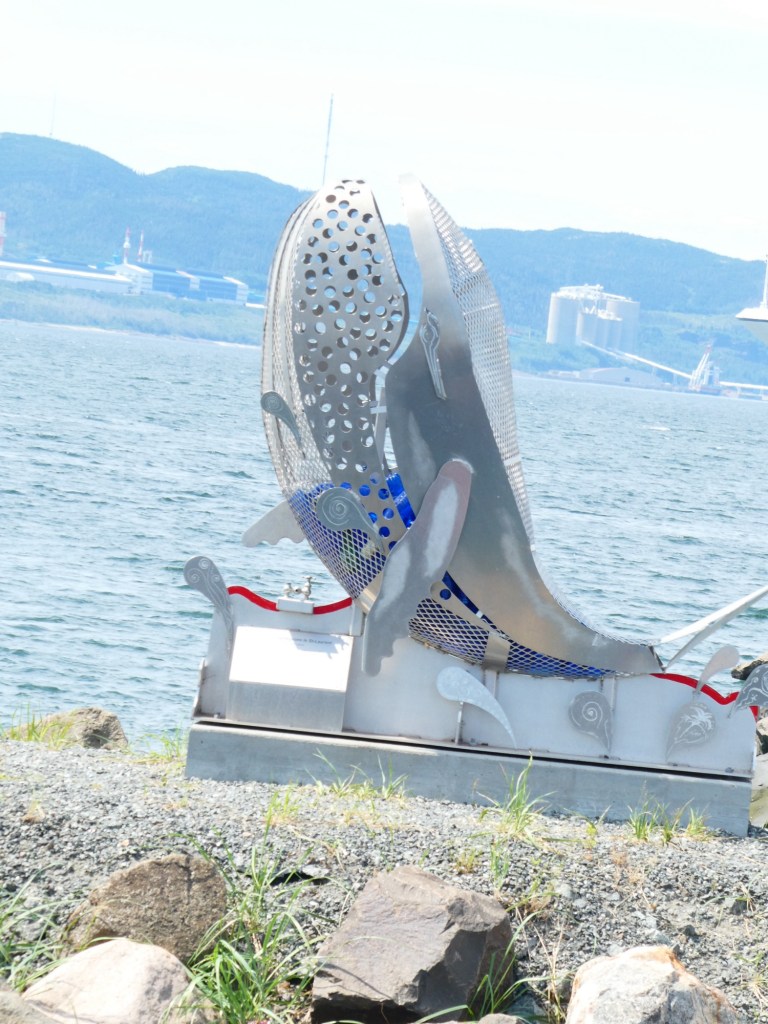
At the entrance to the port where our ship was anchored was this metal sculpture of a whale. It was filled with plastic goods, to encourage people to be more careful of the oceans, rivers and other waterways.
 Bette and Bob See the World
Recent Comments