Monthly Archives: July 2025

No Heimaey

Our last port of call was supposed to be Heimaey, an island off the coast of Iceland. The ship had been rocky and rolly over night and although the seas looked calm when we were off the coast of the island the ship’s captain came on the public address system to tell us that they had tried to launch the tenders but the swells made them impossible to load.

In almost no time there were lots of activities to go to. Extra lectures, various games and sadly time to pack since we were getting off the ship the next morning.

The ship was able to get back to Reykjavik around 7:30 in the evening which allowed people to go ashore if they wanted to. We stayed onboard and went to the show in the theater and then got our suitcases out for collection.

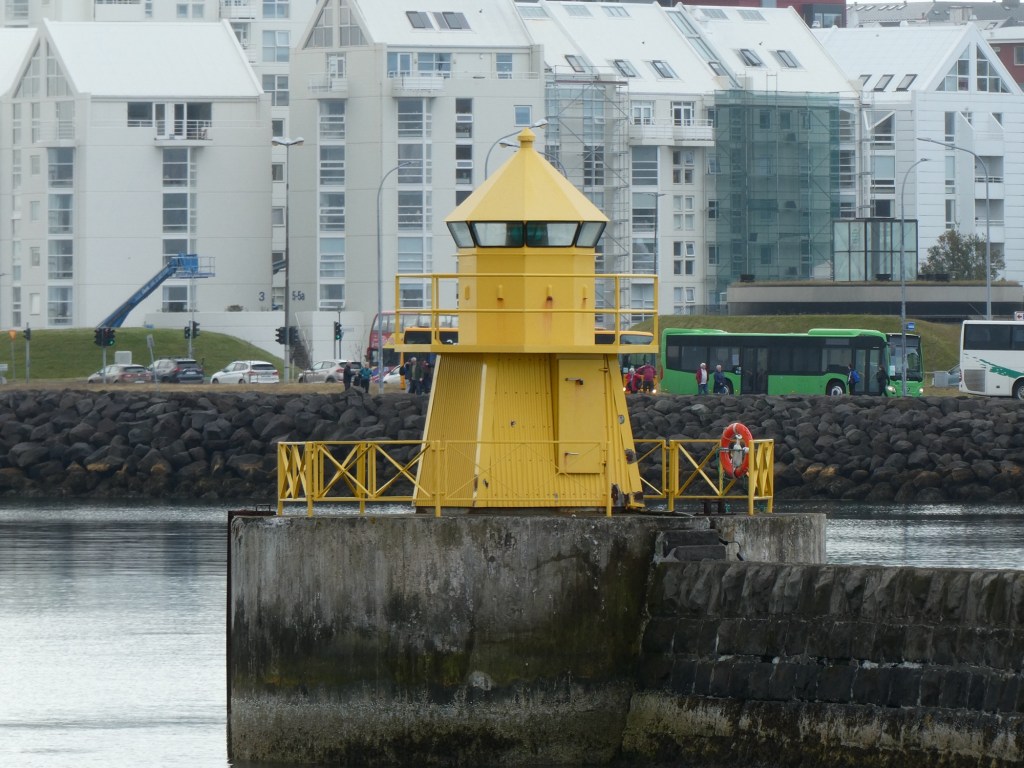
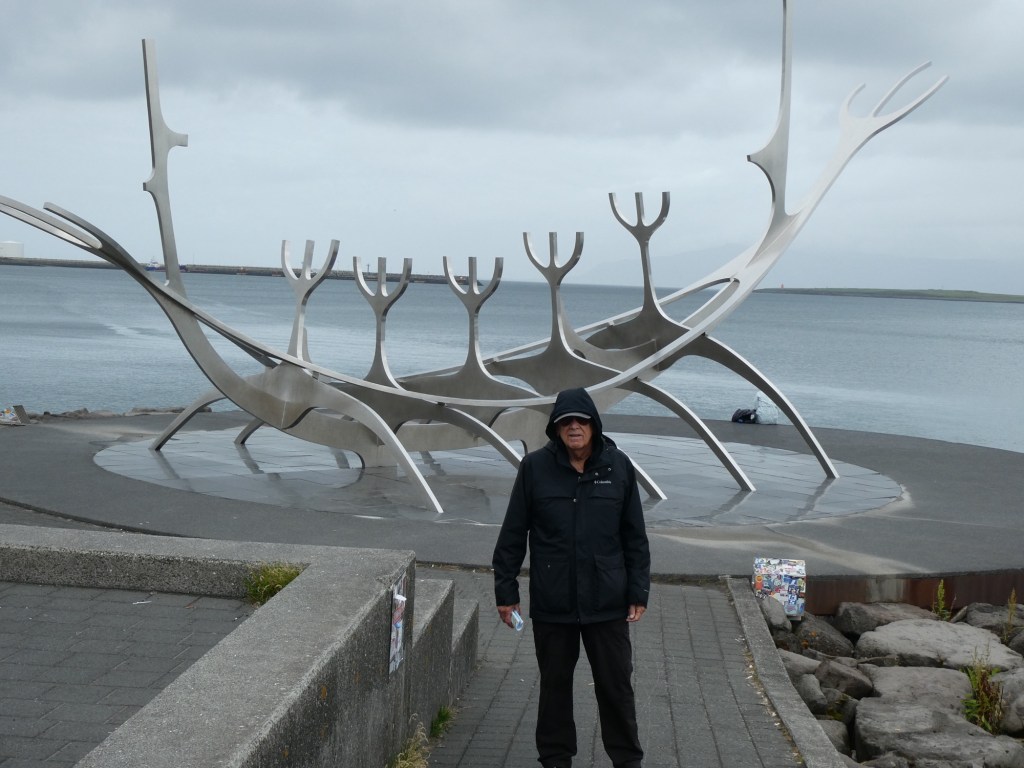
When we got off the next morning our car service was waiting and we were able to get into our room at the Hilton Reykjavik Nordica. If coming to Iceland we would not recommend this hotel. We walked into town and got to see the famous sculpture of a Viking ship which stands on the edge of the harbor.

We had lunch in the Harpa building and then went to the “Penis” Museum. Yes a museum dedicated to the male genitalia and we saw these from many animal species. There was even one from an Icelandic man who dedicated his on his death to the museum. I did not take any photos there, but you can use your imagination.

Inside the Harpa

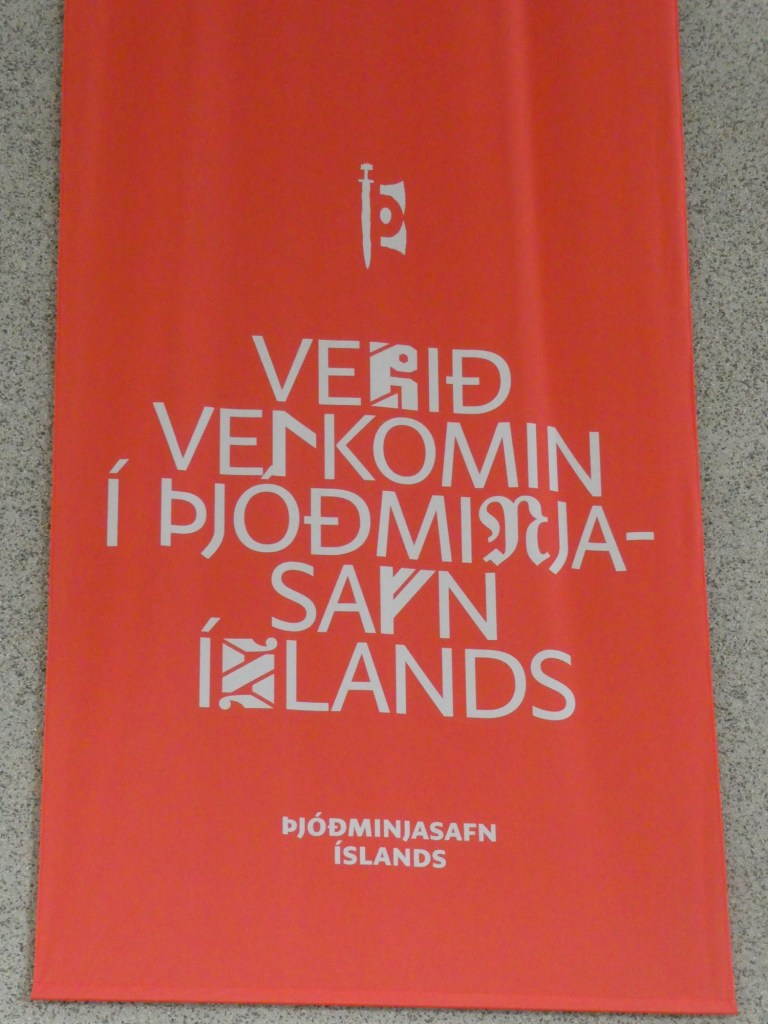
We then walked to the National Historical Museum. It told the story of Iceland from its inception to current times. It had some interesting items and was very well done.
Tapestry from church altar
Full size fishing boat, 1800s

We then walked back into town and rested in a park before going to our dinner at a wonderful restaurant in town. The room was lovely and the food amazing. Reindeer carpaccio, apple salad with peanut butter dressing, amazing fish and chips and a lobster, shrimp and langostino salad.

We ended up walking almost 6.5 miles today, and took a taxi back to the hotel. With the sun not setting it is hard to figure out when you are ready for bed 😉.

Categories: Uncategorized | 1 Comment

Djúpivogur and the Eggs of Merry Bay

We started the day with very bright sun, but quickly it turned foggy and cloudy and windy. We had to tender from the ship because there is no docking area for a large ship. The small harbor had many small fishing boats. They only fish 4 days a week and can bring in 800 kilos a day of cod. 1 kilo of cod is worth about $4.
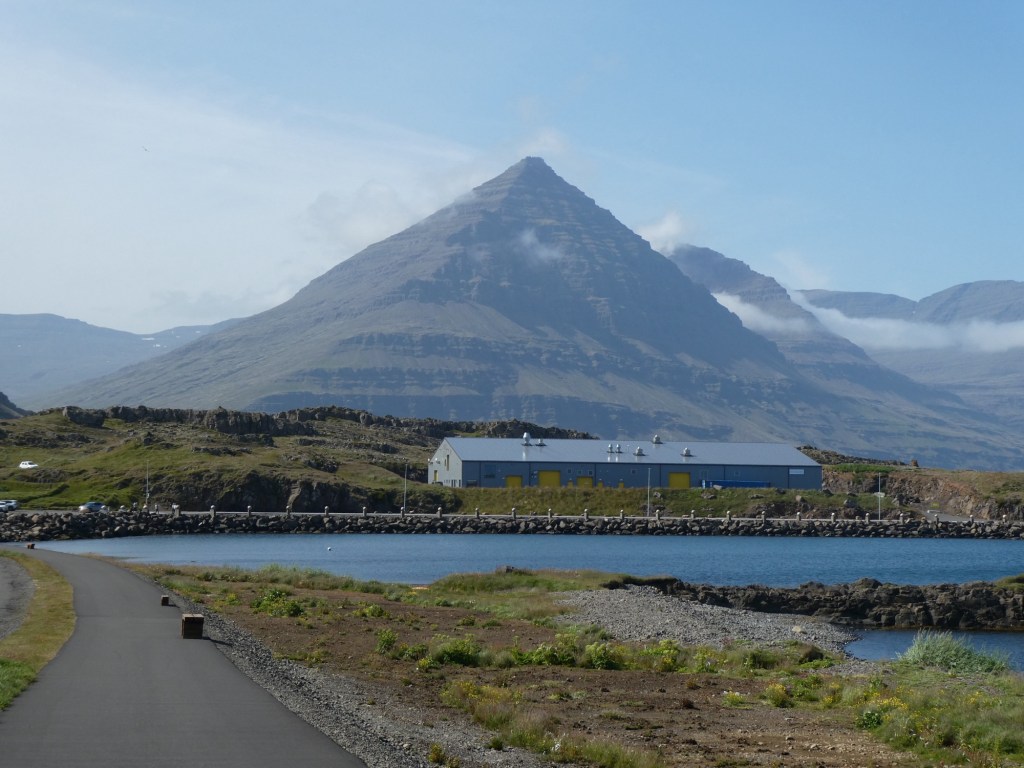
The name Djúpivogur means deep bay. Only 500 people live here, so with our ship in port we tripled the population for the day. There are approximately 5,000 reindeer in Iceland and most are found in this eastern region. The biggest industry of the village is salmon farming. There were huge areas in the fjord with the rings holding the salmon. About 20% of the village is involved with this industry and they produce about 20,000 tons a year. It takes 2 years for the salmon to grow to the size to be sold.

The cliffs in the area are full of minerals but they cannot be mined. The highest mountain in Iceland that rises directly from sea level is Berufjörður and lies directly behind the village. In the morning it was completely covered with clouds, but became visible in the afternoon. It is 1069 meters high.

From the ship
On the walk to see the Eggs of Merry Bay

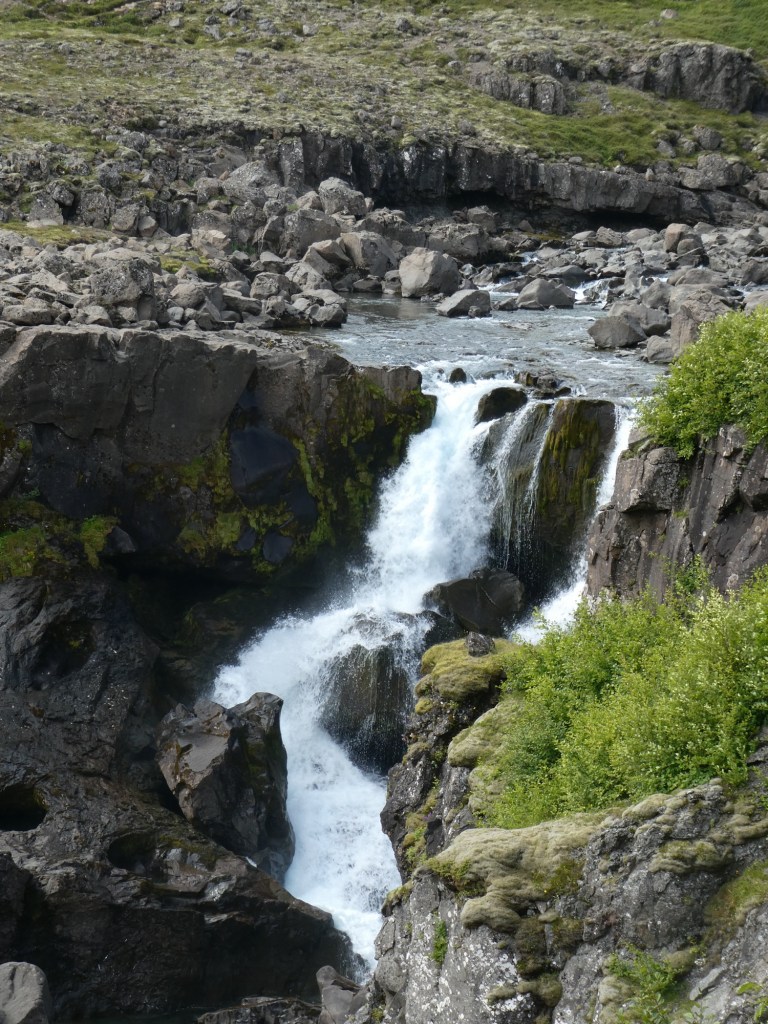
The mountains in this area are dated to 15 million years old. They are flat topped from the glaciers movement and have diagonal stripes also from the movement of the glaciers. Our first stop was at a waterfall. Our guide said it was very low due to the time of year.

We next stopped along the fjord to an area where nesting Eider ducks are protected.

We next heard the story about the Eggs. It was very difficult to totally follow but here is a link that will give you some historical information.

https://www.atlasobscura.com/places/the-eggs-of-merry-bay-iceland

The day ended sunny, but very windy.

Categories: Uncategorized | 1 Comment

Seyðisfjörður and a Viking Festival

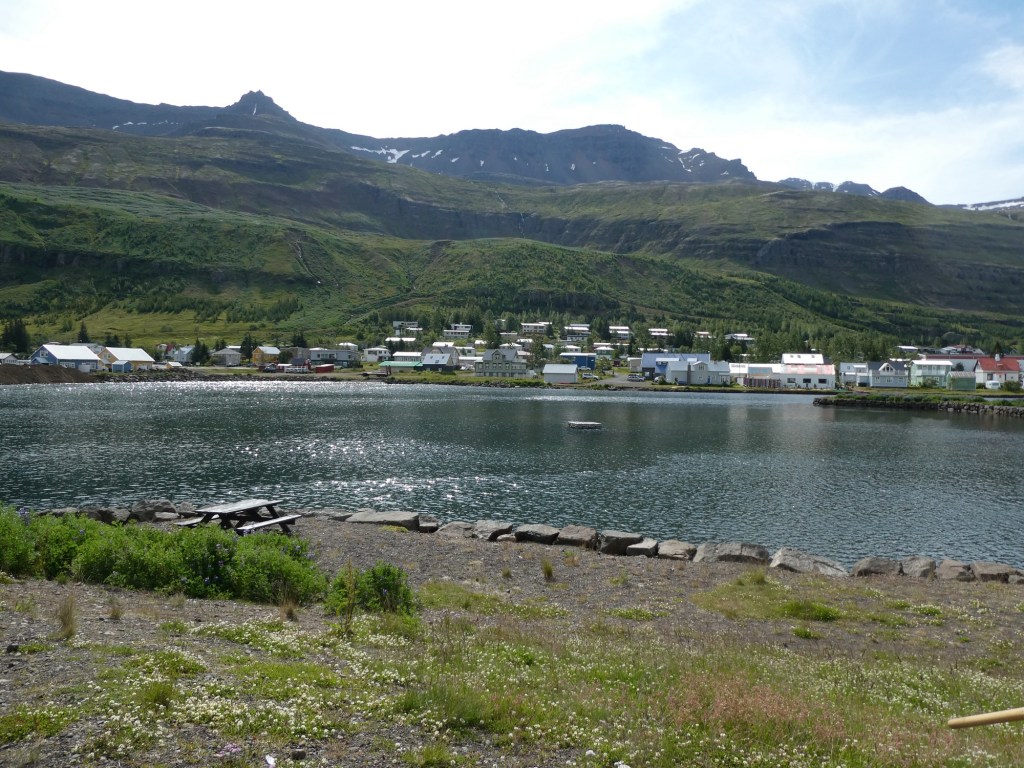
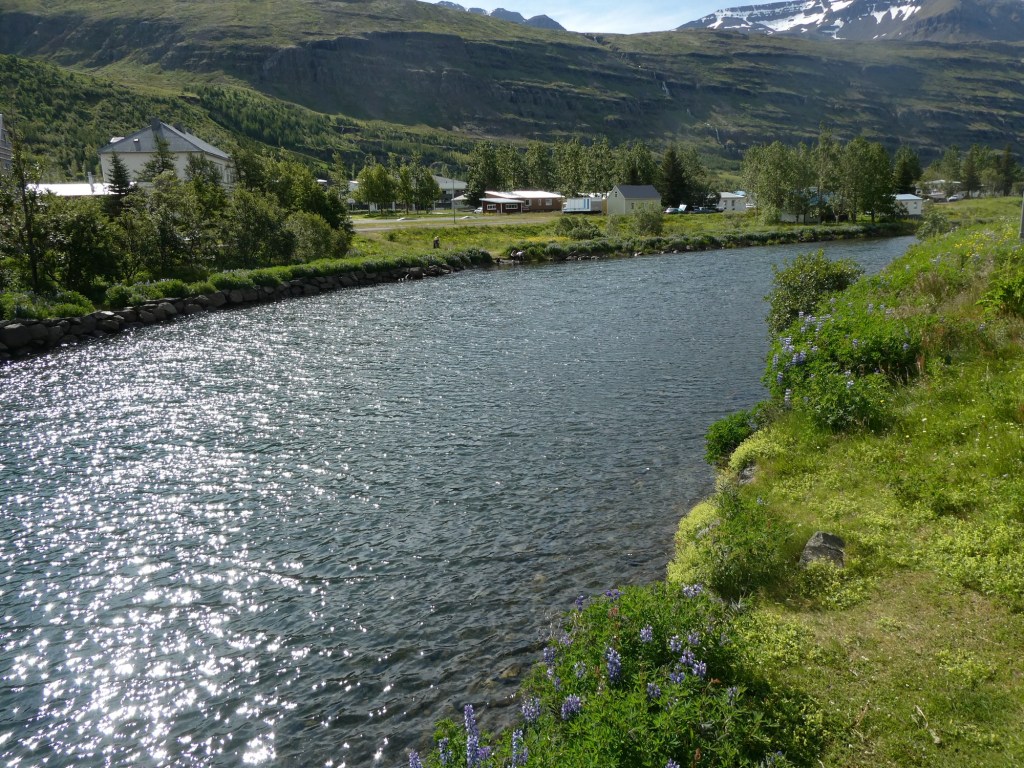
We awoke to a beautiful sunny morning. We had a walking tour of the town of Seyðisfjörður. The town is surrounded by tall mountains at the end of a fjord. The mountains behind the town have many waterfalls. The total population of the town is 660. The elementary school has 52 students and the kindergarten 21.

The area where we docked was originally part of the fjord but when buildable land became scarce they used landfill techniques to make more land. Just past the cruise ship was a piece of land being prepared for a house to be moved there. In 2020 there was a massive landslide and 12 homes lost and many not able to be lived in because of further possible landslides. One of those houses which is able to be lived in will be moved onto this area.

There were massive avalanche barriers built on the mountainside to further protect the town. When the avalanche barriers were being built a huge archaeological site was discovered. It had an almost complete Viking longhouse and many other structures. They excavated for about 5 years and now all the items are being studied in the University.

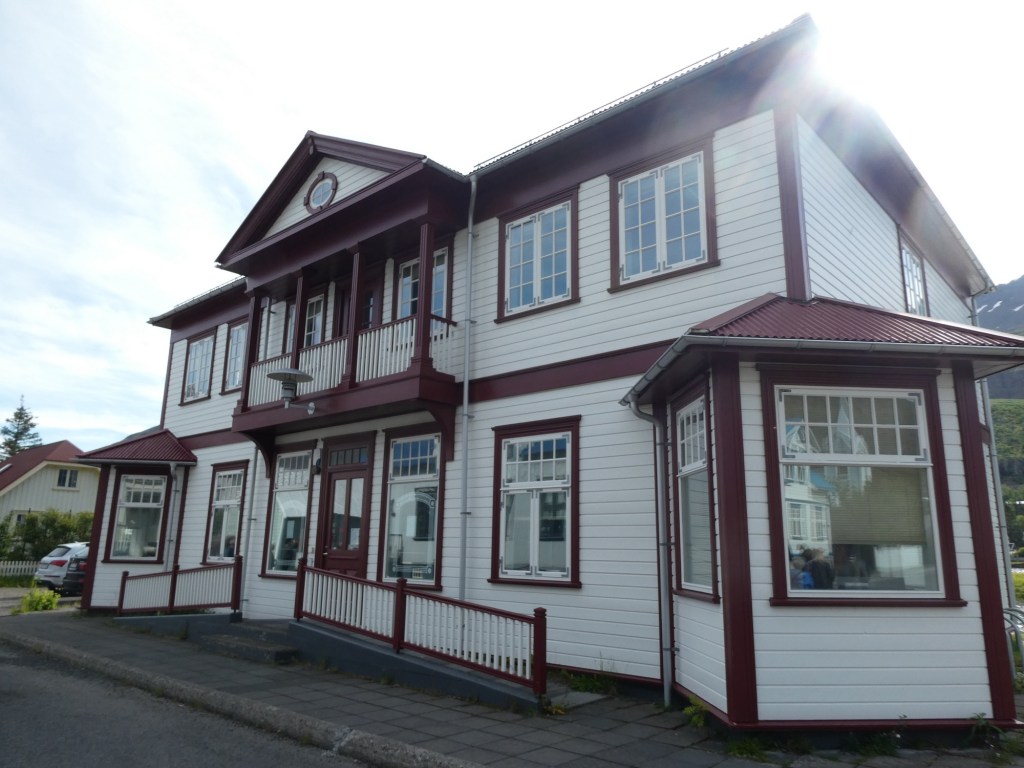
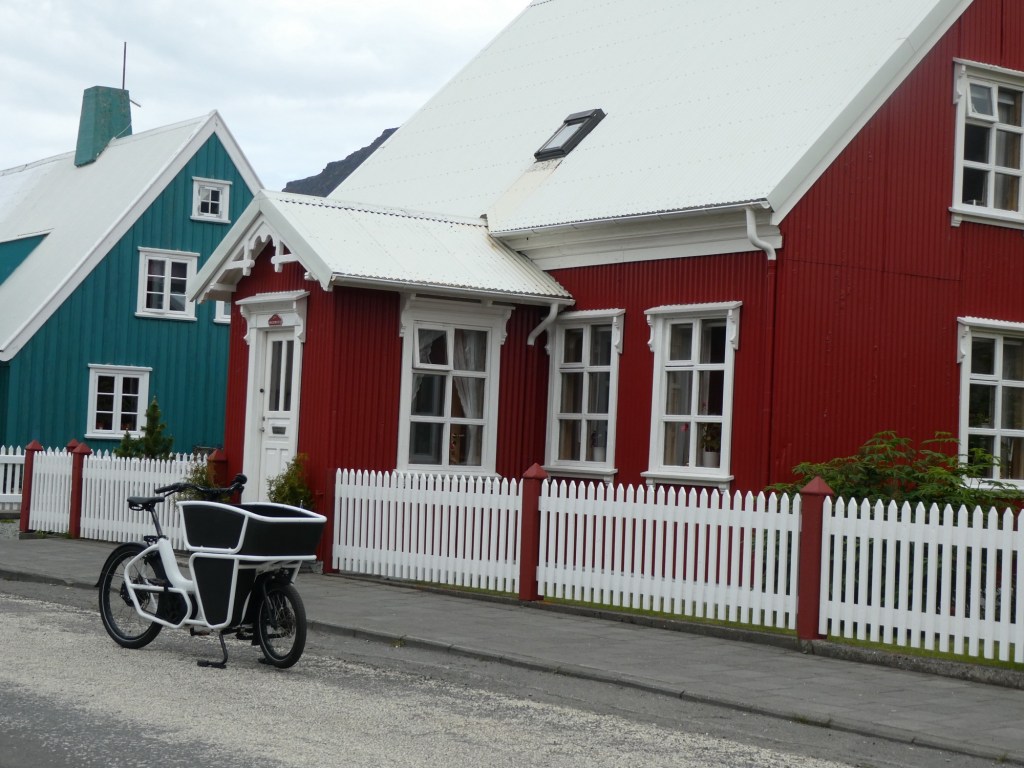
The town is filled with colorful houses. The early houses were ordered from Denmark and shipped here in boxes. They then were assembled on the land. They are small and made of decorative iron. Later houses were built of wood and now they use traditional modern building techniques. The houses are also decorated with art works.

They consider themselves an international city with many languages being spoken here. During WW II, over 1,200 American soldiers were stationed here. They lived in Quonset huts and weekly would invite the town people to see movies. After the war, the Quonset buildings were sold the the Icelandic people. The only requirement was they had to move the building. Many farms have a Quonset building as part of their buildings.

Seyðisfjörður had the first rainbow street in Iceland. Every year after winter is over the whole town comes out to repaint it and then they have a party. For such a small place, they have a grocery store, a movie theater, government offices, a bank and many restaurants and gift shops with local items.

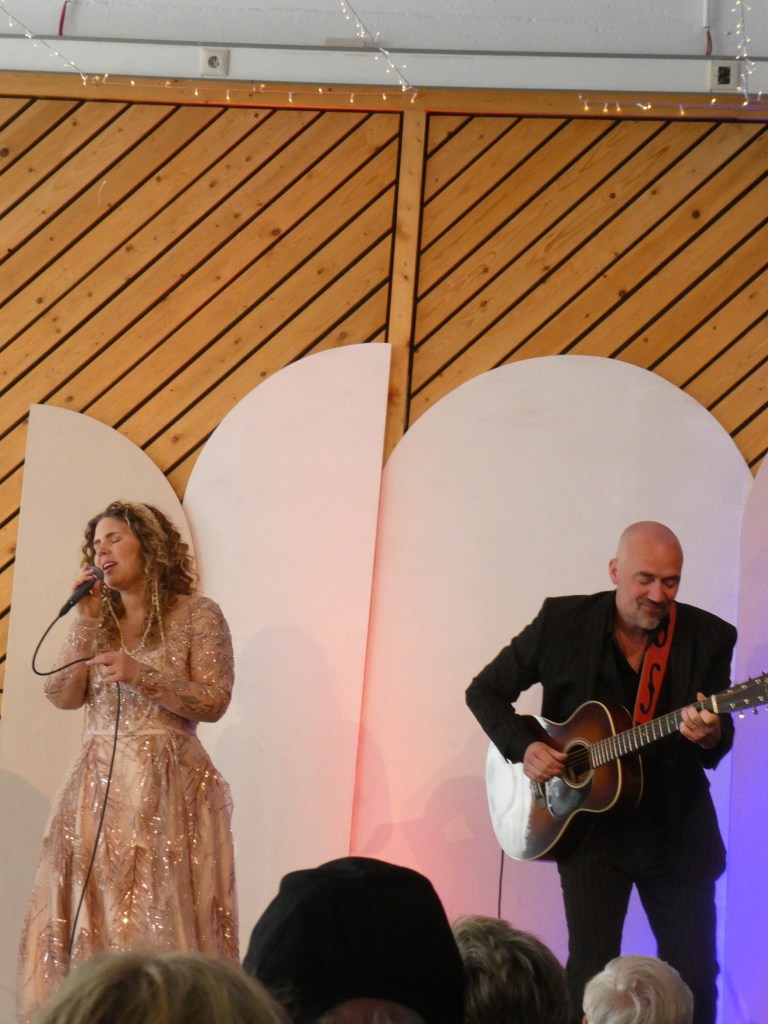
After our walk through town we went to their cultural center for drinks, we had rhubarb lemonade, a tasting of local delicacies and entertainment, 2 singers. We also could view a drone footage movie of the surrounding countryside. Quite an experience for such a small place.

An unusual fact, they are a cold town. This means that there is no thermal activity in the area. Since every town must have a swimming pool, and they need to heat it with electricity, the walls and foundation are 2 meters thick. The government also subsidizes the cost of the electricity.

Our tasting and rhubarb lemonade
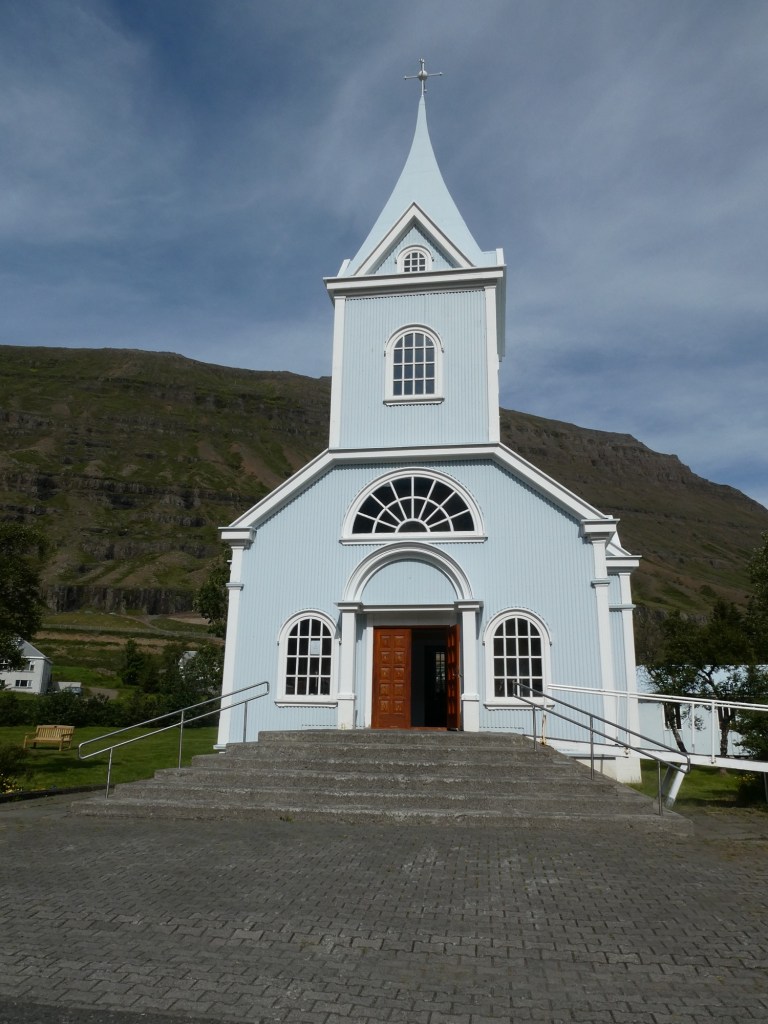
The famous blue church
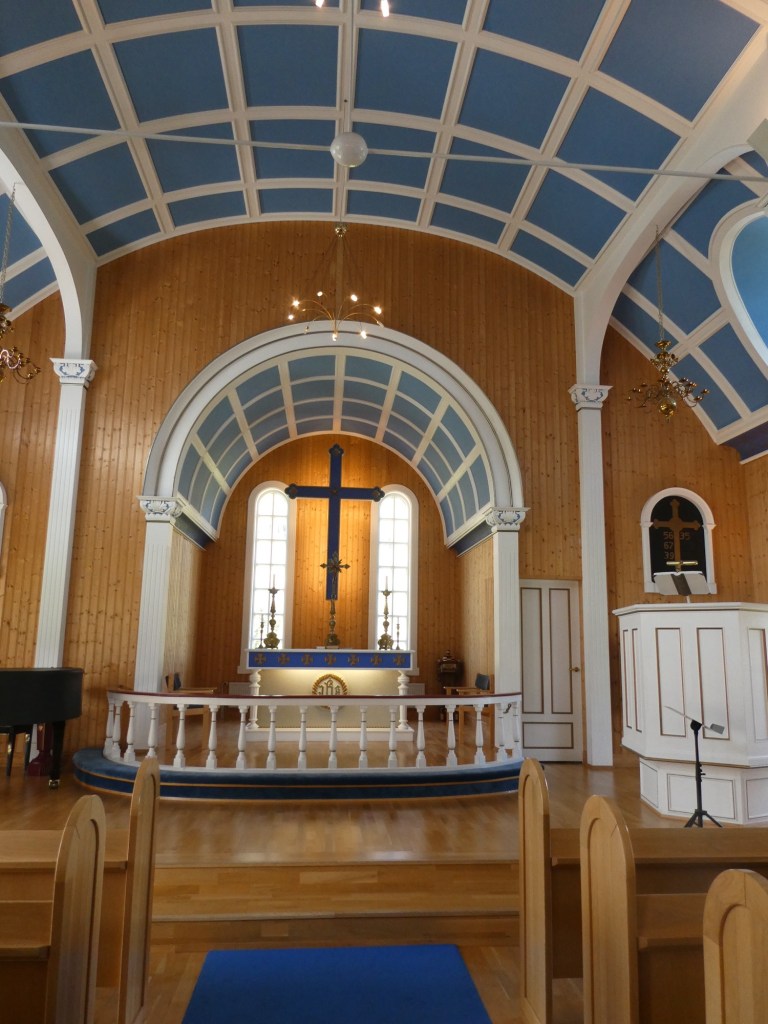
Inside the blue church

Categories: Uncategorized | 1 Comment

Diamonds of the North

Our ship is docked in Akureyri, but our tour took us way out of the immediate area. Akureyri is known as the northern capital of Iceland. On our way here, the evening before, we crossed the Arctic Circle. The city is at the end of the Eyjafjördur and is surrounded by mountains. The city was founded by the Viking Helgi Magritte Hrólfsson in the 9th century. In the 17th century it developed as a Danish trading post. Akureyri is the second largest city in all of Iceland and has a mild climate and an ice free harbor.

Some of the many museums in town have documents of the written history dating back to 1582. The area is a haven for wildlife. All the red lights in the city are heart-shaped ❤️. The roads were lined with the Alaskan lupine which is used for medical treatment as well as keeping the soil in place.

In the early times most of the houses were turf houses because wood was scarce. The people farmed. The workers were paid once yearly with a cow. Once you had 3 cows you could leave the farm and create your own farm. Most people grew all the food they needed and raised sheep. The Icelandic sheep have two different coats: the top one is coarse and is used to make blankets and the inner one is very fine and used to make softer goods. The Icelandic horse is unique to Iceland and has 5 gaits as to the usual 4 of all other horses. They are pure here and if one is sold and leaves Iceland it can never be returned.

To leave Akureyri we drove through a 7 kilometer long tunnel. Because of the geothermal activity in the area the tunnel is very warm and in the winter people come here to melt the ice from their cars, to run and bike.

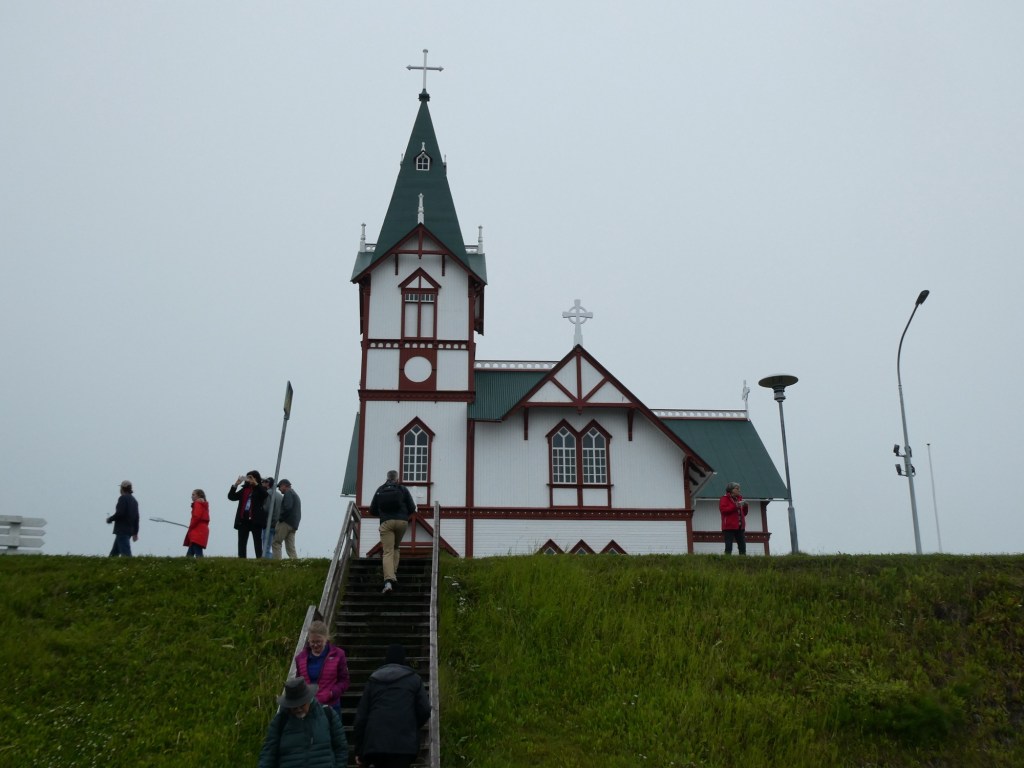
Our first stop was in Hüsavik, a fishing village and whale watching center of activity. We used it as a rest stop and to stretch our legs. We then went to a restaurant that was totally isolated for an early lunch. We had pumpkin soup and Arctic char for our lunch. It was surprisingly good for this remote location. I must mention that although we had been driving for just over an hour, the scenery was amazing to see. We saw volcanic fields of lava, farms with already harvested hay wrapped in plastic for the winter, areas of lush green grass, areas of wild brown grass, lakes and rivers beyond belief.

Hüsavik harbor
Church in Hüsavik

After driving we came to a river that had been part of the ice age erosion of this area. The waters and shores were filled with many rocky formations. Its name is Landavatnshöði. We had to walk on gravel paths to get to it.

On our way to the next stop we passed another area where we could see the rift.

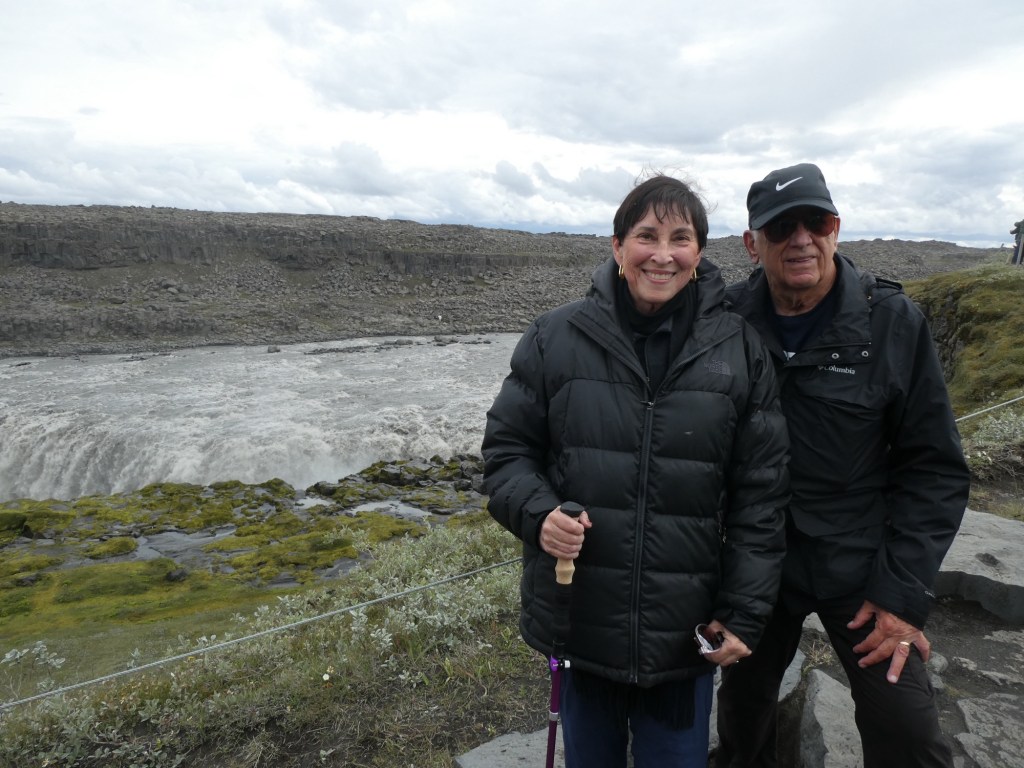
Our next stop was the highlight of the trip – Dettifoss, a huge waterfall. It is 100 meters wide and 45 meters high. The water flows at almost 6200 cubic feet per second. We walked to 2 different viewing points. The trails were gravel and in some areas very rocky. In the area where the picture of us was taken we were being hit by spray from the falls.

Another waterfall farther down the river we did not get close to

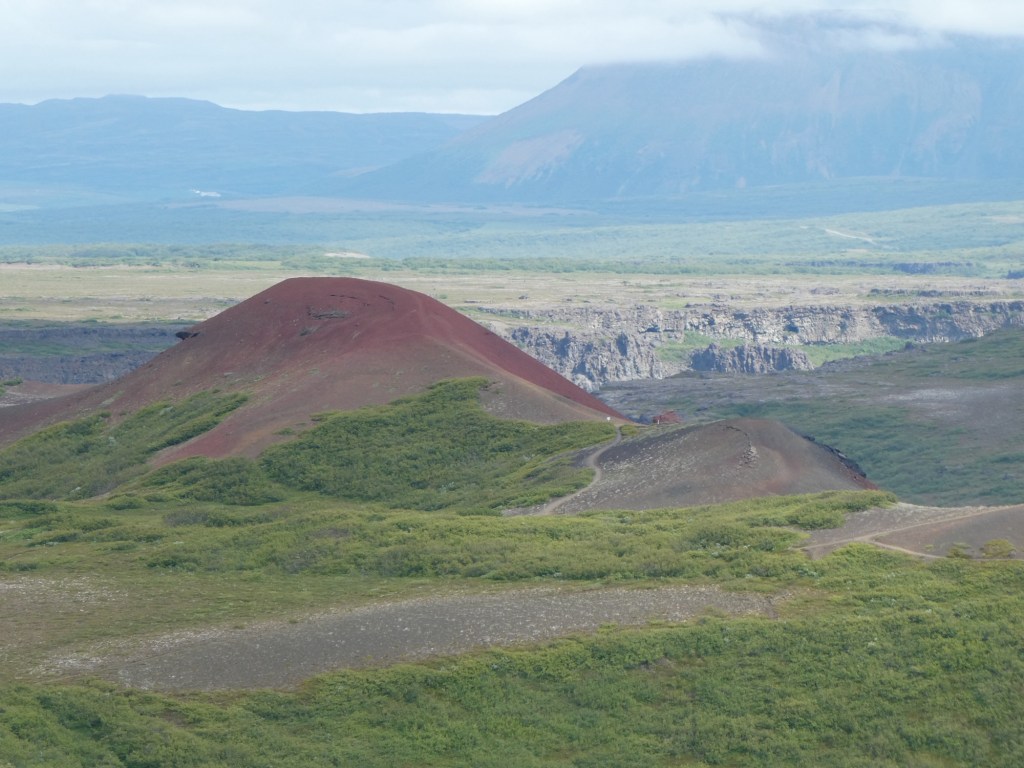
We passed sulfur mountains where sulphur was mined and some hills that were red from iron.

Our last stop was at the “Grand Canyon” of Iceland. It was formed by 2 huge floods of lava, water and soil. The first happened 10,000 years ago and the second 3,000 years ago. It was interesting to see but not as grand as our Grand Canyon in Arizona.

Lake Myvatn in the background

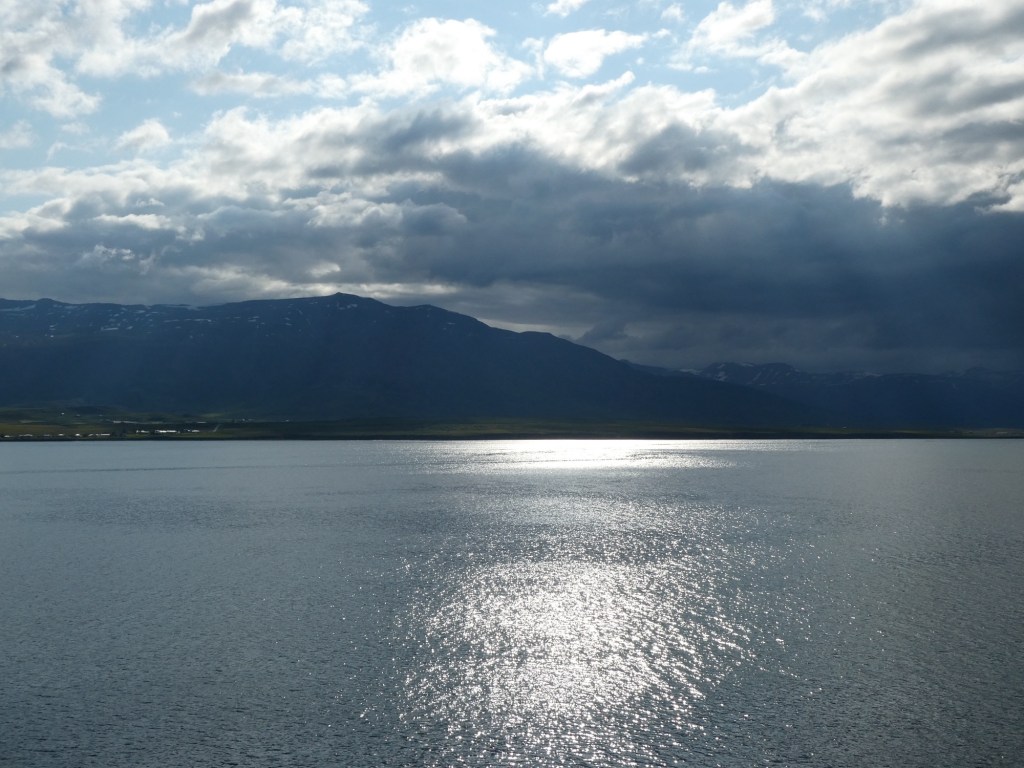
We have not had any sunsets on this cruise, because most nights it is setting around midnight. We are in the time of year of the “white nights” or “land of the midnight sun.” Last evening I did get a photo, not a sunset but nice light on the water. We have been lucky with the weather and although it has been cold for us, we have mostly had only cloudy skies and just drizzle but not real rain.

Categories: Uncategorized | Leave a comment

A Sunny Day in Isafjördur

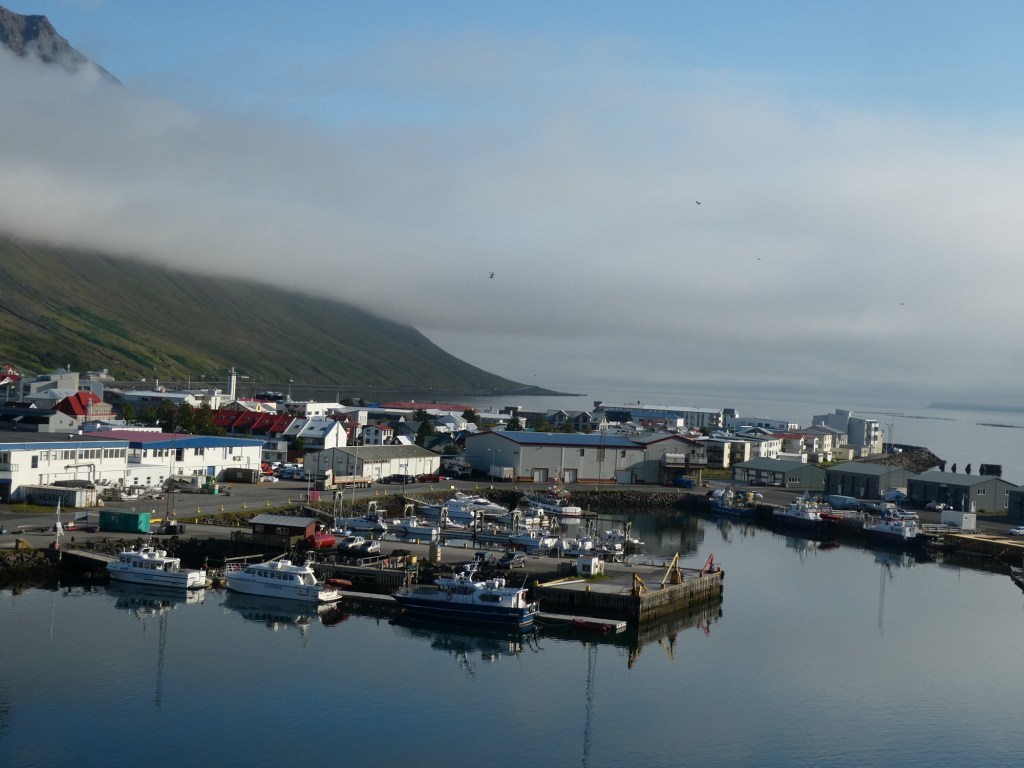
Nestled at the foot of dramatic mountain slopes on a spit of land at the end of a fjord, Ísafjördur was founded in the 9th century by the Viking Helgi Magritte Hrólfsson. Foreign merchants arrived in the 16th century and set up trading posts here. Today, Ísafjördur is home to one of the largest fisheries in Iceland and, despite its remote location and small size, boasts a cultural scene rich in music and drama. The oldest house in Iceland is here, built in 1734, as is the country’s largest concentration of old timber frame houses.

Early morning view, with fog
The fishing harbor and town
A house in town

Our excursion took us from the port, down the coast to the fishing town of Bolungarvik, one of Iceland’s oldest fishing villages. Ísafjördur is the capital of the Westfjords and about 4,000 people live in this town. In all of the Westfjords the population is 7,500. Ísafjördur has one of the best harbors in Iceland.

The fjord is about 100 kilometers in length and 140 meters deep. They get a great many whales and dolphins in the area. They have recently started to do fish farming in the fjord, with very strict rules about the number of fish being raised. Currently the fish being raised are salmon and trout.

Across the fjord from the town are mountains and behind the mountains is the largest glacier in the Westfjords. This area has very extreme light and dark times of the year because of the mountains. From mid October to mid February they do not see the sun and from mid May to mid August there is no darkness. Also across the fjord is a large nature preserve where there is a large population of arctic fox, which is the only native animal in Iceland.

We learned that in this very remote and not highly inhabited area a new company has developed using fish skin for medical purposes. The name of the company is Kerecis and it is used for burn victims and others that need skin grafts.

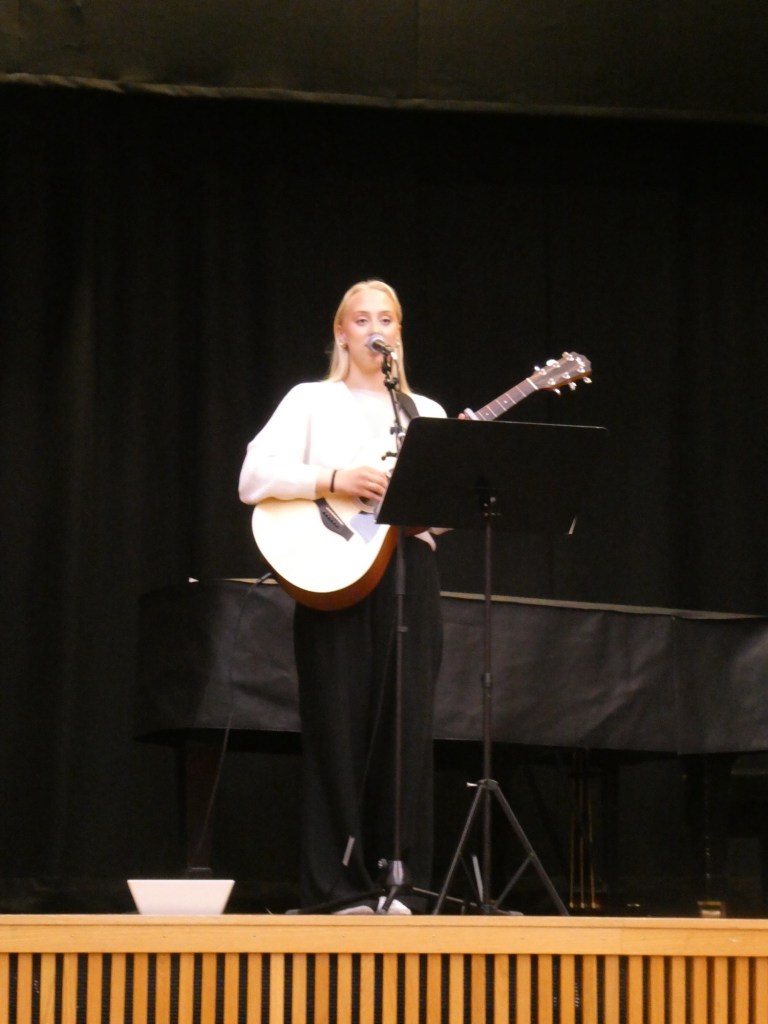
We drove to the village of Bolungarvik going through a tunnel going through the mountain. It was about 3 miles long and took them 1 year to go through the mountain and then an additional year to complete the fitting out of the tunnel. Our first stop was at the town hall where we had a concert. Our entertainer was a local college student who sang and played the guitar. She had a lovely voice and sang traditional Icelandic songs. They have a large music festival in this area each year which features 1 special song which all the attendees learn and sing together. It has been going on for 113 years.

We then learned about the fishing industry in this area of Iceland. The original fishermen used oared boats, went out for 4 days and could catch a ton of fish. Now they use bigger boats that have electric equipment and in the 4 days they are out they can catch almost 100 tons of fish. The fish caught in these waters are cod, halibut and wolffish. When they return to port the fish are salted and then shipped out to the rest of the world.

Our fisherman guide at the museum

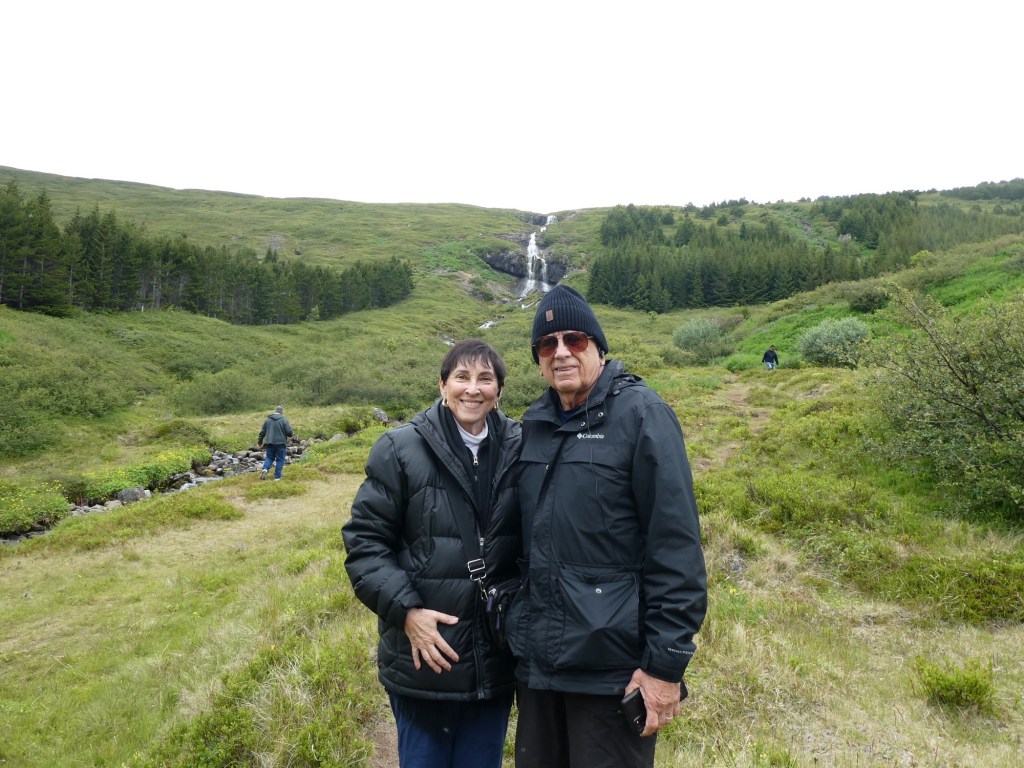
Our final stop was at a waterfall in the town of Ísafjördur. Our guide dipped water from the river and we got to drink the clear cold water.

There are no volcanoes in this part of Iceland. The mountains are all flat topped because of the glaciers and various ice ages.

In the center of town their pedestrian area
Alaskan lupine growing wild along the roads
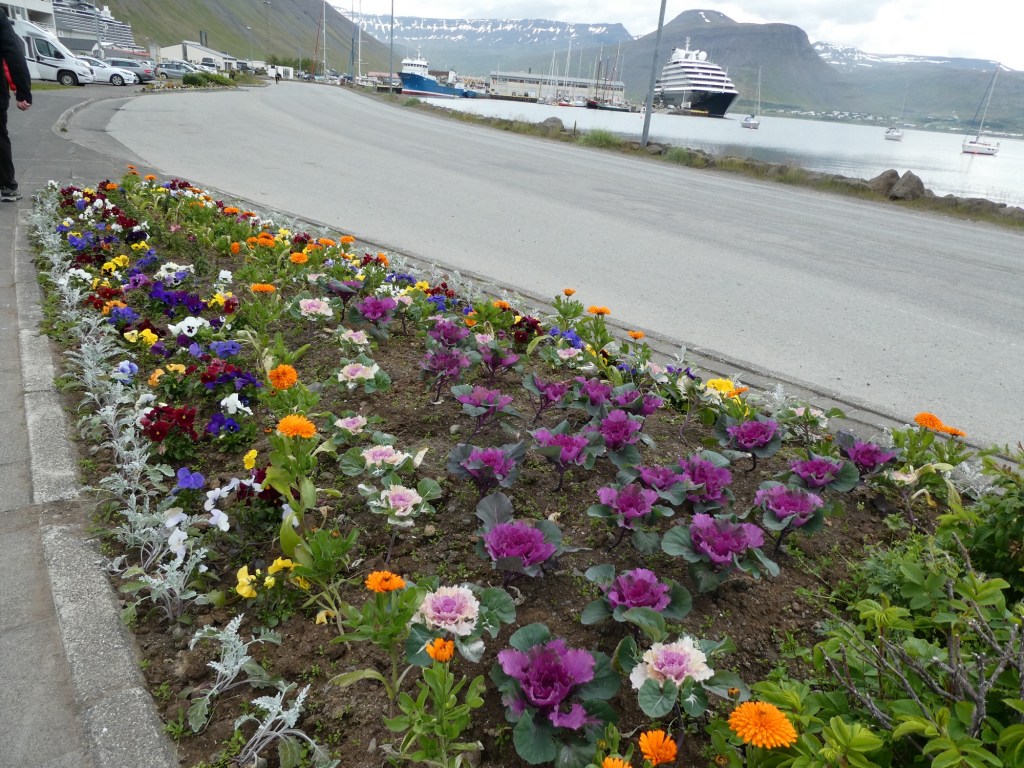
Along the road that we walked into town

Our day turned out perfect with a mild sunny morning for all of our activities. It clouded up somewhat in the afternoon but we were prepared for all kinds of weather.

Categories: Uncategorized | Leave a comment

Something Old in Reykjavik

Although we have been to Reykjavik several times before, today we were taken to someplace new for us but very old.

Our first stop was in the old harbor for a view back to Reykjavik. We were directly across from the Harpa Concert Hall and then a view of the mountains that surrounds the city. It was a very cloudy morning and there were lots of low clouds. There were also patches of sun. As our guide told us, this is very typical of a summer day here in Iceland.

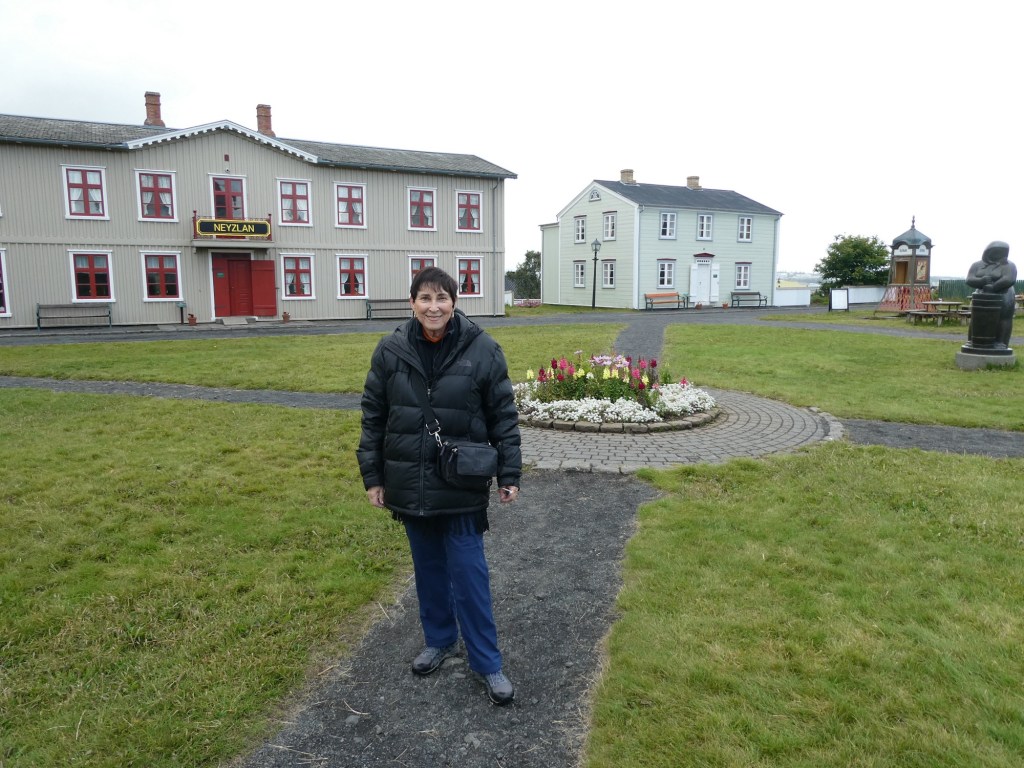
We then traveled about 20 minutes to Arbaer Open Air Museum. A little history of the museum: in the late 1950’s due to an influx of money to Iceland as part of the attempt to help the country become more modern people in the town began to tear down old structures to build more modern ones. The leaders realized that they were losing much of the original heritage of the area and approached a farmer who was no longer farming, about purchasing their property. It had several old buildings to include the original farm house from the 1700s and subsequent buildings the family had built over the ages. Once the family agreed to sell to the city, many of the old houses and buildings were brought to the site. We were able to see these original farm houses as well as a church, general store and many other buildings. Our guide was very informative about how life was in the times gone by and very proud of the heritage it displayed.

The church
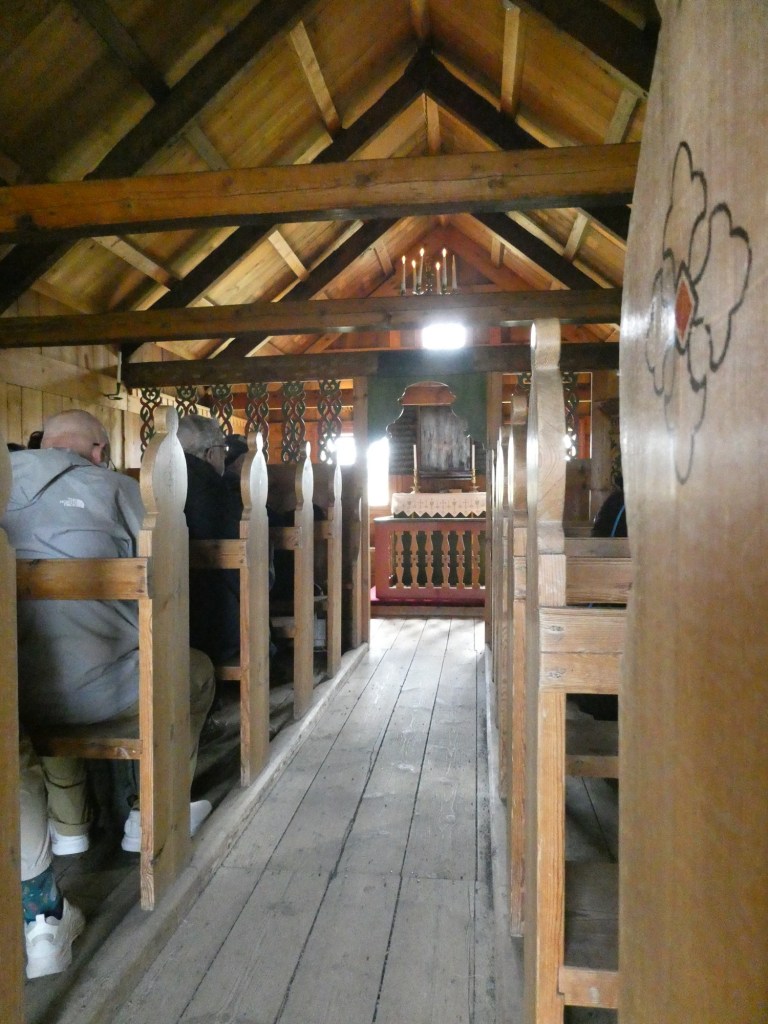
Inside the church
Original farm house, grass roof, and subsequent additions
Our guide with some salted cod
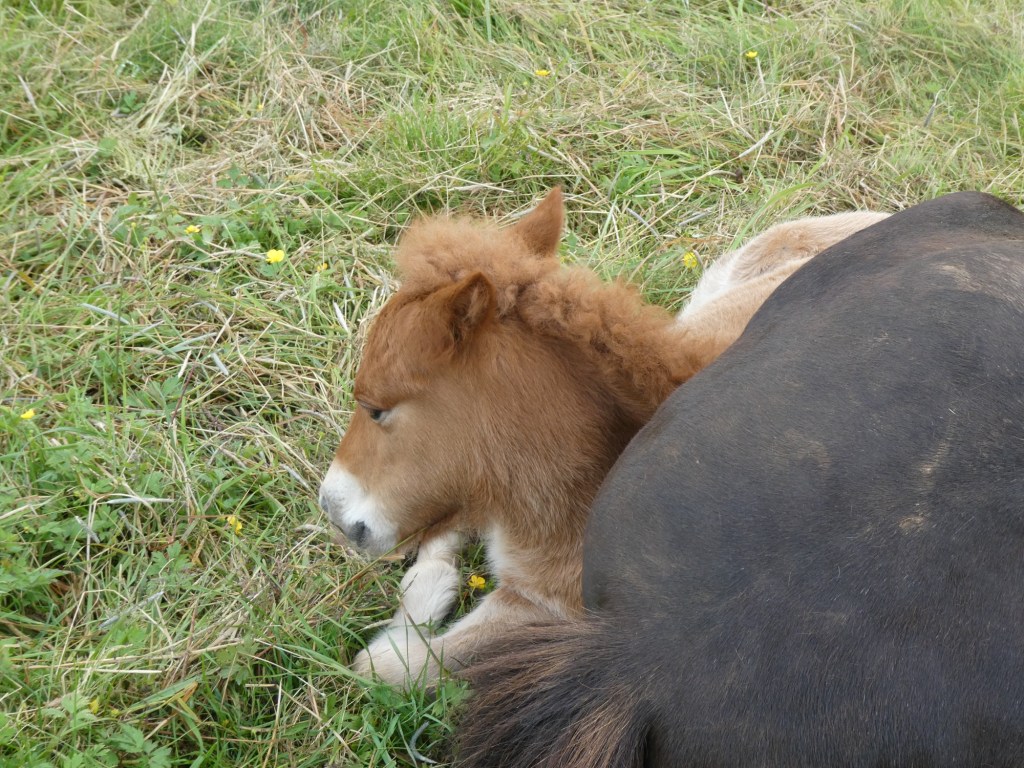
Foal
An Icelandic horse, all horses must be kept outside for at least 3 months a year
City center at the Open Air Museum
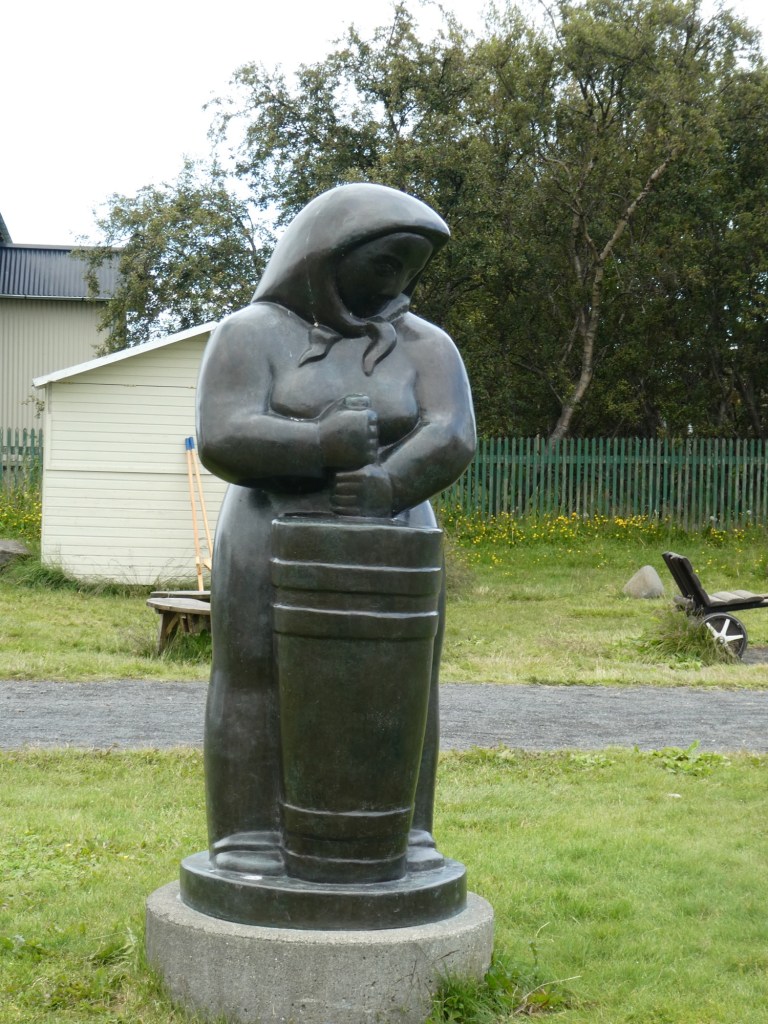
Woman churning

Some facts about Reykjavik and Iceland: the city and metro area has a population of 260,000, while the entire country has a population of 396,000. The climate is subpolar, but because of the Gulf Stream passing nearby the temperature is no higher than 56 degrees or lower than 32 degrees on average. However, the winds make it seem much colder. Reykjavik is the most northern capital city in the world, and the most western one in Europe. Fishing used to be the main source of income for the country, but in the past 5 years tourism has taken the top spot. Almost 96% of the homes in Reykjavik are heated by hot water and most of the electricity for this area of Iceland comes from their geothermal plants. The main road through town as well as the sidewalks have hot water heating under them, keeping them clear of snow and ice in the winter.

During our time on the tour we had several series of drizzling rain, followed by sun, and then cloudy skies. As the ship’s tour manager told us, if you don’t like the weather, just wait a few minutes and it will probably change.

Categories: Uncategorized | Leave a comment

On Our Way to a Cool Adventure

We left Fort Myers on the afternoon of July 1, heading to Iceland, Greenland and Canada. Our flights were uneventful and we arrived at 6:30 AM at Keflavik the airport for Reykjavik.

The lines at immigration were quite long since many flights from the US and Europe arrive early in the morning. We are on a Viking cruise and after collecting our luggage were met by their transfer service people. Our luggage was taken from us to be delivered directly to the ship.

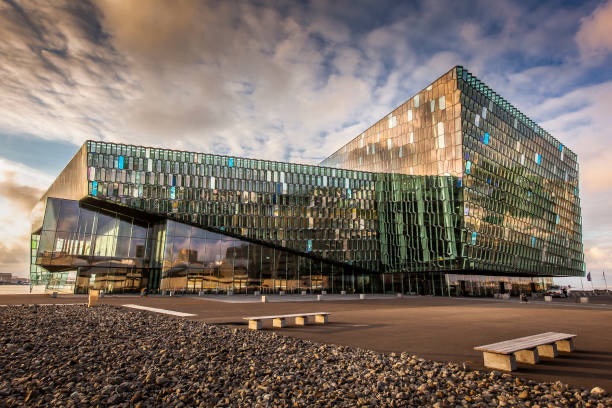
Because of the early hour we were taken to a private room at their Harpa complex. The Harpa is their music and conference venue which also has an upscale restaurant. By the time we had our breakfast,we were ready to be transported to the ship.

Harpa (professional photo)

Check in at the ship was easy and after the security briefing, how to put on your life jacket, we were able to go to our cabin. I do have to report that we were so exhausted from not sleeping on our flight over, that we both fell asleep and only woke up when our cabin attendant brought our luggage.

Since this is our 3rd Viking ocean trip we did not need to “get acquainted with the ship,” since all Viking ocean ships are alike. We had a very good dinner in the main dining room and then saw a fabulous show featuring Greta Salome, both a violinist and singer. She represented Iceland in the Eurovision Song Contest in 2012 and 2016.

We did get an early to bed end of the evening.

Tomorrow we start touring.

Categories: Uncategorized | Leave a comment

Blog at WordPress.com.