Tauranga is a city on the shores of the Bay of Plenty. The population of Tauranga is about 63,000. The actual harbor is huge, covering 117 square kilometers. The water year round is about 21 degrees C. This area is a big holiday destination and the streets were crowded with visitors (we assumed local or in country visitors) since schools are still out for the Christmas holidays.
There are no dangerous animals in New Zealand. The waters are safe to swim in. There are sharks, but there have been very few fatalities from shark attacks. All the beaches have lifeguards, but they are all volunteers.
James Cook named the bay when he was exploring this area in the mid 1600s.
The temperature in this area is mild most of the year with highs in the summer in the high 70s and in the winter in the high 50s.
We all think about New Zealand and sheep. In 1987 there were 70 million sheep and 3 million people. Now there are 5.3 million people and 33 million sheep. The reason that sheep are no longer being raised as much is that there is not as much usage of wool any more.
The 2 islands that make up New Zealand are 1,180 miles from tip to tip and at the widest 280 miles. 30% of the land in New Zealand is under conservation. All of our guides were very much into the land and how they want to protect and preserve it. We actually can’t take anything off the ship in the way of food or goods to protect their environment and keep any pests out.
Our tour was to learn about the Māori culture. Up until 1976 there was a ban on teaching the Māori language in schools. The only way to learn was at home with native speakers. Now it is taught in schools and there are even some classes that are taught only in the Māori language.
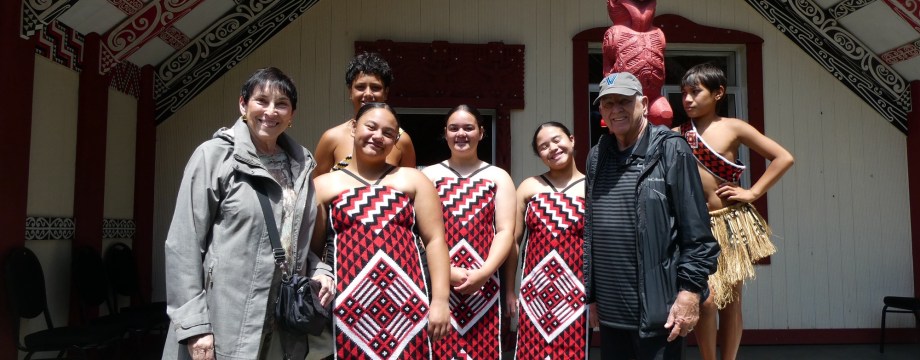
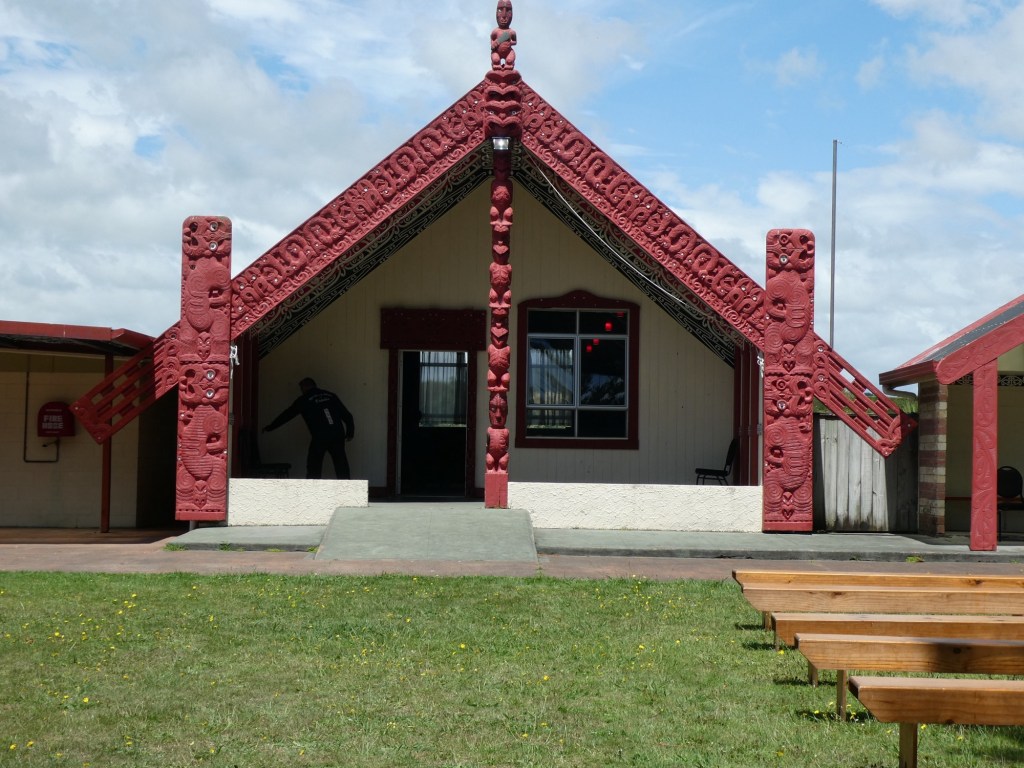
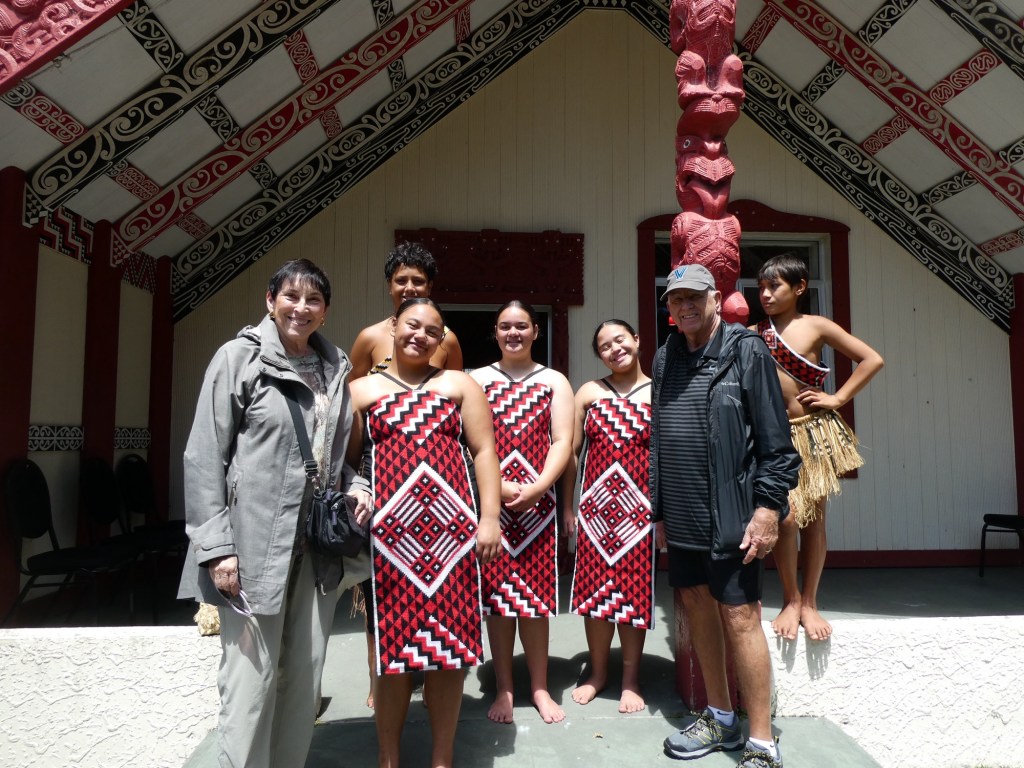
The three purposes in the Māori culture are: family, connection to the land and respect. When we arrived at the Māori meeting place, the women were the first to enter the compound. Then the men entered, but when we were invited to sit on benches to be welcomed the men sat in the front. One of the men in our group was named our “leader”. As we entered there were 5 young people singing. Once seated their leader welcomed us in Māori, which included his naming the 26 generations of his family that came before. Then our leader was presented with a branch and he said something as a welcome in return. Then he was given a traditional welcome which had him “bumping” noses with all of the welcome committee. Traditionally everyone would do the nose bump thing but because we were there to learn it was just our representative who did the traditional welcome. It is thought that the Māori may have come from Egypt and possibly are the lost tribe of Israel. The first peoples who came were from around Polynesia and it is thought it happened about 10,000 years ago. The Polynesian triangle is New Zealand, Hawaii and Easter Island.
In the meeting building are carvings that represent the ancestors, almost like photos. We could not take photos in the meeting house since it is considered a holy place. There is a big emphasis on each families oral history.
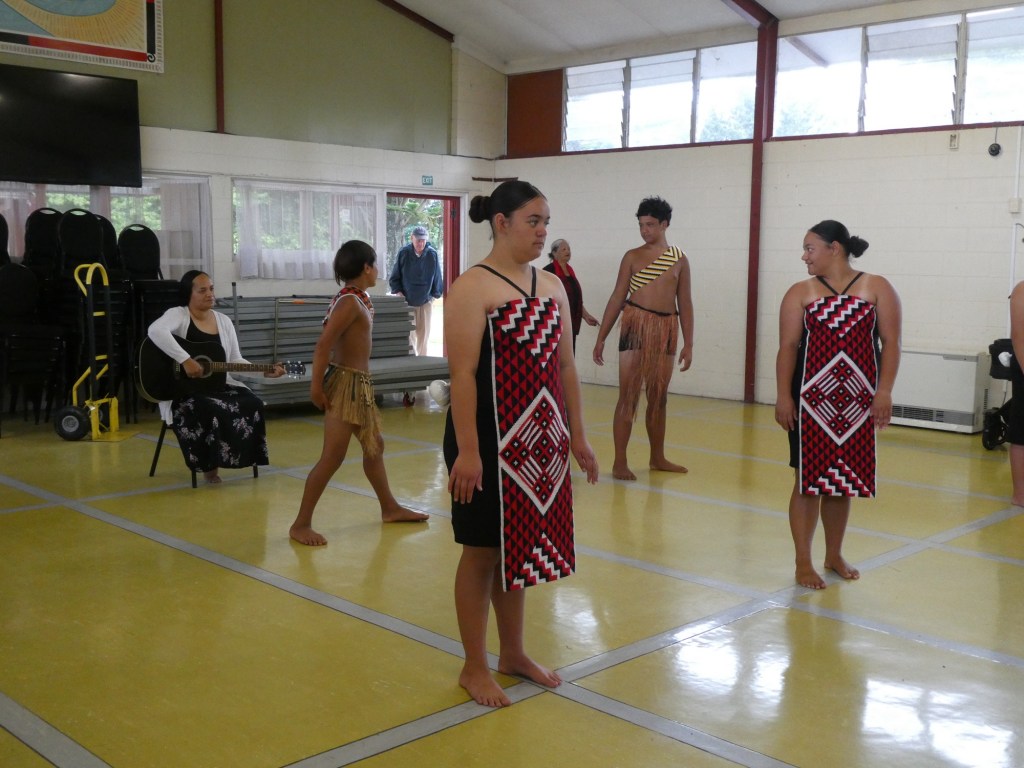
Besides going into the meeting house, we went into a social room where the young people sang and danced for us and we had a snack.
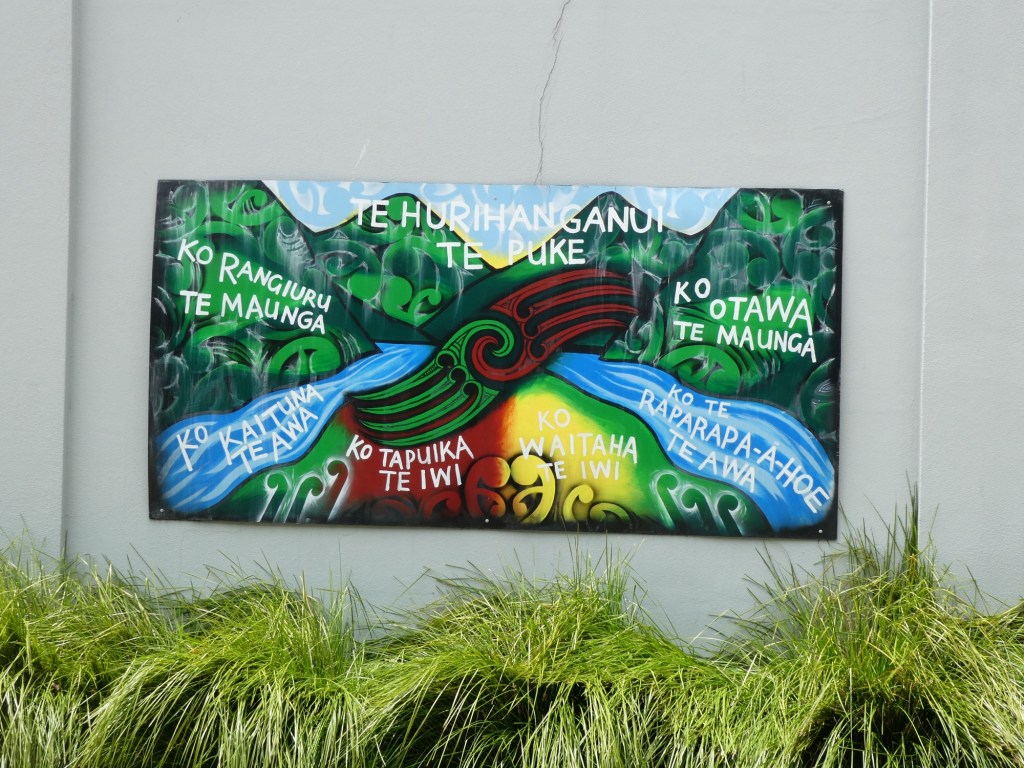
On the return to the port we stopped in another very small town. It had some street art.
Across from where our ship docked was Mount Maunganui.

 Bette and Bob See the World
Recent Comments