Uncategorized

Ajaccio, Corsica – December 3

Corsica is the 4th largest island in the Mediterranean Sea and is part of France. The main language is French but there is also Corsican. Ajaccio is the largest city on the island with a population of 16,000. Corsica was originally part of the Republic of Genoa but was ceded to France to settle a debt in 1769.

The island is 83 million years old. The surrounding waters of the Mediterranean are very deep, more than 1400 meters. There are 432 mountains on Corsica. It was a port way back in history because it has abundant sources of water. During WW II it was bombed accidentally by the Americans. As payment for this accidental bombing, the Americans helped rid the island of its huge mosquito problem. This allowed the inhabitants of the island to move off the mountainsides and down closer to the shore. Although this is an island, they do not have much industry using the sea. They farm and have tourism as their main industries.

The island was invaded over history 14 times. Almost every civilization around the Mediterranean invaded Corsica. The island originally had no trees but each conqueror brought trees from their country of origin.

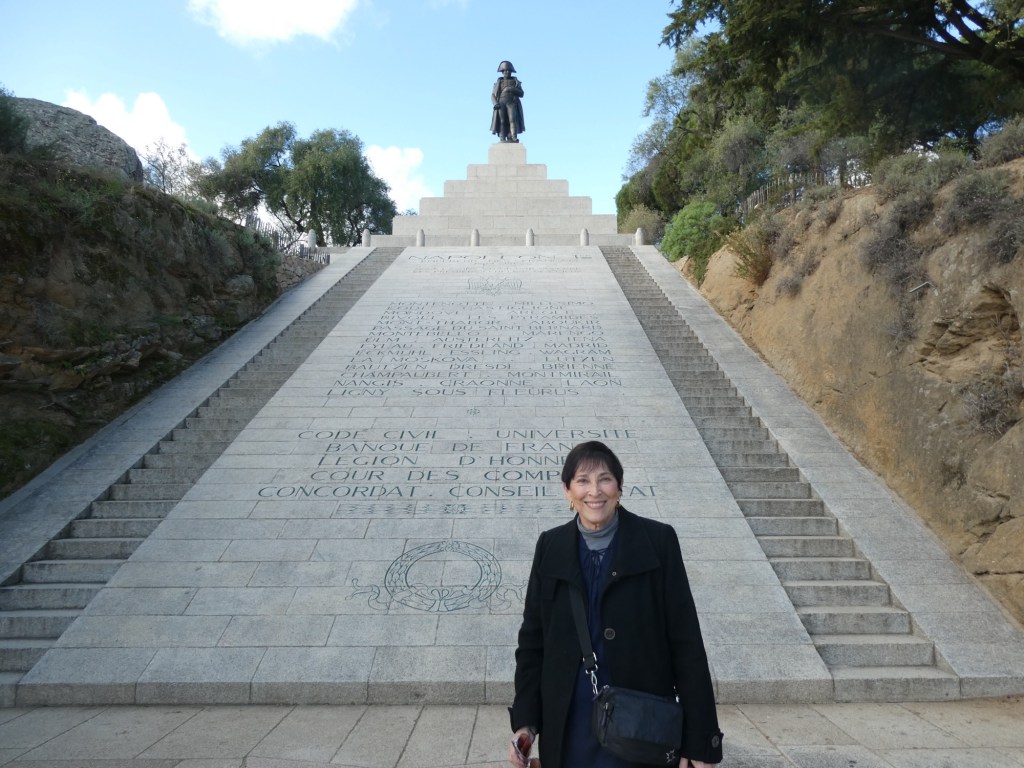
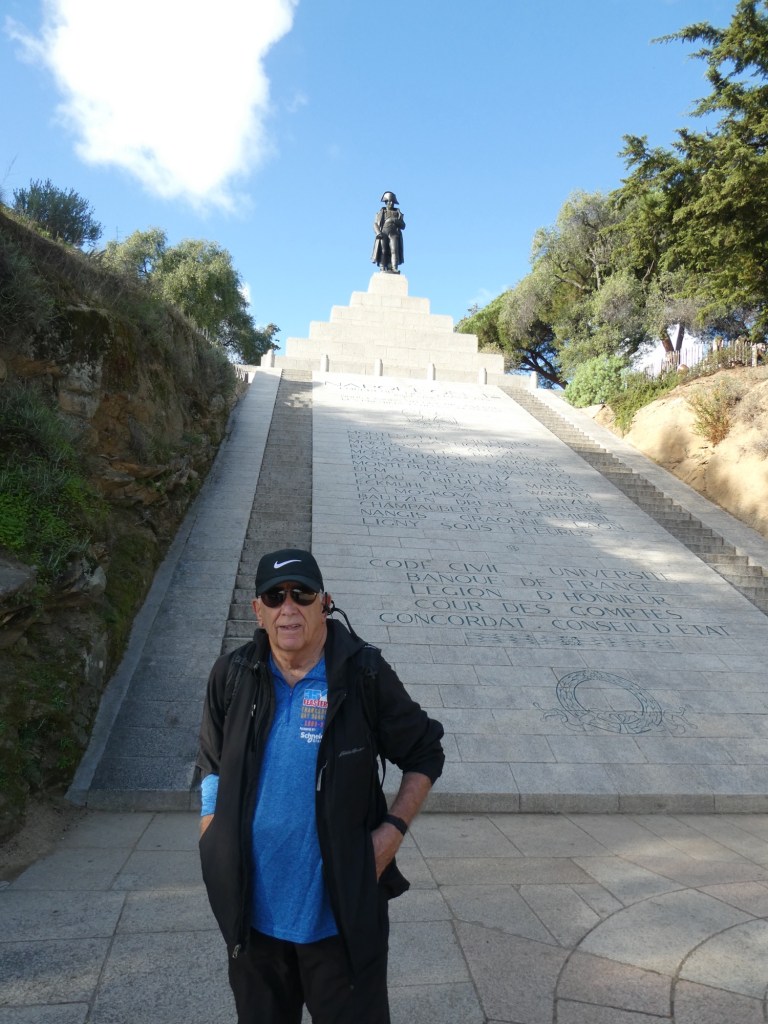
We heard about 2 famous Corsicans: Pasquale Paoli, a statesman and military leader who wrote the Corsican constitution and who was friends with Jefferson and gave him inspiration for the American constitution. The second famous Corsican was Napoleon Bonaparte. Napoleon was born on Corsica on August 15, 1769. He left the island at age 9 and went to live in Paris. During our touring we saw his birth home, the family chapels, the cave he went to, to write and many statues.

We learned about the many things that Napoleon did; he moved doctors from universities to buildings used for sick people creating hospitals, made education mandatory, created garbage services and originated the numbering of houses. These were a few noted by our guide. The statues and pictures of him were done in such a way to make him look bigger than he was.

There was a lot of cleaning up and painting going on during our visit because the Pope was going to be there on December 15 to have mass for 35000 people. The Pope was invited to have mass at the opening of Notre Dame in Paris, but chose not to go there, going to Corsica instead. The people were pretty excited about this.

Ajaccio harbor in the morning
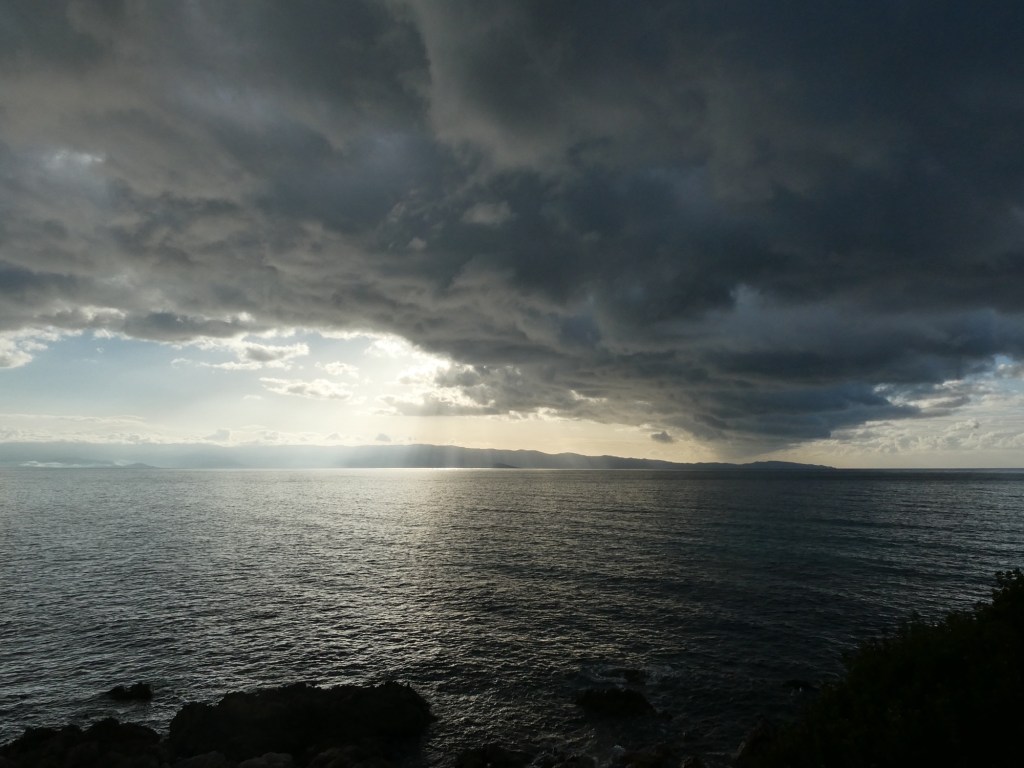
Fortunately these rain clouds did not get us
Watch towers used in ancient times to warn of fire
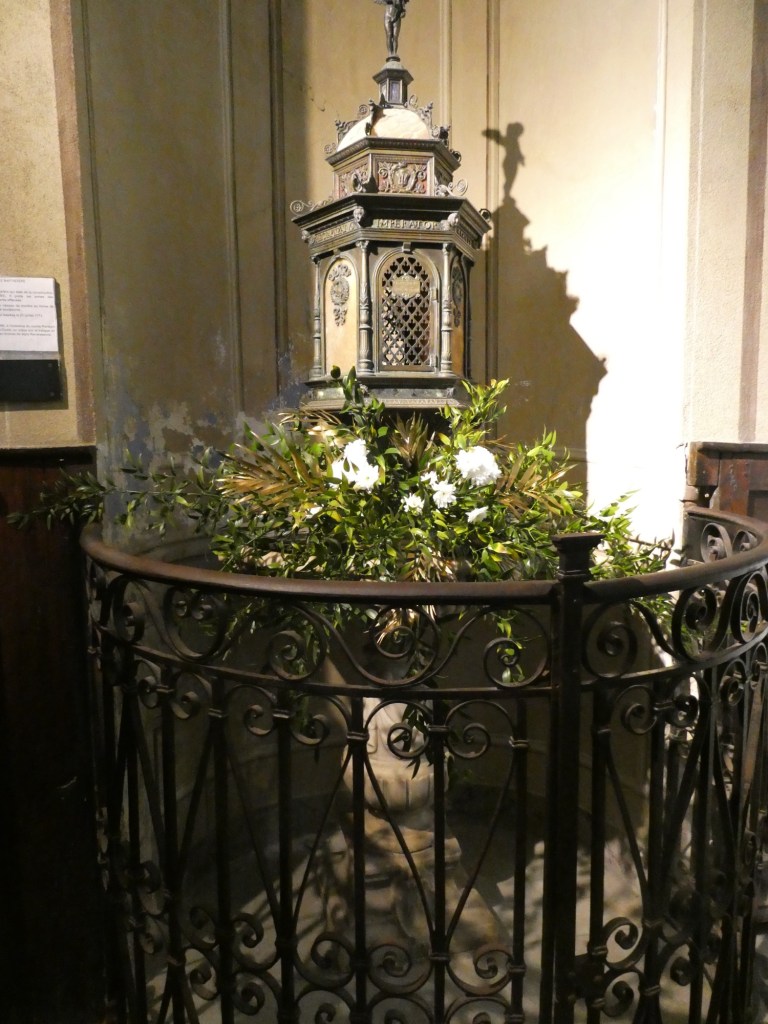
Baptismal font of Napoleon
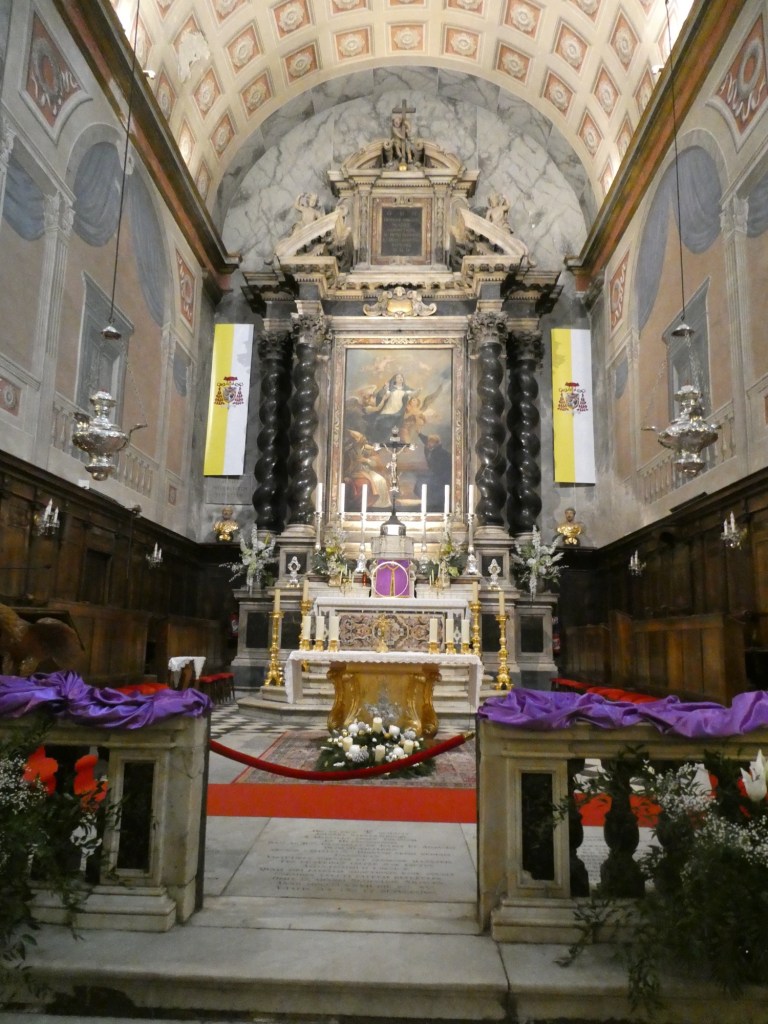
Cathedral Notre-Dame-de-l’Assomption
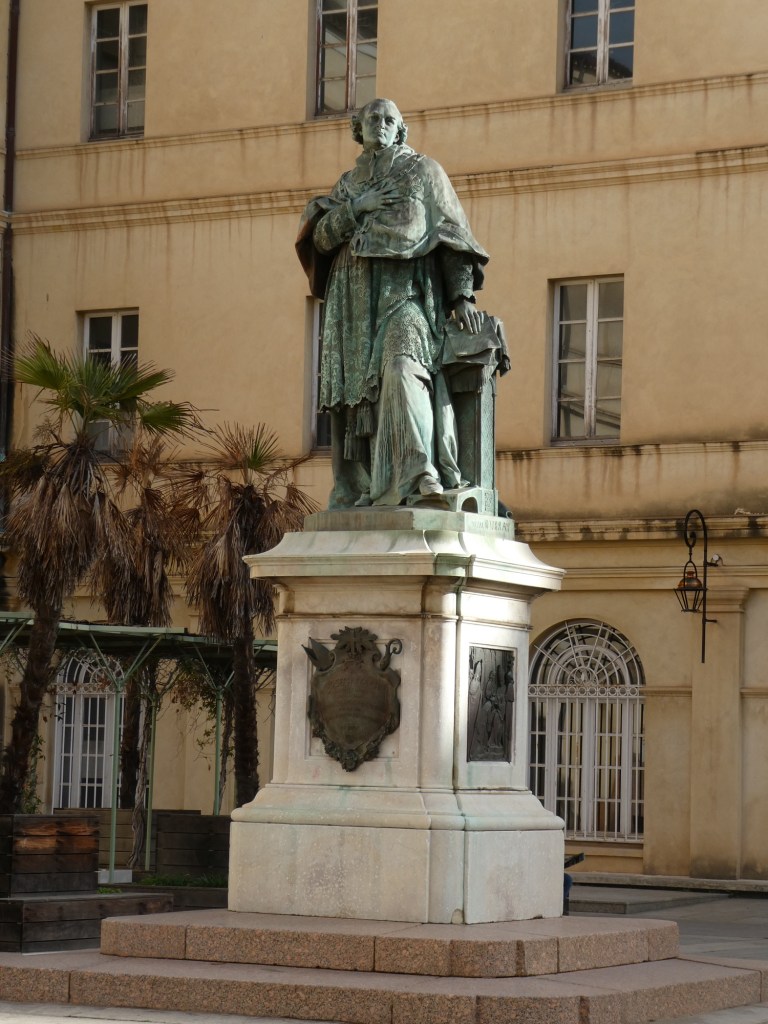
Napoleon dressed like a Pope – one of several statues we saw in Ajaccio
Our home away from home

Categories: Uncategorized | 1 Comment

Marseille, France – December 2

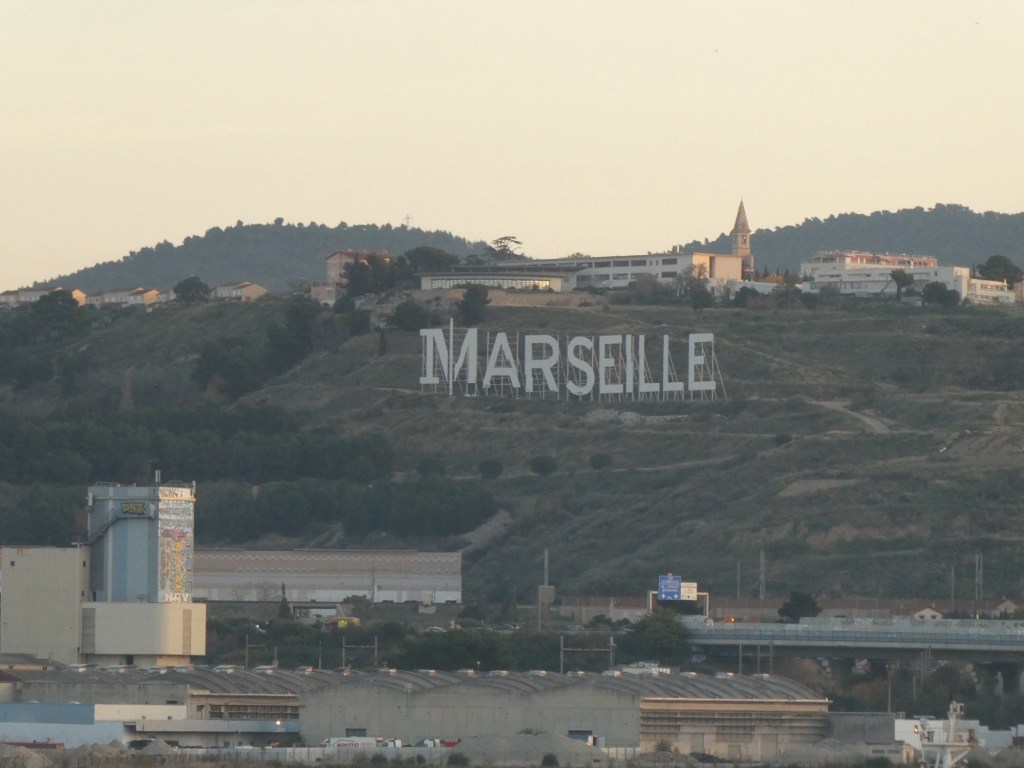
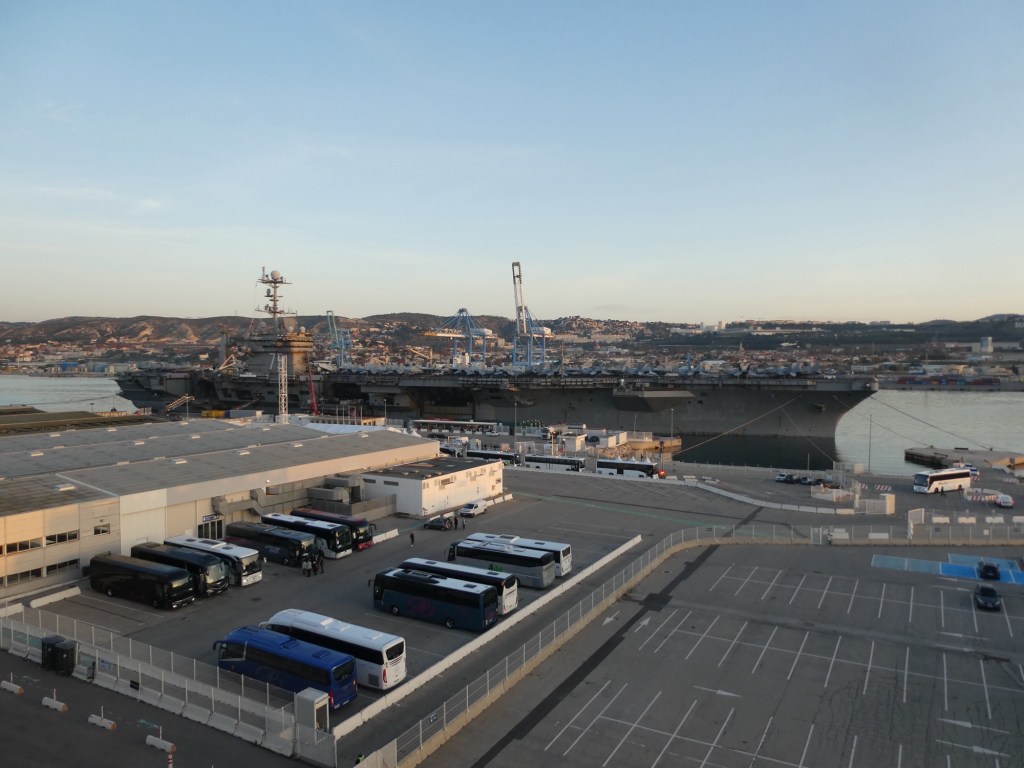
Marseille, France is the country’s oldest city. It was founded by the Greeks around 600 BC. It has always been a port city. We were docked in the new port, where the passenger ships and ferries go. The old historic port was a short distance away. The commercial port, which is where most of the goods coming into France land is farther down the coast from Marseille proper and covers almost 55 miles of coastline.

The entry to the harbor area has several small islands. One had a jail on it and was the setting for the story of the Count of Monte Cristo. The old port has 2 forts protecting it. Marseille is the entry way for the French region called Provence. It is said that the French national anthem was originated here. The population of Marseille is around 860,000 with an area about 3 times the size of Paris. The area away from the harbor is hilly.

Our tour was to the town of Avignon and the Palace of the Popes. When we got on our bus, our guide told us that the taxis were striking and blocking the highways. She indicated that she and our bus driver had mapped out a route to avoid these blockages and get us to our destination promptly. Unfortunately this did not happen and we spent over 3 hours for our 1.5 hour ride. About the taxi strike. Apparently here in France doctors can have patients transported to emergency rooms or hospitals by taxi, if an ambulance is not available. The strike was because the taxis were having to wait a long time for the government to pay them and they wanted the client to pay and then the client would be repaid by the government.
On our ride, we passed many lagoons that were fresh water but eventually connected to the sea. Many had bright pink flamingos, which are the same species we get in Florida. The Rhône river is in this area and we saw it as we traveled.

In 1208, the Pope Innocent III had a crusade to eliminate the Cathars and make the area more Catholic and was also approved by the King of France Louis VIII. The crusade lasted until 1226 and at that time all the land of the ejected Cathars was divided up. None was given to the Pope although he had helped in the crusade.

There was a period of over 200 years when the Pope was not in Rome, as he is now. In 1348, the Pope purchased the land in Avignon with the intention to build a permanent residence. During the 200 years there were 7 Popes all who built on to the structure. Some were Pope for only a short while and some for lengthy times. Why were the Popes in France, well, apparently one Pope was traveling and died in France. When a Pope dies there is a conclave to elect a new one, AND it is held wherever the prior Pope had died. So, one Pope died in France the next one was elected there and chose to stay and so there was a succession of Popes in France. One of the last Popes decided to visit Rome, died there and the Italians elected a new Pope from Italy and made it impossible for the Pope to live anywhere else, which is why the Pope is now found in Rome.

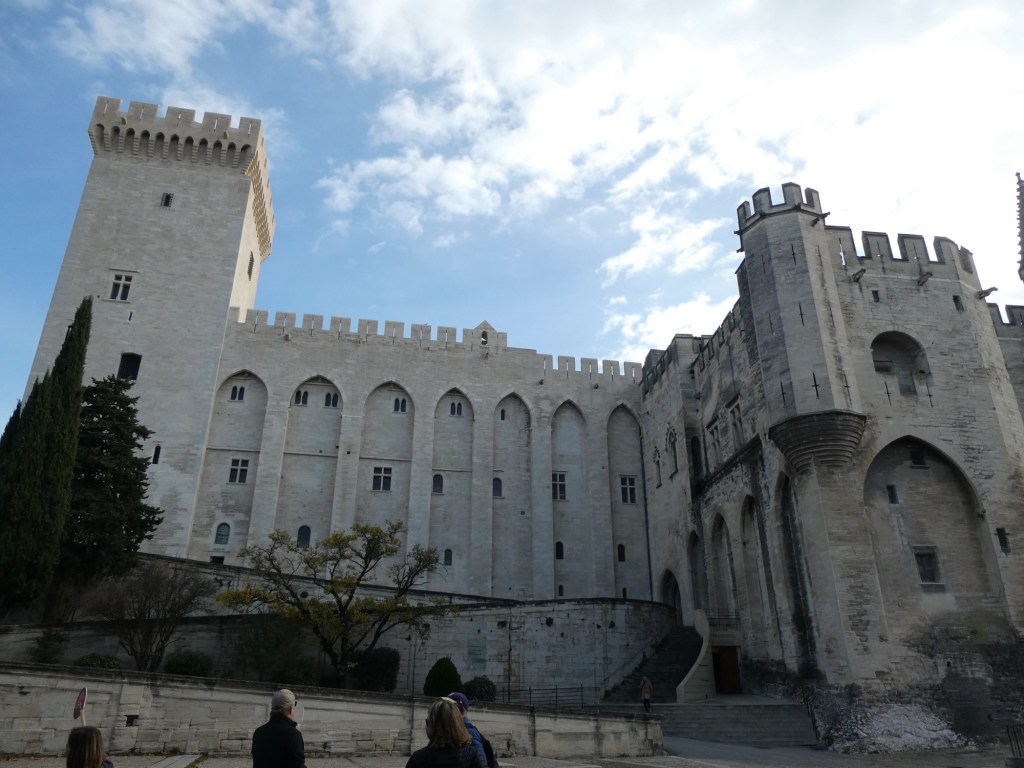
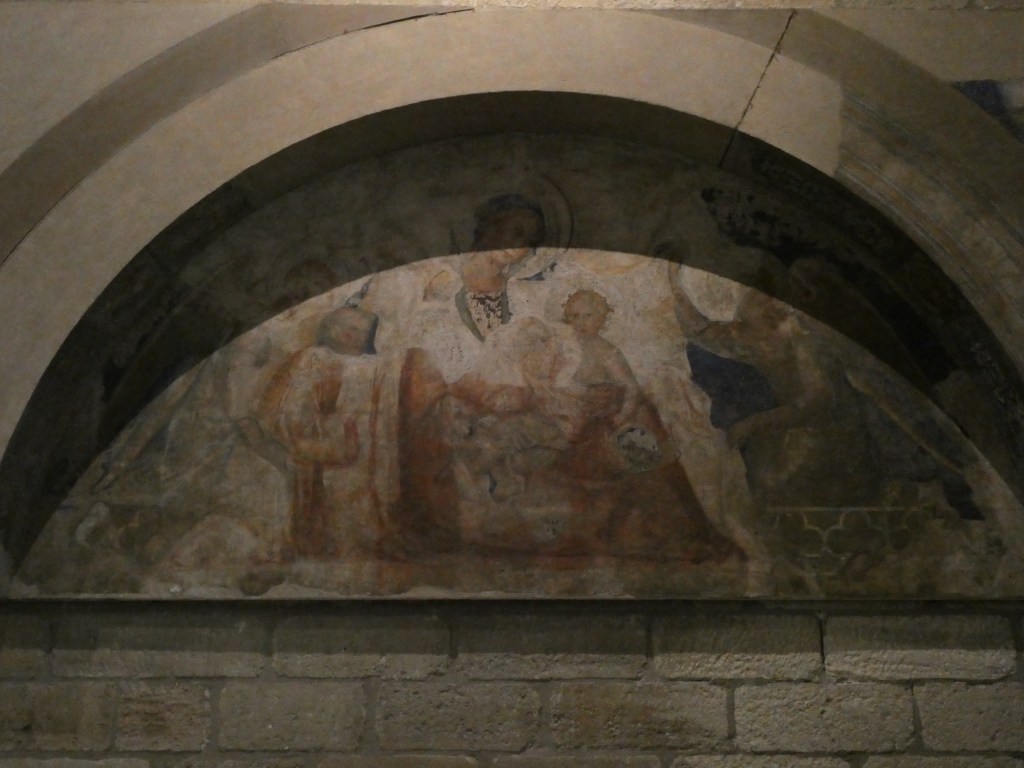
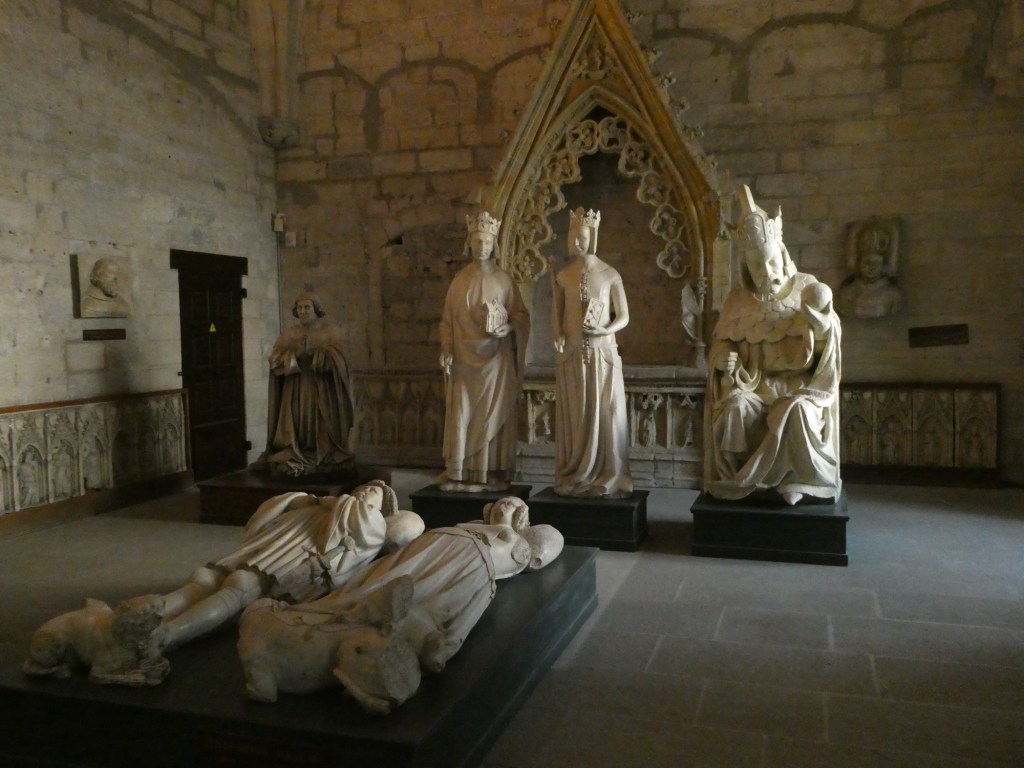
We toured the Palace of the Popes, which was built over almost 200 years. It is mostly huge rooms that we saw. There were many preserved frescos and ceilings. There were no furnishings.

Our neighbor
The original sketch for the fresco you see above
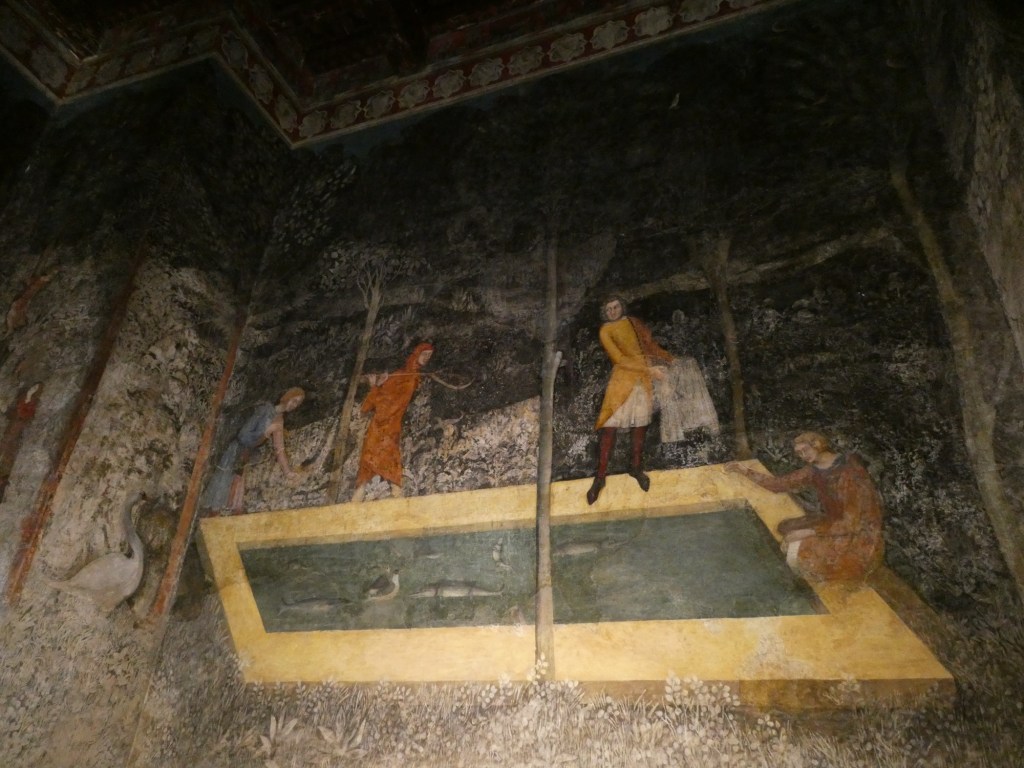
The painted rooms were amazing
Original floor tiles
Another painted wall from the Pope’s bedroom
Another painted wall
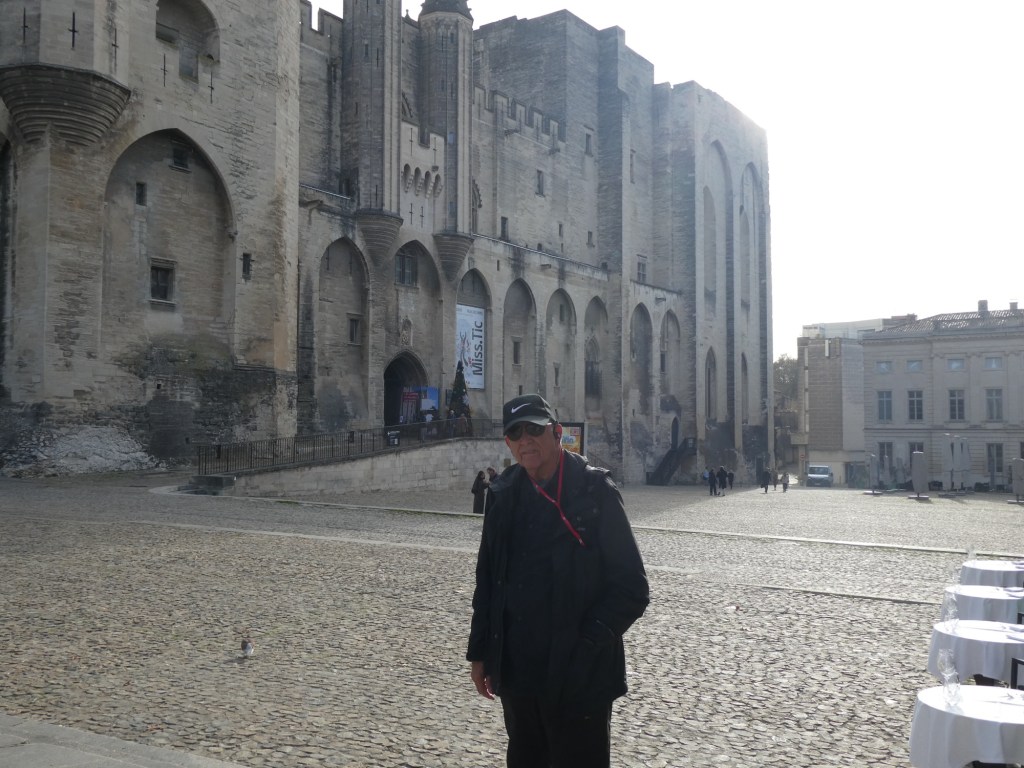
In the main square in Avignon

The trip back was much better. No blocked roads and the correct amount of time.

Categories: Uncategorized | 1 Comment

Barcelona – November 30 and December 1

All of our flights were on time and we made it to Barcelona around 1:30 in the afternoon. There was a pretty long line at immigration but it went quickly. Our luggage arrived on the conveyor belt almost as soon as we got past immigration and our driver was there about 10 minutes after we picked up our bags.

Our room was ready when we got to the hotel. After washing up, we went out walking. We had no real plans for this visit since we had been to Barcelona several times. We just needed to move our bodies after two long flights. We opted for an early and light dinner at a tapas bar.

We really felt our ages this time and were ready for an early night. I think we both had our reading lights out by 8:30.

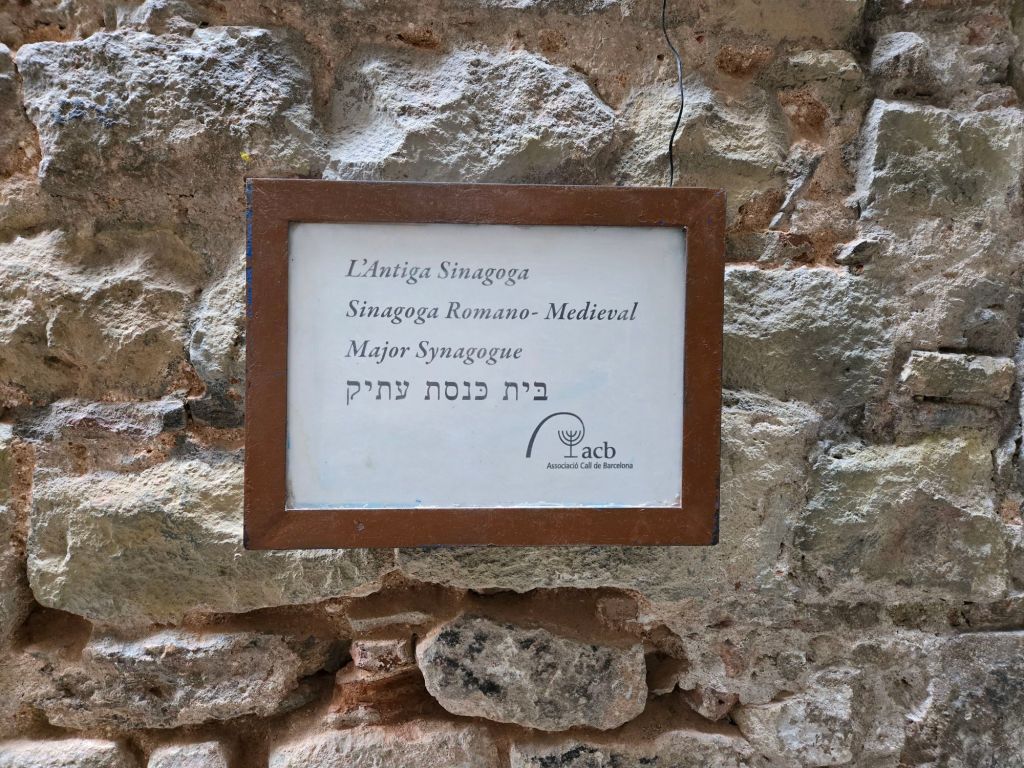
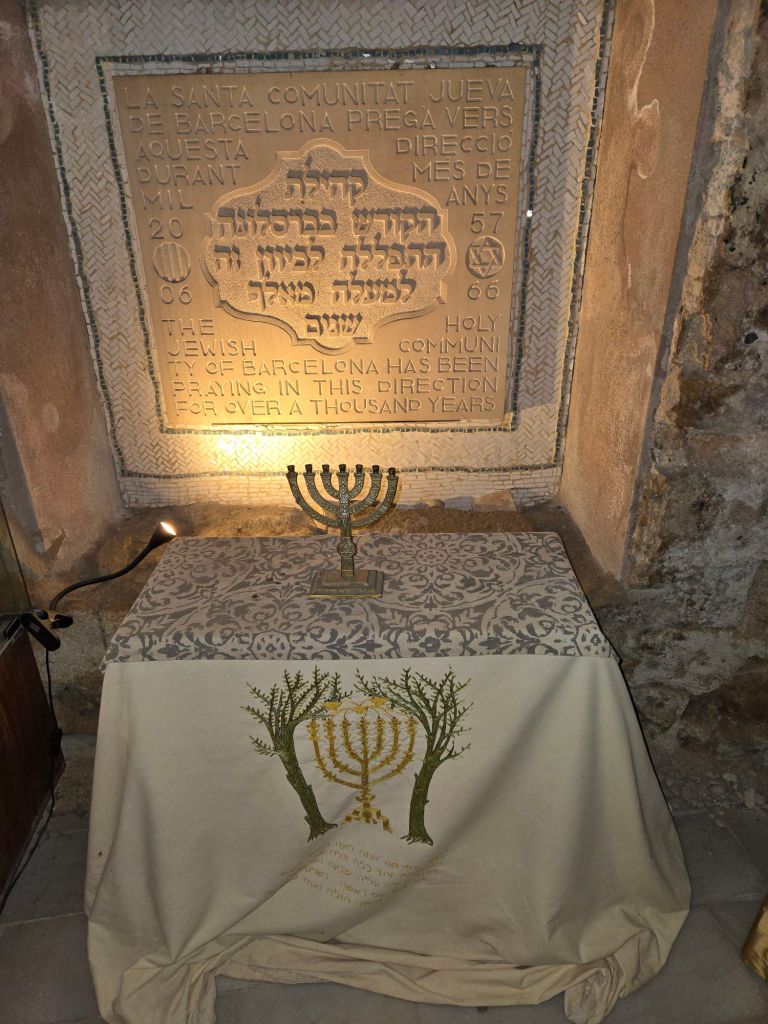
The next morning after breakfast we walked in the Gothic quarter to see an old synagogue.

We also were near the Gothic Cathedral.

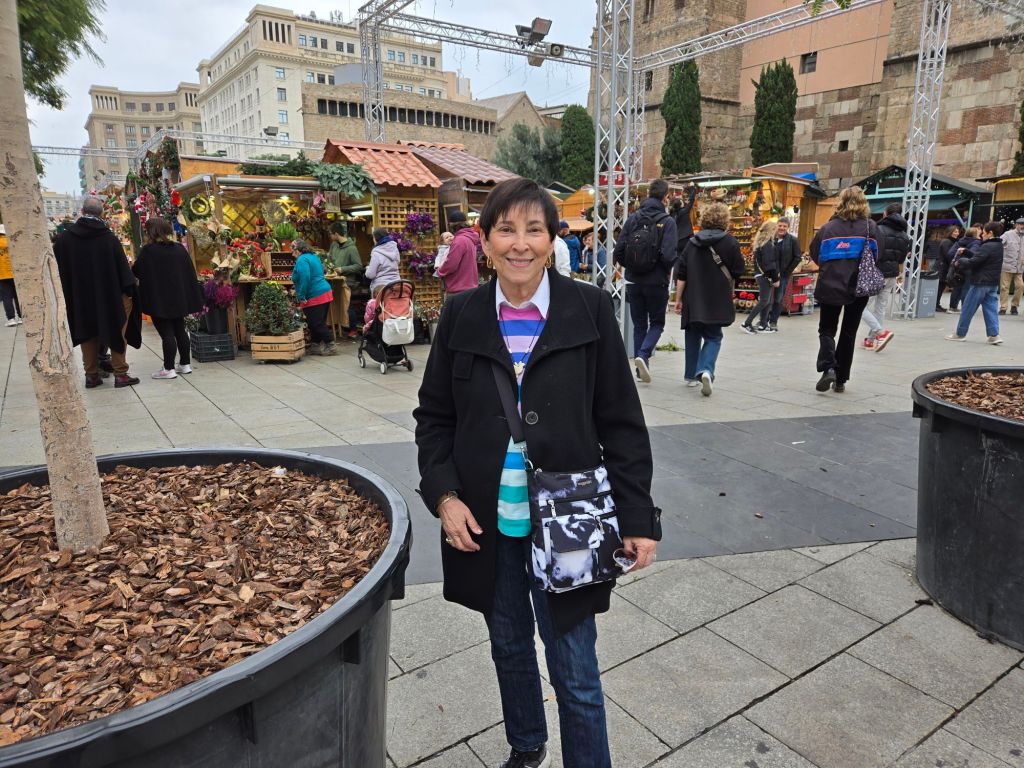
And there was a small Christmas market that we wandered through.

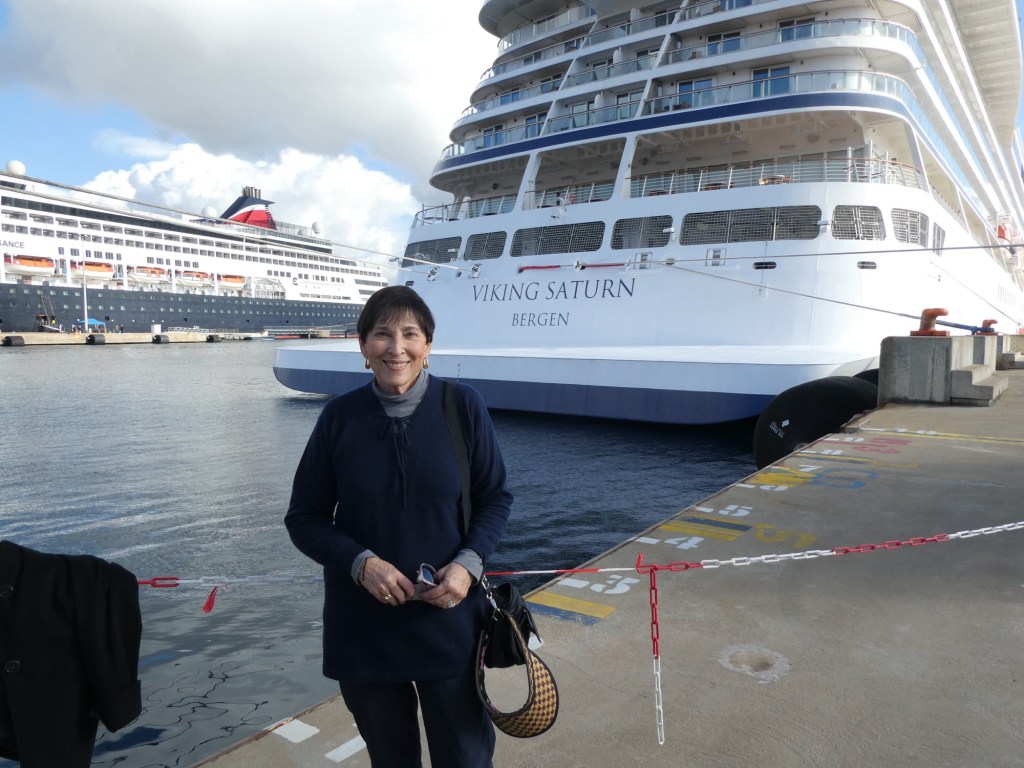
Then it was off to our cruise ship, Viking Saturn.  And now we are truly on our way.

Sailing out of Barcelona
Categories: Uncategorized | Leave a comment

Away we go again!

Currently sitting in the British Airways lounge waiting for our flight to Barcelona through London Heathrow.

We spent Thanksgiving at Jennifer’s and now are on our way to a Viking cruise. We enjoyed our days with Jennifer, Sunny and Abby. We had dinner one night with Mike, Dylan and Jerry since they were visiting Dylan’s family for Thanksgiving. We got to see Jacob on his very short holiday break and had the bonus of being there when Abby got her early decision acceptance to Villanova. A very good to visit to say the least.

More as we continue on this adventure.

Not very good at selfies 😞
Categories: Uncategorized | 4 Comments

Rouen, France – day 2

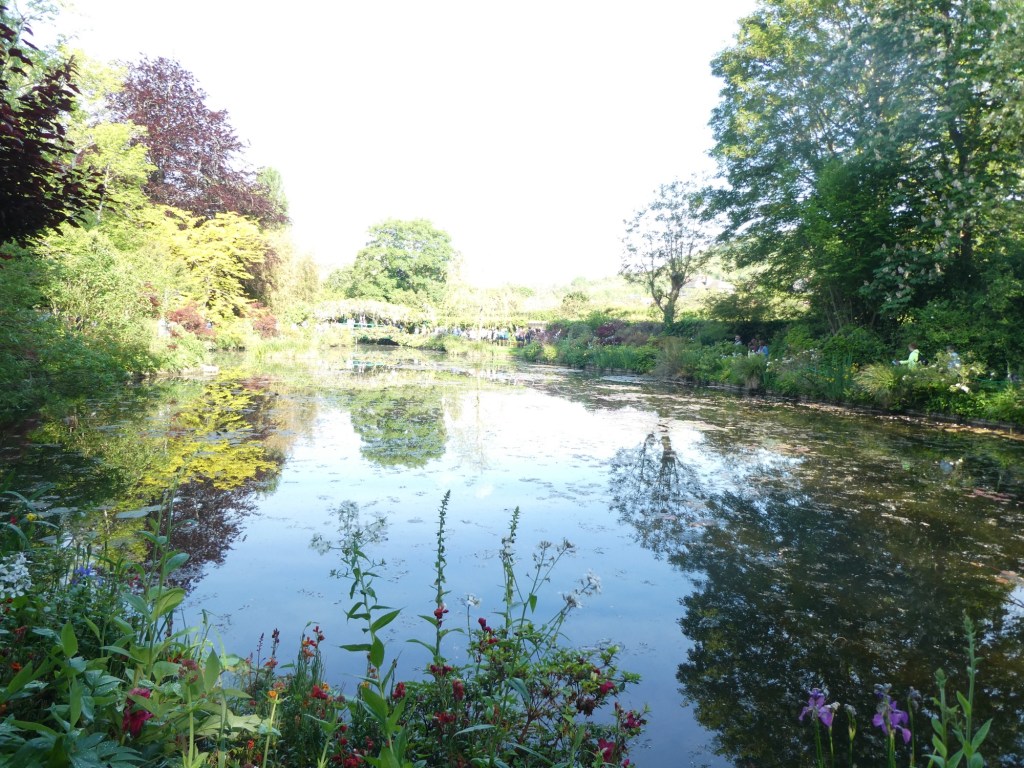
Today Bette got to go to Monet’s house and gardens in Giverny. The guide gave another history of the area, and then talked about painting. There were very strict rules that painters in France had to follow. However in the mid 19th century the landscape in paintings became the focus and not just the background. Around 1850, many artists broke with the current academy and in Fontainebleau started the Barbizon school of painting. Until this time artists only painted in studios, but now they began to paint outside, to take advantage of the change in light. To paint this way you had to paint quickly to catch the light in a precise moment, and therefore the brushstrokes were not fine as they were in earlier times. This gave an “impression” of the scene and so Impressionism was born.

Monet’s painting presented in 1872, Impression of the Rising Sun, was not well received, but was the first of this type of painting to be displayed in Paris.

Monet was born in Paris in 1840, spent his childhood on Le Havre at the mouth of the Seine and lived for some time in London. In 1890 he bought the house in Giverny and lived there with his 2nd wife and their combined family of 8 children. He slowly added to the property and now it encompasses about 15 acres. The house is in great condition.
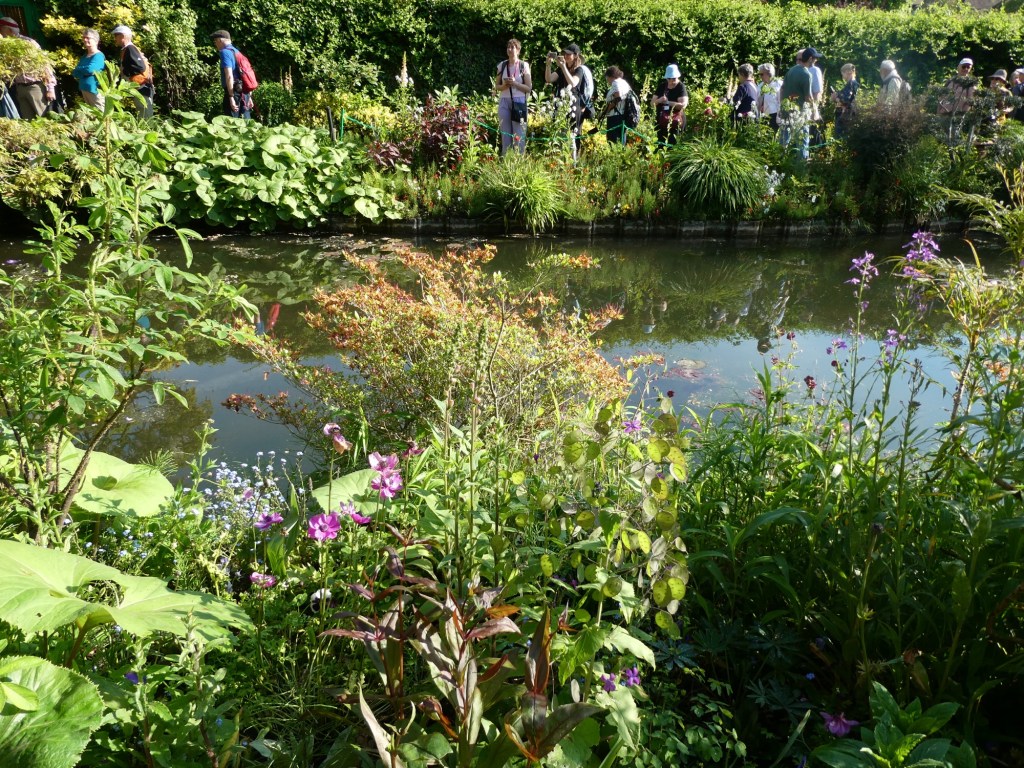
The garden were in full bloom and quite lovely.

The water lily pond and bridge in the Japanese garden

In the afternoon Bob and I did an excursion to Chateau Gaillard and the village of Lyons la Foret. On the bus ride we again heard about the Vikings and the settlement of that area.

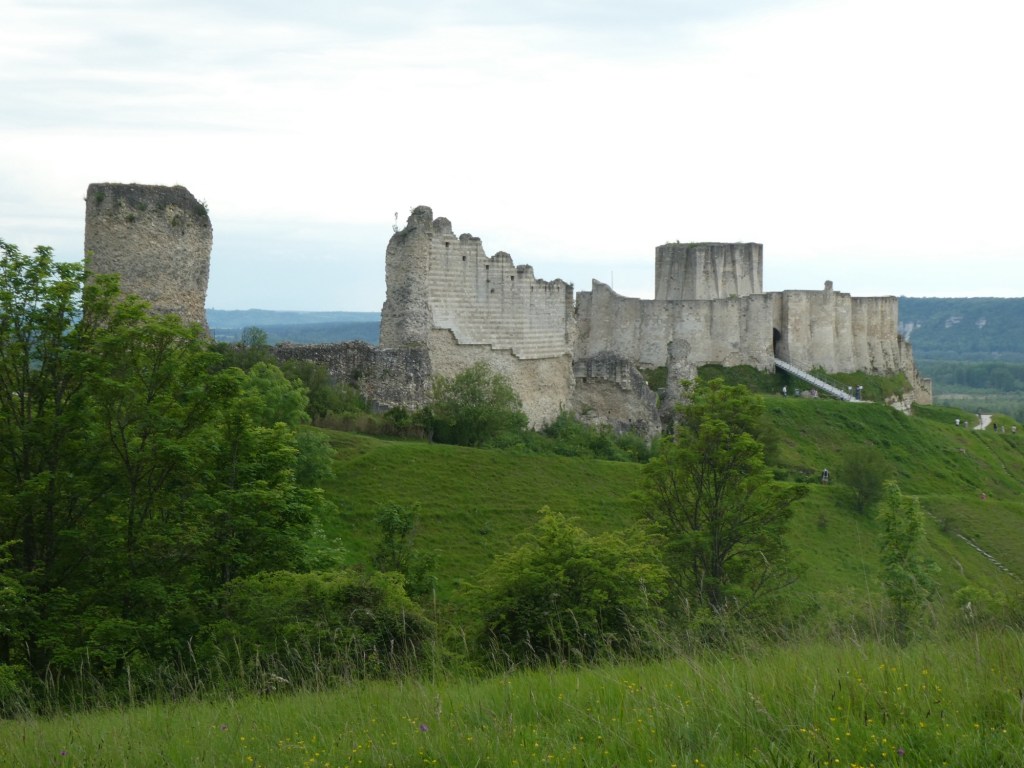
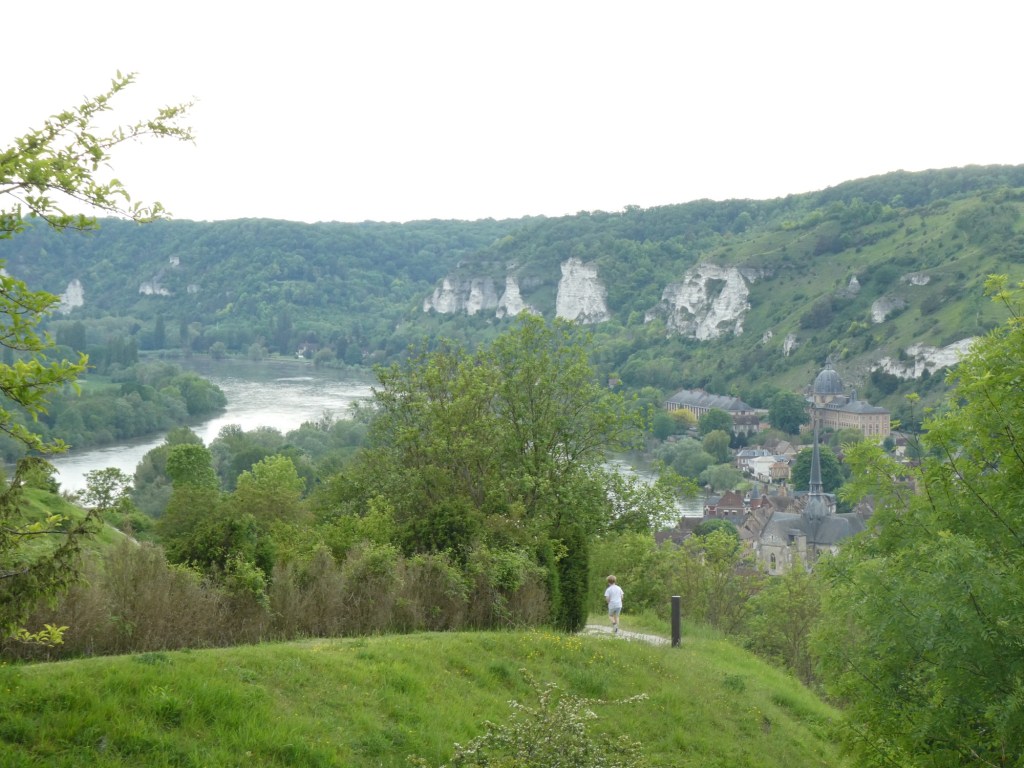
The Chateau is supposedly built by Richard the Lionhearted and he may have been the architect. It was built over a period of just 15 months. It stands on a cliff high above the Seine River. We got to see it from an overlook and then we walked to the ruins. You could not enter the chateau.

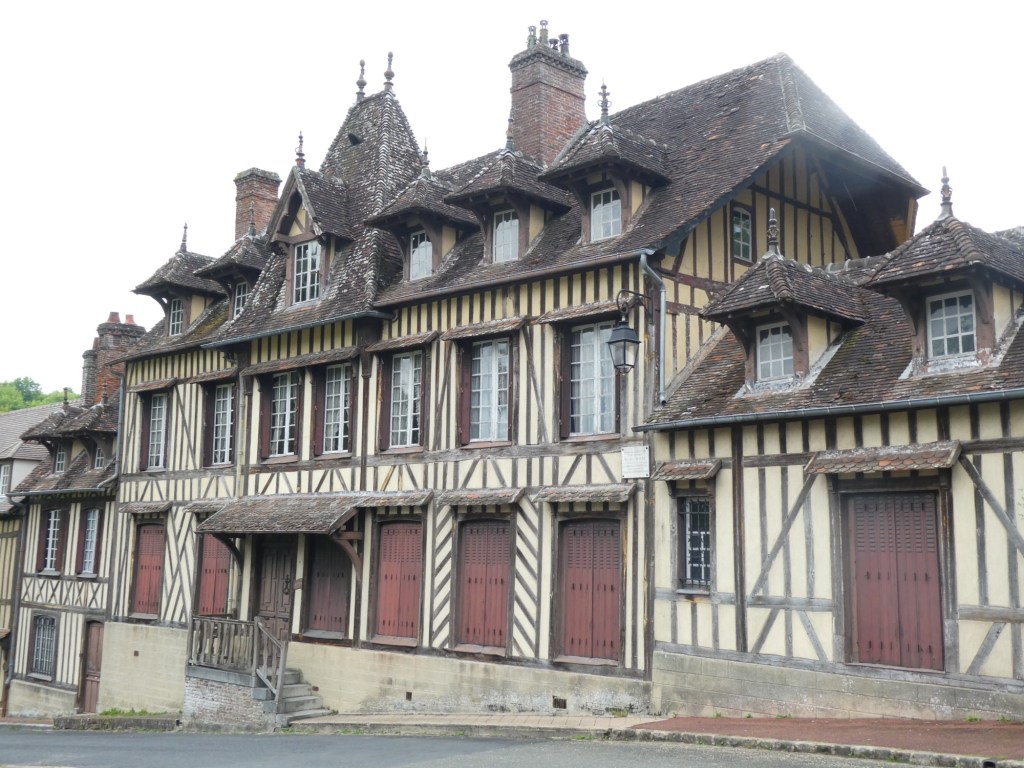
We next went to the small town. We saw their covered market area which was from the 1500s, the house where Ravel lived when he wrote Bolero. This week that we were in France, the country was celebrating VE Day, May 8 and there was a war memorial decorated with flowers.

Another good example of a timbered house
Where Ravel lived
Categories: Uncategorized | 2 Comments

Rouen, France

We sailed all day from Saint Malo to Rouen, France. Rouen is the last deep water port on the Seine River. We saw many charming looking towns as we traveled up the River Seine. When we got to Rouen, we had a twilight walking tour.

Along the Seine
Finally a day without rain

Our guide gave us a great deal of history about Rouen, Normandy, the Vikings, Joan of Arc and of course the famous Cathedral that Monet painted either 36 or 46 times (different guides, different numbers 😉).

Just a summary: the Vikings came to the area around 800 but did not settle in the area until 100 years later. Rouen was the capital of Normandy (North men) at that time. The Vikings and the Franks made a treaty to defend each other and therefore there was peace between them. William the Bastard with the help of the Normandy Vikings raided England in 1066 for the battle of Hastings. This helped William become King of England and then was called William the Conqueror.

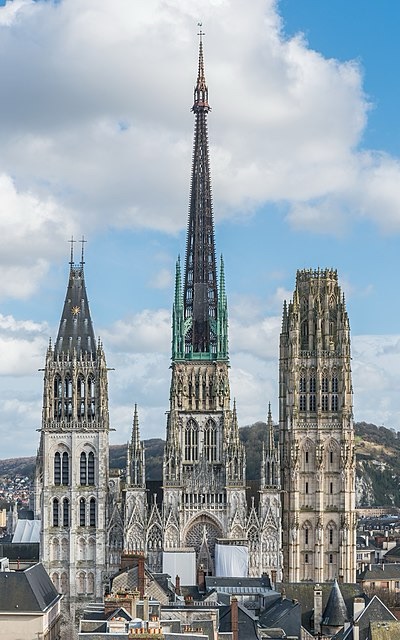
The Cathedral was built over 5 centuries with the different parts of the church quite distinct. The oldest part is quite plain from the 10 – 11 century. The middle is from the 14th century in the flamboyant Gothic style and the final part, the Butter Tower from the 16th century, so called because the funds to build it came from a butter tax, not the pale yellow color. Unfortunately, there was a street fair directly in front of the Cathedral so we could not get a good photo.

Taken from Wikipedia
Left to right, oldest tower, middle 3 arches Flamboyant Gothic and on the right, the Butter Tower

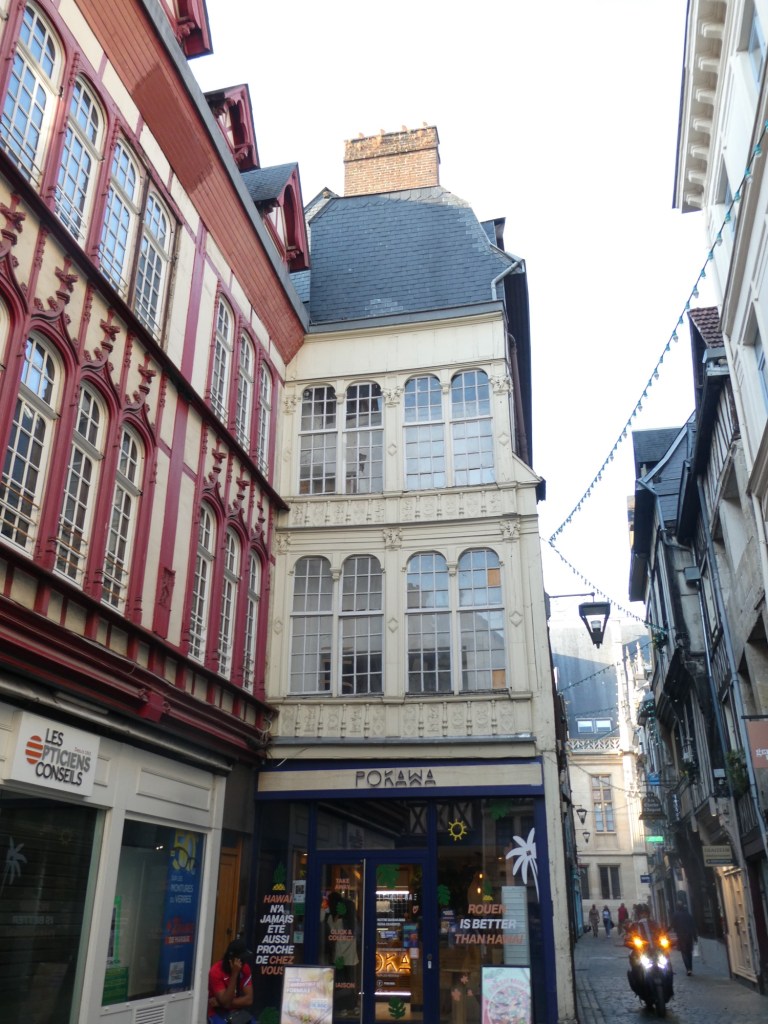
The town of Rouen is famous for its timbered houses. There are over 700 still in use. We also saw a beautiful large clock from the 14th century which is still in use and accurate. The clock besides telling the time also tells the day of the week and the phases of the moon.

Timbered houses
Clock in arched tower
Clock

We also heard the story of Joan of Arc, who as a 17 year old girl helped the French defeat the English during the 100 years war. She told the King that G-d had come to her to lead his men in battle. He agreed and she was able to win many battles. The army that she led grew as she won battle after battle. She was captured by the French, sold to the British and then was burned at the stake. She never wavered in her story and was killed probably because she was a woman who had accomplished much. She became a saint during the 19th century and is the patron saint of France. We saw the church that is dedicated to her in Rouen, supposedly near where she was killed.

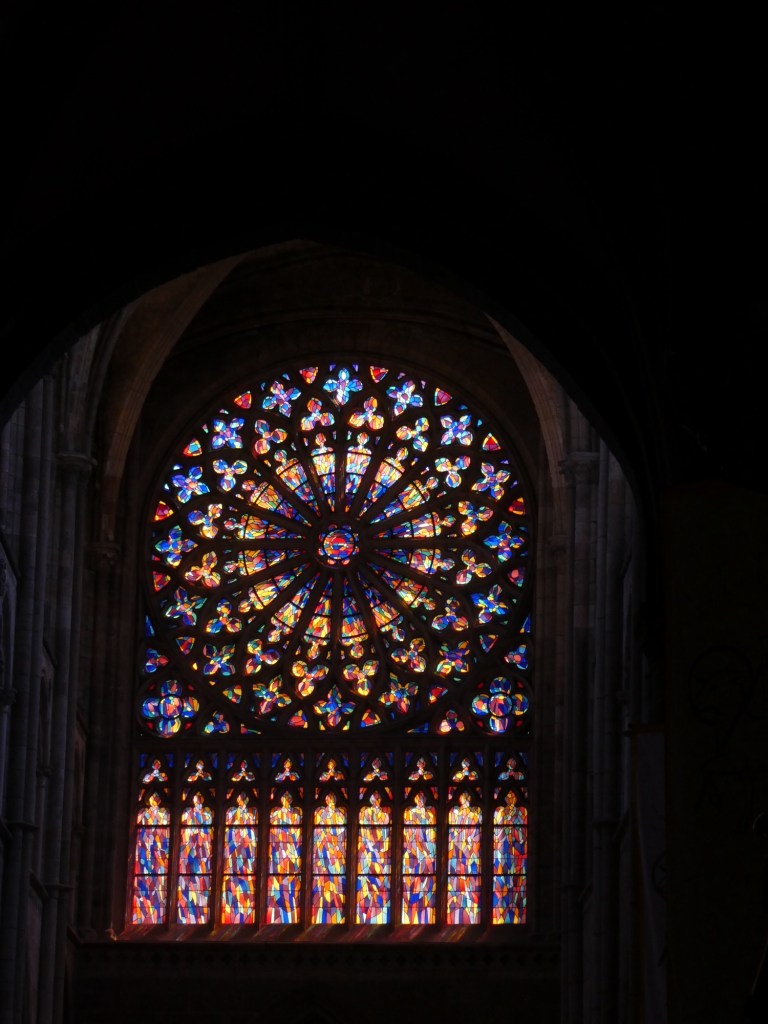
Windows in the church of Joan of Arc
Joan of Arc
Categories: Uncategorized | 1 Comment

Saint Malo, France

Saint Malo started as an island in the 12th century. The city is built on a granite rock. Today it is connected to the mainland because of shifts in the water around it. Our ship did not dock, so we had to arrive by tender.

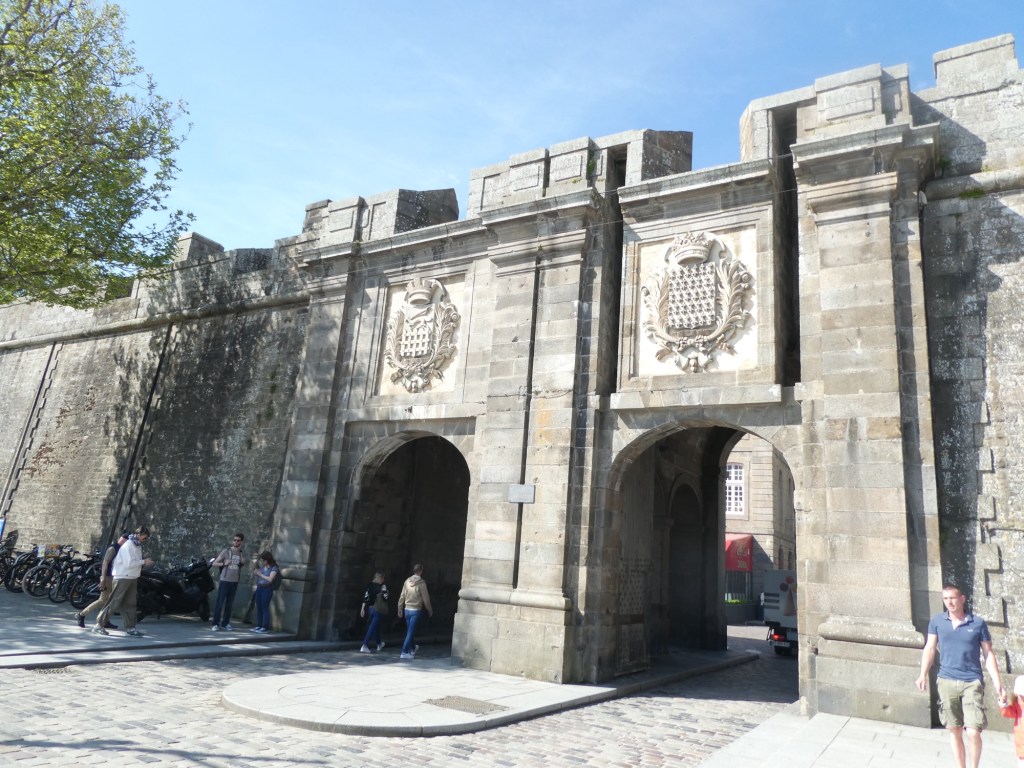
The city is still surrounded by thick walls and you can walk totally around it on these ramparts. During WW II, 80% of the city was destroyed. However, the inhabitants saved the stones and were able to reconstruct the old buildings. There are not many new buildings in the city.

The oldest house, was not destroyed in the war and is 7 levels, 3 underground, and has 45 rooms.

Saint Malo was a rich trading port in the 17th century. There were 3 main gates to enter the city. To protect the inhabitants there was a curfew at 10 PM, large Mastiff dogs were set free and no one could enter the city. The area also had a large ship building industry.

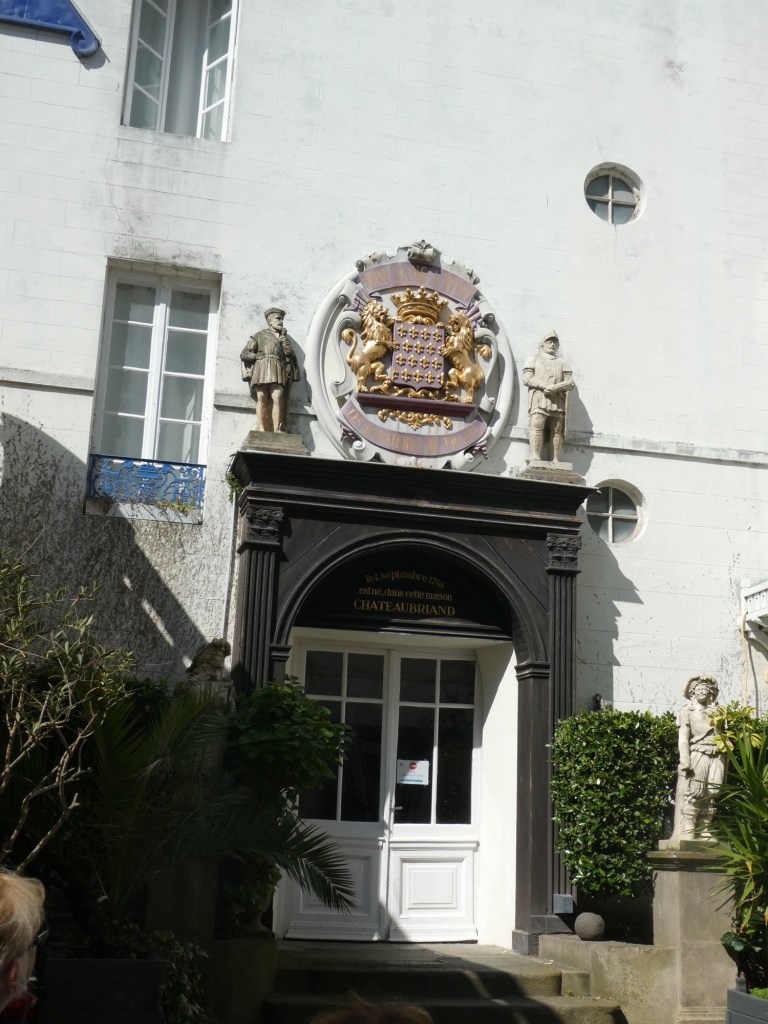
Francois Chateaubriand was born in Saint Malo. The explorer Jacques Cartier left from here to find a way to China in 1535. He did not find China, but did discover Canada and colonized near what is now Quebec.

There are about 5 or 6 smaller islands off Saint Malo which all hold forts. This was the defense for the city from the sea. During all the wars with the English over centuries, Saint Malo was never taken.

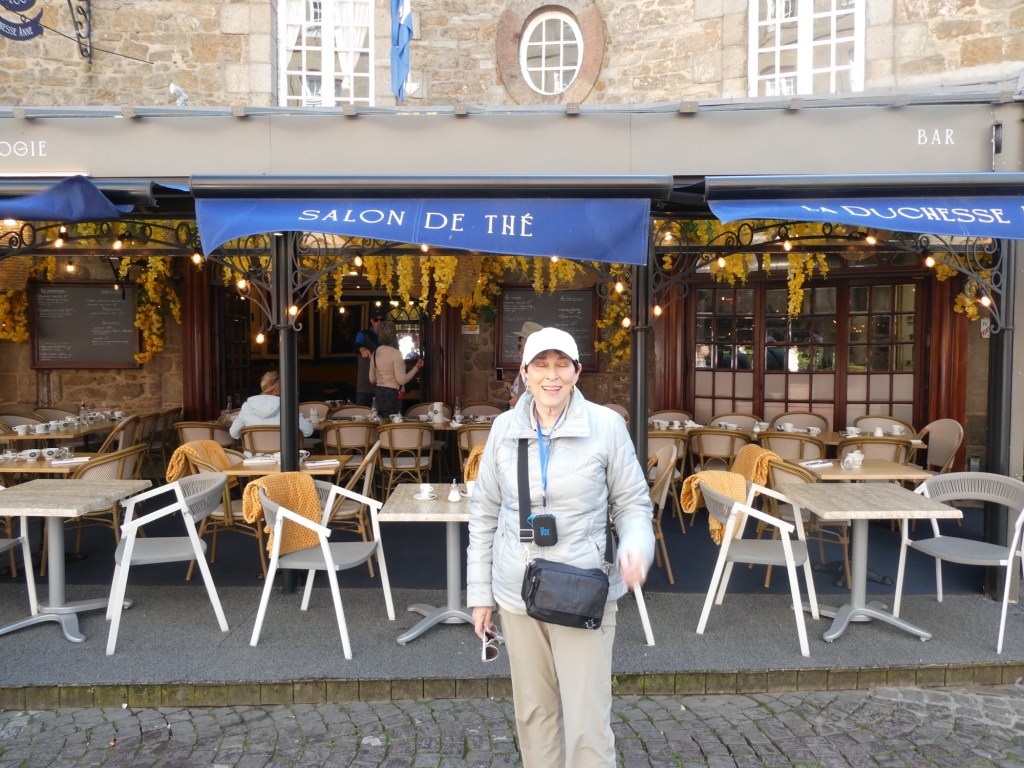
During our walking tour we were treated to crepes and coffee or cider. This area is well known for cider.

City gates
Creperie
Wall with people walking on the ramparts
Coat of arms of Chateaubriand
From the church where Cartier left for his voyage
Islands with forts
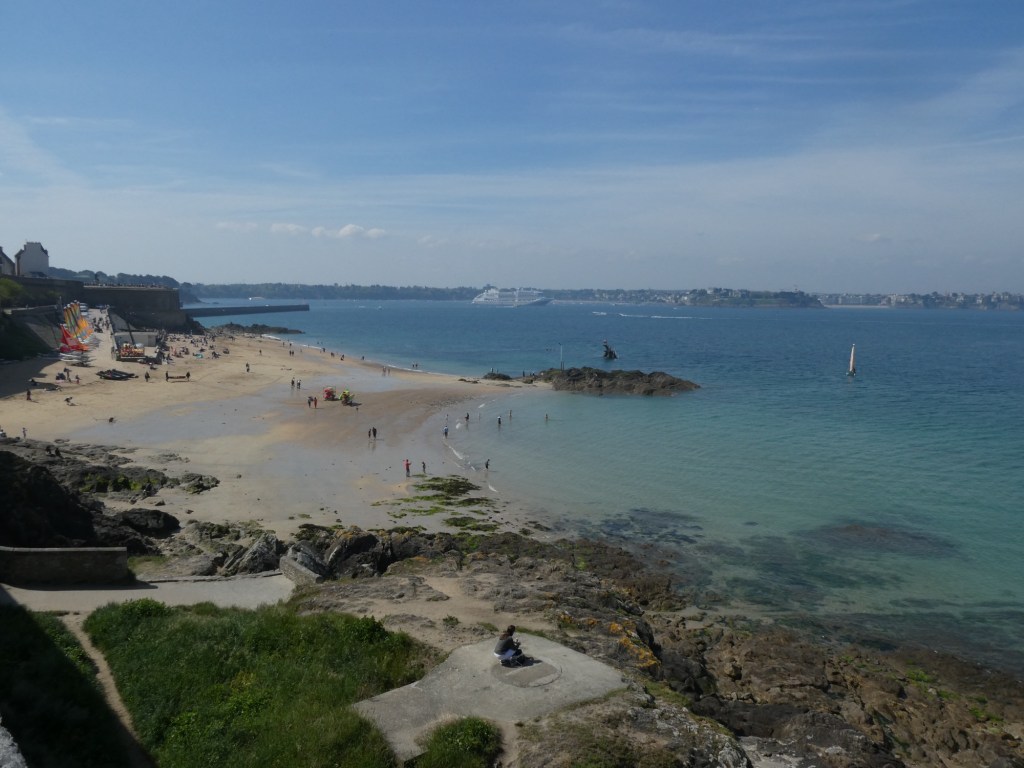
Beach area, islands with forts and our ship anchored off shore
Saint Malo from our ship

During the afternoon, Bob went on a hike. It turned out to be a stroll and he was very disappointed. No photos. He said the walk was along a cliff and pretty, but not what he thought he would be doing. More bus riding than hiking. 😞

Categories: Uncategorized | 1 Comment

Bordeaux, France – Day 3

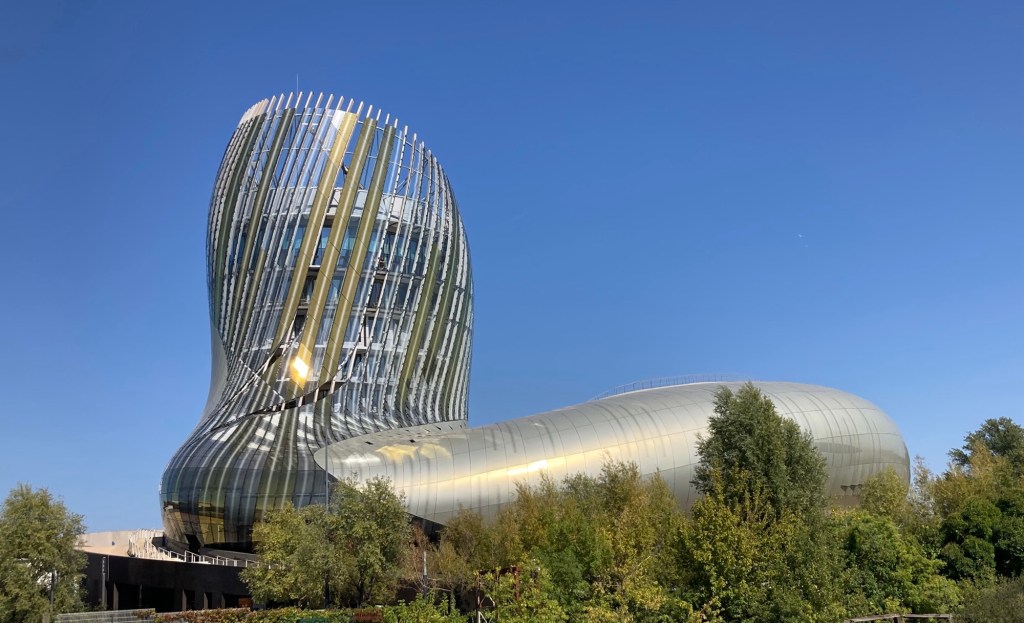
This morning we had a tour of some of the 362 monuments that you could find in the town of Bordeaux. We ended at the Cite’ du Vin, the Wine Museum. The building is very new and modern and the exhibitions are terrific. They are interactive and very informative. There were videos, places to smell ingredients, dioramas and at the top of the building a view of the city and a taste of wine.

The large vertical lift bridge
A view from the wine museum top floor

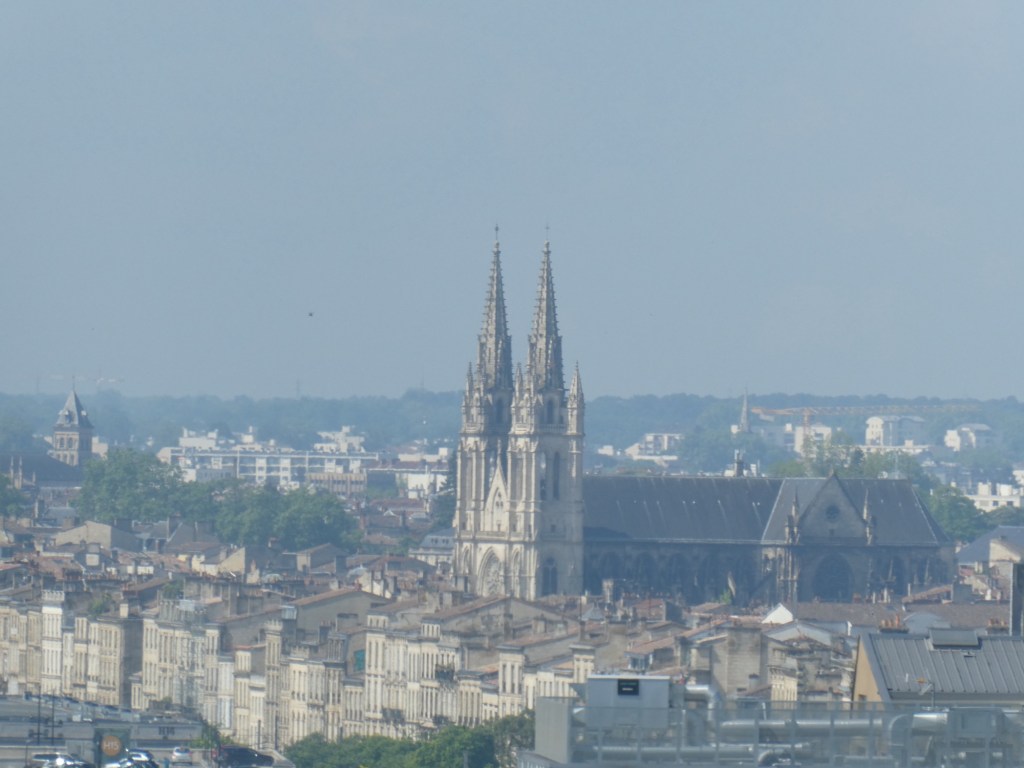
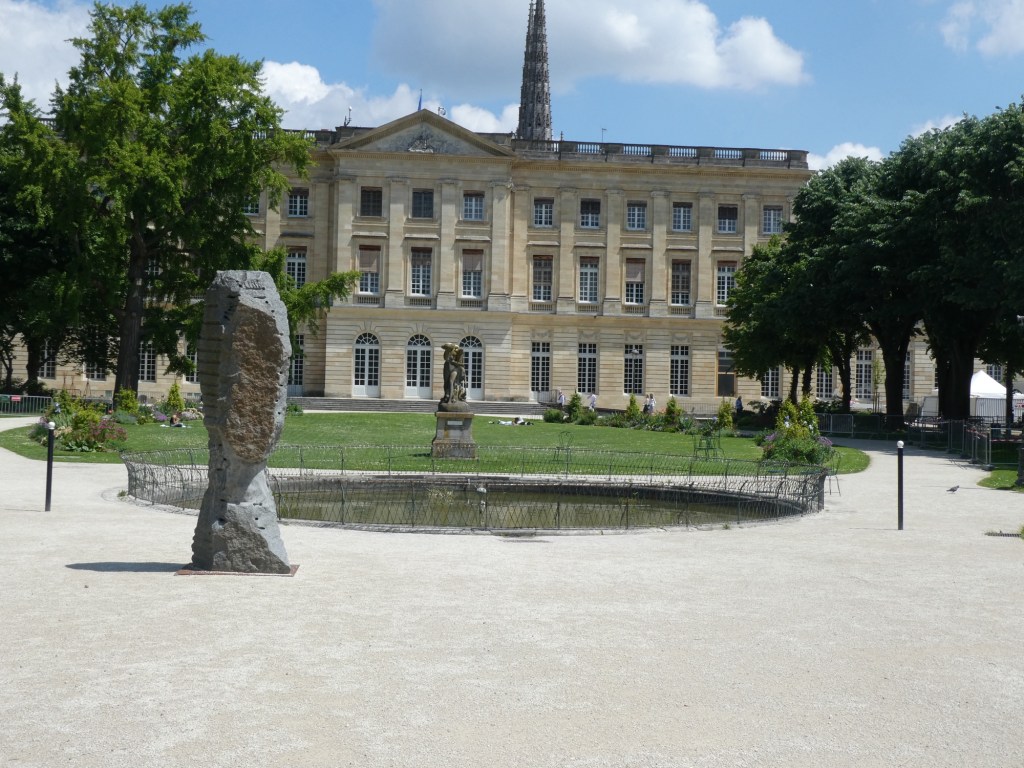
We again walked after returning from our excursion. Our mission was to see the Museum du Beaux Artes and the Cathedral. When we got to the museum it was closed up. Some other people also looking to go into the museum told us that this day, May 8, was a holiday, Victory in Europe day. Something well worth celebrating. Fortunately the cathedral was open so we did accomplished part of our plan.

The art museum
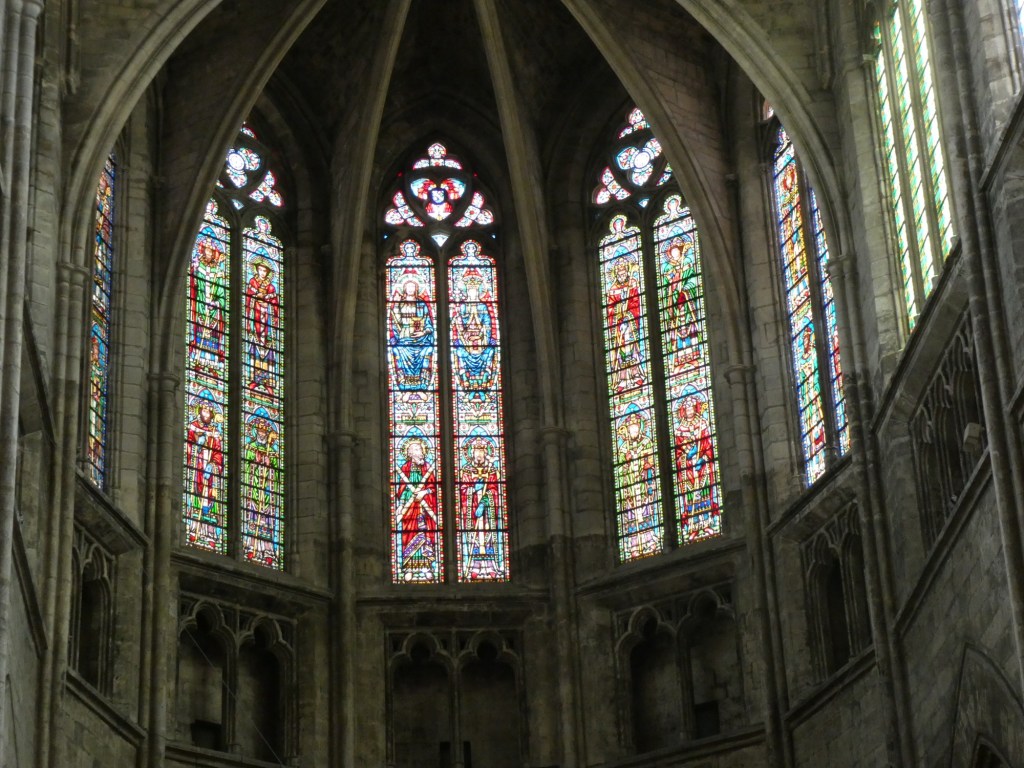
Cathedral of Saint Anthony
Categories: Uncategorized | 3 Comments

Bordeaux, France – Day 1 and 2

After leaving Bilbao we had a full day of sailing to our next port of Bordeaux. We had much calmer seas. The city of Bordeaux is about 60 miles from the Atlantic Ocean on a very wide river, the Garonne River.

The landscape while sailing up the river was mostly flat, and often you could see vineyards on either side of the river.

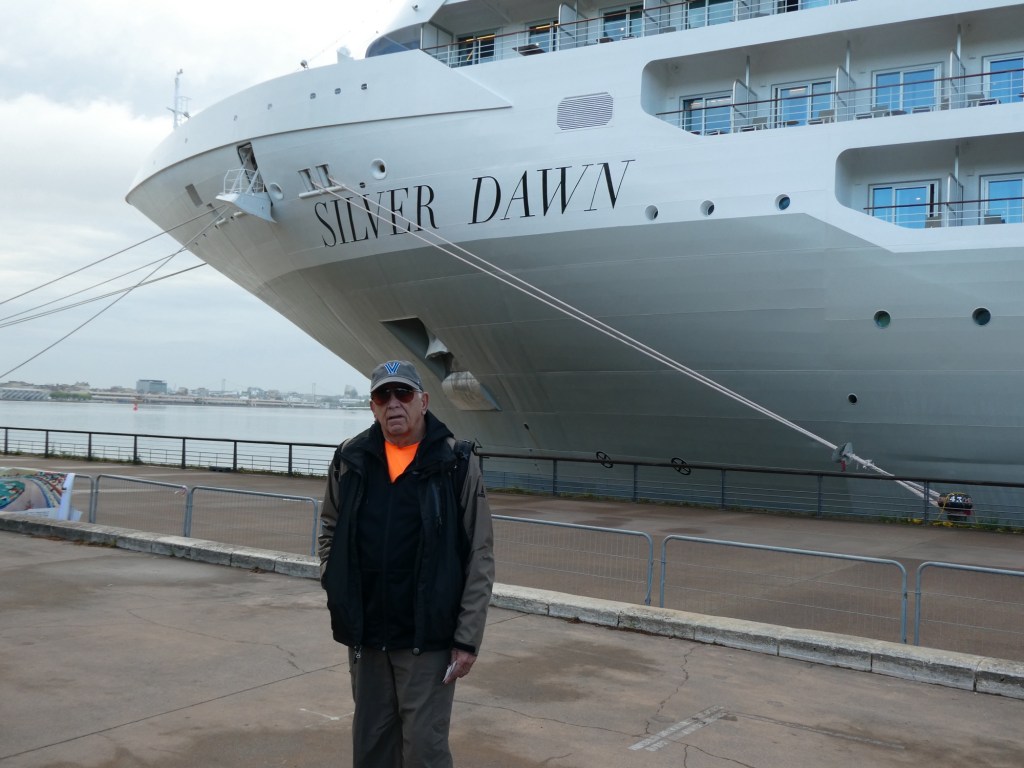
To get the pilot on the ship, he was dropped from a helicopter. Unfortunately it happened so quickly there are no photos. The Pont Jacques Chabang-Delmas is the largest vertical lift bridge in Europe and was built around 13 years ago. Our ship docked right in the middle of the city center. There was another cruise ship docked in the same area and the riverboats were farther away from the town center, but only a short distance.

The city had a modernization renaissance about 10 years ago with many buildings built around that time. However, the old limestone buildings are still prevalent in the city center and are beautiful with intricate details and wrought iron Juliet balconies. They have developed an amazing tram system in the city center which is run on electricity and does not pollute. The city of Bordeaux has about 300,000 inhabitants and in the metropolitan area about 900,000 inhabitants.

The real reason to come to Bordeaux is the wine. There are 300,000 acres of vineyards, mostly producing red wines. Bordeaux region is also the 2nd largest region to produce rose’ wine. There are 65 unique wine regions in Bordeaux, with a total of over 6,000 different wineries.

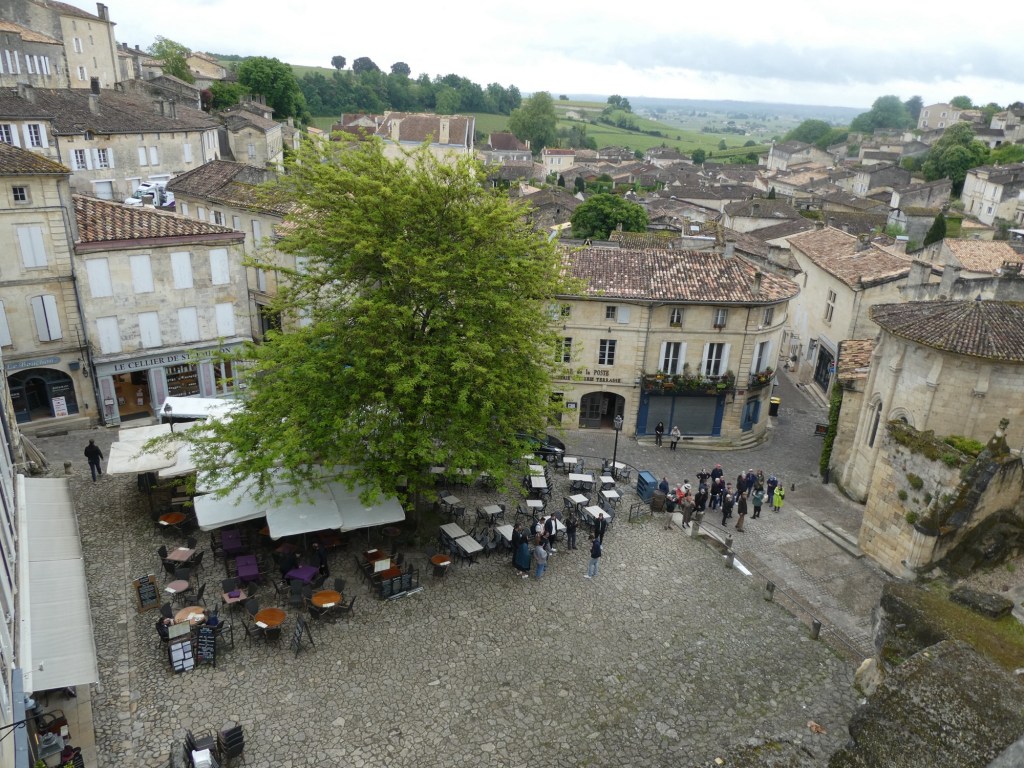
Our excursion took us to the UNESCO village of Saint Emilion. It is about 45 minutes outside of Bordeaux city. The town originated in medieval times as a religious center. This city is on part of the Camino, which we had experienced when we were in A Coruna, Spain.

We heard a great deal about Eleanor of Acquitaine who was both the queen of France and then the Queen of England. Long story, look it up. She was the mother of Richard the Lionhearted and also of King John who signed the Magna Carta in 1215.

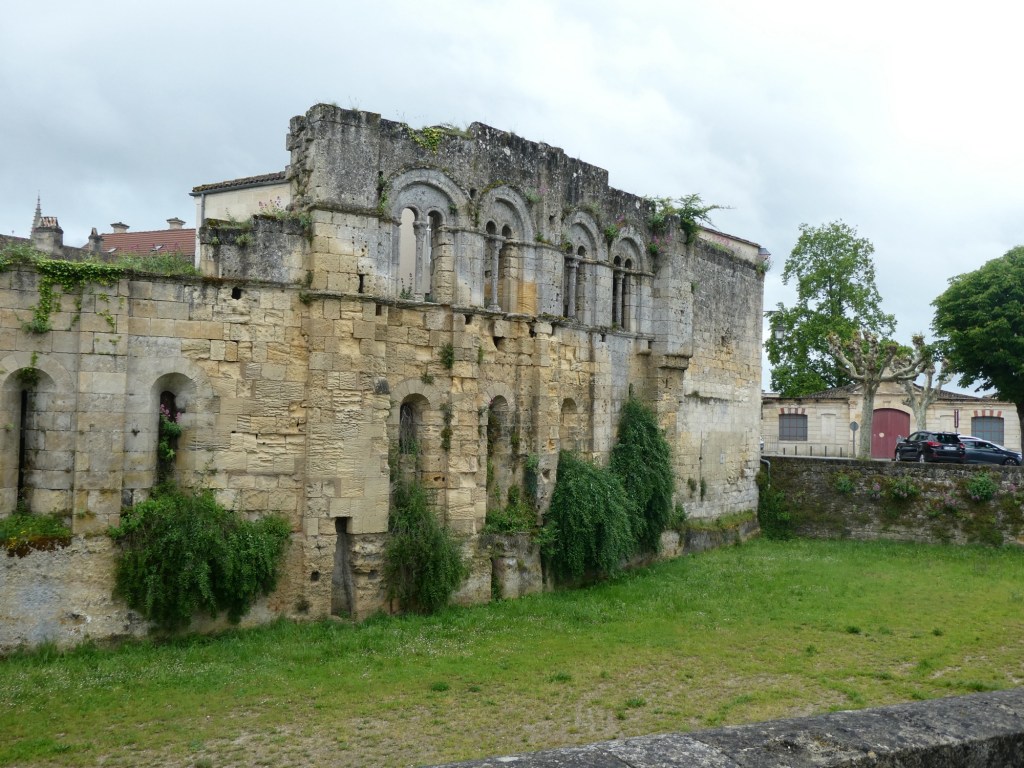
We toured Saint Emilion, which is a walled town and has an upper and lower town. The Romans first brought grapevines to this area about 2000 years ago.

Sailing to Bordeaux, canapés and champagne in our suite
Another cool, wet day
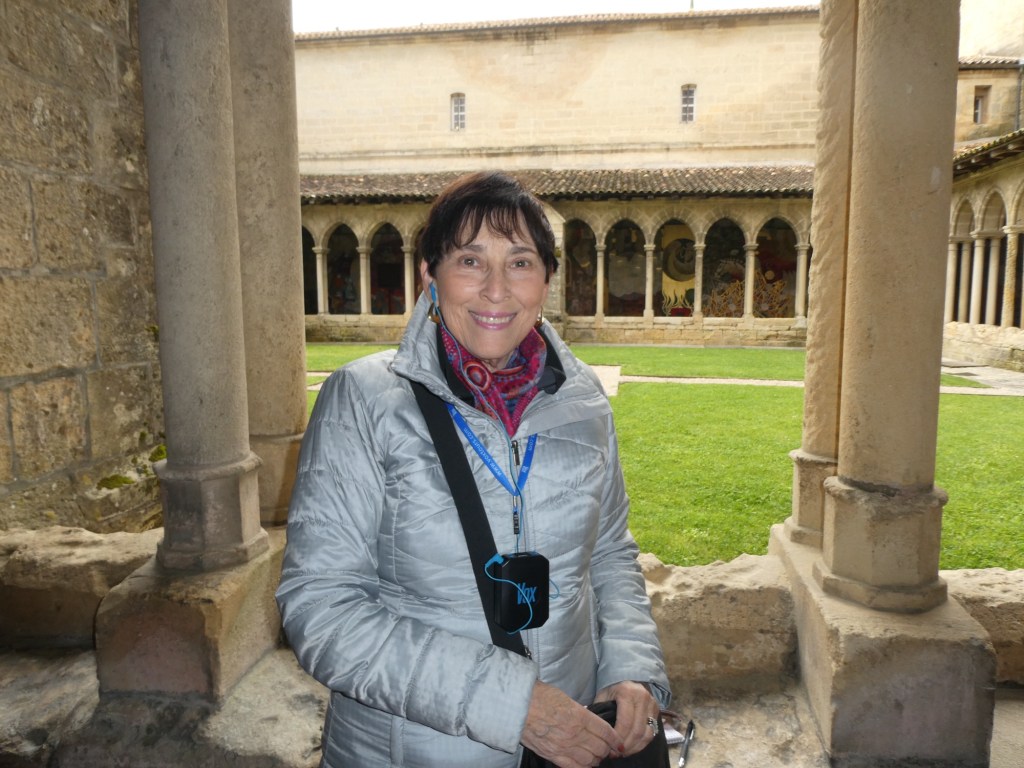
Cloister of church
Lower town area
Macarons

Then we went to a boutique winery where we found out about their way of making wine. They had very modern equipment and only about 15 acres of grapes. They only produce about 2500 bottles of wine annually. At this time of year they are tying up the vine tendrils which can grow up to 3 inches a day. Later in the season they may prune some of the vine clusters to have “quality not quantity” from each vine. It takes 8 to 12 bunches of grapes to make each bottle of wine.

When we got back to the ship we walked around a bit, but rains drove us back. Later after dinner we did stroll along side the river.

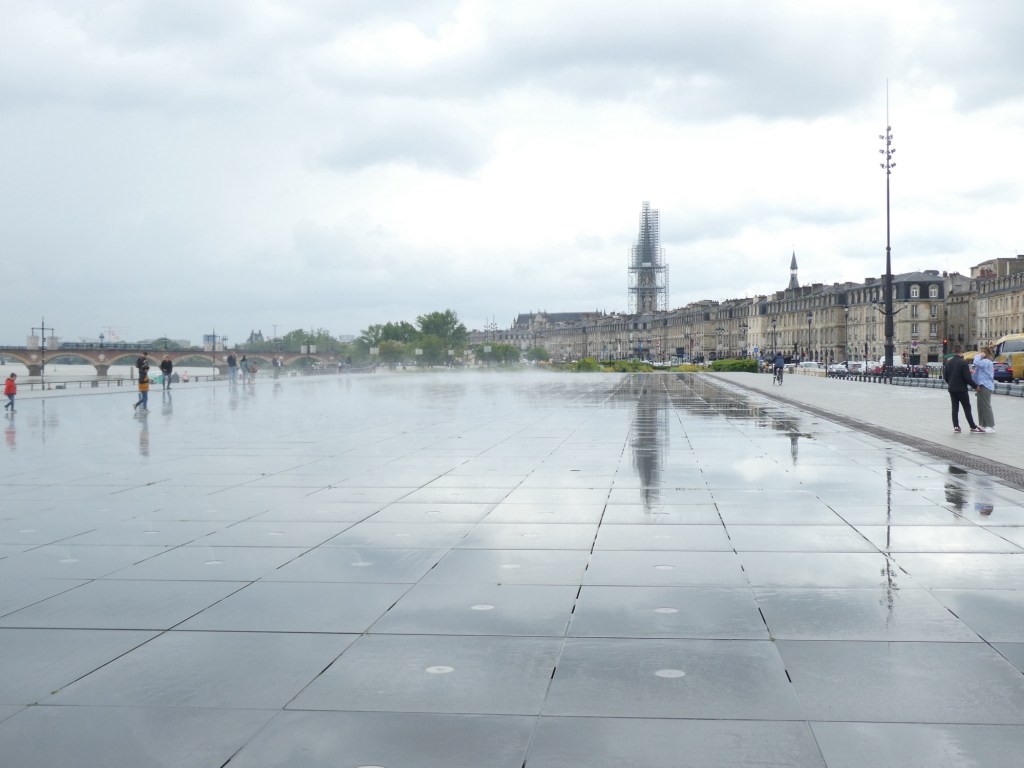
The Water Mirror – difficult to get a photo with grey skies
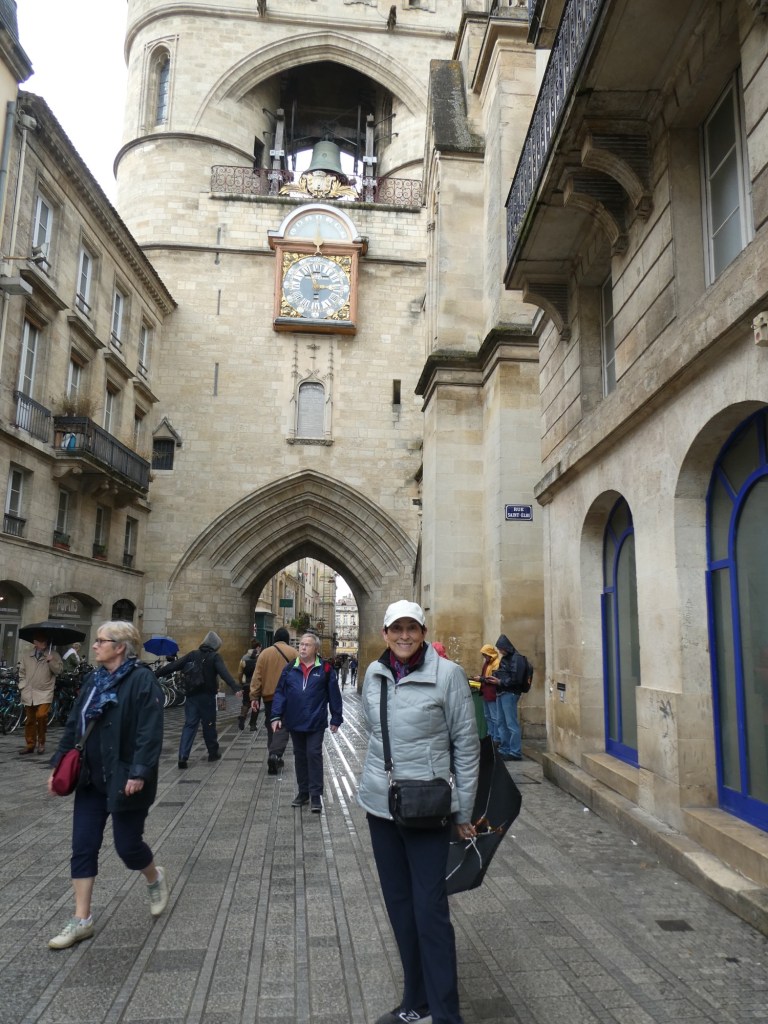
One of the city gates from the 15th century
Another gate also from the 15th century

Categories: Uncategorized | 1 Comment

Bilbao, Spain

The town of Bilbao is approximately 8 miles up the river Nervion from the Atlantic. There is a population of about 450,000 in the city itself and 1 million in the suburban area. Until approximately 50 years ago the port for Bilbao was in the city itself. The area was originally a fishing village established in the 14th century. There are many iron mines around this area and the town had many foundries and other processing plants to turn the ore into steel and then products made of steel. There were also many ship building sites in the city.

The city was very rich into the early part of the 20th century but then in the 70s and 80s the economy turned and the city decided to change their history. The port was moved to the mouth of the river and the steel mills and ship building was stopped. The city decided to improve the life of their inhabitants and provide for a better life long term.

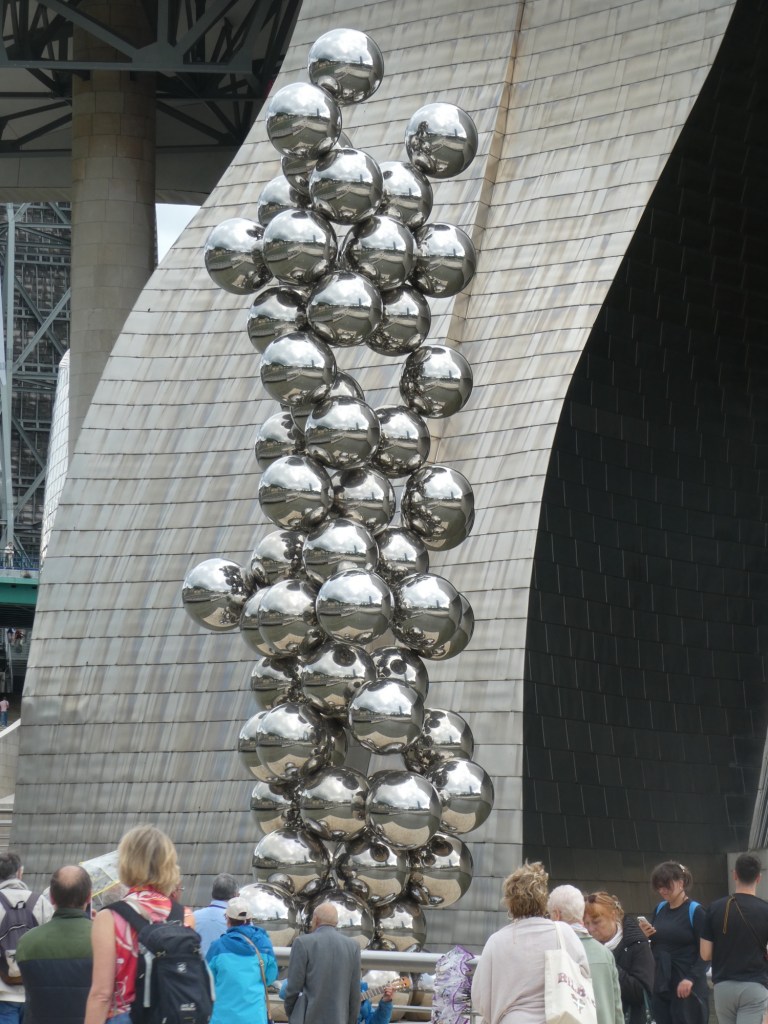
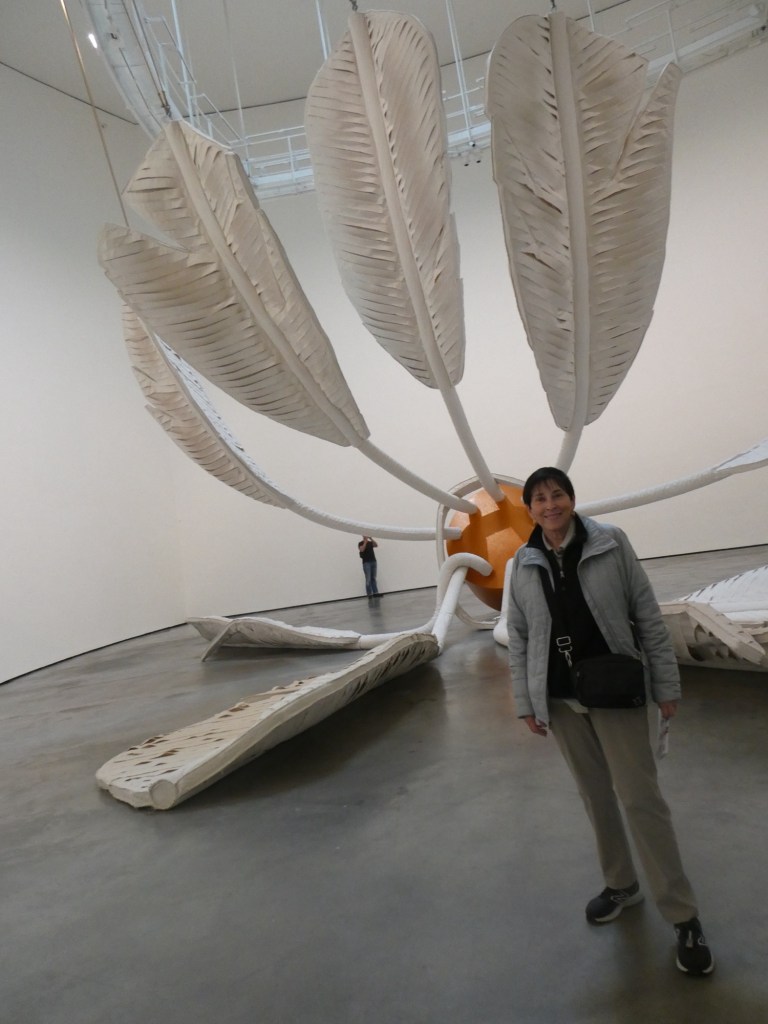
The Guggenheim Foundation was looking for a place to have a new museum in Europe and Bilbao threw their hat into the ring. They agreed to fund the entire cost of the museum with the foundation providing the art. When the city decided to do the revitalization they decided that they would only allow buildings, bridges and parks to be designed by well known architects. The results are amazing and the city and landscape of Bilbao is quite sophisticated.

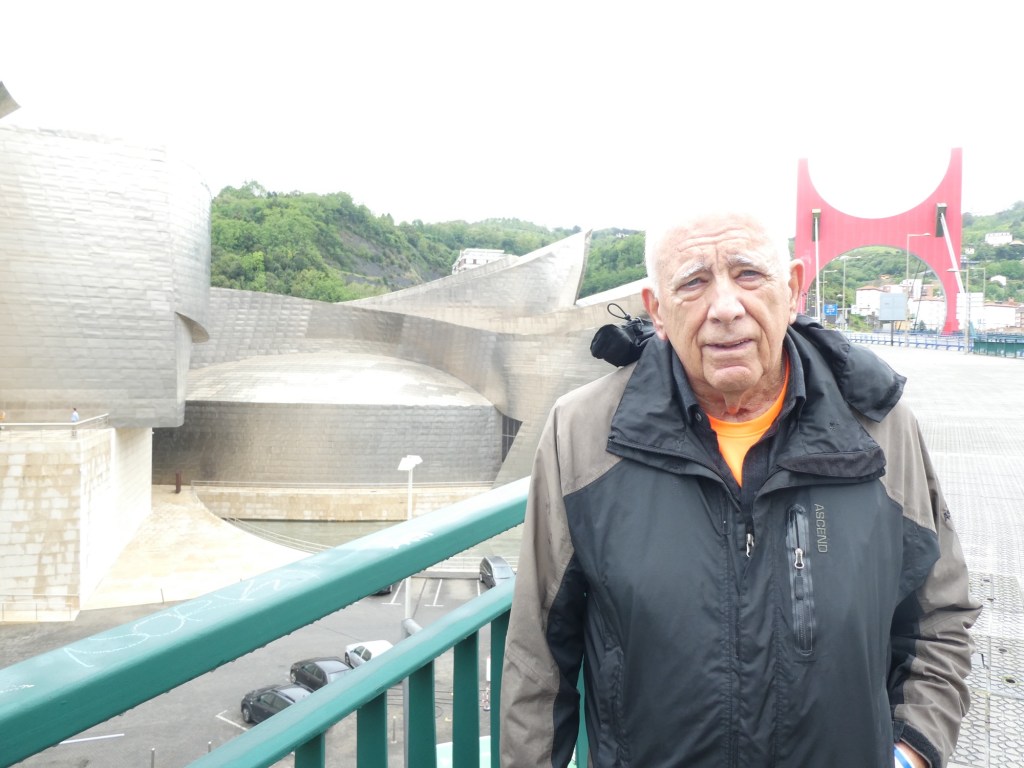
Frank Gehry won the competition for the design of the museum which is quite iconic. It was finished in November 1997 at a cost of 350 million Euro. The first year it opened there were 2 million visitors and now they average over 1 million visitors a year. The town citizens were leery about spending the money to build the museum, but their economy has blossomed because of the tourism it has created.

We started the day with just overcast skies but ended with heavy rains which limited our ability to got photos of the building. The art is very avantgard, but the building itself is what you want to see.

Outside the Guggenheim
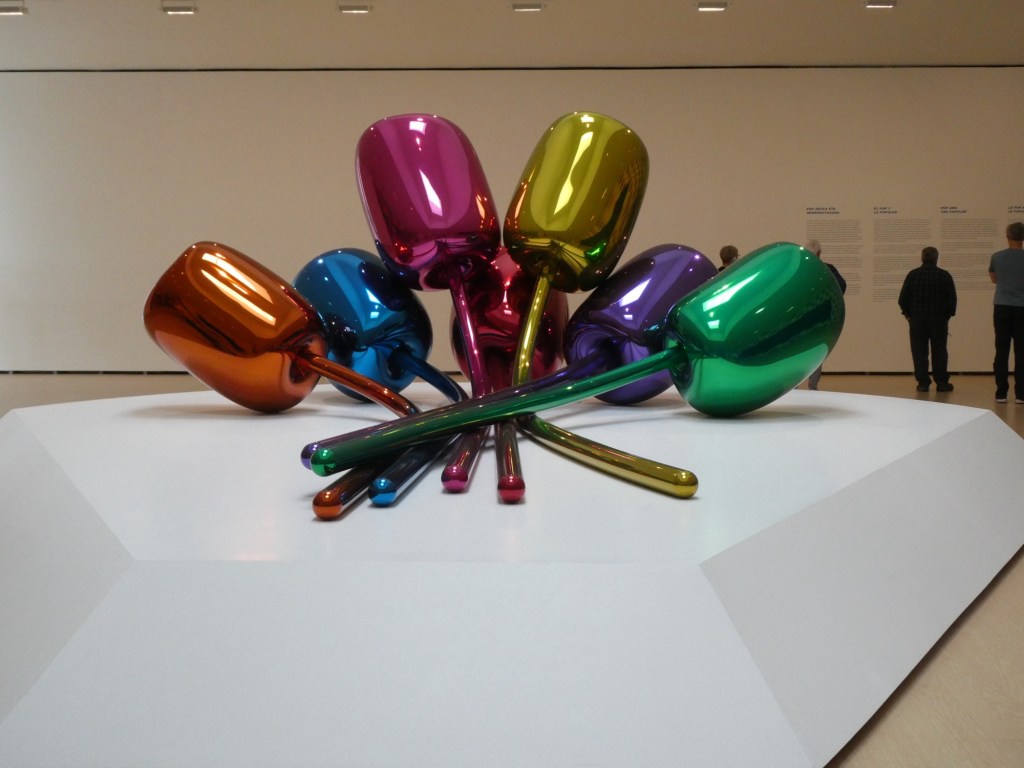
Jeff Koon’s Tulips
Inside the mirrored room by Yayoi Kusama
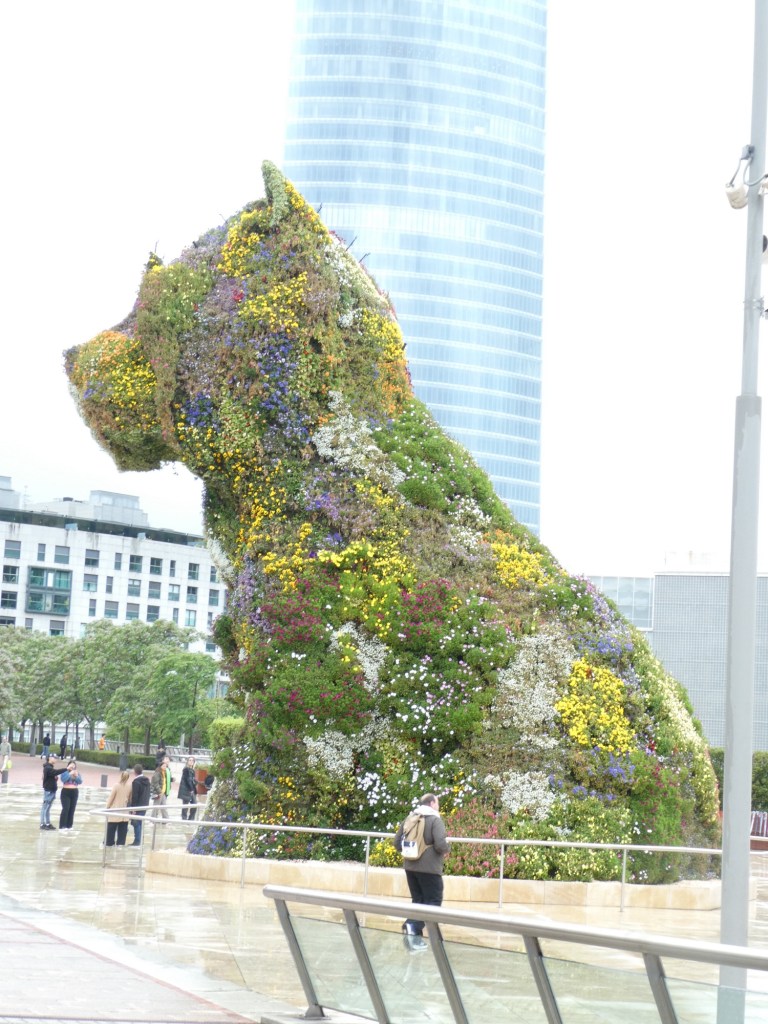
Jeff Koon’s Puppy ( covered entirely in flowers)
Categories: Uncategorized | 1 Comment

Blog at WordPress.com.