Monthly Archives: December 2024

Malaga, Spain – December 14

Today Bob and I went on different excursions. Mine was to the mountainside village of Mijas. Bob’s was to a cave and the town where the cave is located.

The main economy of Malaga is tourism. In season there can be 7 cruise ships in port. Today we were the only one. Malaga is the 6th largest city in Spain. With the surrounding area the population of Malaga is about 2 million.

Malaga is on the Costa del Sol with around 300 days of sun a year. In the summer it can get to almost 100 degrees with a lot of humidity. It too was founded by the Phoenicians around 2,800 years ago. The Phoenicians came to this area because of the abundance of minerals, copper and silver. When driving out of the port area we passed many high rise buildings that overlooked the Atlantic. Our guide said that they were the most expensive properties in Malaga.

She told us about 2 famous people born in Malaga; Picasso and Antonio Bandalares. Picasso, born in 1881, only lived here for 9 years. He spent most of his life in France and could not return to Spain because of Franco, a Fascist and Picasso a communist. Franco came into power after the Spanish Civil War, 1936 – 1939. He ruled until his death in 1975, at which time Spain became a democracy.

Bandalares has homes here still and returns yearly for Easter. He has 4 restaurants in town, has built a theater and does good work for the city.

Mijas is a town on the side of a mountain about 30 minutes from Malaga. All the buildings are white. It is a very wealthy area with many people retiring here from all over the world. There are other towns closer to the water that are also made of white buildings. In the lower areas closer to the water there are 16 golf courses.

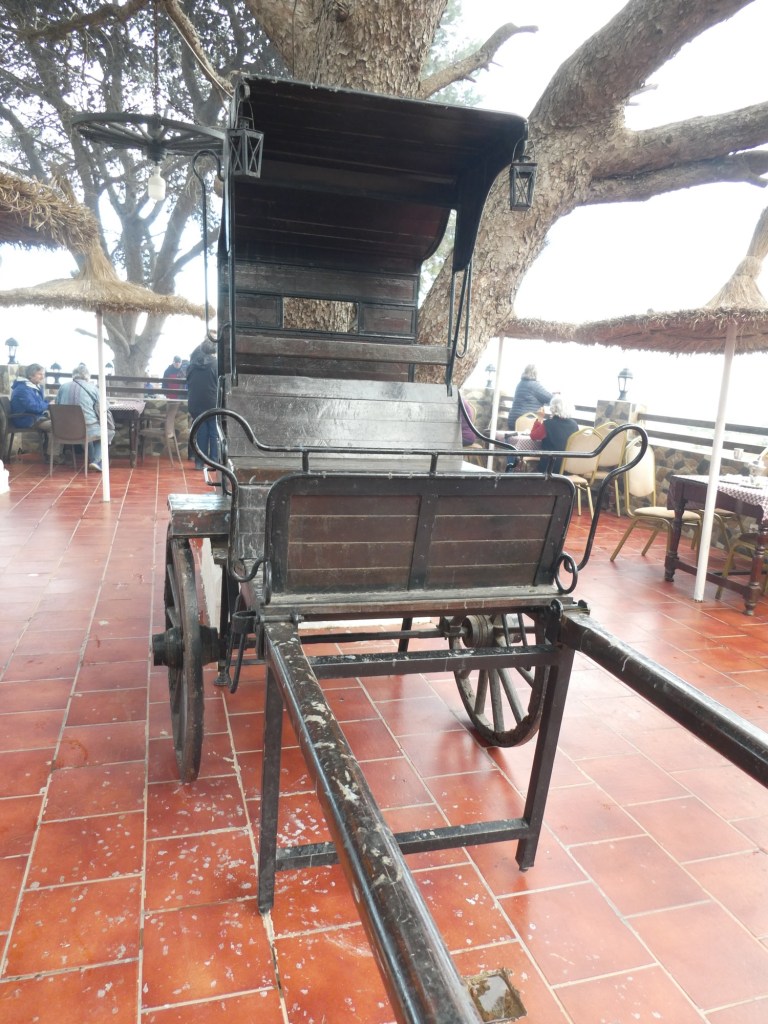
The symbol of Mijas is the donkey. There were carts available for donkey rides. The donkeys were originally used to haul the good to build the buildings up the mountain, but the owners soon discovered they could make more money giving people rides than hauling goods. Nowadays goods are brought in by truck.

Our guide on the donkey statue
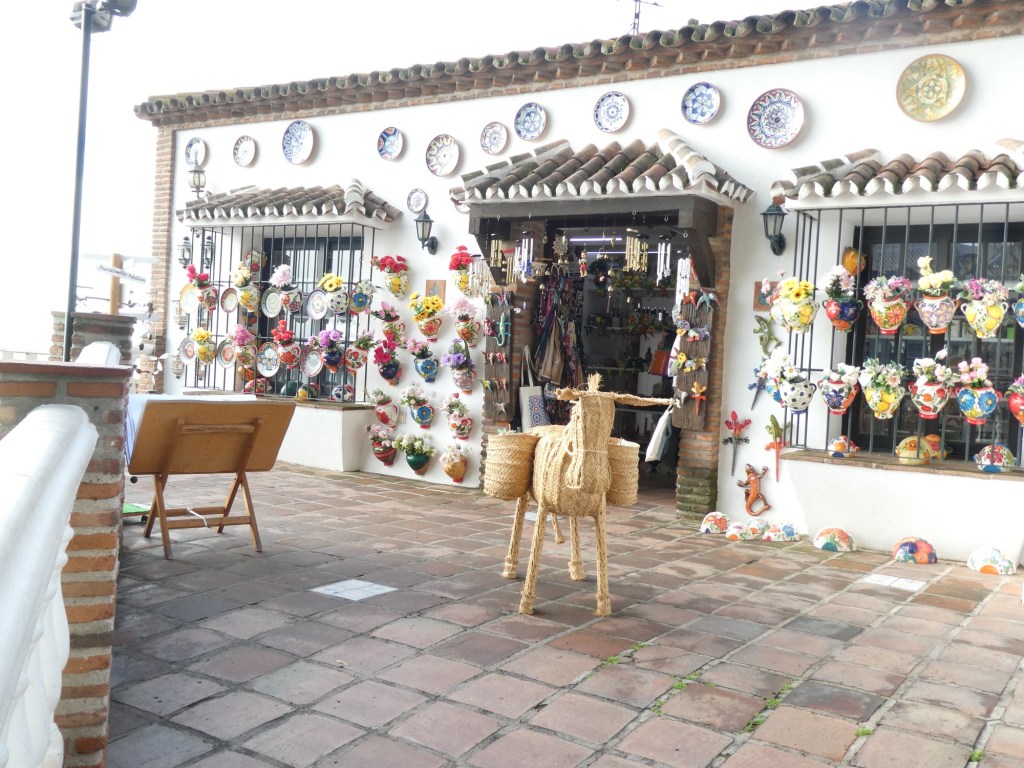
Because the buildings are all white they decorated them with colorful flower pots
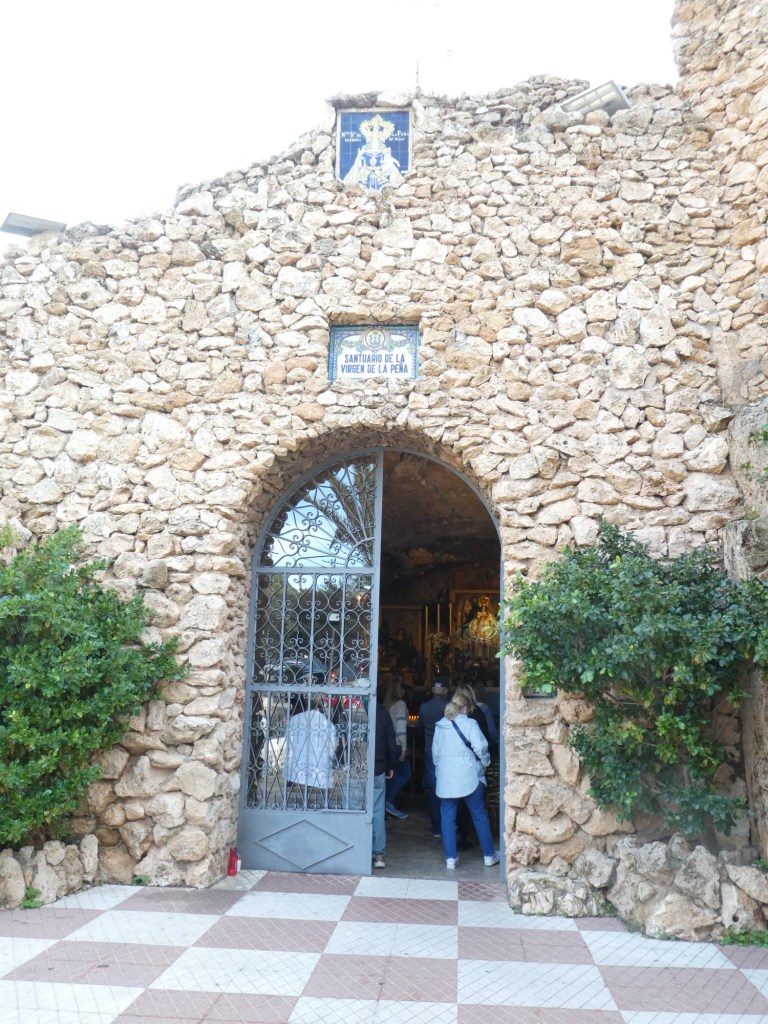
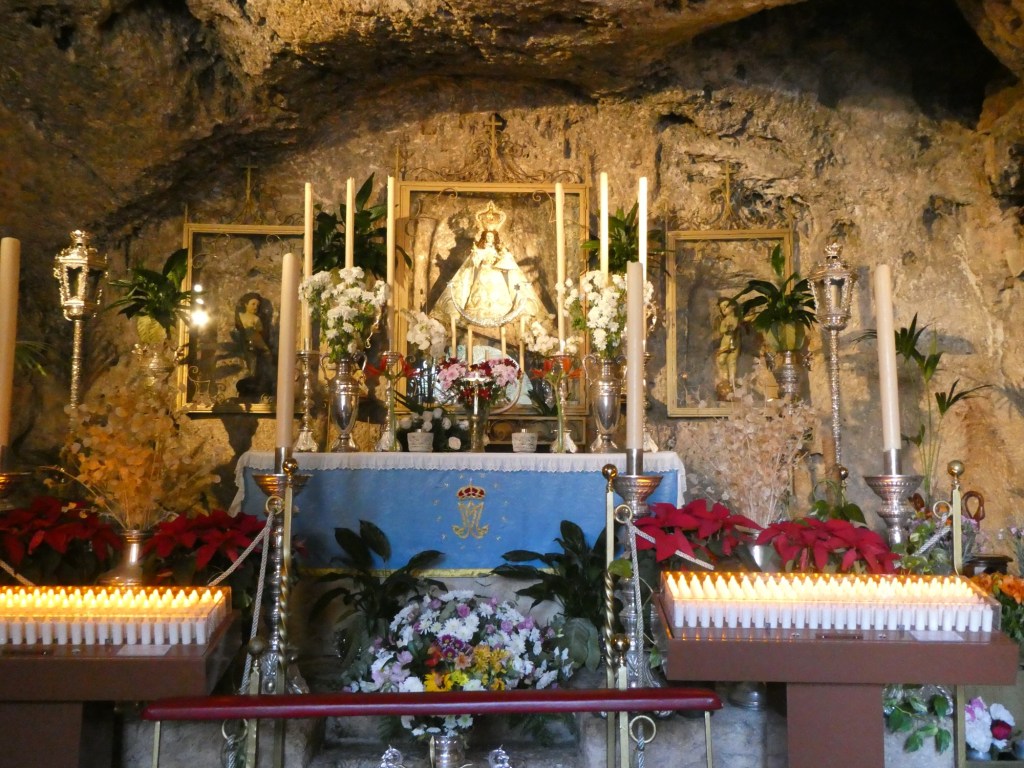
A church in a cave like building

The town also has a small bullring. It is oval in shape.

We had a tapas tasting in the local chocolate factory. We had meats and olives and chips and wine. They had a presentation on chocolate and on how they make it here. We then got to taste the dark, milk, white chocolates and also had a bonbon.

Yum!

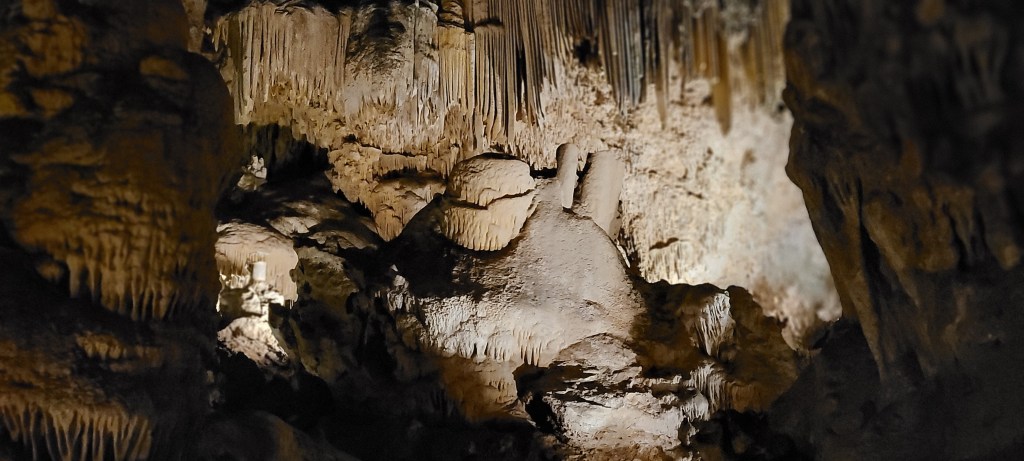
Bob went to Nerja Cave and said it was very interesting. He said there were 480 steps going down and up. The cave was discovered by some boys who saw bats coming from the mouth of the cave.

Categories: Uncategorized | Leave a comment

Cadiz, Spain – December 13

Cadiz is one of the oldest cities on the Atlantic coast in Europe. It was founded by the Phoenicians around 3,000 years ago. It overlooks the Straights of Gibraltar and 2 of Columbus’ trips started from here. When the Romans overtook the town there were about 50,000 people living here. The Romans built an aqueduct from the mountains that was about 75 kilometers long. The city was walled in the past. During our walking tour we saw the 2 remaining gates and part of the original walls.
Around 1717, was the heyday of the city. It was a major port for trade with the Americas. The legend of Hercules originates in this area of Europe. At Gibraltar there were messages to sailors to “go no further” and then the new world was discovered. According to our guide, the Temple of Hercules was recently found in the waters near this city.

Many of the streets do not have cobblestones, but river rocks from America. This is because the ships would use the river rock as ballast and off load it here before taking on the Spanish good to trade.

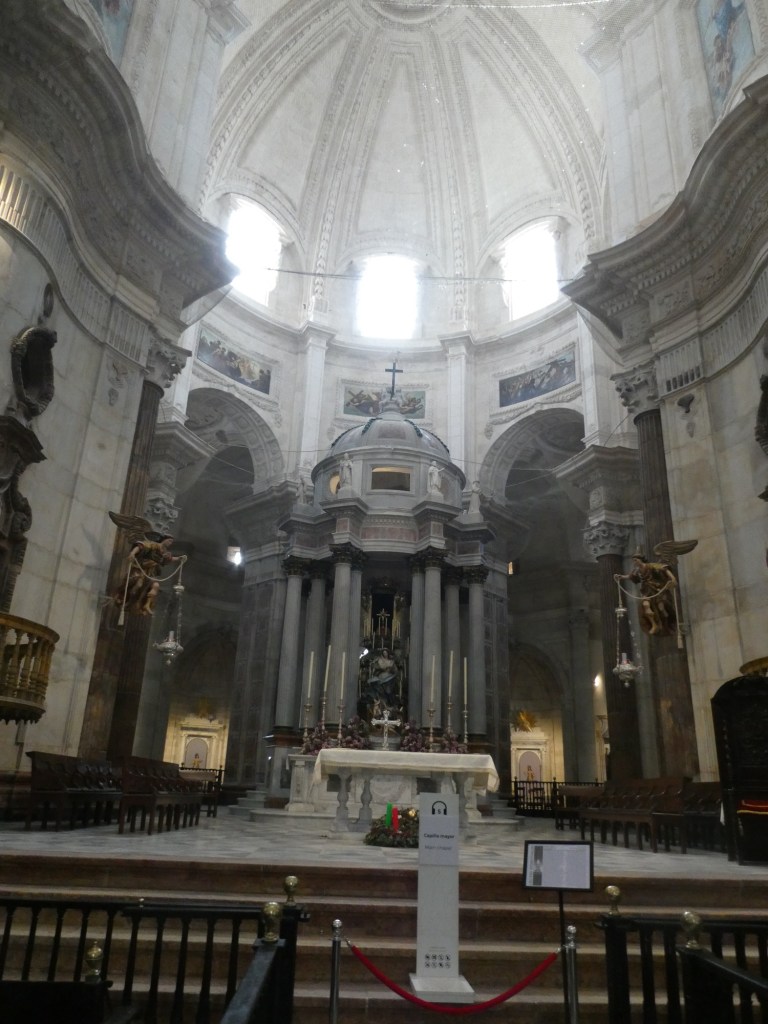
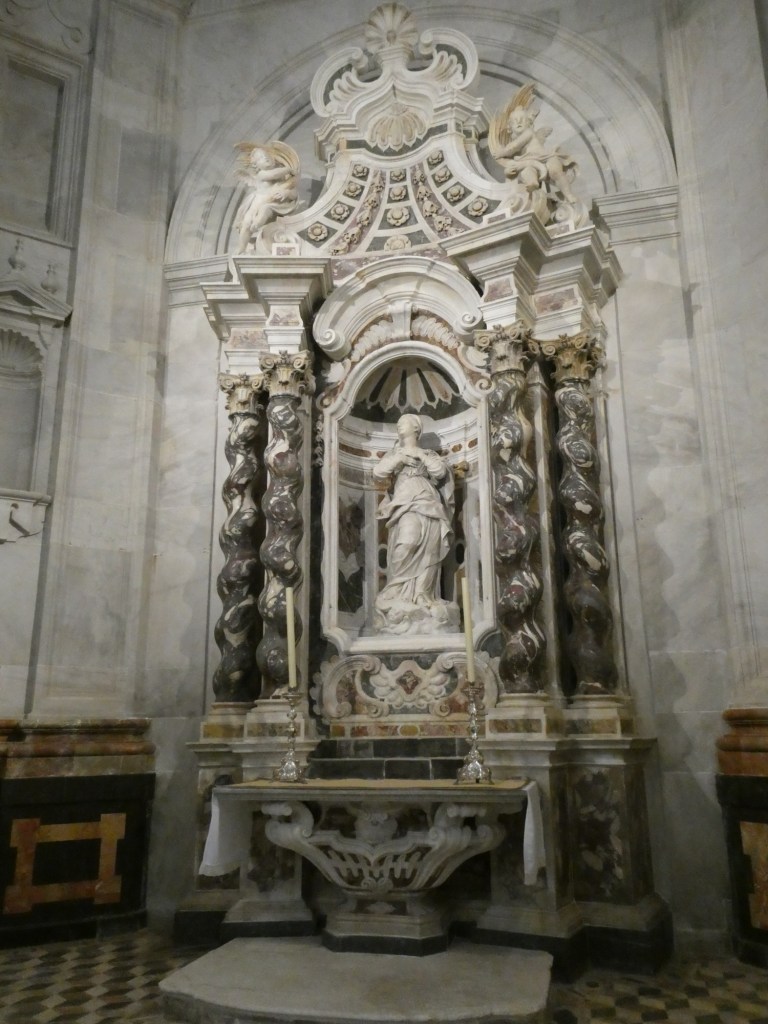
The old cathedral was originally a mosque. We could not go into it. The building of the new Cathedral was begun in 1722. It took 116 years to complete. The crypt is below sea level but stays dry. There is a spot in the crypt where if you make a loud noise it will echo 16 times. We tried it and it did! The Cathedral’s organ contains 17,000 pipes.

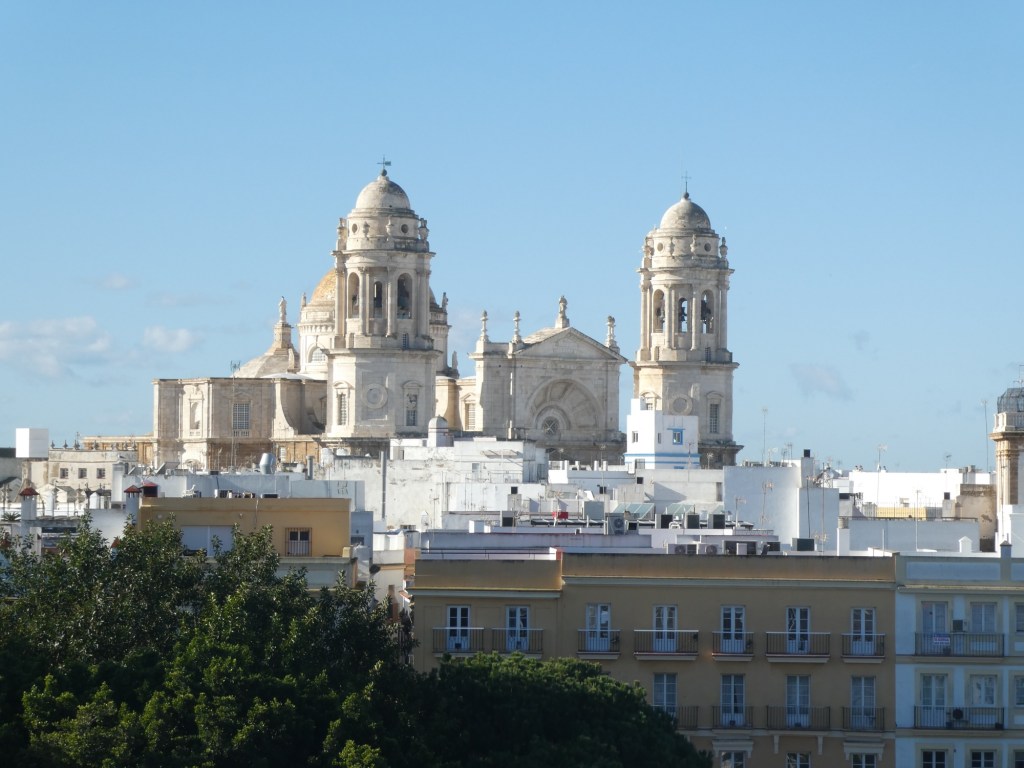
The Cathedral from our ship
Main plaza near the port area
City hall
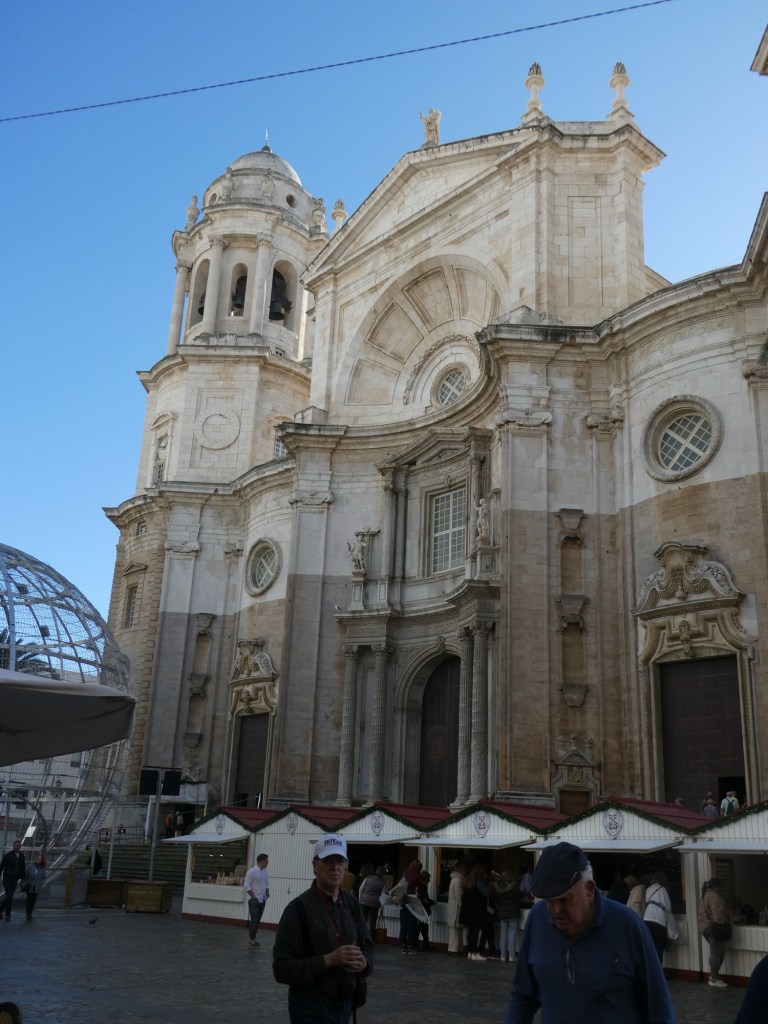
Entry to the Cathedral

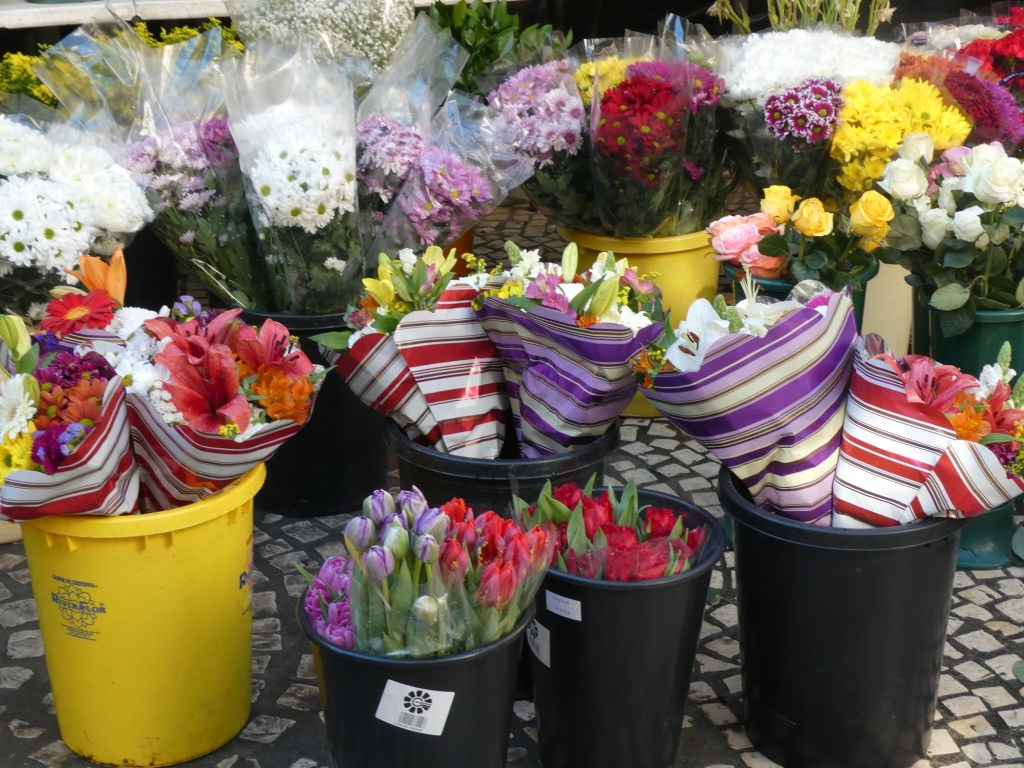
After visiting the Cathedral we walked through many of the plazas. We saw Plaza de la Flores, Plaza Candalaria and Plaza San Antonio. Most of them were lovely parks surrounded by old buildings. The streets in the old part of the city were narrow and winding.

Cadiz is also called the city of 100 towers. They get about 300 days of sun being on the Costa de la luz. Many movie companies film here because of all the great light. The new part of town was not started until the 1950s. The city actually is almost like a peninsula with water around a good portion of it. The waters were very clear. Locals are not allowed to scuba dive or snorkel because there are so many shipwrecks and ancient structures in the surrounding waters that are valuable and can only be accessed by government agencies.

In ancient times because there are very high tides here, they were able to mine for salt. It was a valuable commodity and even soldiers were paid in salt.

Today the port is busy with cruise ships and commerce. They export from here wheat, olives, oranges and cotton to name a few.

Cannon from the time of Napoleon
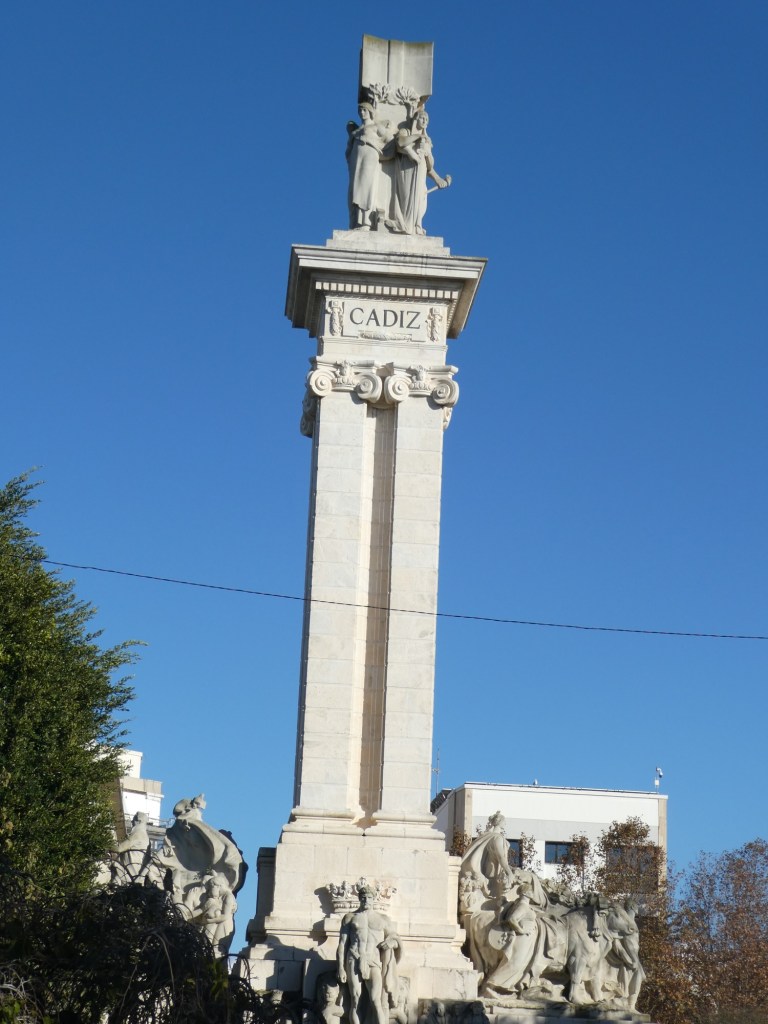
Monument of the Constitution built to commemorate 100 years in 1912

When we returned to the ship we had tea and scones.

Categories: Uncategorized | Leave a comment

Casablanca, Morocco – December 12

Casablanca is a port city and commercial hub of western Morocco. The population is over 4 million in the entire region and the 8th largest city in the Arab world. It is also the country’s primary base for their Navy. The area was founded by the Berbers in the 7th century BC. It was used as a port by both the Phoenicians and Romans. One of its ancient names was Anfa.

Our guide explained to us that the people are very accepting of all religions. There was a large Jewish population in Casablanca but many left in the 1950s to go to Israel. There are still 12 synagogues in use today.

In 1943, Churchill, Roosevelt and DeGaulle met in Casablanca to discuss the war and it was called the Anfa Conference. At this conference the allies adopted the idea of “unconditional surrender”.

The French took control of the area in the early 1900s and their influence can be seen in the architecture and language. Morocco became independent in 1956. They are a monarchy with the King (never a queen) having absolute control of all aspects of the country. There is a parliament of elected officials but all laws and rules must be approved by the King.

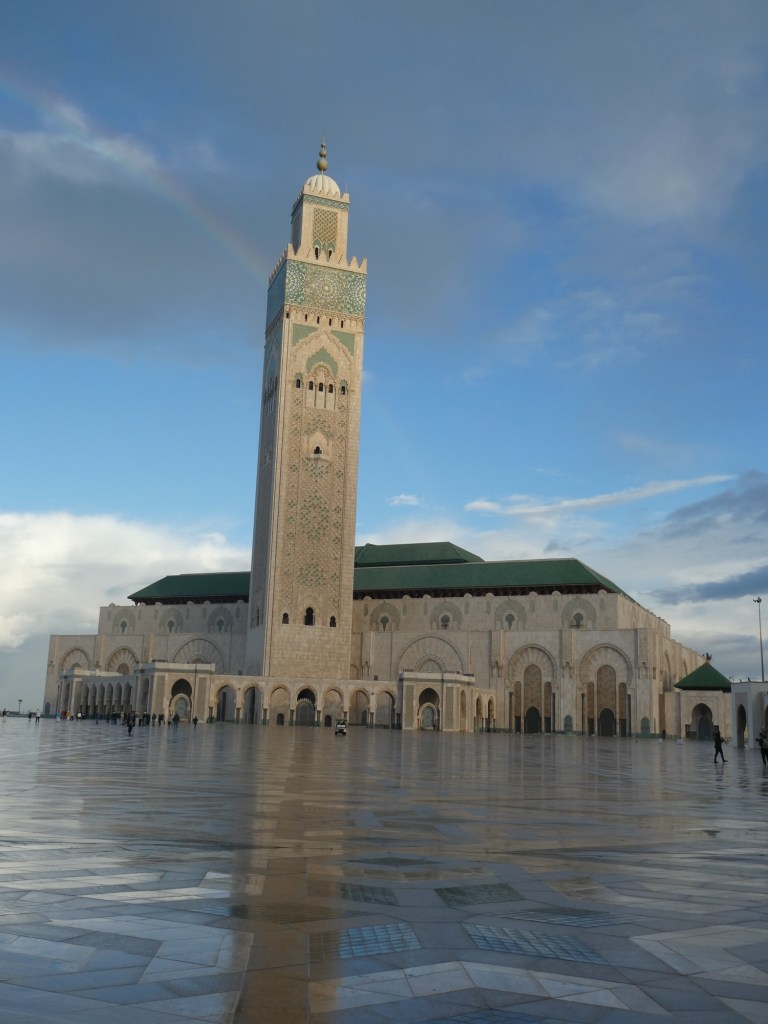
Our tour started with a visit to the Hassan II Mosque which is the 3rd largest mosque in the world. It has the highest minaret at 600’. The call to pray is still done by a person and not a recording. At the top of the minaret, and actually at the top of all minarets, are 3 balls representing the 3 main religions of the world.

The mosque is actually built over the Atlantic Ocean with pilings going down 180 feet to support the building. The roof of the mosque was green indicating it was an important building. It was opened in 1997 after 6 years of round the clock building at a cost of 1 billion.

Our guide, Hamid, who was fabulous, explained the 5 pillars to be a good Muslim: declare your faith, pray 5 times a day, observe Ramadan, give charity/be generous and go to Mecca. He told us that the purpose of the mosque is for prayer only. To be married you go to a judge. He also told us that it has only been in the last 20 years that marriages that were not arranged have happened. He met his wife at university and when he told his mother he wanted to marry her, he was told no. It was only after his sister intervened that they were able to marry. As the oldest son, they lived with his family for about 5 years before getting a place of their own.

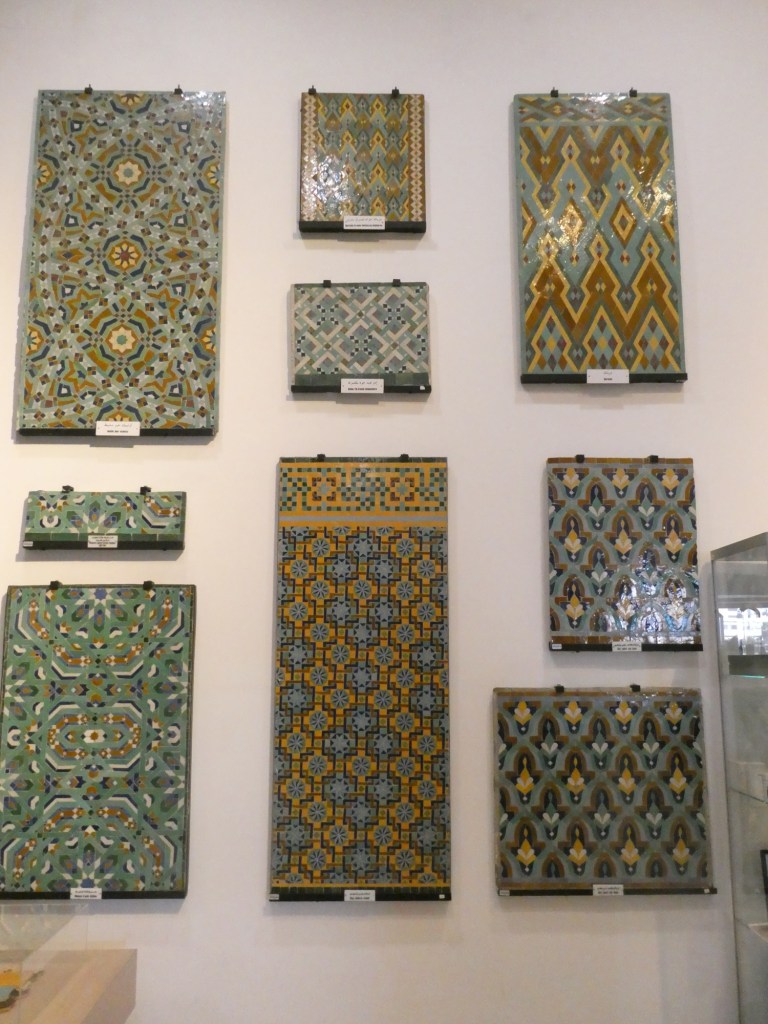
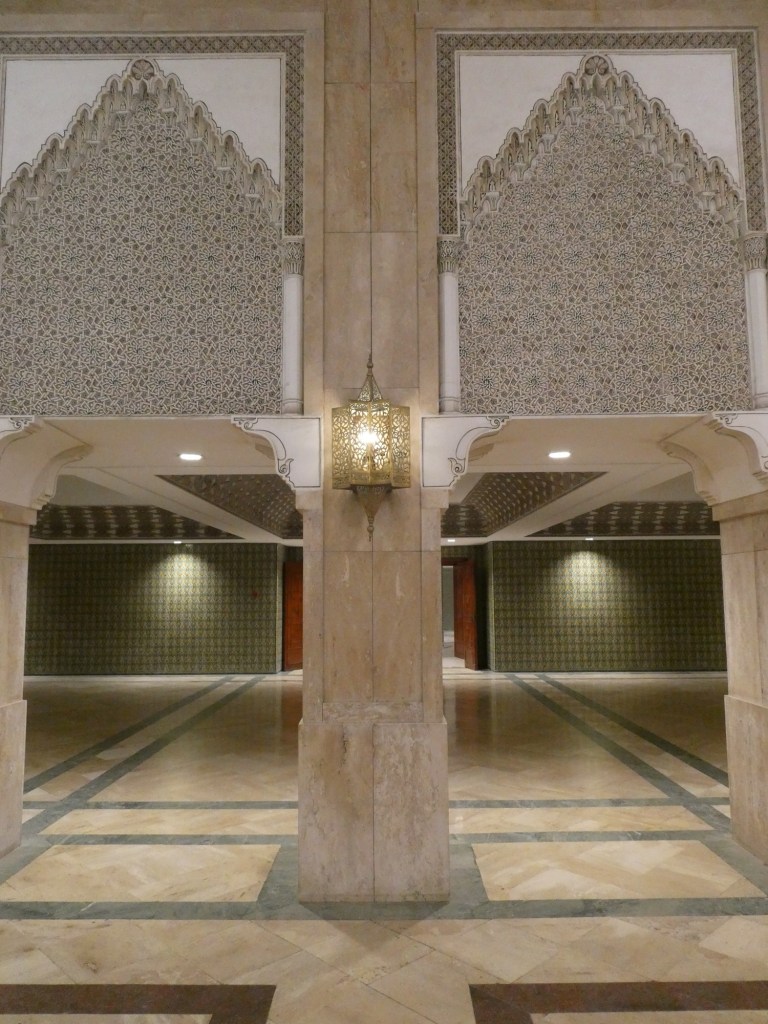
All the materials to build the mosque are from Morocco with much of the marble and stone coming from the Atlas Mountains. The only thing not from Morocco are the Murano chandeliers. The main ceiling is in Berber style, meaning the design has no beginning and no end. The ceiling is cedar wood and all the paints used to decorate it are natural coming from mint for green, pomegranate for red and other natural ways to get the colors. Friday is the holy day and everyone comes to a mosque on that day.

We had to remove our shoes on entry to the building. We did not have to wash since we were not there to pray, but if we were coming to pray we would wash our hands, face and feet since these body parts would be touching the floor of the mosque. Not only did this mosque have areas to wash it had Hammans for each sex. Women in Muslim countries come to the hamman each week to totally cleanse themselves and to gossip.

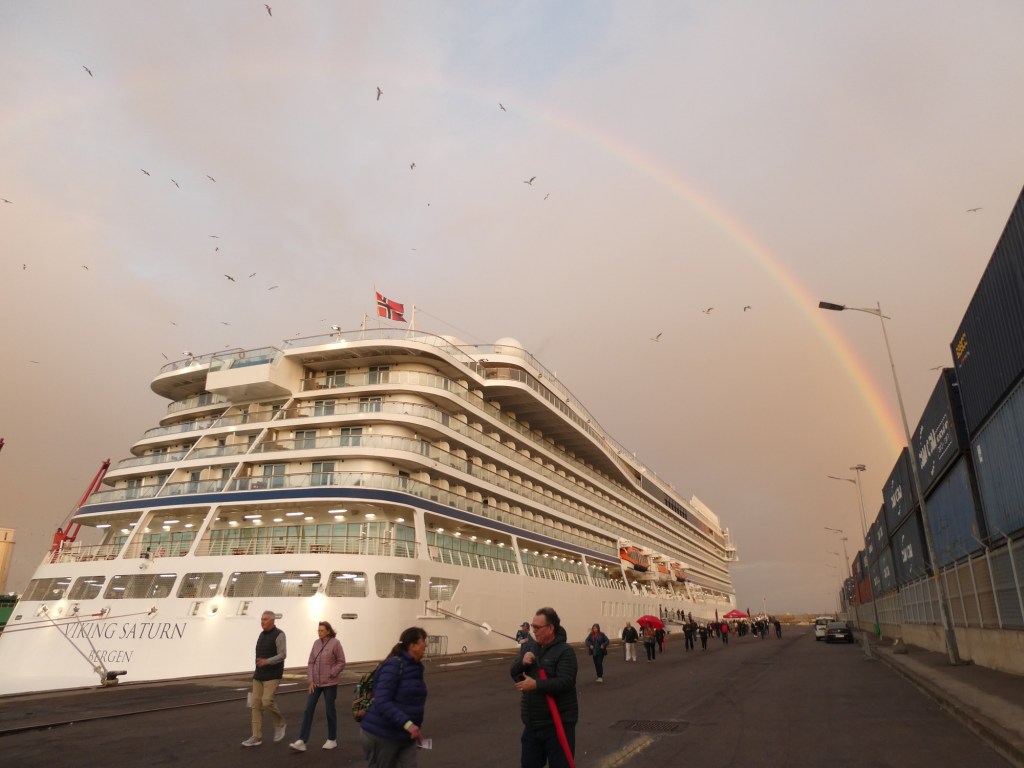
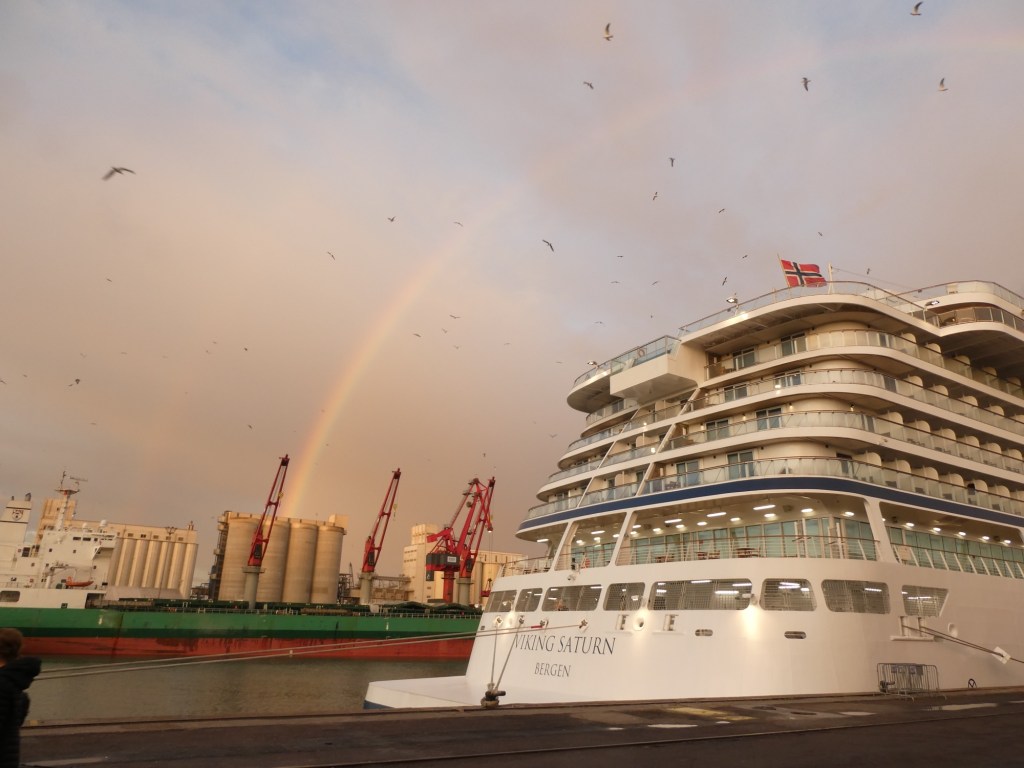
Rainbow over ship as we exited
It was a full arc but hard to catch
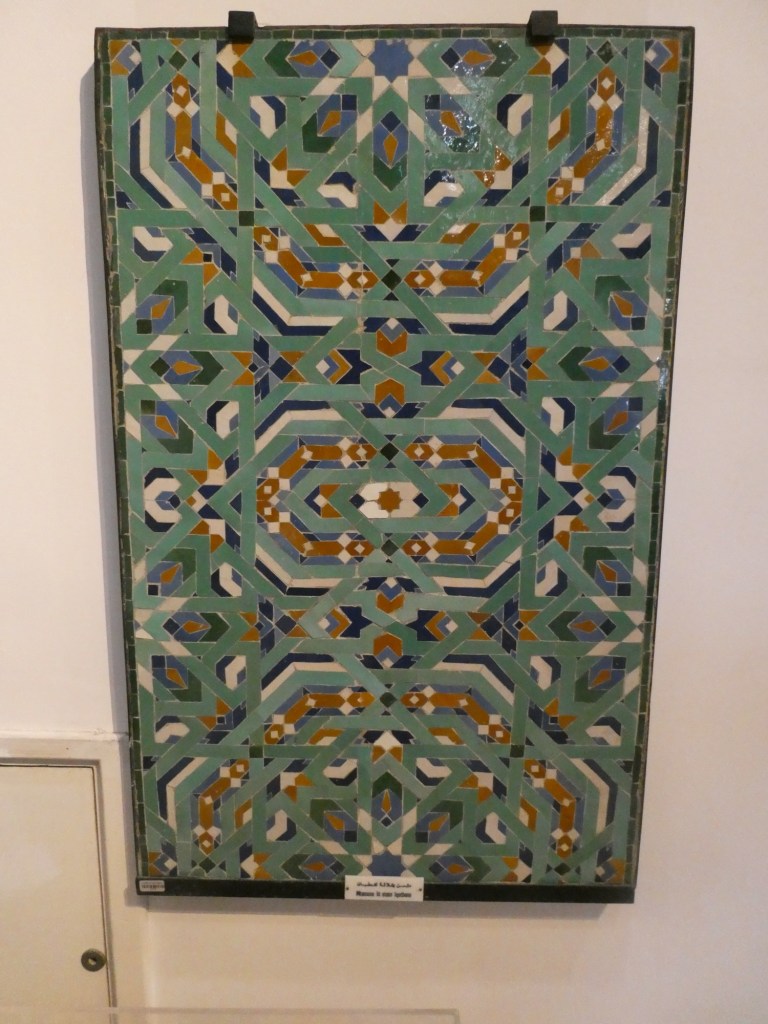
Samples of mosaics used in the mosque at the entry point
Hamid explaining that when the mosque was being built he donated money for it. He said the stone he was on was the one he provided funding for.
Some of the steps leading down to the washing area. There were more than 50 altogether.
One of the washing fountains

After our visit to the mosque we drove down the coast along the Corniche. They recently tore down the last shantytown in Casablanca but our guide was not sure what would be built on the land which was along the coast. We then drove through the wealthy part of town. The homes there could be 27,000 square feet at a cost of $5,000 per square meter (9 sq feet).

We stopped in United Nations Plaza across from their medina, or market area. We did not go into it since we were warned it could be unsafe. We did get to shop at a national store that had all native goods.

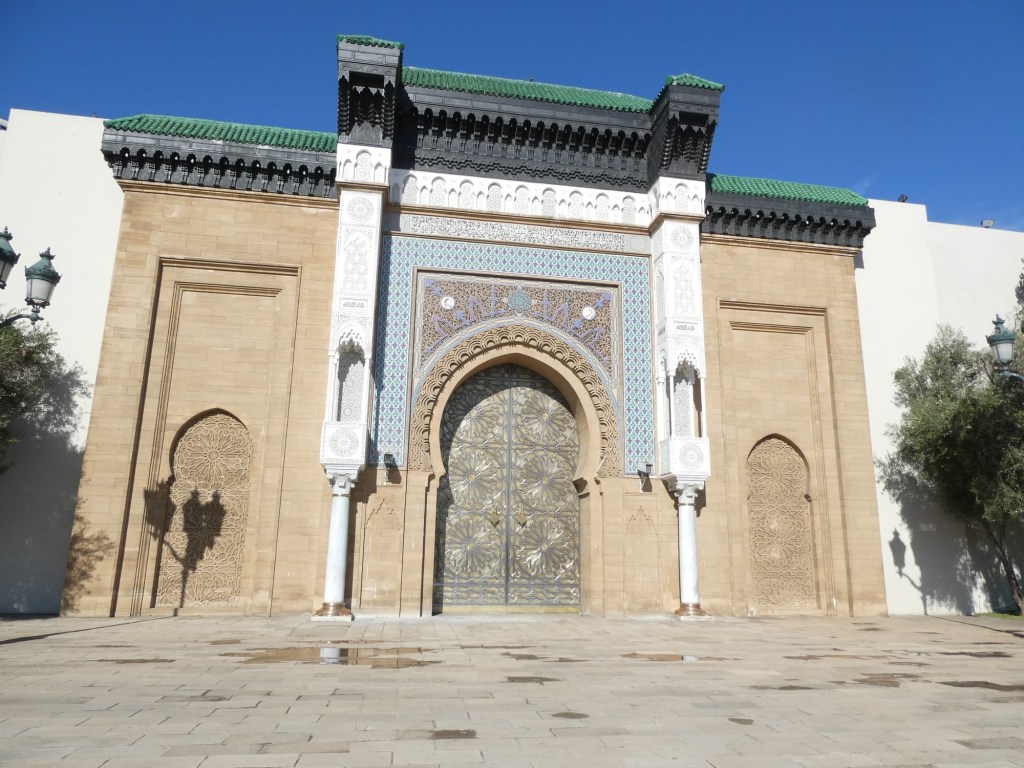
Our last stop was to see the King’s palace. Hamid had to turn in his ID and official guide badge to get us past the guarded entry gate.

Some additional things we learned today. Morocco is a large exporter of citrus. The capital is Rabat. Casablanca is the economic hub of the country. The country is 90% Muslim. The movie Casablanca put the country on the map. In the movie the cafe is called Rick’s. There are currently about 4 Rick’s Cafes in Morocco and the one that claims to be the original can only be entered with a reservation.

As you can tell from the length of this post it was a very interesting and informative day.

Categories: Uncategorized | 2 Comments

Another sea day – December  11

What a difference this day was from the last sea day.  No rocking and rolling.   We had a late breakfast and then joined some other guests for bridge.

After bridge we met with our trivia team and tried our hand.  We had a lot of correct answers, but not enough to win.

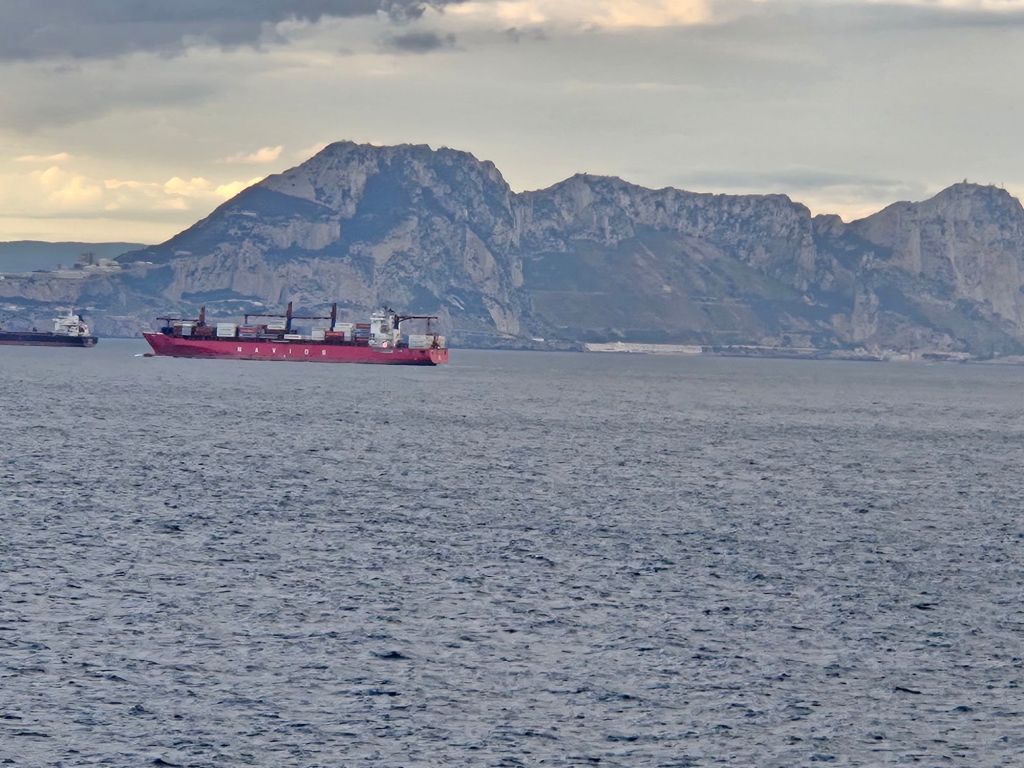
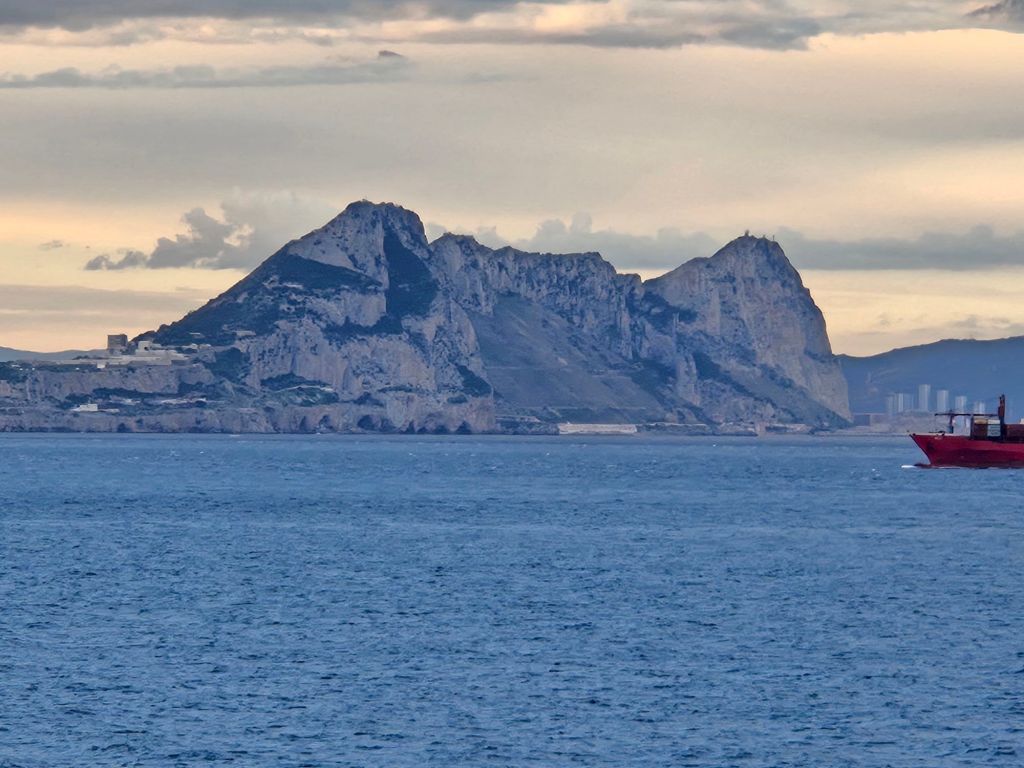
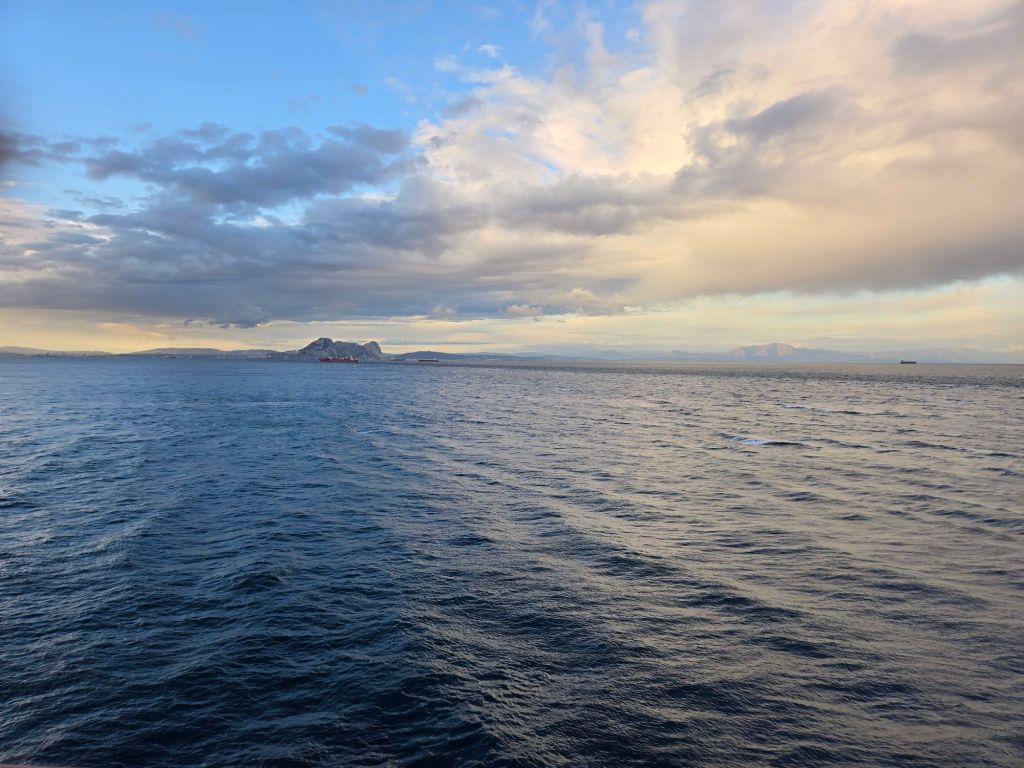
Bob finally got to rest while Bette had a massage.  Then around 5:30 we got to sail past the Rock of Gibraltar.

The sky was pretty with it being just before sunset.

Categories: Uncategorized | Leave a comment

Algiers, Algeria – December 10

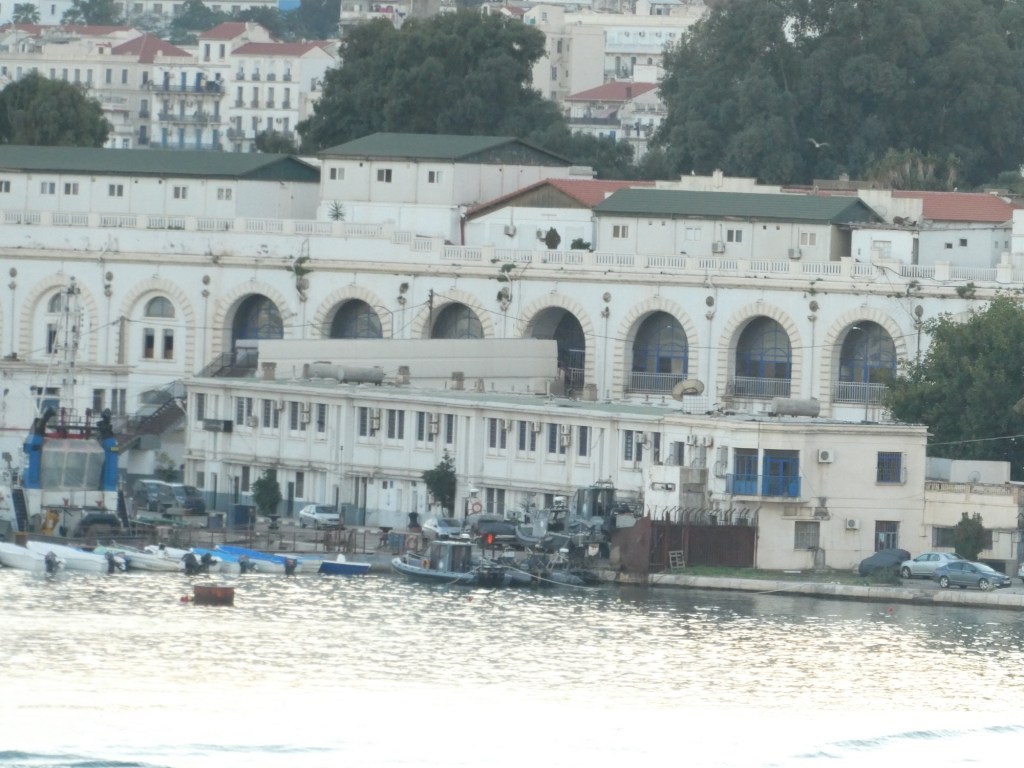
Algiers is the administrative, political and economic capital and largest city of Algeria as well as the capital of the Algiers Province. The city’s population in 2020 was estimated to be around 4,500,000. Located in the north-central part of the country, it extends along the shores of the Bay of Algiers in the heart of the Maghreb region making it among the biggest cities in North Africa, the Arab world and the Mediterranean, making it a major center of culture, arts, gastronomy and trade. It is called the White City because of all the white buildings.

The city’s history is believed to date back to 1200 BC, but it was a small settlement without any significance until around the 3rd century BC when “Ikosim” became a small port town in Carthage where Phoenicians were trading with other Mediterranean ports.

Formally part of the Ottoman Empire but essentially free from Ottoman control, starting in the 16th century Algiers turned to piracy and ransoming. Due to its location on the periphery of both the Ottoman and European economic spheres, and depending for its existence on a Mediterranean that was increasingly controlled by European shipping, backed by European navies, piracy became the primary economic activity. Repeated attempts were made by various nations to subdue the pirates that disturbed shipping in the western Mediterranean and engaged in slave raids as far north as Iceland.

The French came to Algeria in 1830 and continued to rule here for over 100 years. Algeria gained its independence in 1962. About 80% of the country lies in the Sahara. All healthcare and education is free for all citizens. The country is a democracy. We passed many apartment blocks which were built by the Chinese. They have 20 desalination plants which provide 2 million gallons of water daily.

Our excursion took us out of town to visit the Royal Mausoleum of Mauritania and the ruins of Tipasa. Unfortunately we had a difficult time understanding our guide’s explanations. I have used Wikipedia for some information.

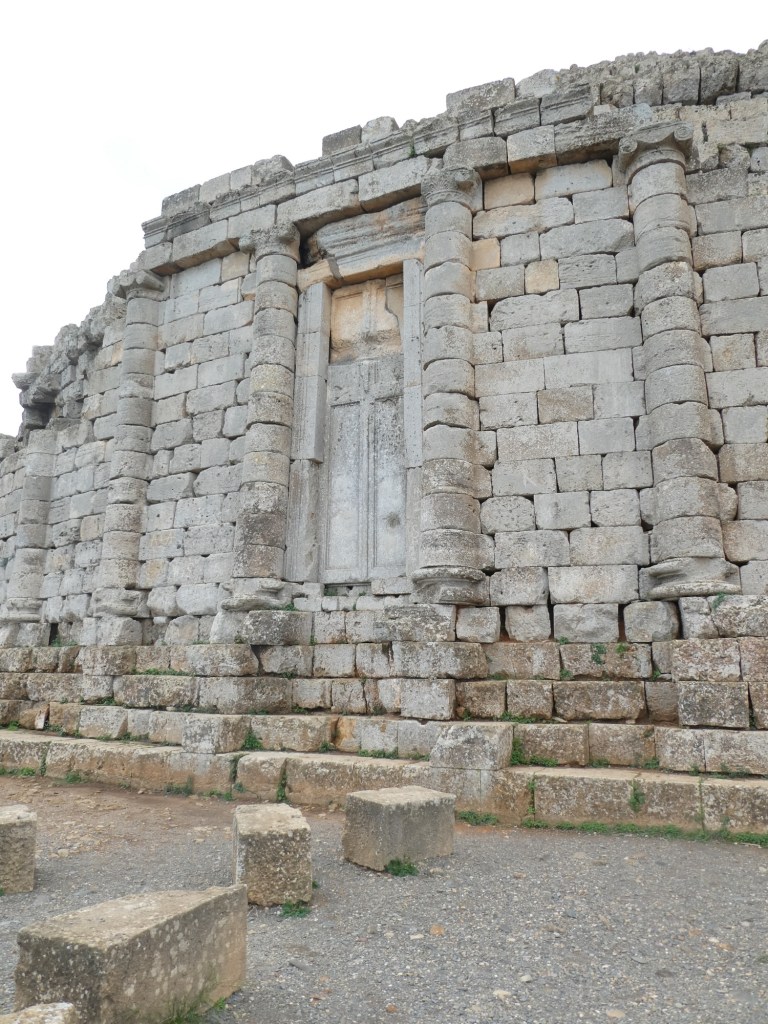
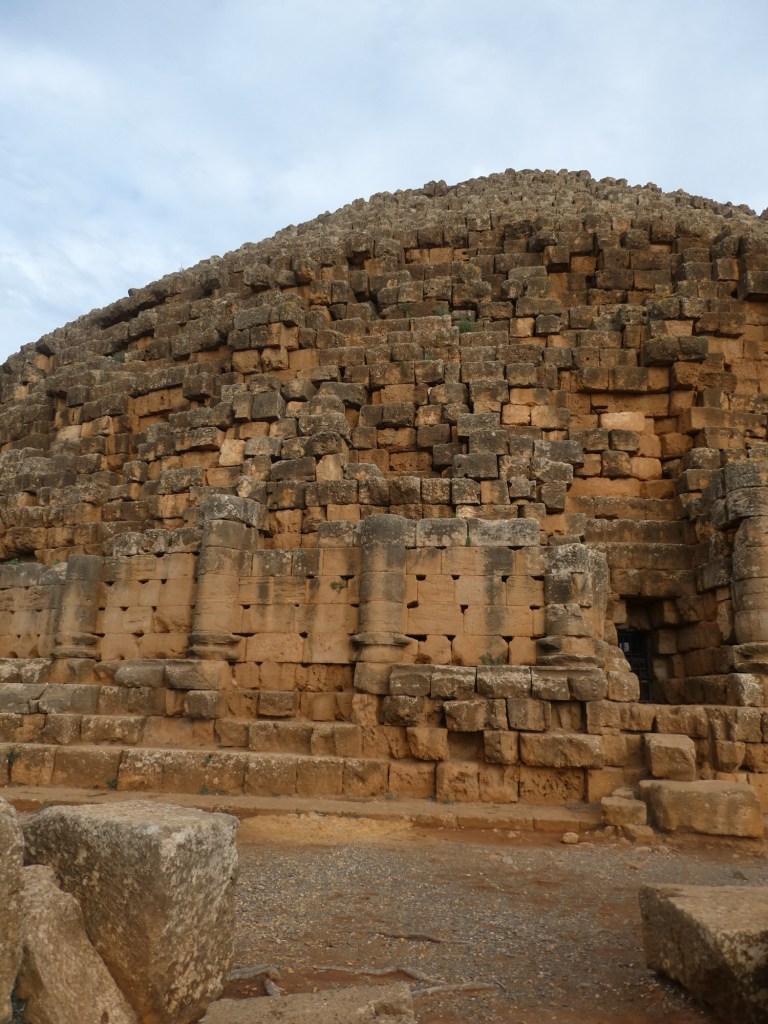
The Royal Mausoleum of Mauritania is located in the Tipasa Province of Algeria. It was built around 3BC. The mausoleum is the tomb of the Numidian Berber King Juba II and the Queen Cleopatra Selene II (daughter of the Egyptian Cleopatra) sovereigns of Numidian and Mauritania who were allegedly buried here. There are currently no human remains on the site. The monument is built from stone and is circular, with a square base topped by a cone like structure, looking somewhat like a pyramid.

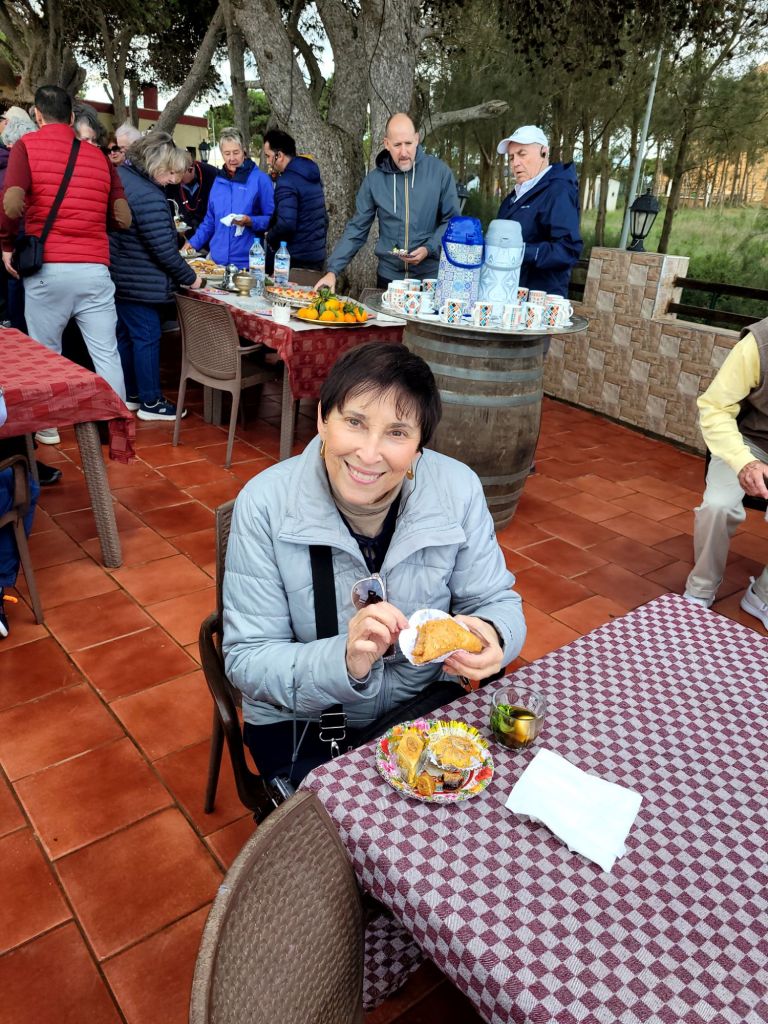
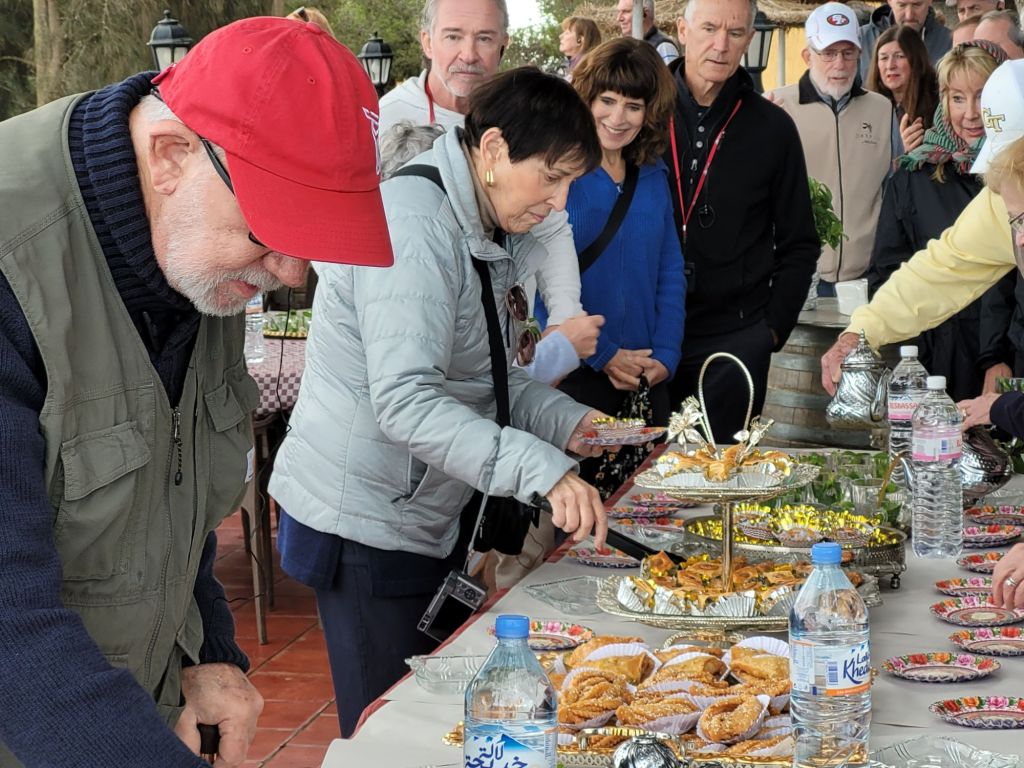
After visiting the mausoleum we were treated to tea and traditional Algerian sweets. There were about 8 varieties of sweets to include some really good, but very sticky baklava.

Filling the teapots
The table of sweet treats
Some decorations on the terrace where we had our break

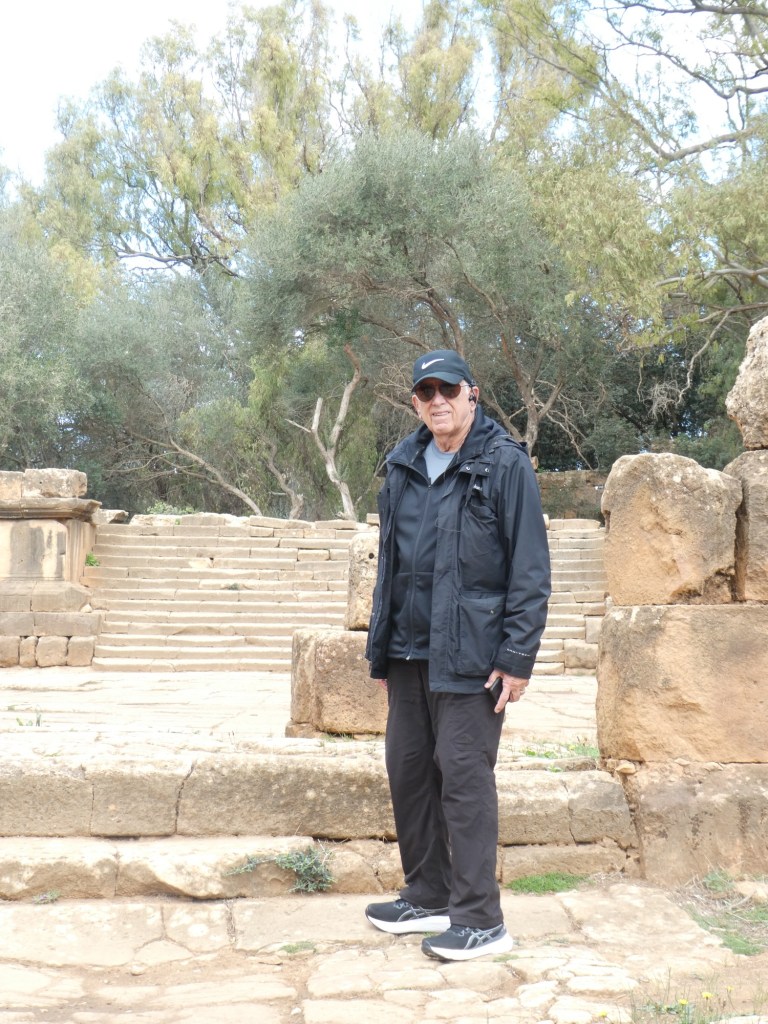
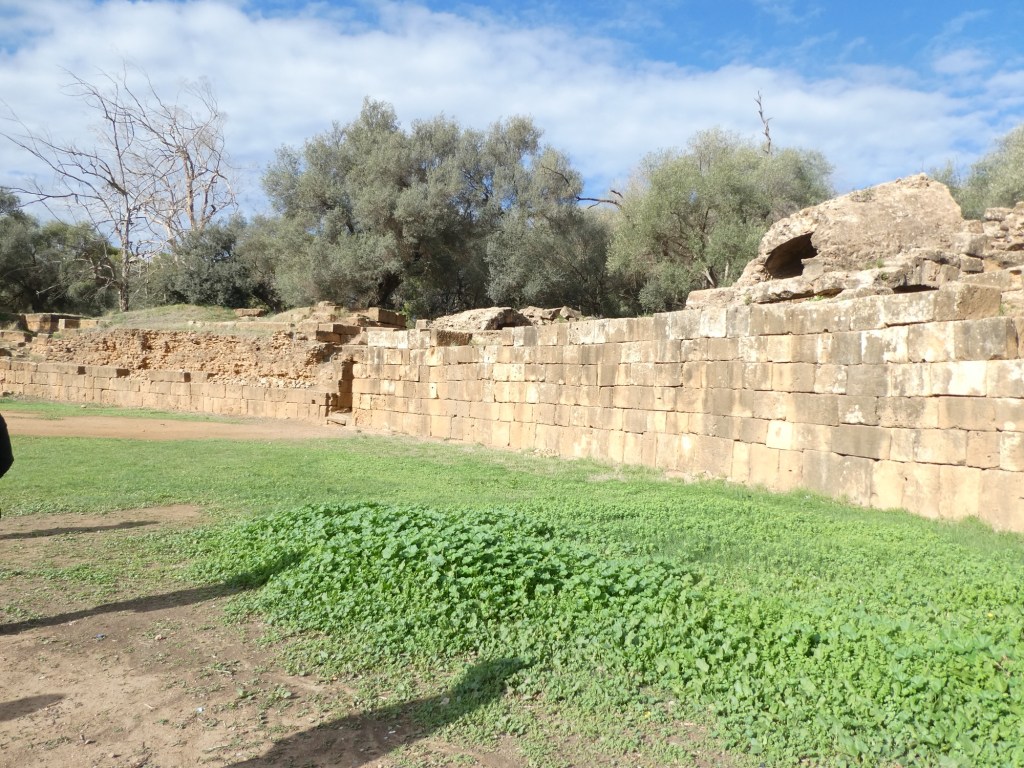
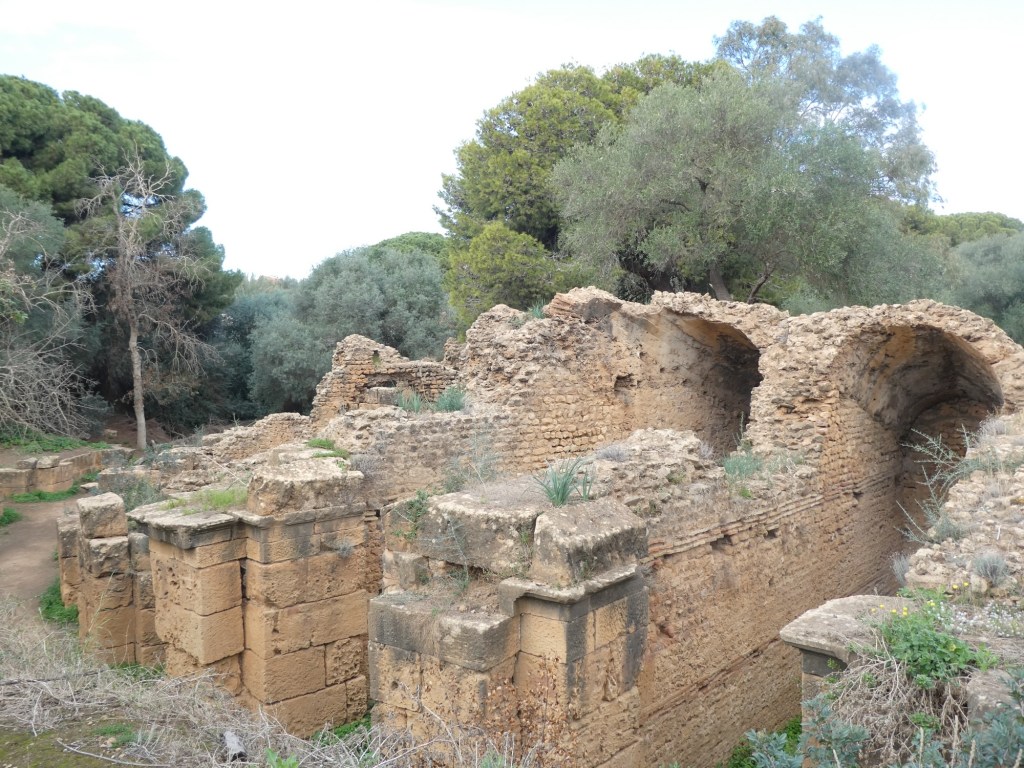
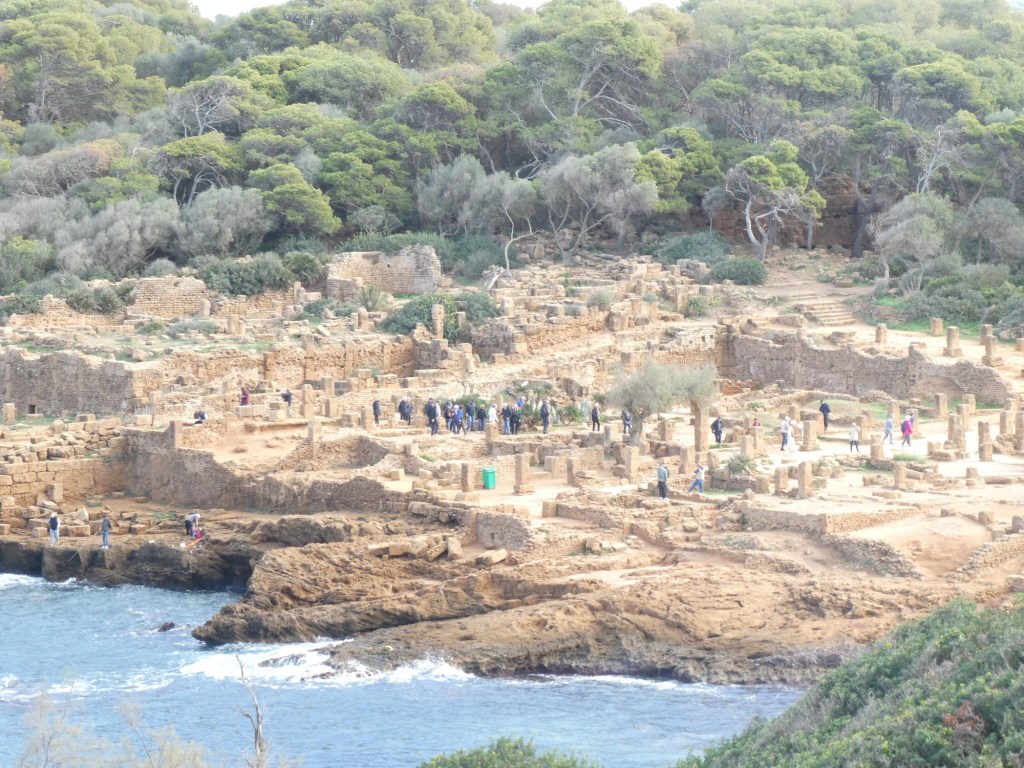
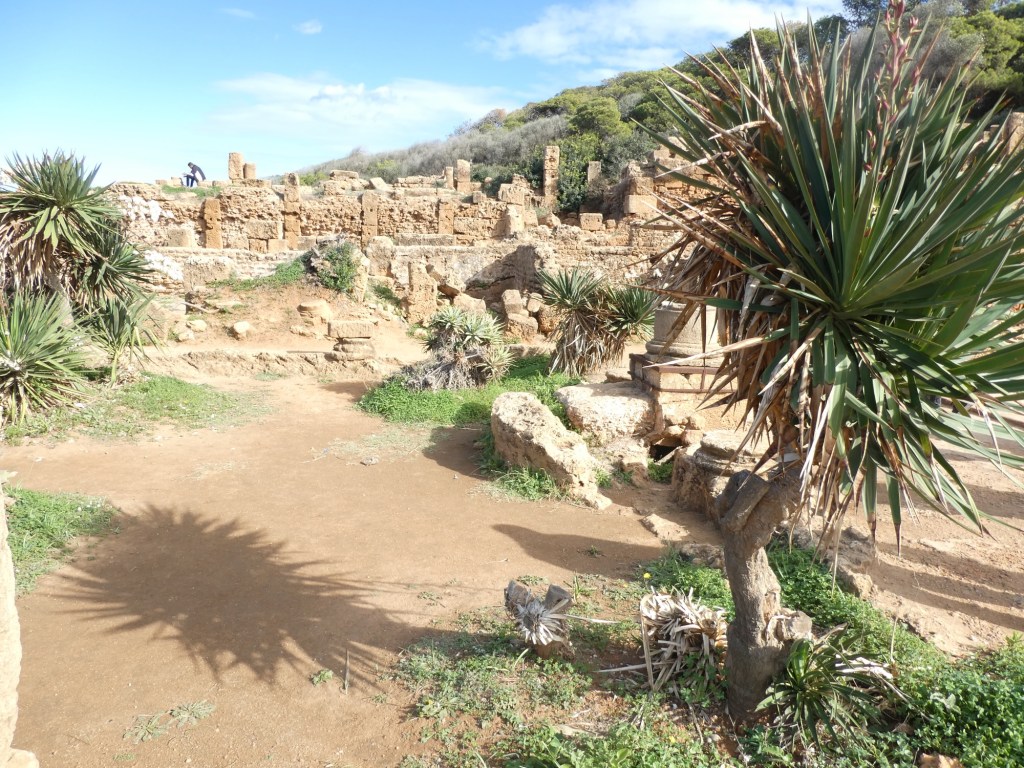
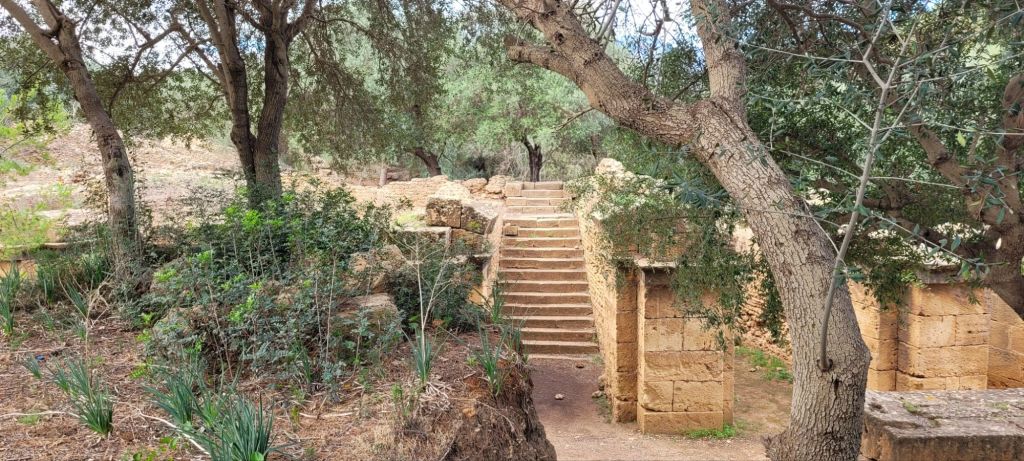
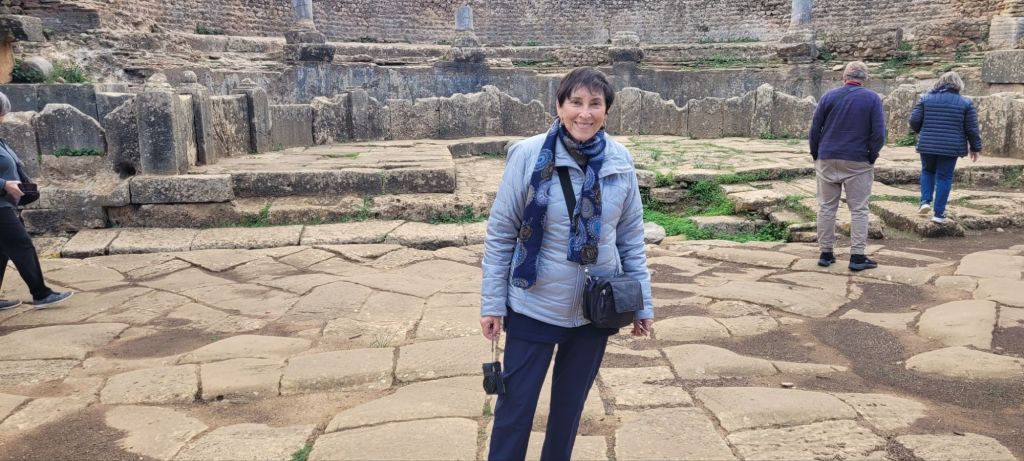
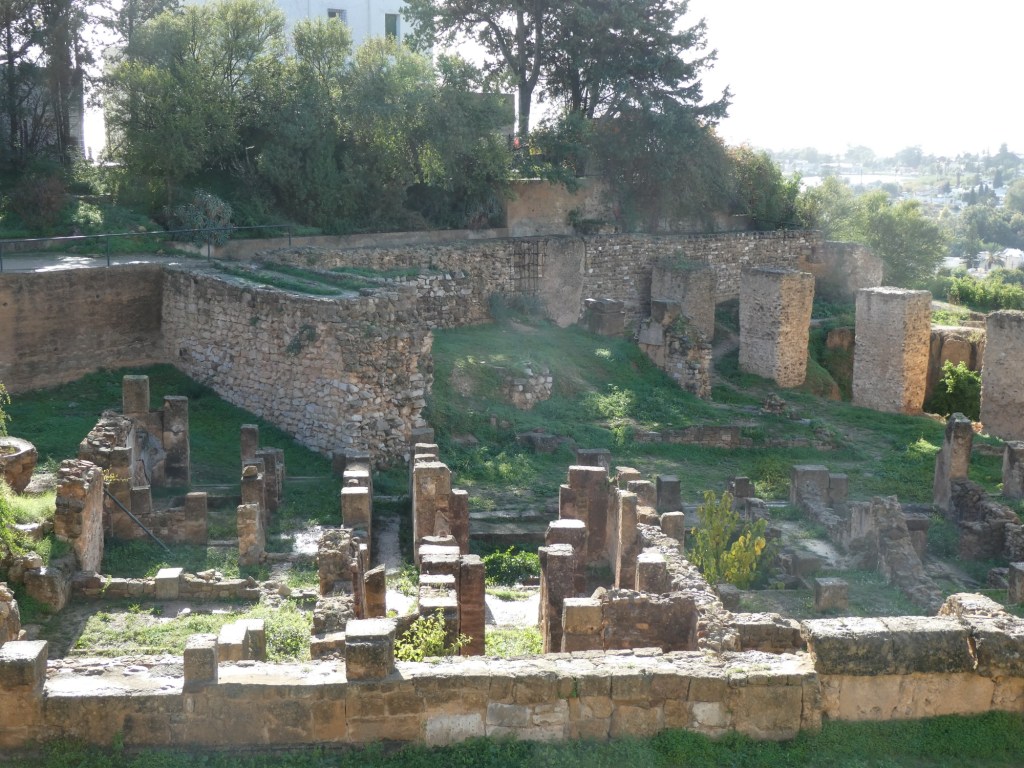
Then we were off to the ruins of Tipasa. Initially the city was a small ancient Punic trading-post. Conquered by Ancient Rome, it was turned into a military colony by the emperor Claudius for the conquest of the kingdoms of Mauritania. The Roman city was built on three small hills which overlooked the sea, nearly 20 km. east from Caesarea. Of the houses, most of which stood on the central hill, no traces remain; but there are ruins of three churches — the Great Basilica and the Basilica Alexander on the western hill, and the Basilica of St Salsa on the eastern hill, two cemeteries, the baths, theatre, amphitheatre and nymphaeum. The line of the ramparts can be distinctly traced and at the foot of the eastern hill the remains of the ancient harbour. We followed our guide through all the ruins climbing from one hilltop to the next.

Atop the coleseum
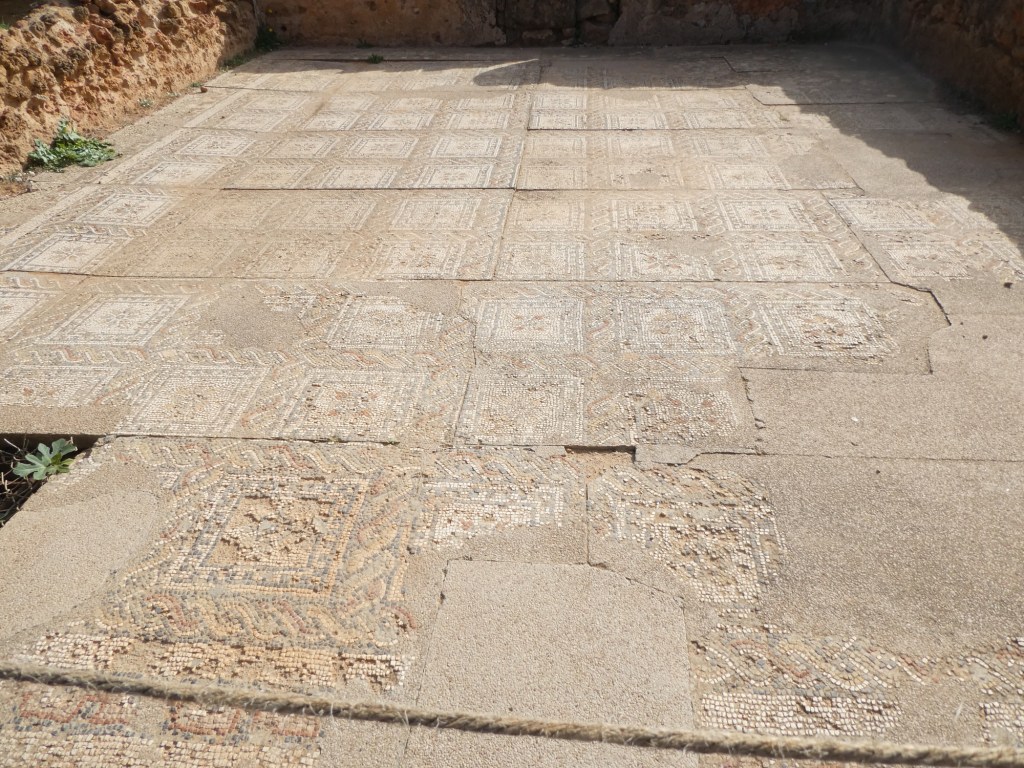
Mosaic floors
Pot used to store food or wine

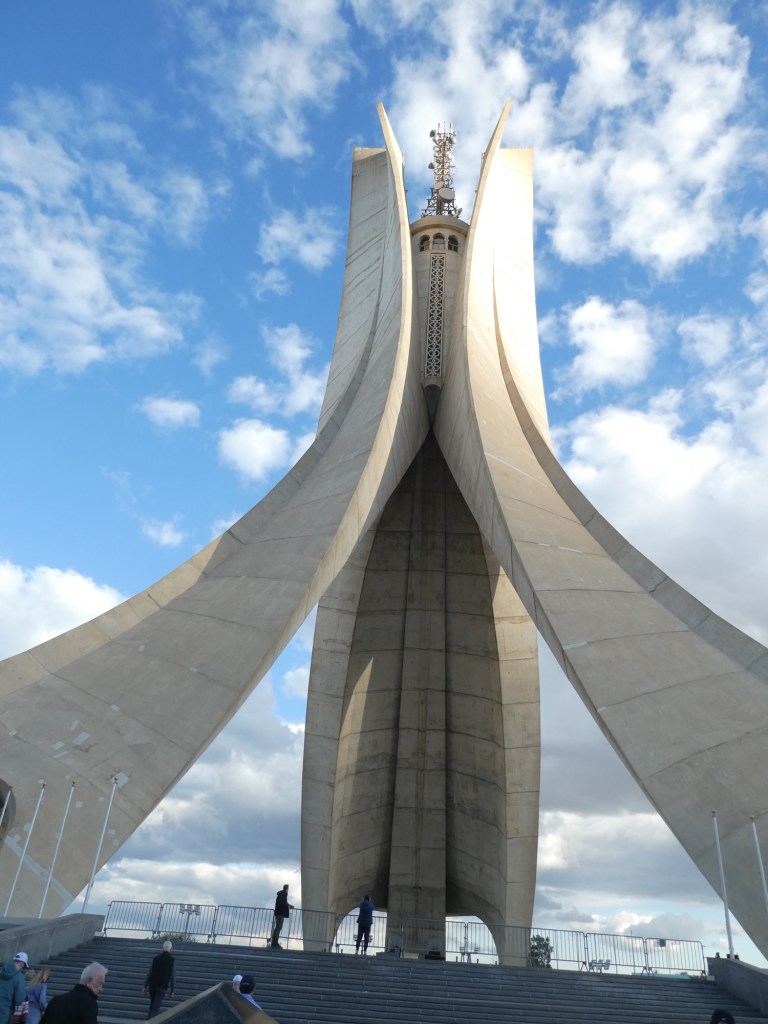
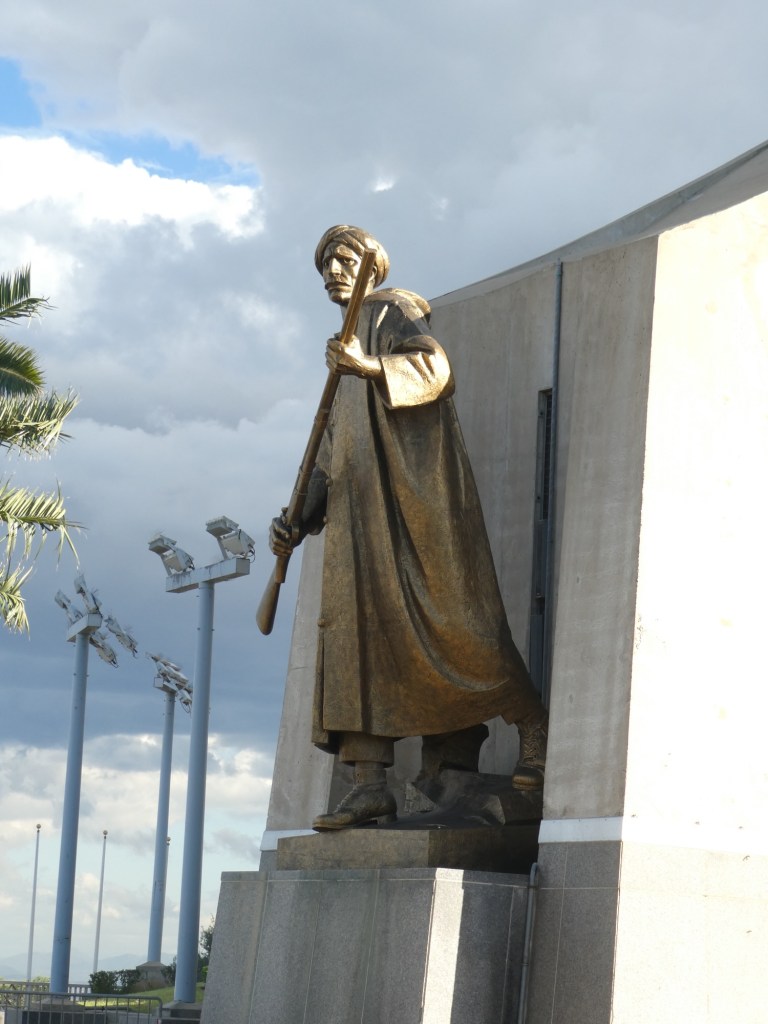
After we left the archeological site we returned to Algiers where we had a final stop at their memorial to those who died in the fight for their freedom as a country.

A figure representing one period in the fight for freedom. There is one on each corner.

All in all a very interesting day, seeing such unique and interesting places.

Categories: Uncategorized | Leave a comment

Sea Day – December 9

The best thing we can say about our time after leaving Tunis is that we survived. The ship rocked and rolled and bounced and shivered all night.

We tried to get on with our day, but even with sea bands on our wrists we were not feeling well. The seas were still very rough, captain said the seas were 16 feet. We eventually took Bonine which helped as did sleeping.

The rough seas calmed down late afternoon so we were able to have dinner. After all, you don’t miss many meals when on a cruise. We were glad for this day to end.

Categories: Uncategorized | Leave a comment

La Goulette (Tunis), Tunisia – December 8

Tunis is the capital and largest city in Tunisia. It sits along Lake Tunis, just inland from the Gulf of Tunis. It has a population of approximately 600,000 with 98% being Arab. The country became a republic July 25, 1957. Tunisia is a Muslim country. The center of Tunis is the Medina, a world heritage site. Jasmine is the national flower. 40% of the land is the Sahara desert. Their main source of income is from olive oil and dates (3 million trees).

Carthage was established in 698 AD but came into its hay day in the 12th century when it became the most important city on the Mediterranean Sea. The area called Carthage was the 2nd largest city outside of Rome. It was established by the Phoenicians. It was overtaken by Rome after the 3 Punic Wars.

Today Carthage is a suburb of Tunis with the old archeological areas in and among the current city.

Our tour was to see Carthage. Unfortunately the day was like this, cold and windy, drizzle, cold, heavy downpour, sunny, and then drizzly. Carthage was made a UNESCO world heritage site in 1979.

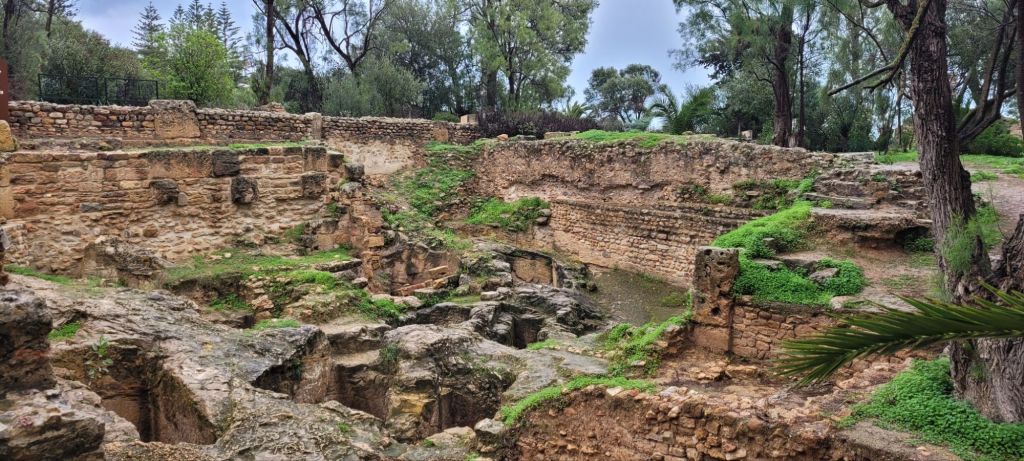
There were 2 main gods that the Phoenicians prayed to the god of fire and the god of fertility. We saw an area that our guide indicated was used to bury the sacrifices. Most were animals, but some were human. We toured 2 different sites.

Fire and fertility representations
Stones from the sacrifice area

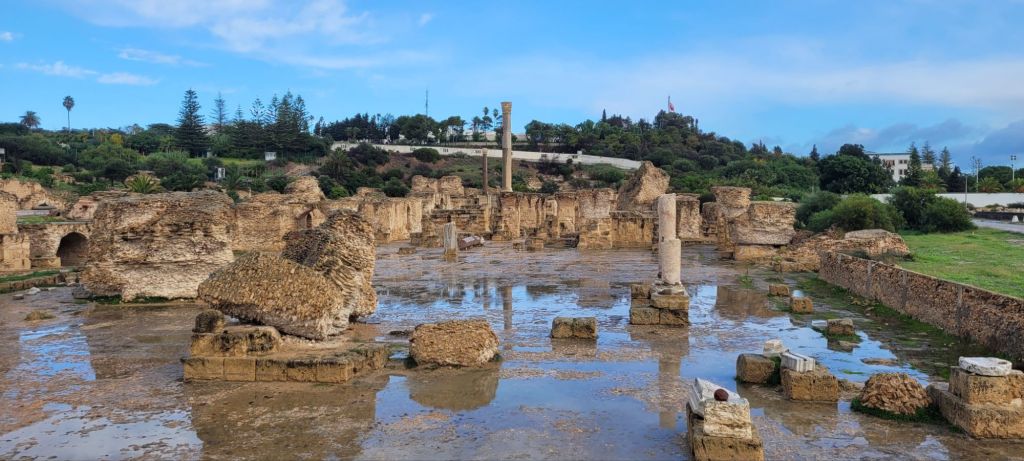
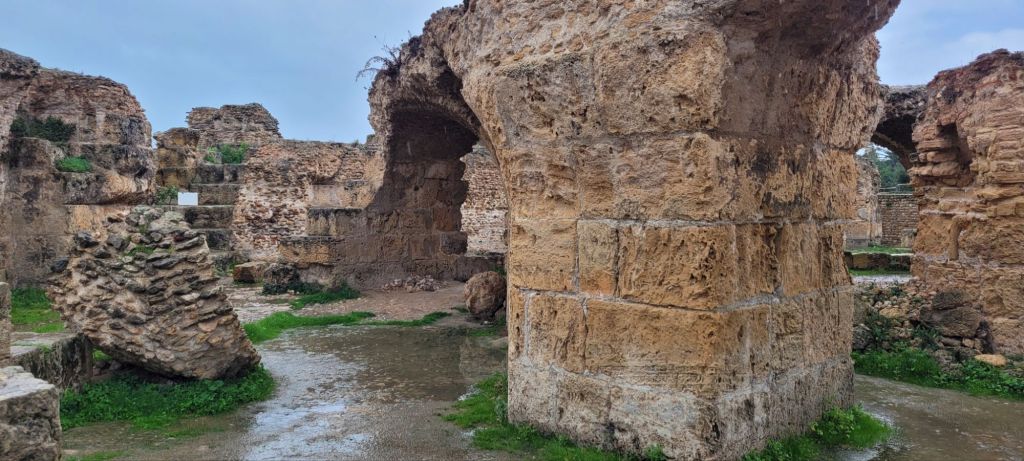
We then continued on to the main area of Carthage. We saw the various buildings and saw the harbors that made Carthage the prime port and hub for trade and war that it was.

A fountain
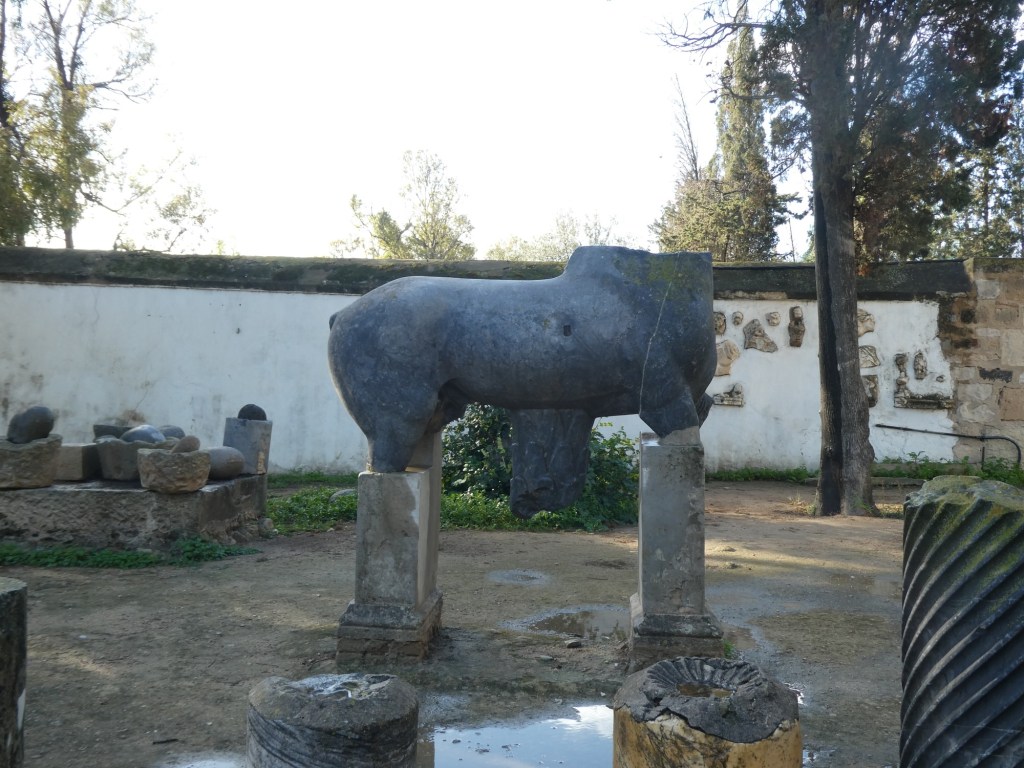
Horse

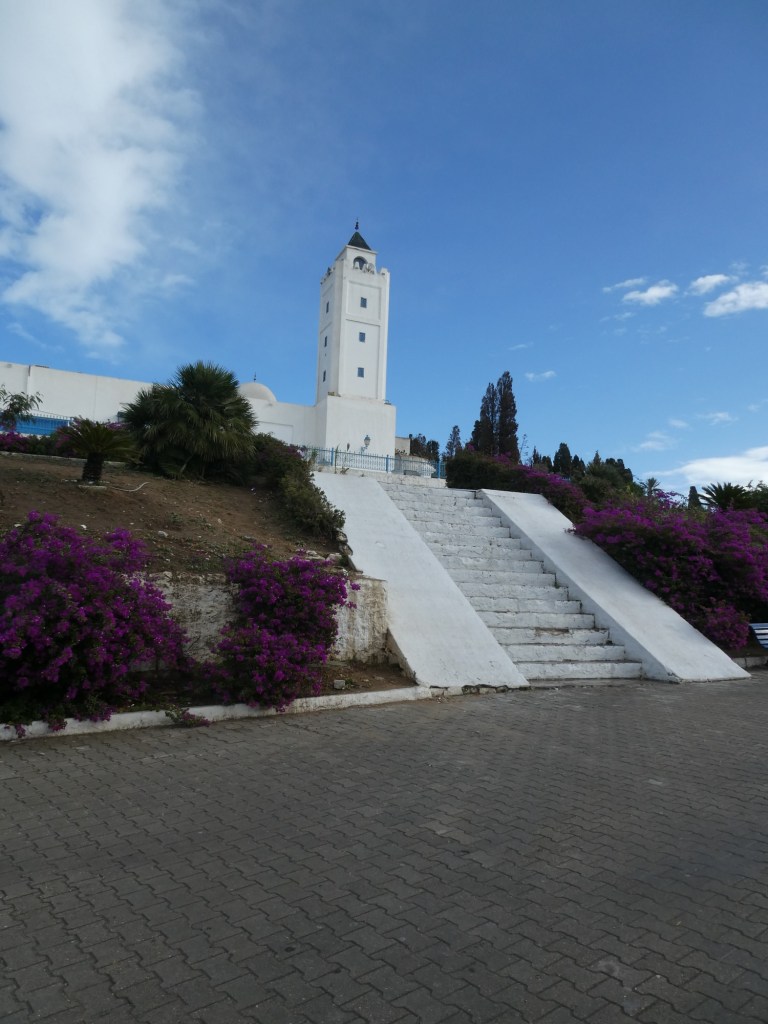
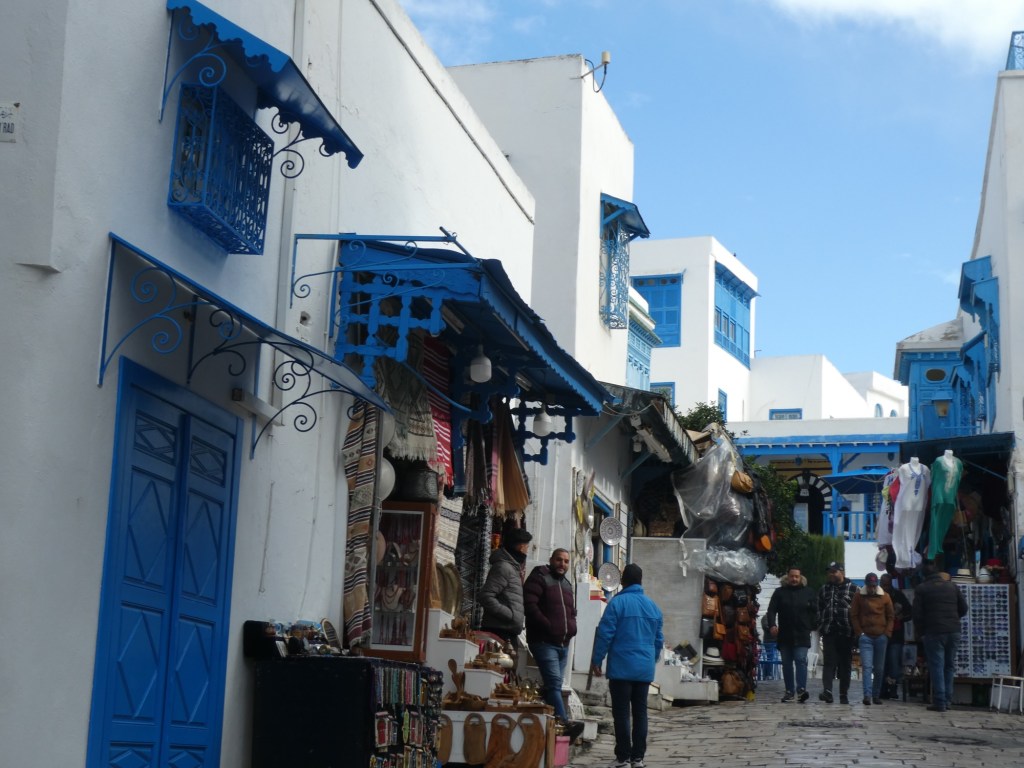
Our next stop was the blue and white city of Sidi Bou Said. We saw their mosque from the outside and then strolled the streets. We climbed to the top of the hill and then did some shopping.

Mosque

We then returned to the ship which had more holiday decorations.

Birch trees in spa area

More adventures to come.

Categories: Uncategorized | Leave a comment

Valletta, Malta – December 7

We overnighted in Valletta and started our second day there with a tour of Mdina and Mosta. Since Malta we a British colony until 1954, they drive on the wrong side of the road. We were warned to look both ways when crossing since we are only used to looking to the right. We learned that there are 4 desalination plants that provide the water for Malta and that the government subsidies water and electricity for everyone. All bus transportation is free as well as all schooling through university.

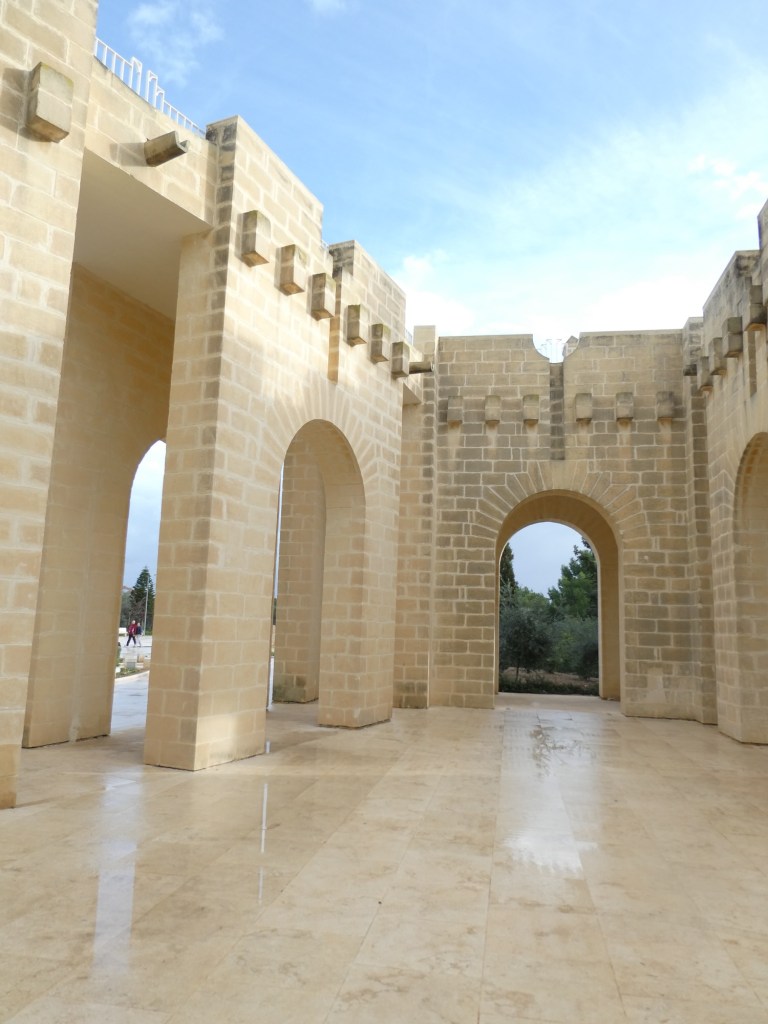
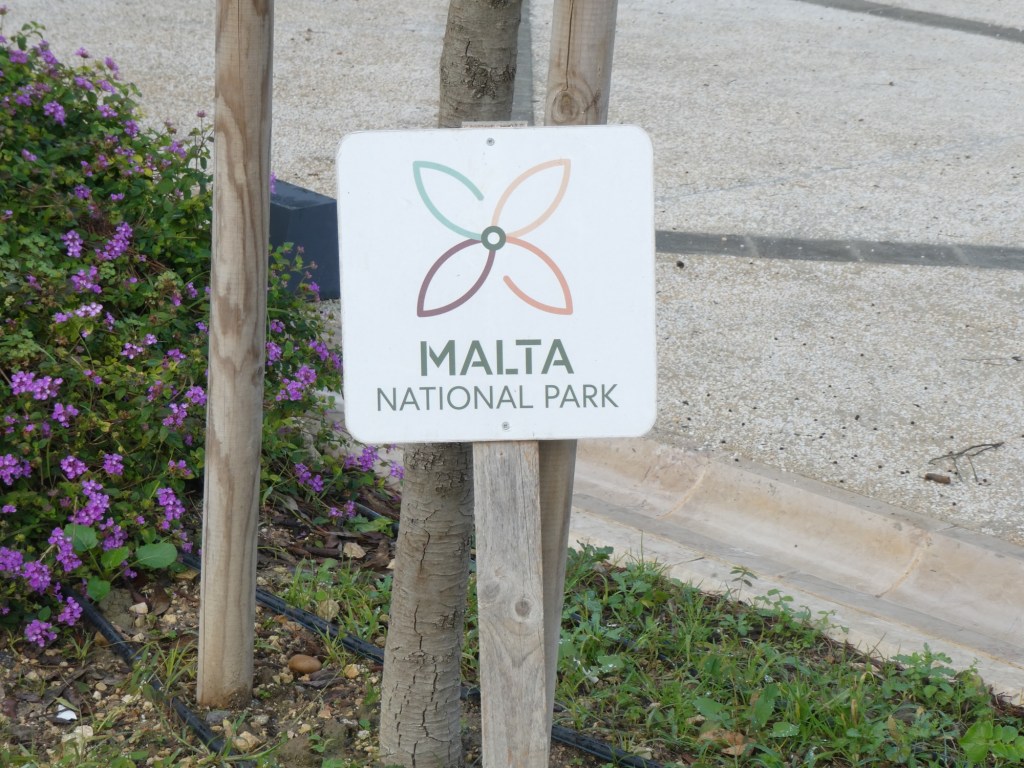
Our first stop was at a glass blowing factory. This is one of the main industries of Malta, brought to them by the Phoenicians. Unfortunately the glassblowers were not at work when we were there. Across the street from the glass factory which was in an old RAF hanger was Malta National Park. Bob and I walked around for a while. It was very nice with gardens, fountains, picnic areas, playgrounds and hiking area.

Christmas tree in front of glass factory with 2,000 balls

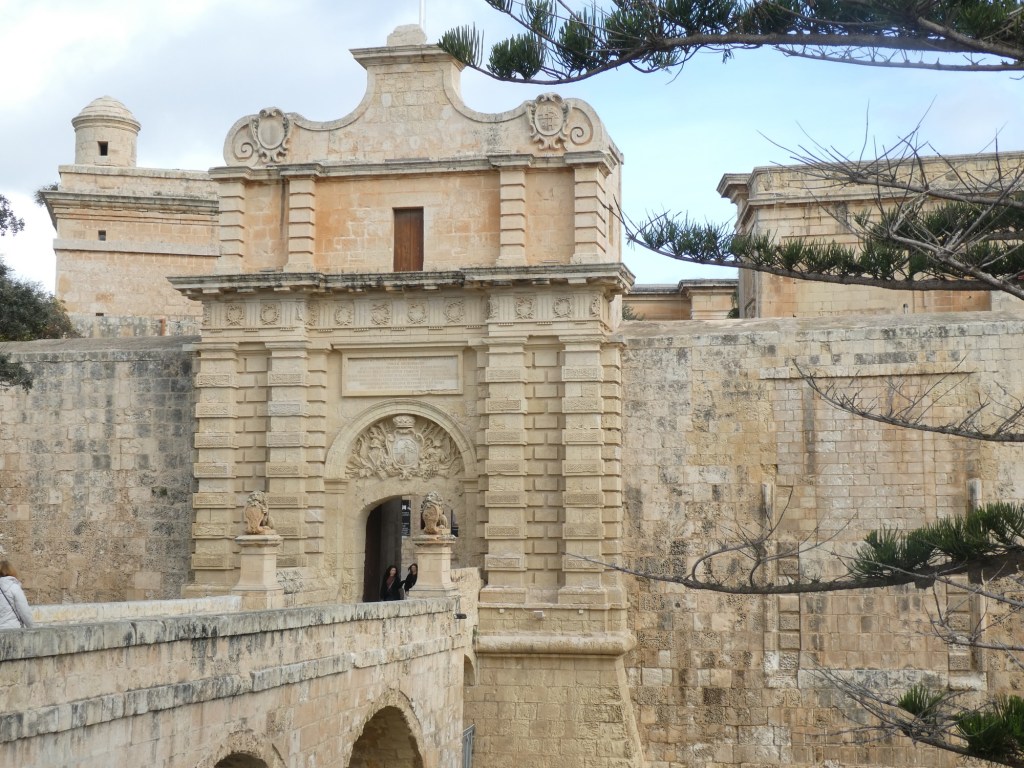
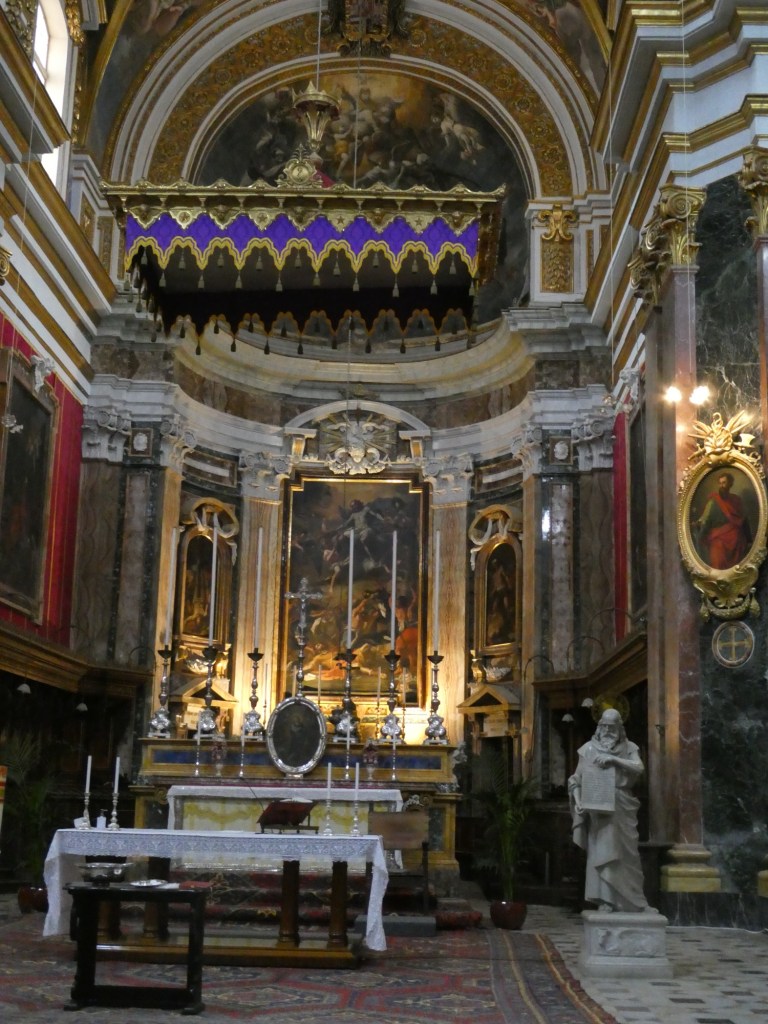
Our next stop was the walled city of Mdina, called the silent city. There are only 74 people who live here currently. Mdina was the original capital of Malta. It is built in both a medieval style and a Baroque style. Part of the city was destroyed by an earthquake in 1693. Mdina is the seat of the Bishop of Malta. The cathedral is dedicated to St. Paul who landed in Malta after a shipwreck. The church is in the Maltese Baroque style, which is a calmer interior design. The families who still own property here are nobles, because they have the money to maintain these old properties. Some are turning them into boutique hotels to help pay for maintenance.

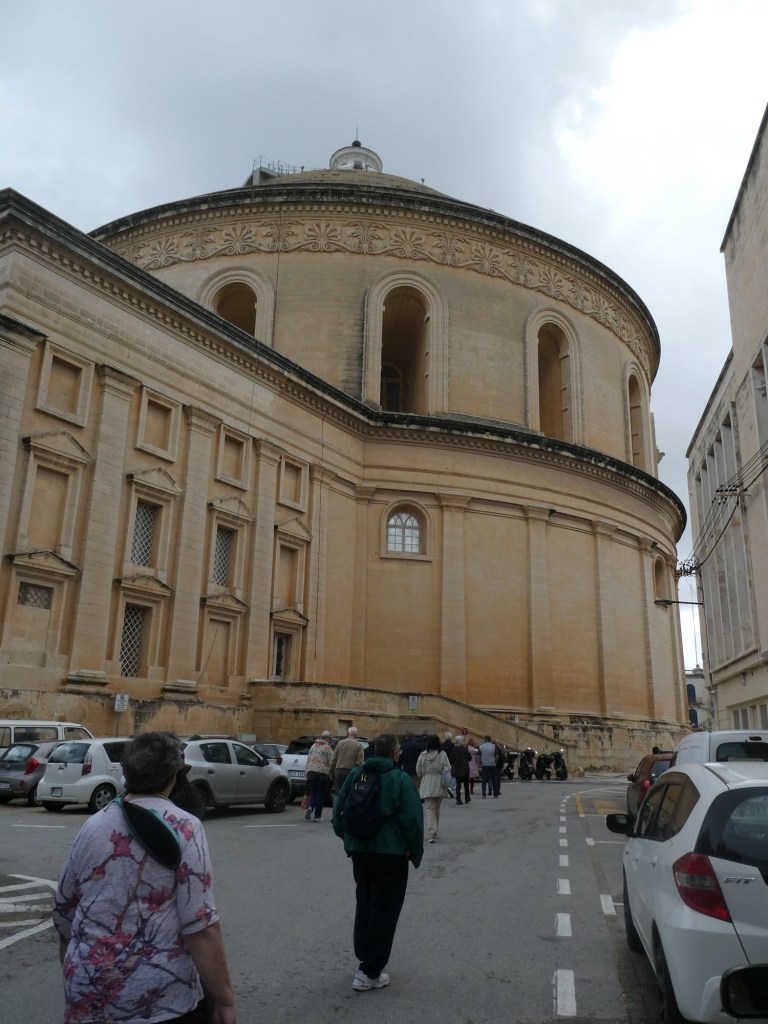
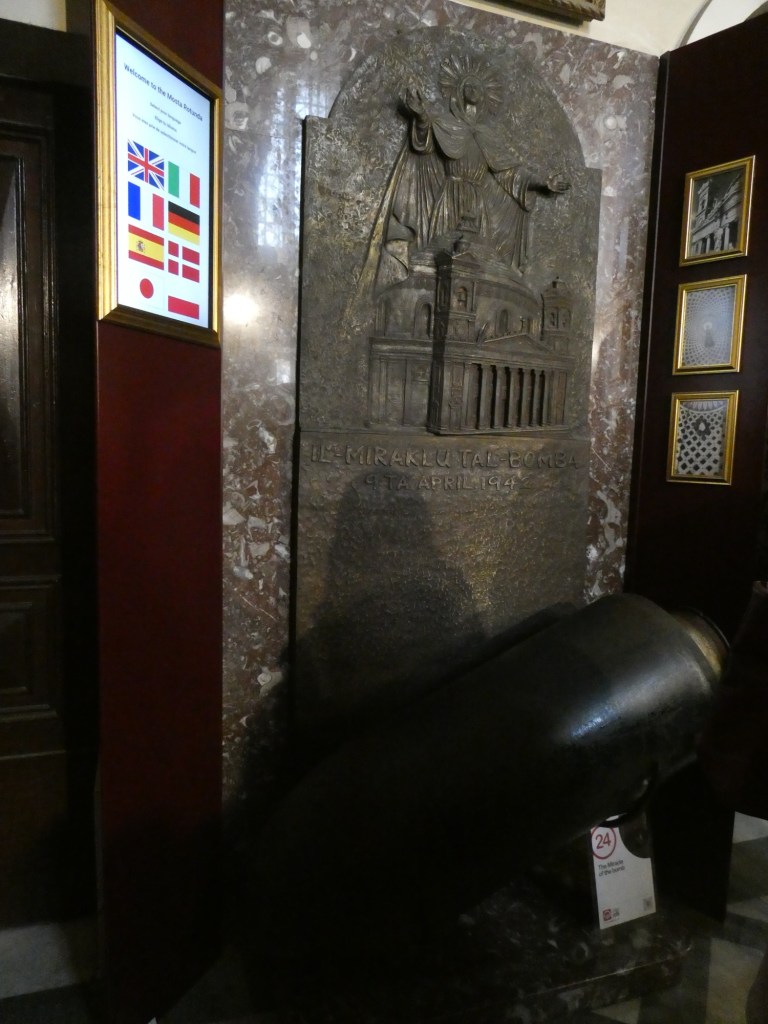
Our next stop was in the city of Mosta. It is in the middle of the island of Malta. The church we visited here is a huge round church that resembles the Parthenon in Rome. The priest’s family that provided the money for the church wanted it designed this way. It took 33 years to build and is dedicated to the Virgin Mary. It is neo-classical in style. It is colored in the 3 colors that represent the Virgin Mary, blue, white and gold. The various arches hold chapels. On April 9, 1942, 3 bombs were dropped on the town of Mosta. 2 fell outside of the church and did not detonate. One pierced the dome and it too did not go off. The locals call this the miracle of the bomb.

The unpainted spot is where the bomb pierced the dome
A replica of the bomb about 1/2 size

Categories: Uncategorized | Leave a comment

Valletta, Malta – December 6

Malta is a group of 5 islands in the Mediterranean Sea between Sicily and North Africa. It is the 10th smallest nation in the world. It was held over time by almost every civilization that bordered the Mediterranean. There are ruins that date back to 5,000 BC.

Valletta, the port for Malta, is one of the first planned cities in Europe and most of the construction is of the honey-colored limestone found here. The buildings look baroque and there is virtually a church on every corner. The churches are very plain on the outside but their interiors are amazing. The city is a UNESCO World Heritage Site. The harbor is huge and designated as the Grand Harbor. It is surrounded by many forts.

We had to go through actual passport checks because there was an international meeting being held in the city. The group, Organization for Security and Cooperation in Europe, and Secretary of State Antony Blinken was one of the speakers. Other than having to show our passport when leaving the ship we were not held back in any way.

Valletta is a walled city and sits on a high bluff. We were bussed to the starting point of our walking tour. The city was fully decorated for the Christmas season and we walked through a Christmas market, but it was only open late in the day, not the morning when we were there.

Malta was used in the Second World War and according to our guide was the most heavily bombed place. Malta joined the EU in 2004 and has been an independent country since 1964. There are 365 churches. The island of Malta is about 27 kilometers long and 14 kilometers wide. Tourism is the main occupation on Malta and they also do ship building and ship refurbishment. They have no natural resources. The population of all the islands is about 550,000. About 25% of the population is foreign because they need the additional workers to support the island. 80% of the population is Catholic.

The major expansion came when the Knights of St. John settled here. They arrived in 1566 and the founder of Valletta was Jean de Parisot Valette. The original knights were actually nobles, usually the second son of the family. They started by being hospitalists. They established hospitals in Jerusalem. The original knights were monks. They basically came from 8 regions and when we went into the giant church, there were ornate chapels for each region.

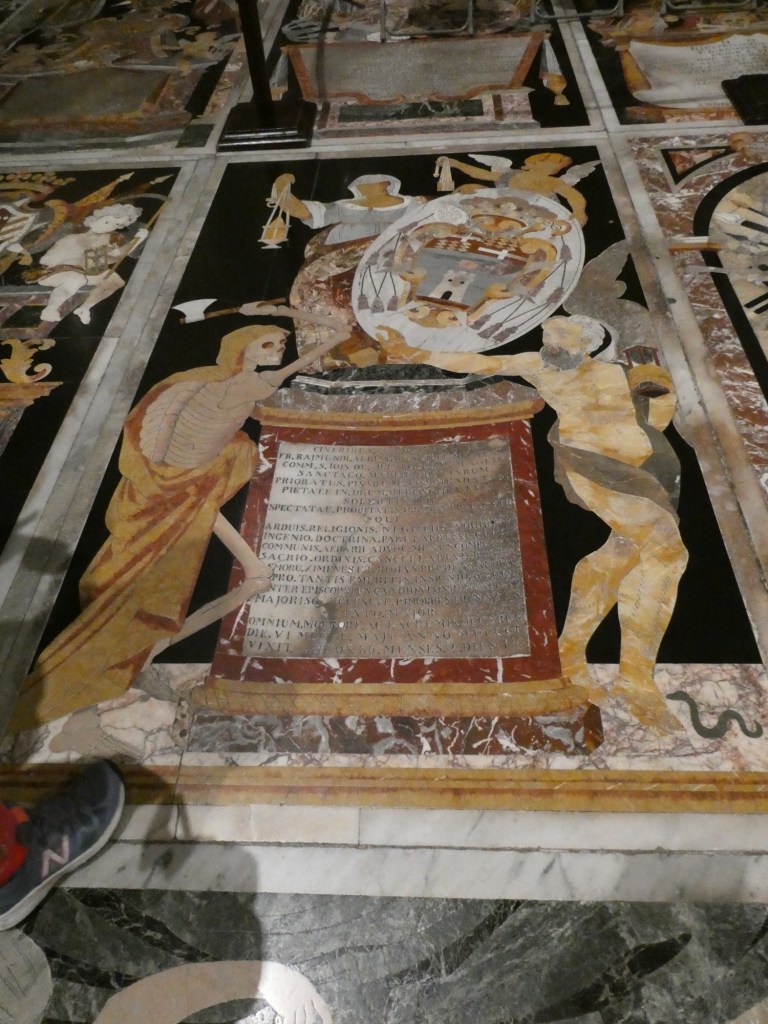
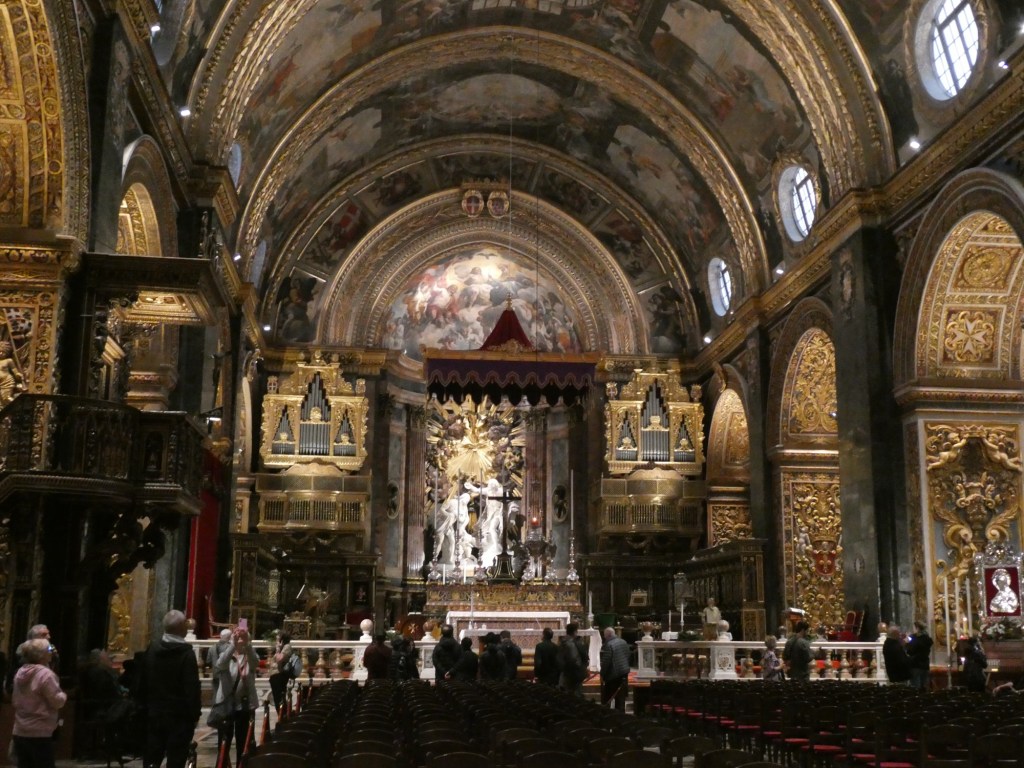
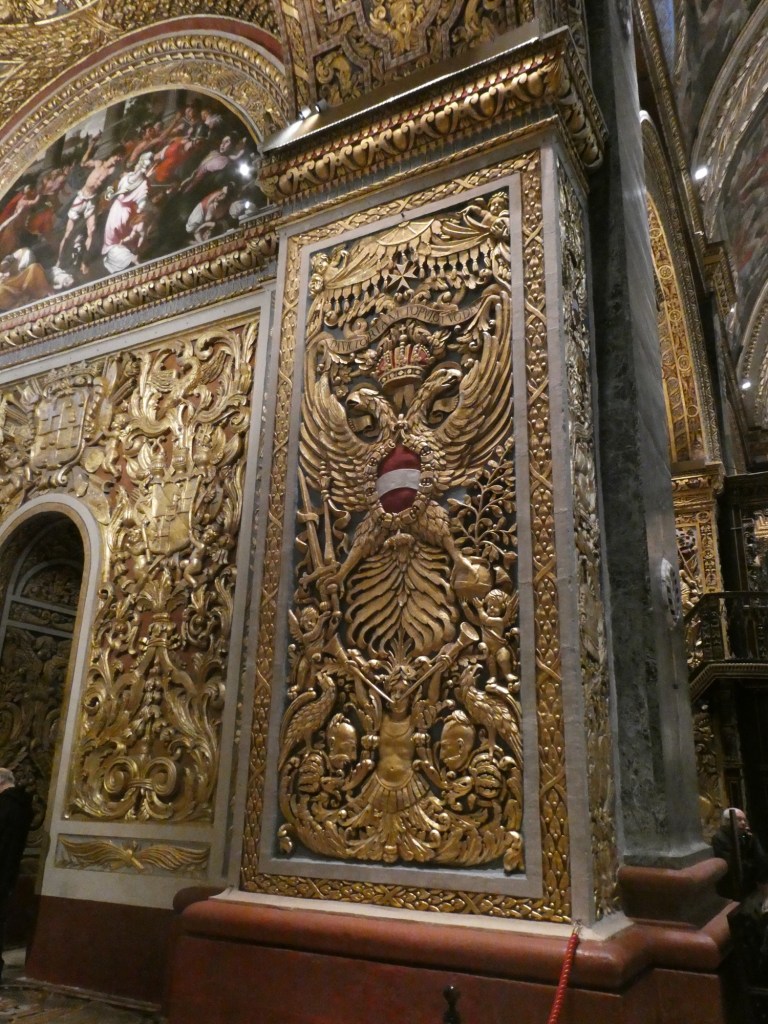
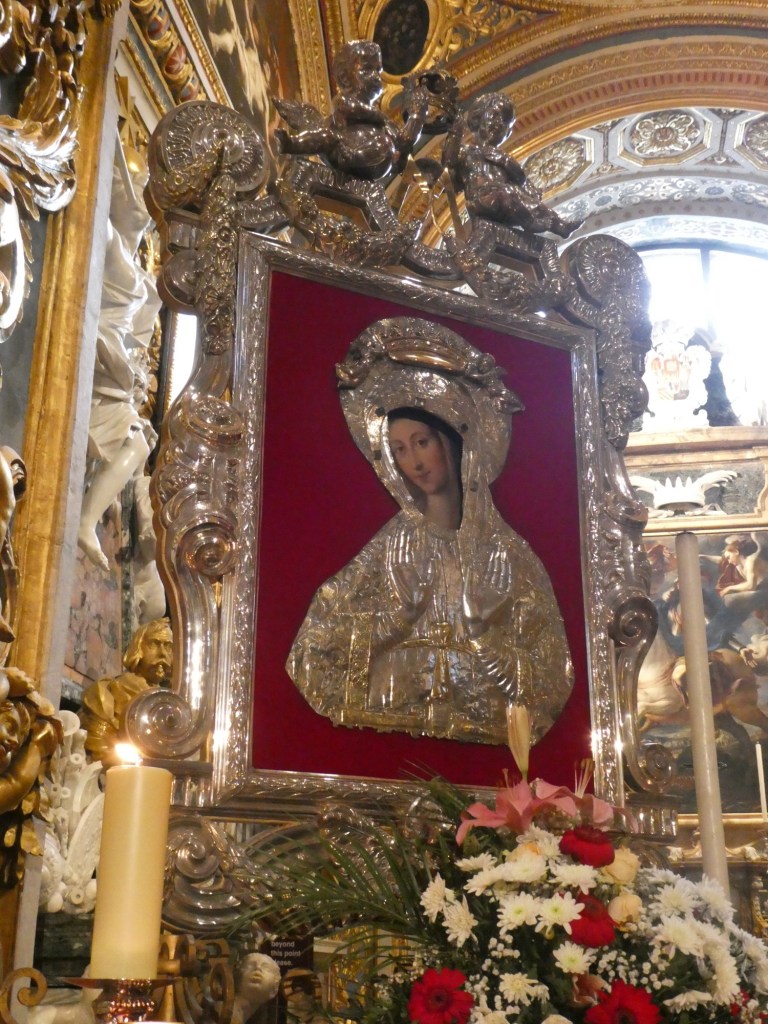
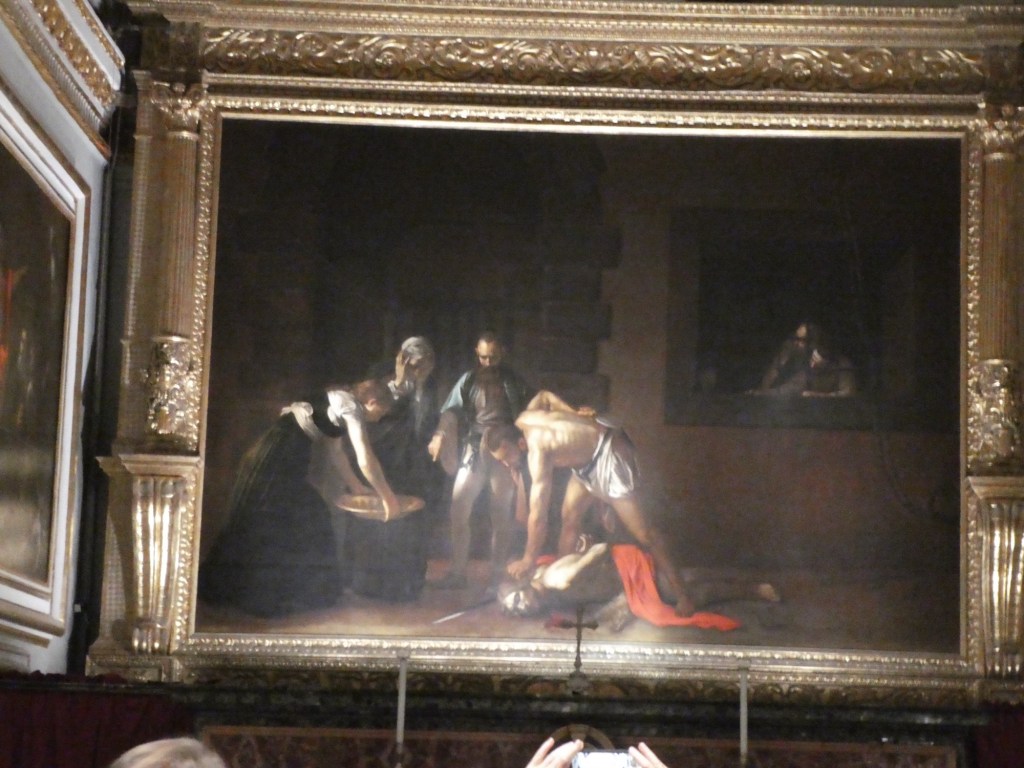
Our first stop was at the St. John Co-Cathedral. It is a co-cathedral because it is not the seat of the Bishop. The exterior of the building is plain yellow with a few towers and a clock tower. Inside it was amazing in how opulent it is, The walls are covered with marble carvings covered in gold. We saw all the chapels which were amazing. The floor was covered with the marble tombstones of the former knights. They were very ornate. It was built between 1574 – 1577. The ceilings are covered in beautiful frescoes representing the life of St. John. There are 2 paintings by Caravaggio; The Beheading of St. John the Baptist and St. Jerome Writing.

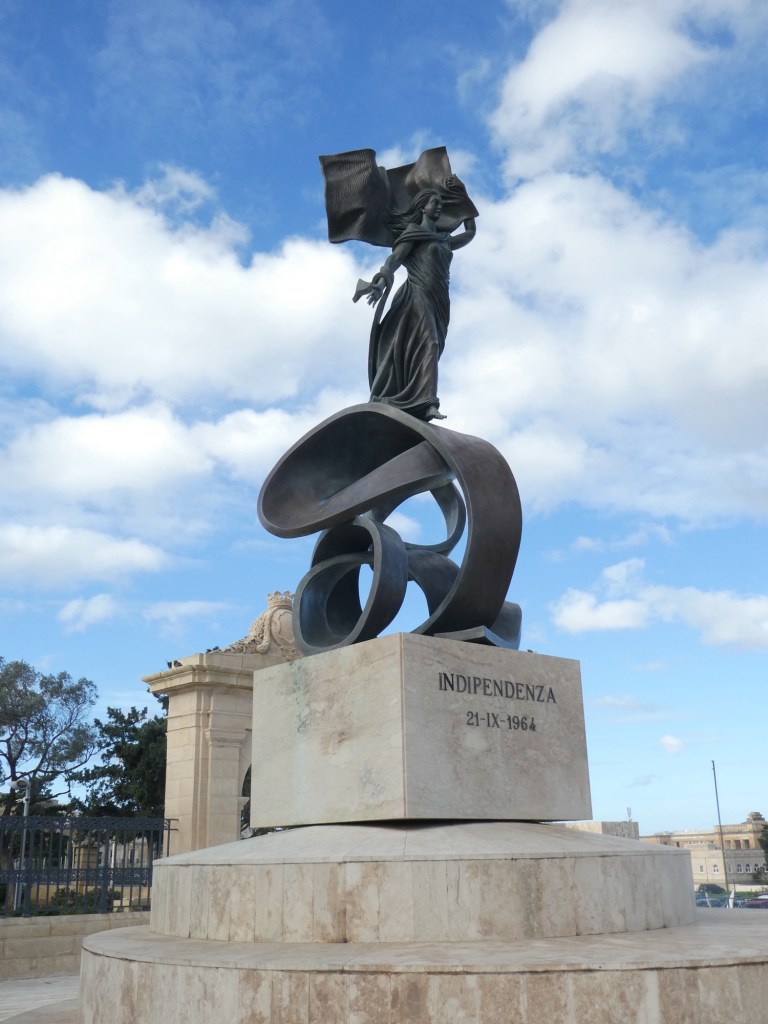
The independence statue
The opera house destroyed in the war, now is an open air theater
A marble tombstone
The two Caravaggio paintings
Co-cathedral clock/bell tower

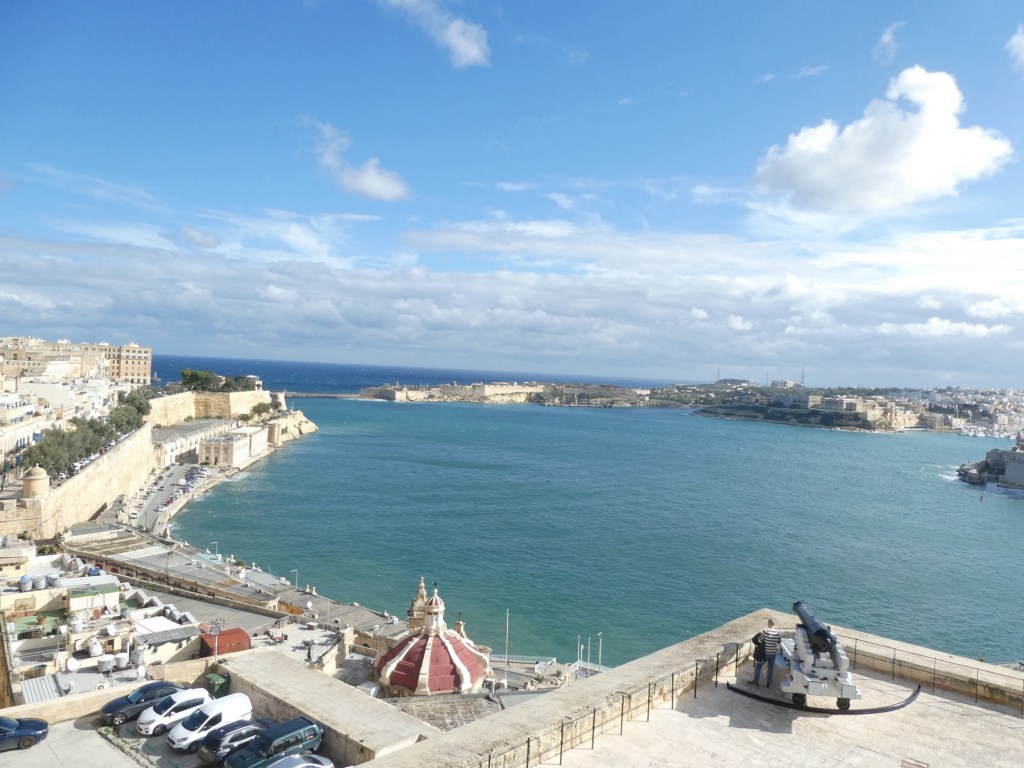
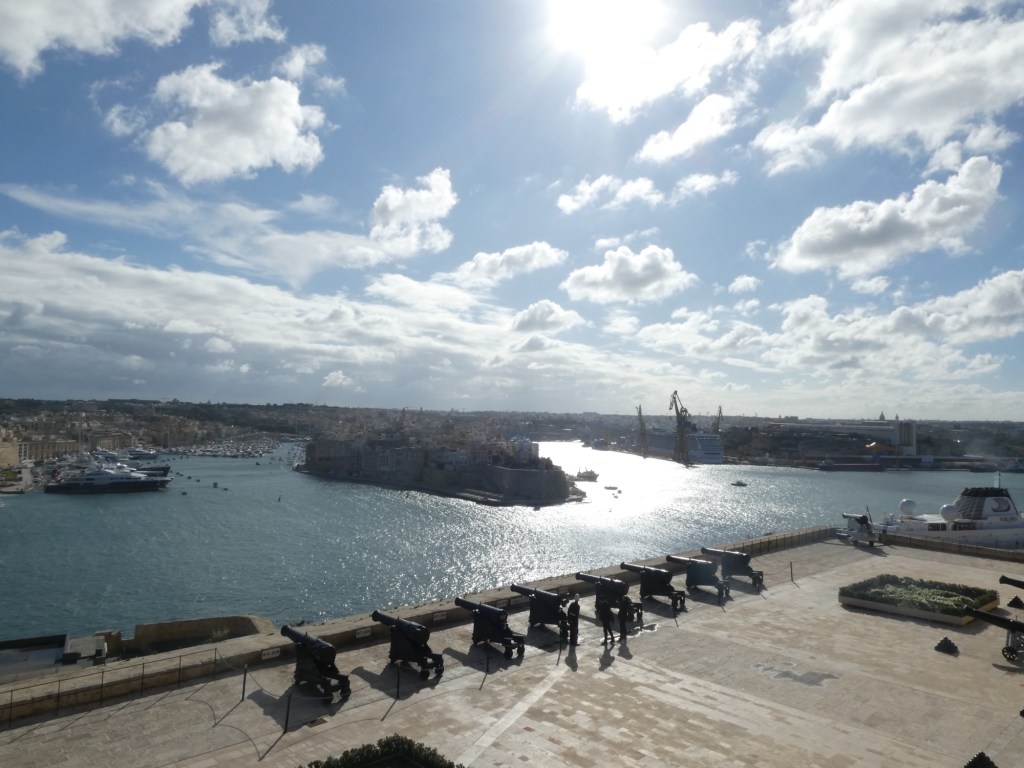
Our second stop was at the Barrakka Gardens which gave us a panoramic view of the harbor and the many forts surrounding it.

Jean Valette

Our final stop was a talk by a current Knight of St. John. It was very interesting to learn about the current workings of this organization. They are a Roman Catholic organization AND a charitable organization. They continue to try to epitomize the traits of St. John the Baptist: selfless giving, honesty, frugal life and unsparingly critical. They began as a hospital order in 1048. Their founder, Jerome, established the first hospital. In 1113 the organization was recognized by the Pope as a Catholic organization. Around 1140, they became militarial and policed the Mediterranean to keep pirates from invading various places. They arrived in Malta in 1530 and since that time there has been free health care in Malta.

Their motto is “defense of the faith and assistance to the poor” (900 years old). Their central government is in Rome and their current budget is 200 million Euros. Our speaker told us about all the good they do all around the world. They provide disaster relief, go to war zones, run medical facilities around the world. It was very interesting to learn so much about this amazing group of people.

Please take some time to Google the Co-cathedral and the Knights of St. John to find out more. Or maybe I have told you more than you really wanted to know. 😉

Categories: Uncategorized | 2 Comments

Scenic sailing – Tyrrhenian Sea

A sea day! We slept in late and had a leisurely breakfast in the observation deck. We played trivia with some other guests and although we got a lot of answers correct we did not win.

This leisure day has allowed me to catch up with my blog.

When we first boarded the ship on December 1 there were no holiday decorations. Then on the morning of the 3rd there were lots of areas decorated.

It is almost time for a lecture and then a little later a port talk.

We arrive this evening in Valletta, Malta.

More as our adventure continues.

Categories: Uncategorized | 1 Comment

Blog at WordPress.com.