
Malta is a group of 5 islands in the Mediterranean Sea between Sicily and North Africa. It is the 10th smallest nation in the world. It was held over time by almost every civilization that bordered the Mediterranean. There are ruins that date back to 5,000 BC.
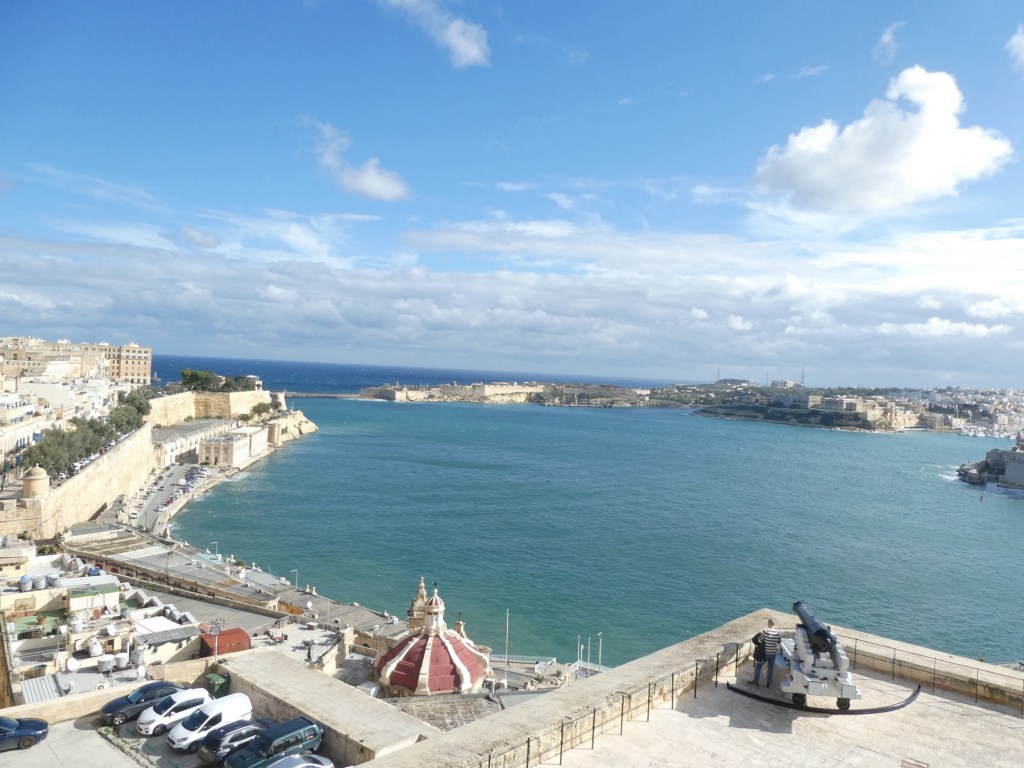
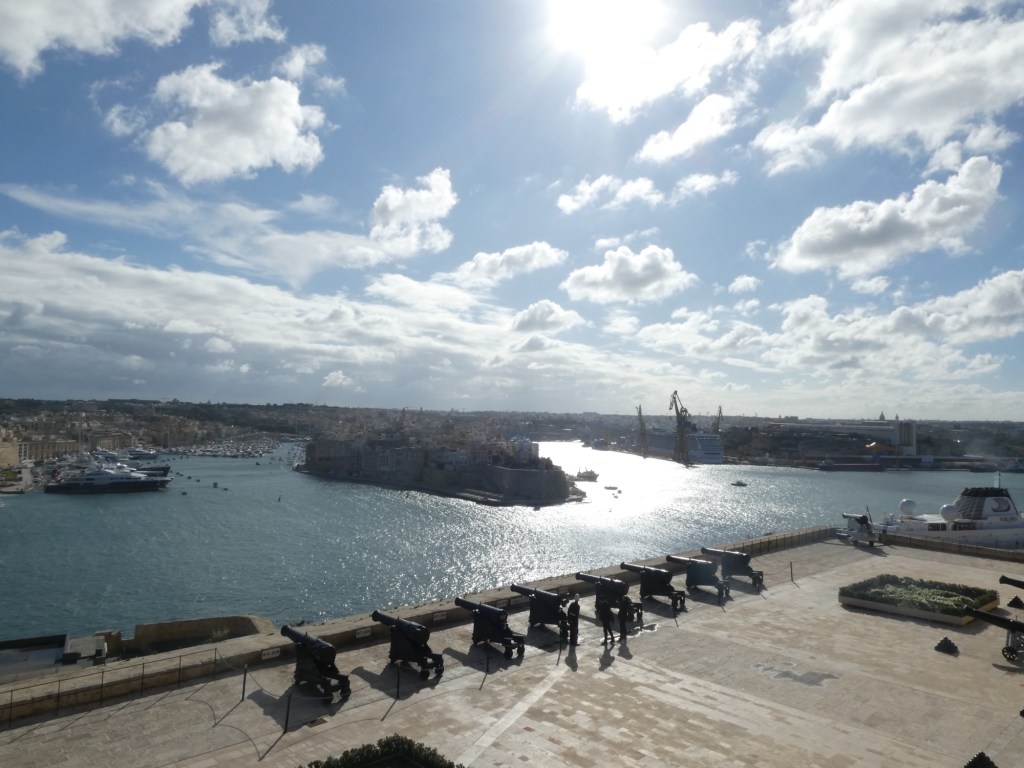
Valletta, the port for Malta, is one of the first planned cities in Europe and most of the construction is of the honey-colored limestone found here. The buildings look baroque and there is virtually a church on every corner. The churches are very plain on the outside but their interiors are amazing. The city is a UNESCO World Heritage Site. The harbor is huge and designated as the Grand Harbor. It is surrounded by many forts.
We had to go through actual passport checks because there was an international meeting being held in the city. The group, Organization for Security and Cooperation in Europe, and Secretary of State Antony Blinken was one of the speakers. Other than having to show our passport when leaving the ship we were not held back in any way.
Valletta is a walled city and sits on a high bluff. We were bussed to the starting point of our walking tour. The city was fully decorated for the Christmas season and we walked through a Christmas market, but it was only open late in the day, not the morning when we were there.
Malta was used in the Second World War and according to our guide was the most heavily bombed place. Malta joined the EU in 2004 and has been an independent country since 1964. There are 365 churches. The island of Malta is about 27 kilometers long and 14 kilometers wide. Tourism is the main occupation on Malta and they also do ship building and ship refurbishment. They have no natural resources. The population of all the islands is about 550,000. About 25% of the population is foreign because they need the additional workers to support the island. 80% of the population is Catholic.
The major expansion came when the Knights of St. John settled here. They arrived in 1566 and the founder of Valletta was Jean de Parisot Valette. The original knights were actually nobles, usually the second son of the family. They started by being hospitalists. They established hospitals in Jerusalem. The original knights were monks. They basically came from 8 regions and when we went into the giant church, there were ornate chapels for each region.
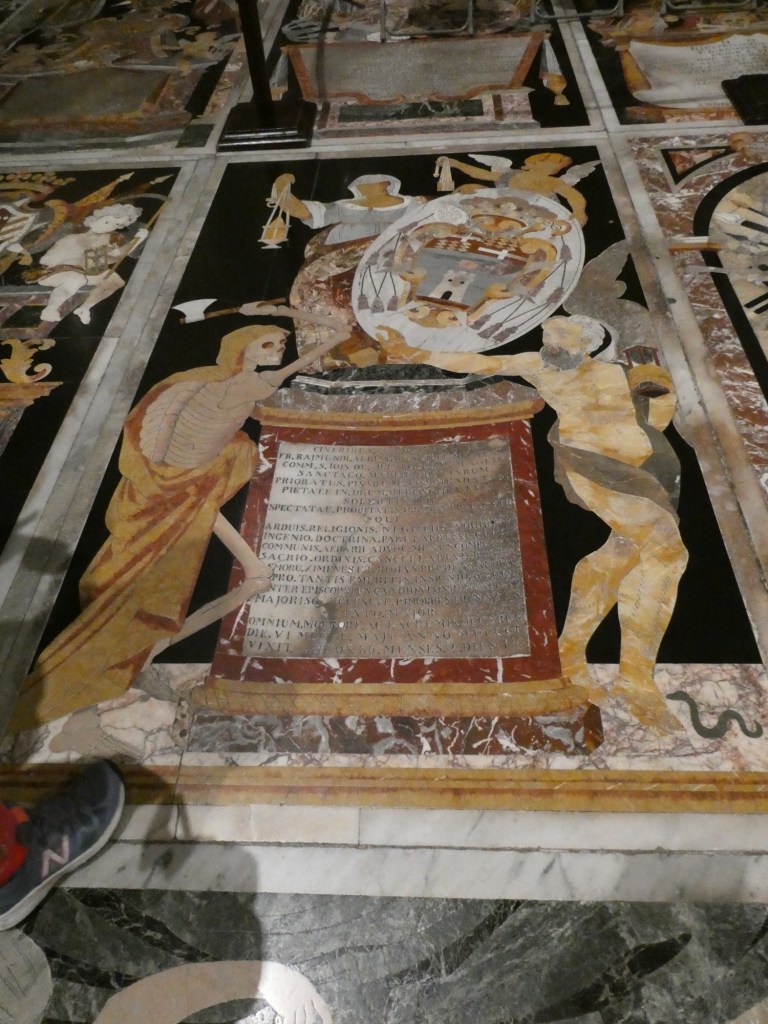
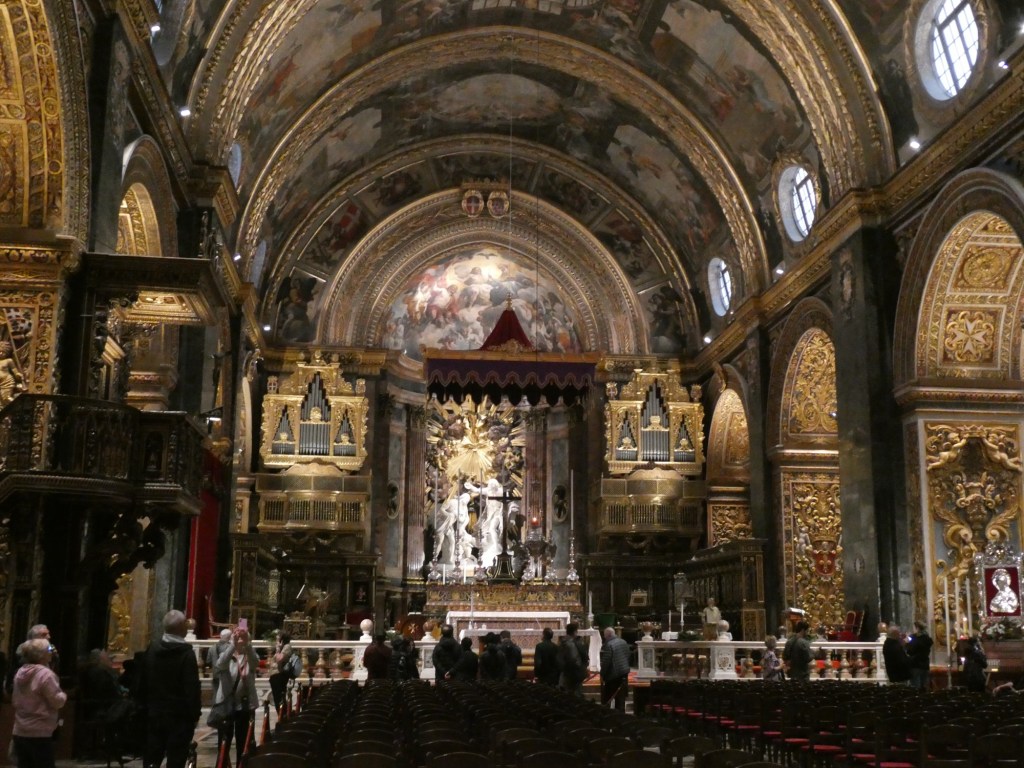
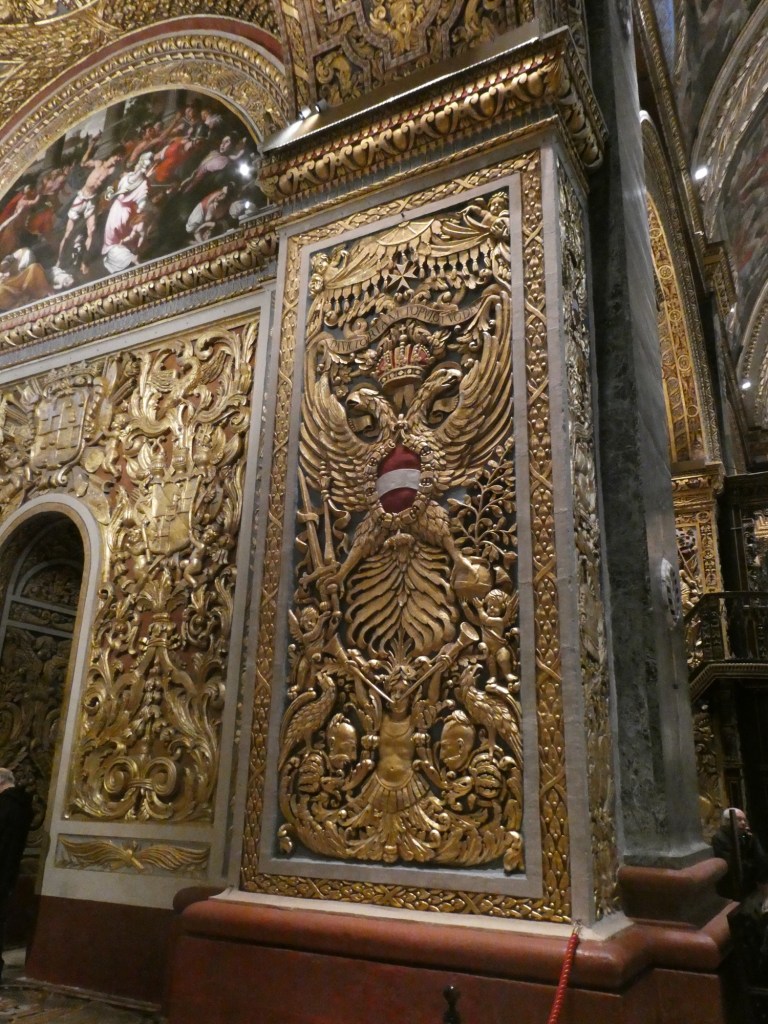
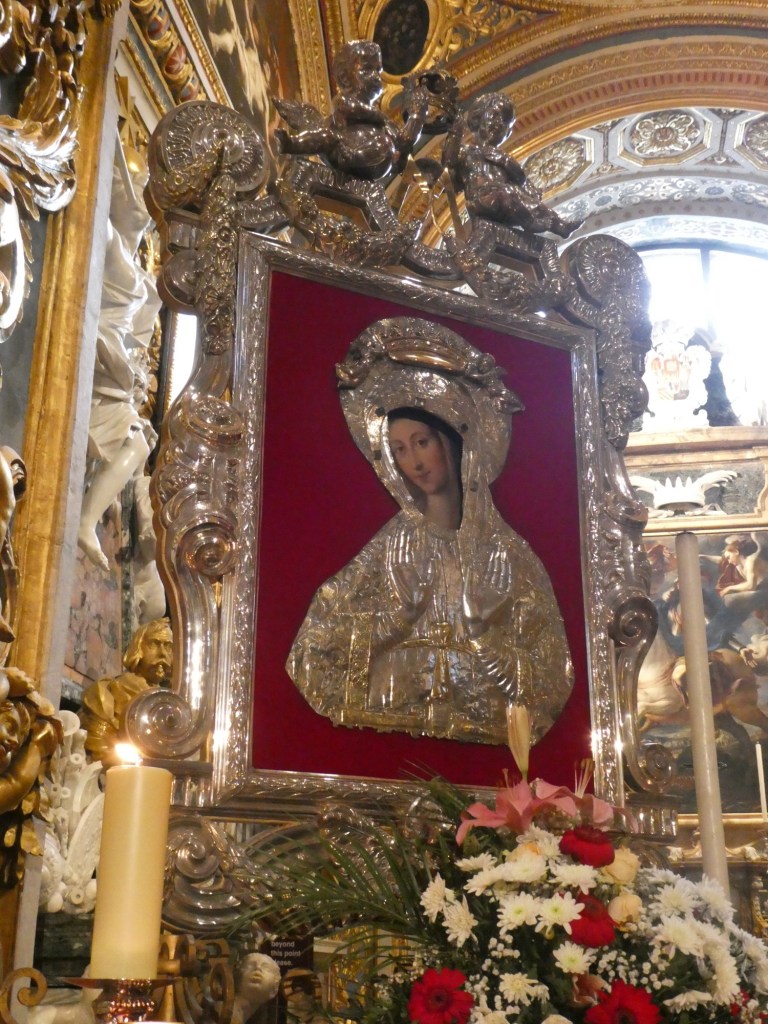
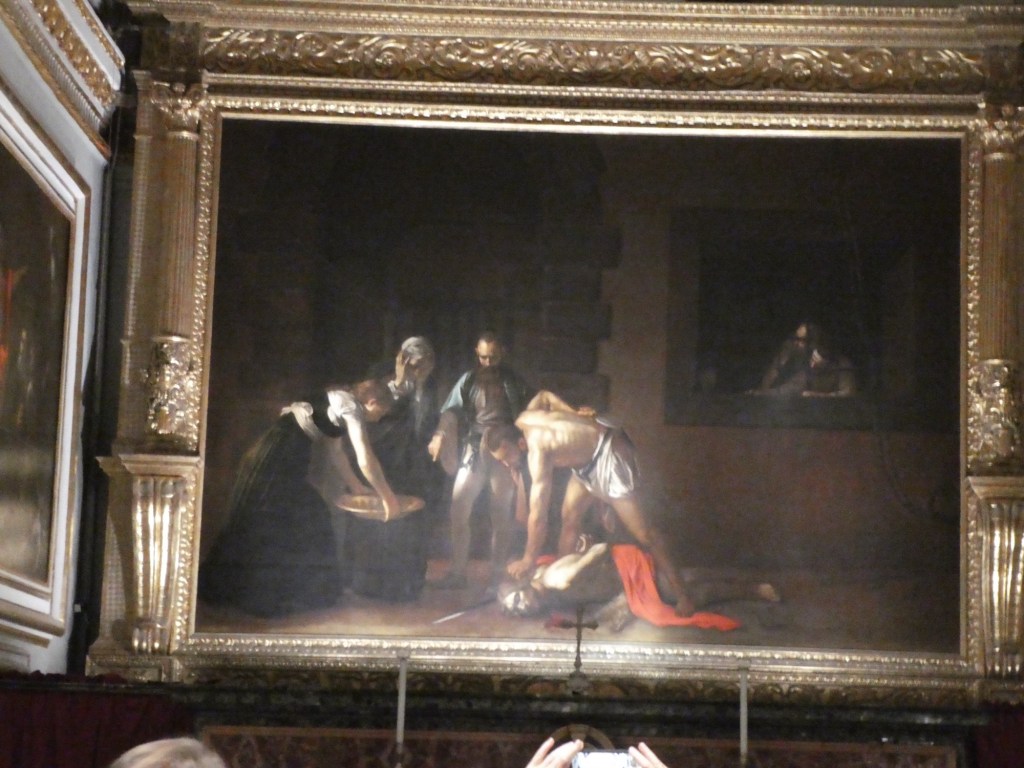
Our first stop was at the St. John Co-Cathedral. It is a co-cathedral because it is not the seat of the Bishop. The exterior of the building is plain yellow with a few towers and a clock tower. Inside it was amazing in how opulent it is, The walls are covered with marble carvings covered in gold. We saw all the chapels which were amazing. The floor was covered with the marble tombstones of the former knights. They were very ornate. It was built between 1574 – 1577. The ceilings are covered in beautiful frescoes representing the life of St. John. There are 2 paintings by Caravaggio; The Beheading of St. John the Baptist and St. Jerome Writing.

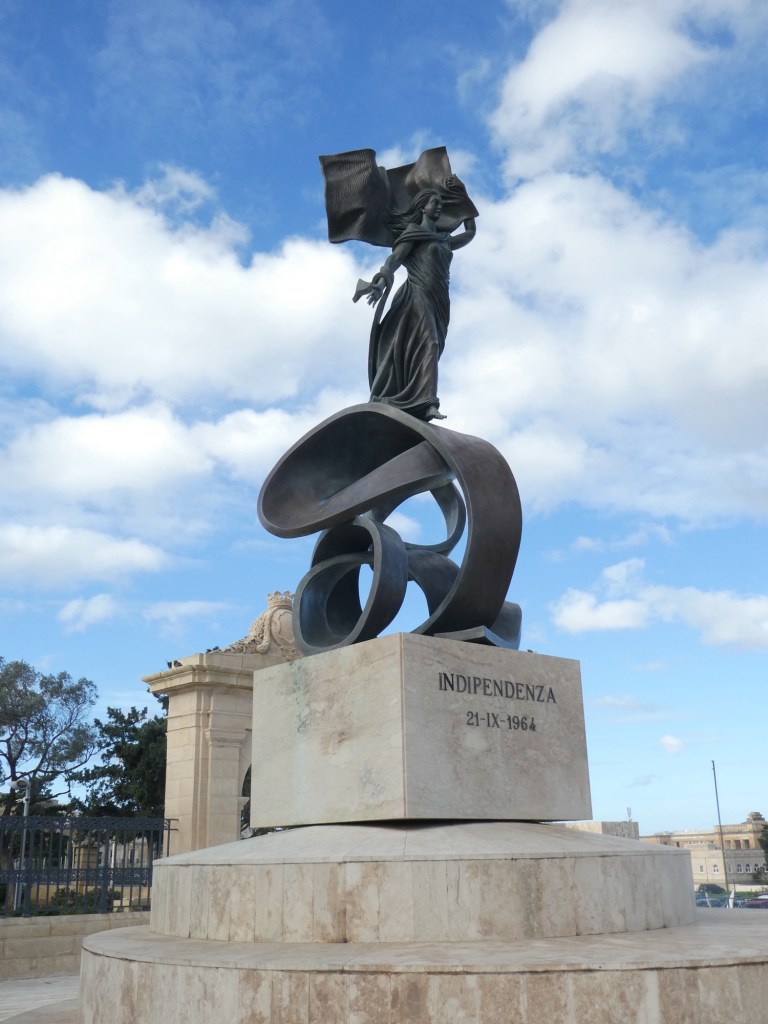







Our second stop was at the Barrakka Gardens which gave us a panoramic view of the harbor and the many forts surrounding it.


Our final stop was a talk by a current Knight of St. John. It was very interesting to learn about the current workings of this organization. They are a Roman Catholic organization AND a charitable organization. They continue to try to epitomize the traits of St. John the Baptist: selfless giving, honesty, frugal life and unsparingly critical. They began as a hospital order in 1048. Their founder, Jerome, established the first hospital. In 1113 the organization was recognized by the Pope as a Catholic organization. Around 1140, they became militarial and policed the Mediterranean to keep pirates from invading various places. They arrived in Malta in 1530 and since that time there has been free health care in Malta.
Their motto is “defense of the faith and assistance to the poor” (900 years old). Their central government is in Rome and their current budget is 200 million Euros. Our speaker told us about all the good they do all around the world. They provide disaster relief, go to war zones, run medical facilities around the world. It was very interesting to learn so much about this amazing group of people.
Please take some time to Google the Co-cathedral and the Knights of St. John to find out more. Or maybe I have told you more than you really wanted to know. 😉


 Bette and Bob See the World
Thanks for your informative posts. Malta is lovely but I learned more from you than the times we’ve been there. Thanks, Bette.
LikeLike
Great history lesson! TY
LikeLike