
Casablanca is a port city and commercial hub of western Morocco. The population is over 4 million in the entire region and the 8th largest city in the Arab world. It is also the country’s primary base for their Navy. The area was founded by the Berbers in the 7th century BC. It was used as a port by both the Phoenicians and Romans. One of its ancient names was Anfa.
Our guide explained to us that the people are very accepting of all religions. There was a large Jewish population in Casablanca but many left in the 1950s to go to Israel. There are still 12 synagogues in use today.
In 1943, Churchill, Roosevelt and DeGaulle met in Casablanca to discuss the war and it was called the Anfa Conference. At this conference the allies adopted the idea of “unconditional surrender”.
The French took control of the area in the early 1900s and their influence can be seen in the architecture and language. Morocco became independent in 1956. They are a monarchy with the King (never a queen) having absolute control of all aspects of the country. There is a parliament of elected officials but all laws and rules must be approved by the King.
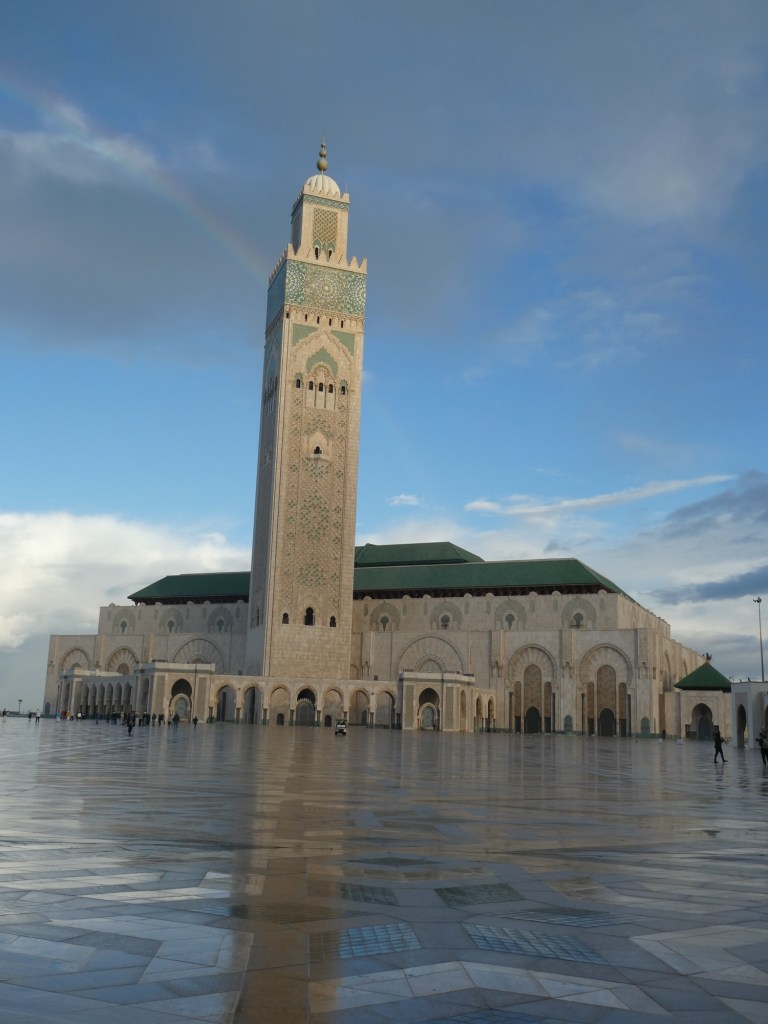
Our tour started with a visit to the Hassan II Mosque which is the 3rd largest mosque in the world. It has the highest minaret at 600’. The call to pray is still done by a person and not a recording. At the top of the minaret, and actually at the top of all minarets, are 3 balls representing the 3 main religions of the world.
The mosque is actually built over the Atlantic Ocean with pilings going down 180 feet to support the building. The roof of the mosque was green indicating it was an important building. It was opened in 1997 after 6 years of round the clock building at a cost of 1 billion.
Our guide, Hamid, who was fabulous, explained the 5 pillars to be a good Muslim: declare your faith, pray 5 times a day, observe Ramadan, give charity/be generous and go to Mecca. He told us that the purpose of the mosque is for prayer only. To be married you go to a judge. He also told us that it has only been in the last 20 years that marriages that were not arranged have happened. He met his wife at university and when he told his mother he wanted to marry her, he was told no. It was only after his sister intervened that they were able to marry. As the oldest son, they lived with his family for about 5 years before getting a place of their own.
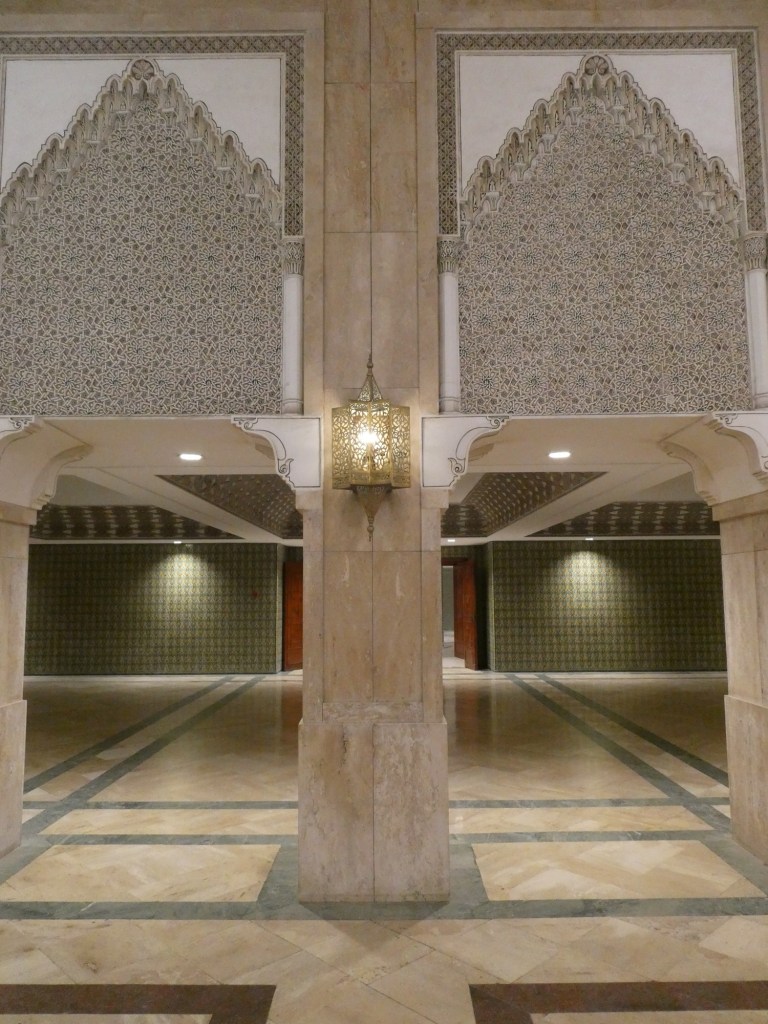
All the materials to build the mosque are from Morocco with much of the marble and stone coming from the Atlas Mountains. The only thing not from Morocco are the Murano chandeliers. The main ceiling is in Berber style, meaning the design has no beginning and no end. The ceiling is cedar wood and all the paints used to decorate it are natural coming from mint for green, pomegranate for red and other natural ways to get the colors. Friday is the holy day and everyone comes to a mosque on that day.
We had to remove our shoes on entry to the building. We did not have to wash since we were not there to pray, but if we were coming to pray we would wash our hands, face and feet since these body parts would be touching the floor of the mosque. Not only did this mosque have areas to wash it had Hammans for each sex. Women in Muslim countries come to the hamman each week to totally cleanse themselves and to gossip.
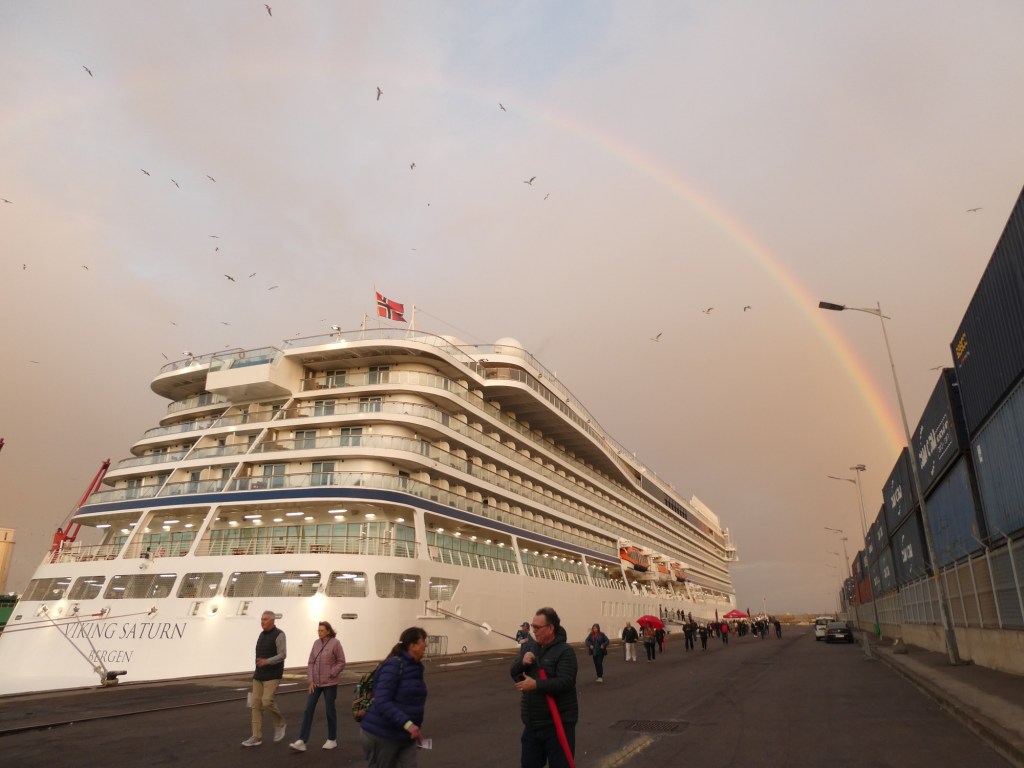
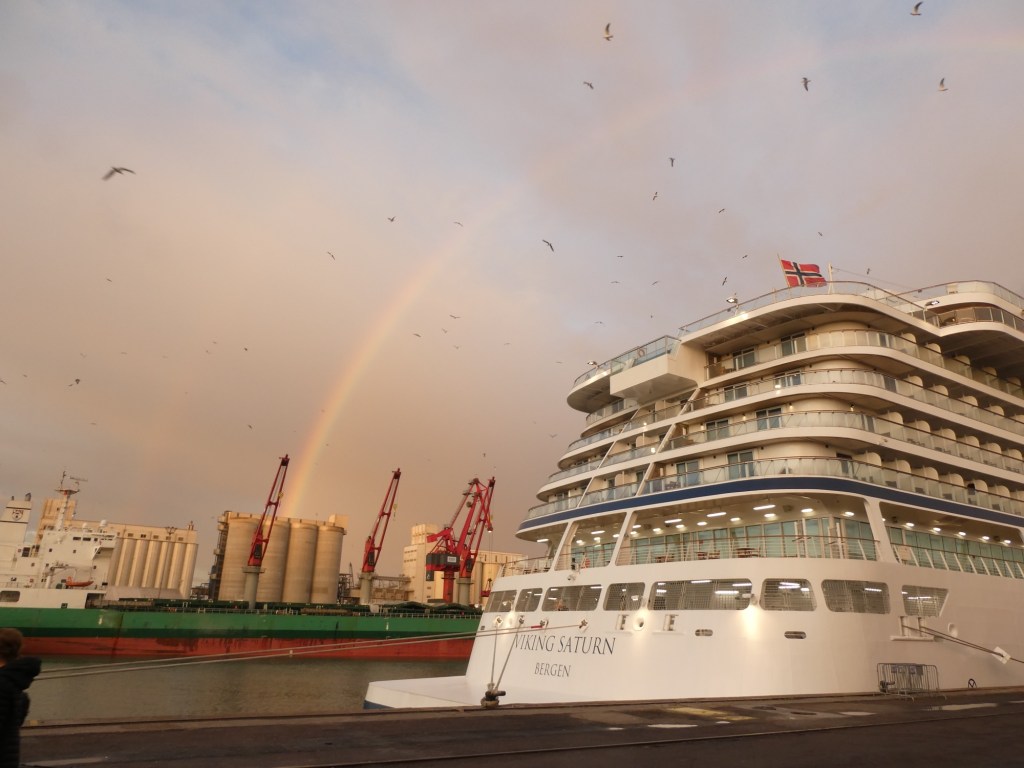

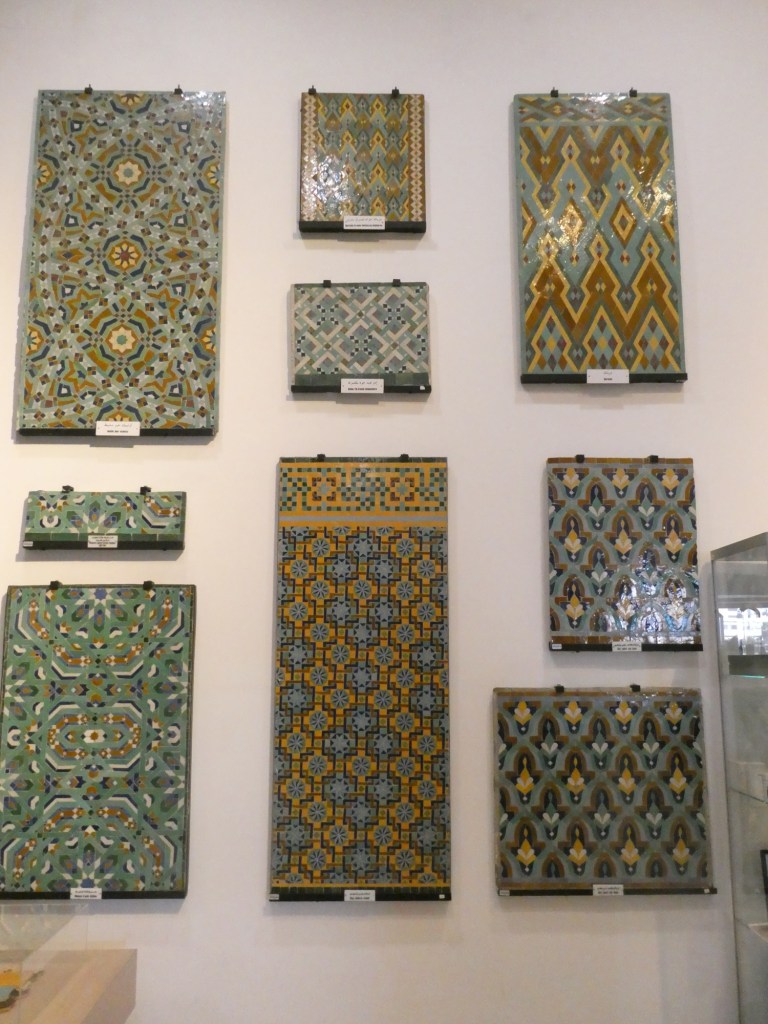
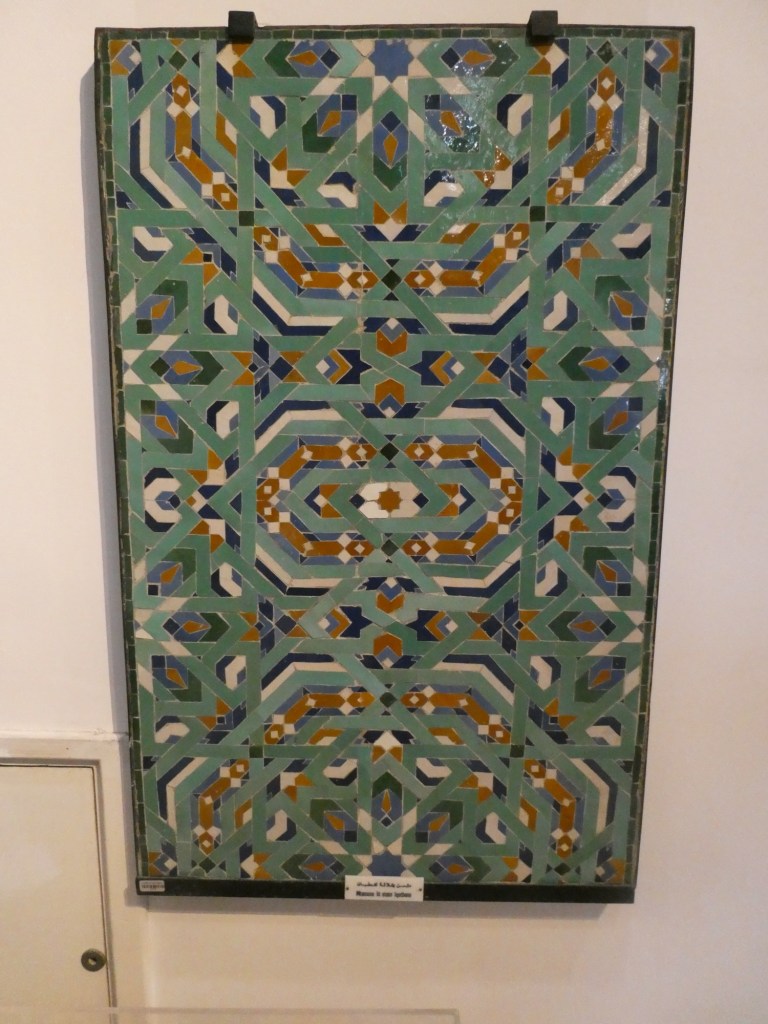





After our visit to the mosque we drove down the coast along the Corniche. They recently tore down the last shantytown in Casablanca but our guide was not sure what would be built on the land which was along the coast. We then drove through the wealthy part of town. The homes there could be 27,000 square feet at a cost of $5,000 per square meter (9 sq feet).
We stopped in United Nations Plaza across from their medina, or market area. We did not go into it since we were warned it could be unsafe. We did get to shop at a national store that had all native goods.
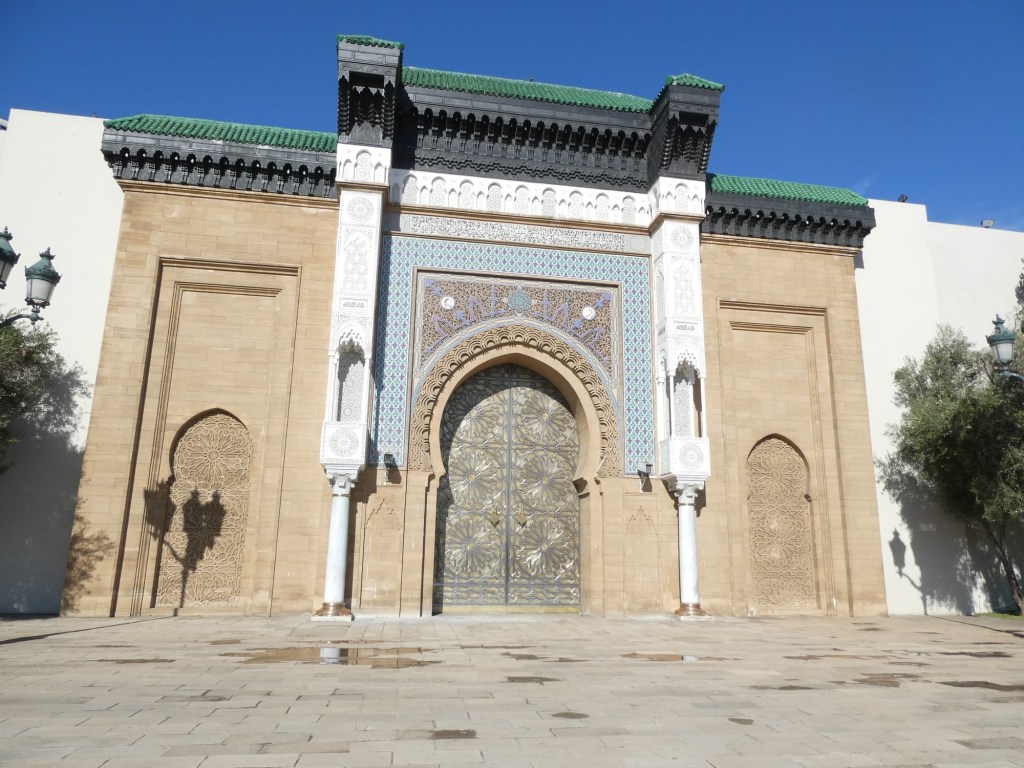
Our last stop was to see the King’s palace. Hamid had to turn in his ID and official guide badge to get us past the guarded entry gate.

Some additional things we learned today. Morocco is a large exporter of citrus. The capital is Rabat. Casablanca is the economic hub of the country. The country is 90% Muslim. The movie Casablanca put the country on the map. In the movie the cafe is called Rick’s. There are currently about 4 Rick’s Cafes in Morocco and the one that claims to be the original can only be entered with a reservation.
As you can tell from the length of this post it was a very interesting and informative day.


 Bette and Bob See the World
You really made me regret not getting to Morocco as the trip I planned many years ago got cancelled. I’m so happy to learn all thaat you shared. Thanks. Polly
LikeLike
Thanks for your message. Hope you are doing well. I am still away with my kids for Christmas and Chanukah. Missed being with you all at Nancy’s.
LikeLike