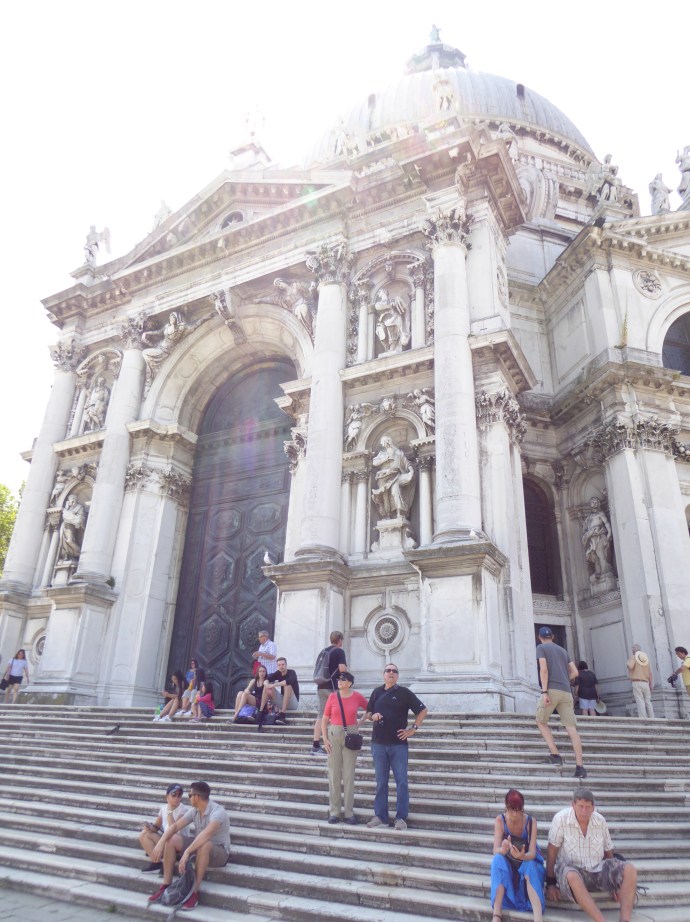
Today, Bob, Mike and Bette walked around Venice, wandering through small streets and squares. We ended up at the Santa Maria de la Salute Church only to find it did not open until 3. We then took the vaporetto all the way down the Grand Canal. We did some shopping for Mike since he and Cheri still had no luggage. After lunch on the ship, Bette and Cheri went shopping for clothes and cosmetics for her. Then the luggage was delivered!
We had our life boat drill and we sailed out of Venice. Dinner in Toscana. A win at trivia.
We had three days in Venice. On the first one, because of all the flight delays we just walked around and then had dinner in a small restaurant in a square.
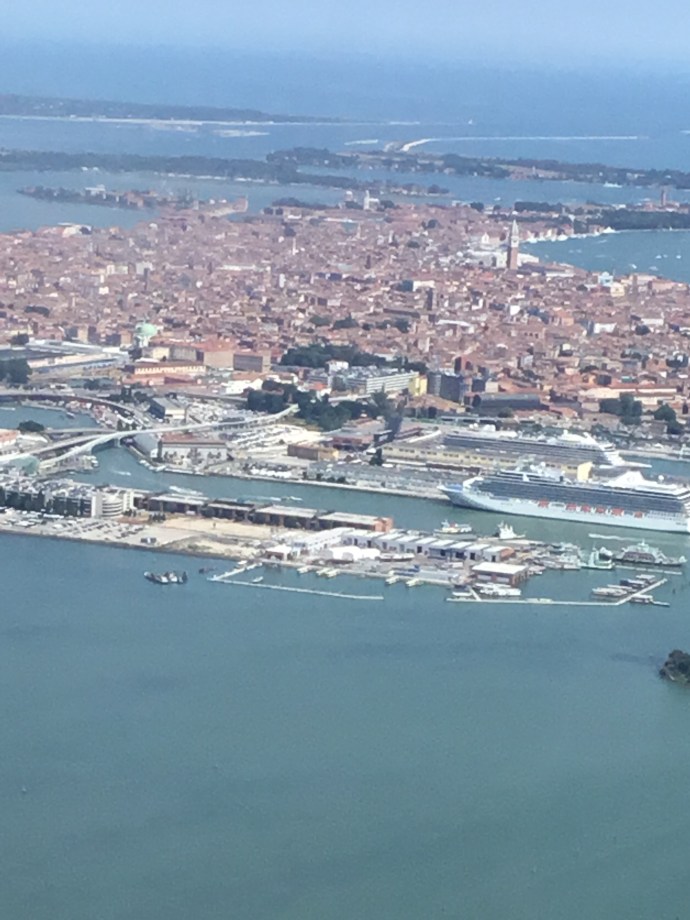
Our ship, Oceania Riviera, with Venice in the background as we were landing.
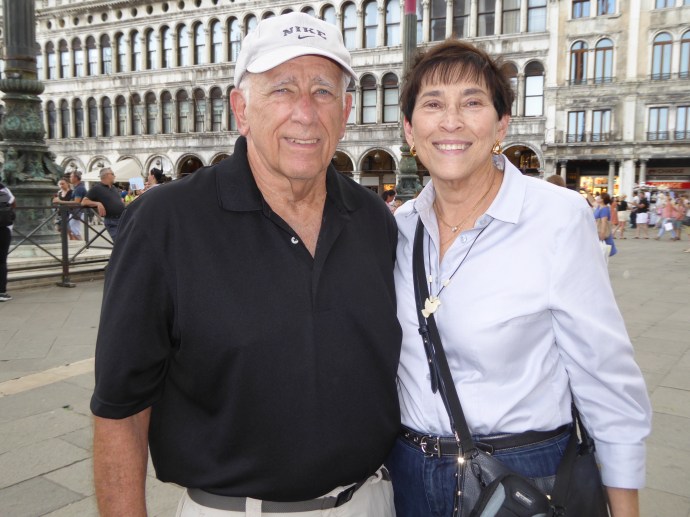
In the Piazza de San Marco
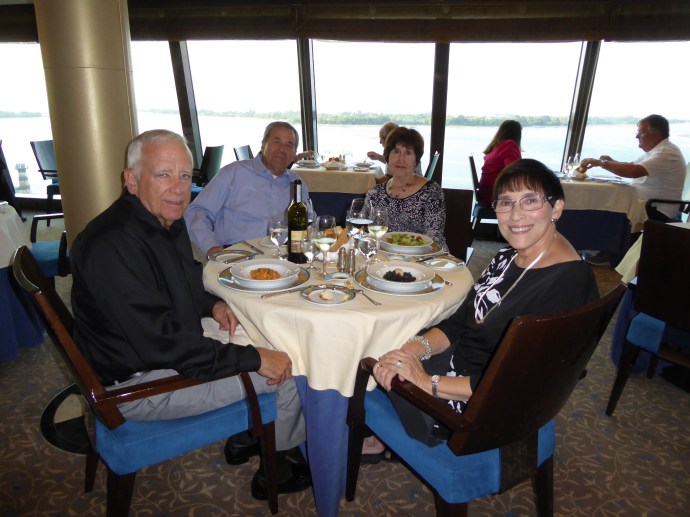
Dinner
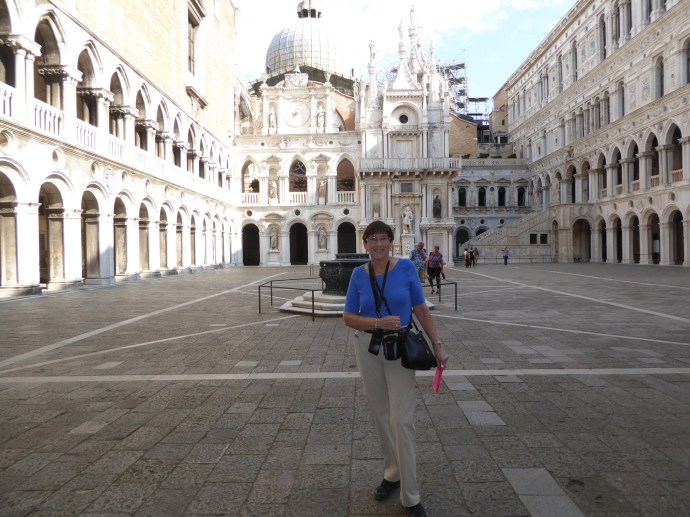
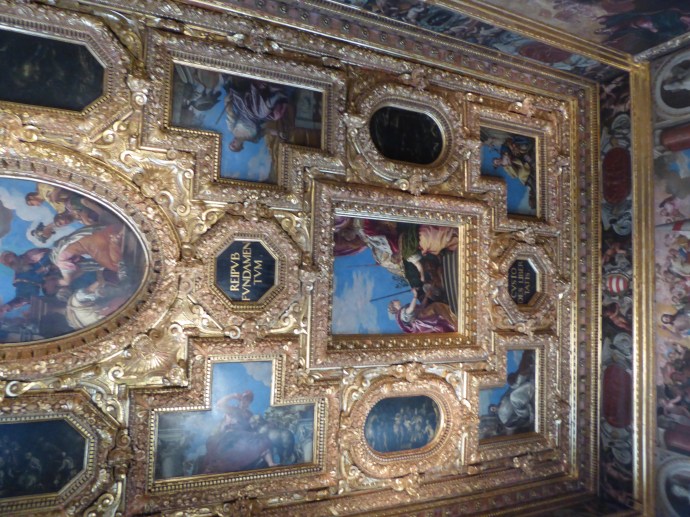
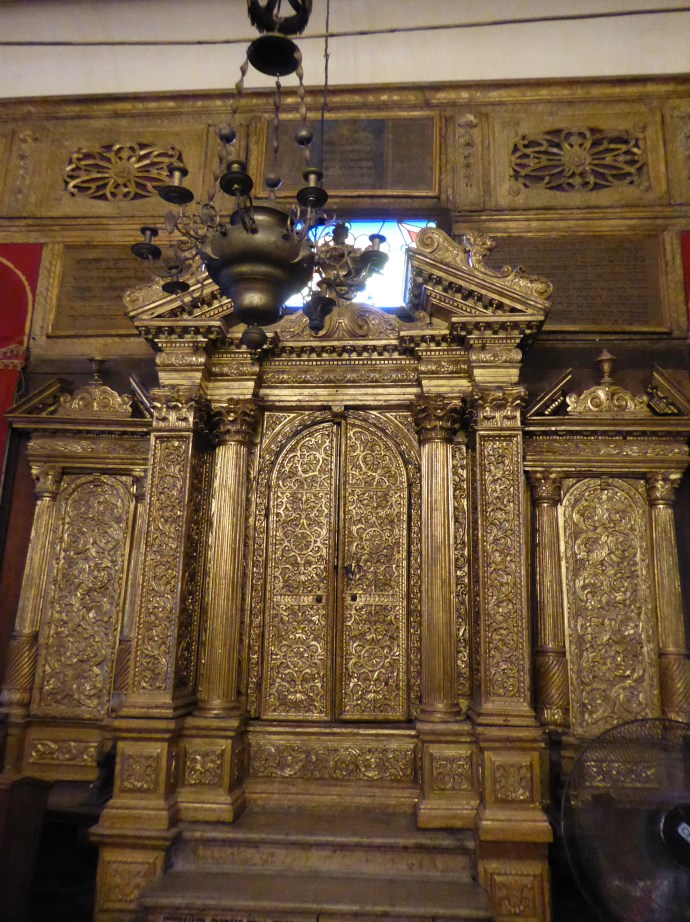
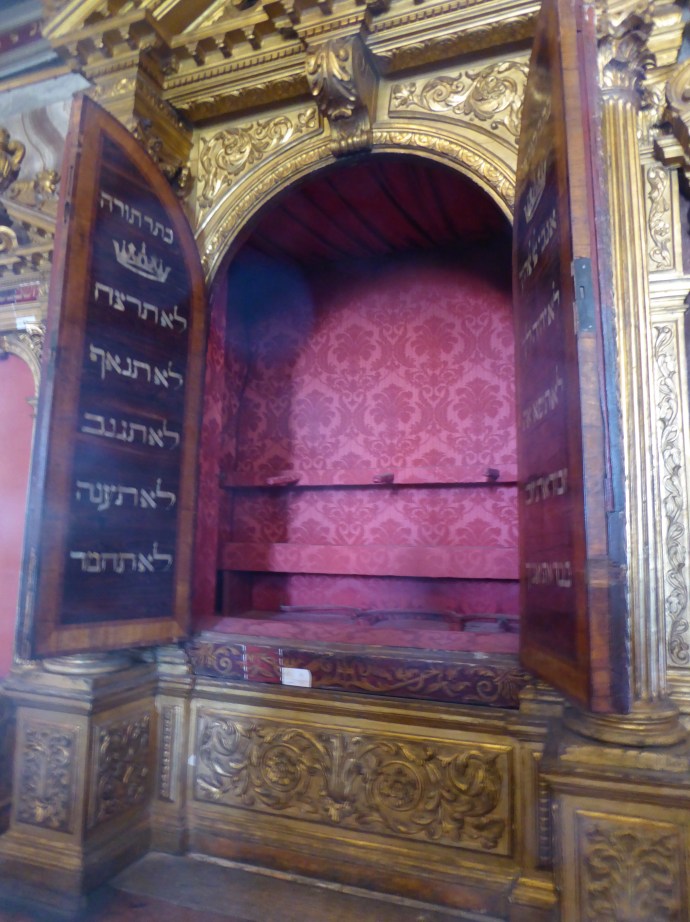
The first thing we did on the second day was tour the Doges Palace before transferring to our ship by water taxi. We had to dodge lots of gondolas on the way. After lunch we took the people mover to get into Venice and walked until we found the Jewish quarter. We took a tour of the 3 synagogues. It was very interesting. The three different ones were French, German and Ashkenazi.
After a wonderful wedding for our son, Michael, and his beautiful bride, Dylan, last weekend we are finally off on our next adventure. Well, we thought we were off, but a series of events have bogged us down.
Our flight from Boston to Paris and then connecting on to Venice was due to leave at 7:06 PM. We actually left at 7:30 but did not actually fly until 8. This was somewhat problematic since our connection in Paris was only 70 minutes. When we landed in Paris, we thought we would be fine until our gate was not ready and then when it was ready we were in a remote area that took 15 minutes by bus to get us to the terminal. We did the run through the terminal, going through passport control and security and getting to our gate about 3 minutes too late to make the flight.
We are now waiting for our rebooked flight hoping that our bags have also been rebooked.
Our friends, Cheri and Mike Madsen, who we were meeting in Paris, had plane problems and ended getting rerouted directly to Venice. Unfortunately no one rerouted their bags. They have been told that the bags will get here tomorrow and be sent directly to the ship.
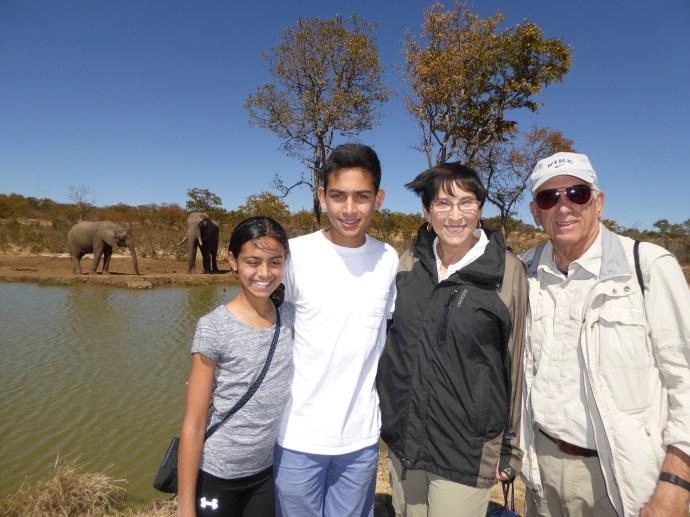
We started the last day of our trip with an excursion to an elephant sanctuary. We had two speakers tell us about the elephants and how they got to the sanctuary and what was done with them once they were rescued. The second speaker was from the Victoria Falls Wildlife Trust who told us about their efforts in animal conservation and protecting from poachers and others who harm the animals.
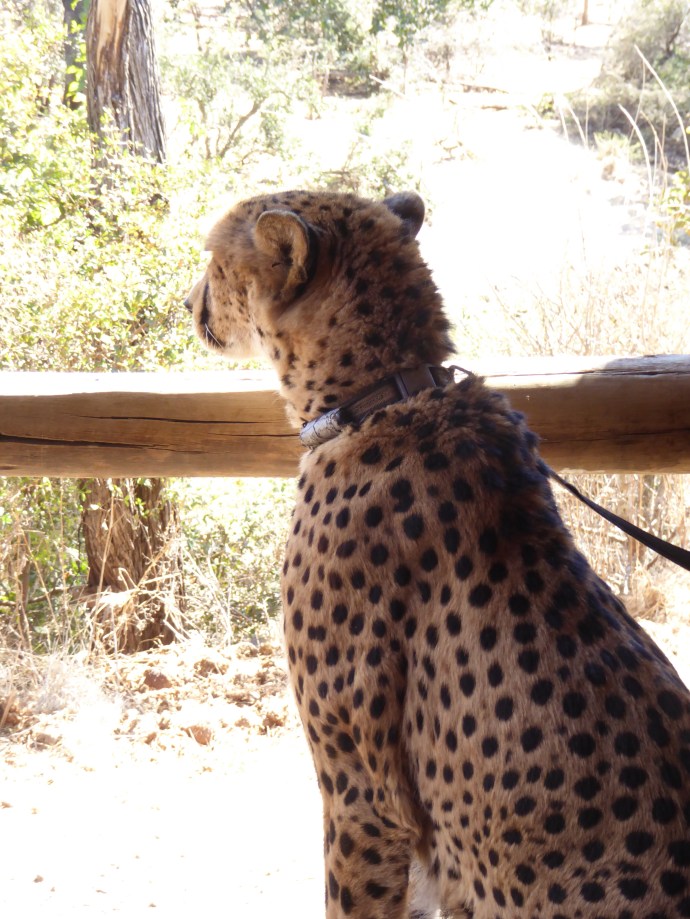
We came out onto the deck and there was our surprise, Sylvester, the cheetah. What a beautiful animal. We were told how he had been rescued after his mother was killed shortly after he was born. We heard about his typical day and then we were able to take pictures with him.
Then the elephants came to the deck. We were also able to take pictures with them and pet them. Soon we were taken to another area where we were able to feed them. It was quite an amazing experience for everyone.
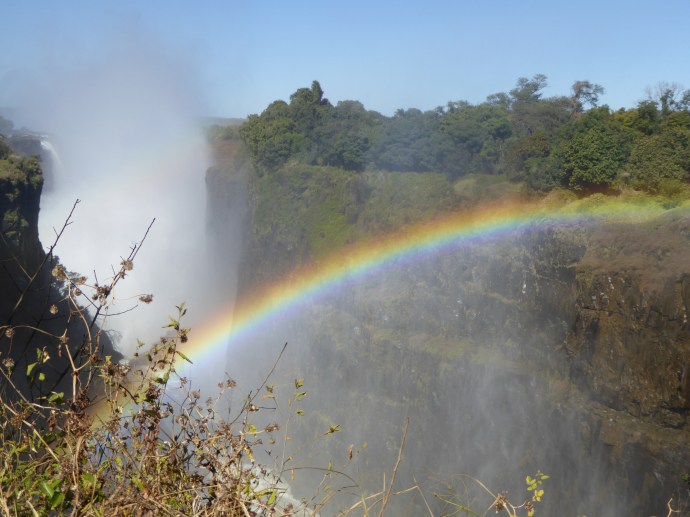
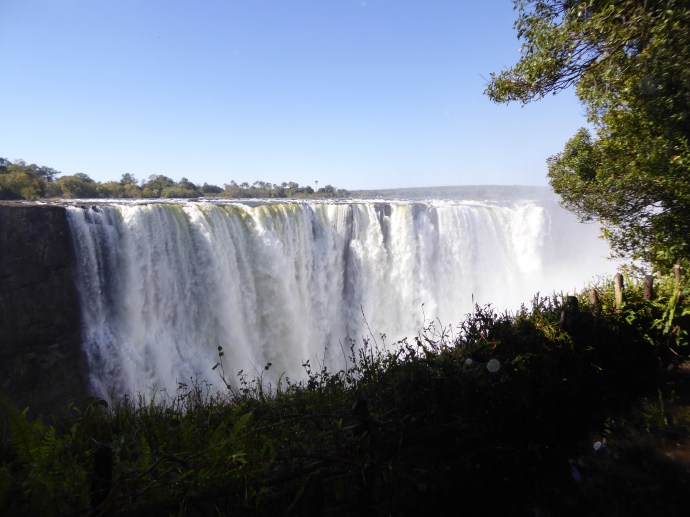
We then had a lovely lunch and were off to Victoria Falls. They were amazing to see and were rushing with a very high volume of water. In some areas the mists were so thick that you could not see the falls. In some places it was almost like it was raining.
Upon returning to the hotel we all donated no longer needed or wanted clothes or goods to a school that 2 of our fellow travelers had helped establish several years ago.
Then we had a lovely tea on the verandah.
Finally we had our farewell dinner.
Tomorrow morning we start the long trip home. This has been a wonderful experience for all of us.
We had an early start from Jo’burg to get us to the airport in time for our mid-morning flight to Victoria Falls, Zimbabwe.
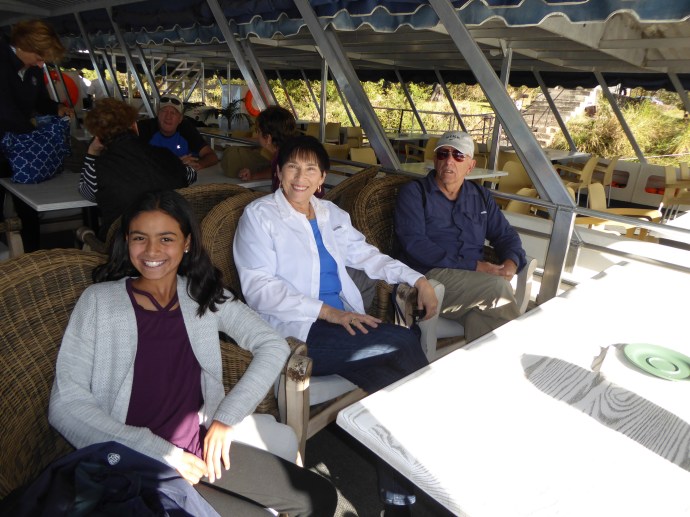
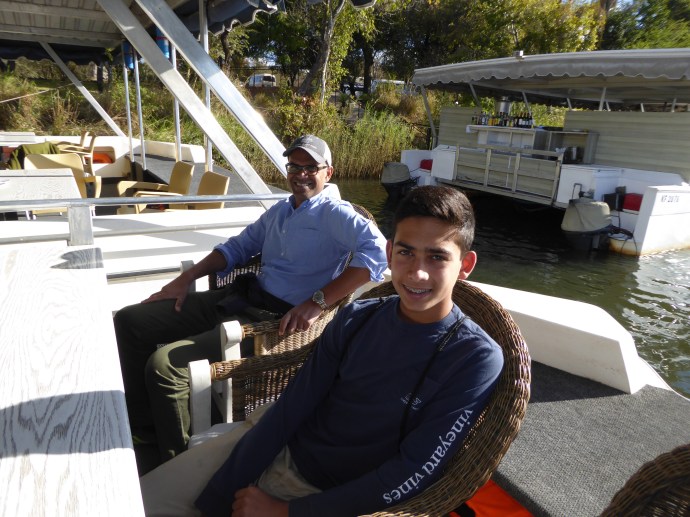
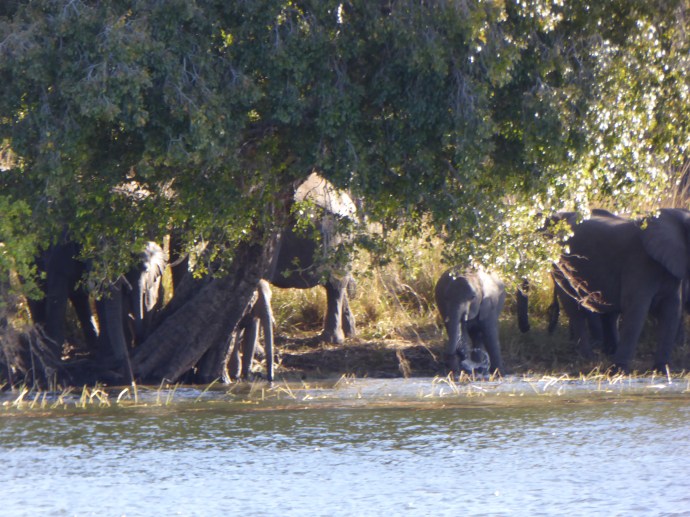
After arriving at the Victoria Falls Hotel, a throw back to very British colonial times, we had a short time to freshen up and then we were off. We were driven to a dock on the Zambezi River and we boarded our pontoon boat. While we floated we saw hippos, elephants, warthogs and giraffe. Our guide, Mounya, said it was very rare to see so many animals on a trip.
We had a guest speaker who told us the story of Livingstone who explored the Zambezi River and named Victoria Falls for the queen of England.
The trip ended with the sun going down. It was beautiful.
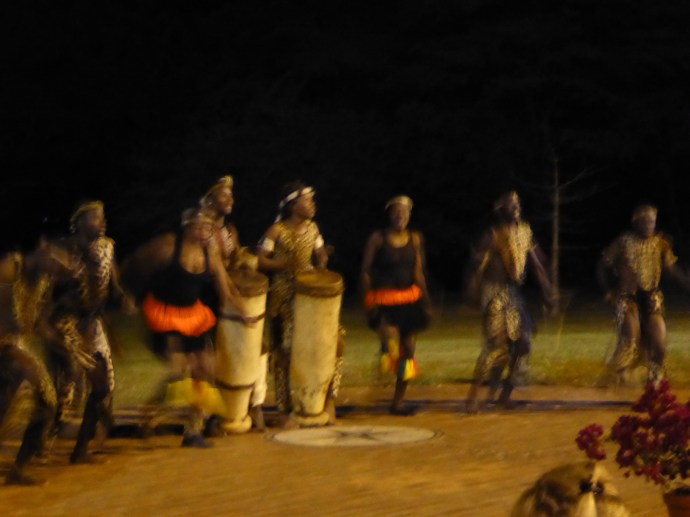
Our dinner was in the open air restaurant, with a show of native dancers.
Tomorrow elephant sanctuary and the falls.
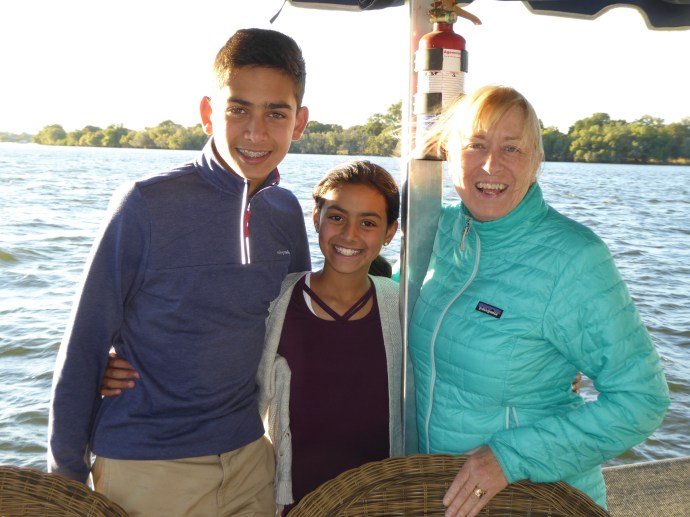
Jacob and Abby with the tour director Nancy
The dancers moved so quickly that my photos are not that good 😞
Our next stop was Johannesburg. The city, 2nd largest in all of Africa, has a population of approximately 4 million. It is the largest city in the world not on an ocean, sea, river or lake. It is however the main “port”of entry for goods in the country. The city is affectionately called Jo’burg or Josie. The city covers 150 square kilometers. There are 11 official languages.
40% of all human remains have been found in the area around Johannesburg.
The city was founded in 1866 when gold was discovered by a pair of farmer brothers. Some of the mines go 1 mile deep. The country of South Africa has everything that can be mined or dug from the ground except oil.
Sadly there is huge unemployment with only about 28% employed. The city used to be almost entirely white but after the end of apartheid in the late 60’s the white population left the main part of the city. There are still areas that have abandoned buildings in disrepair next to beautiful new buildings.
We toured Soweto which is the contraction for South Western Township. This was the area outside of Jo’burg where the black workers were forced to live in the apartheid times. This is still predominantly a black area with tin houses, being replaced by the government with concrete block houses. Unfortunately the blacks are then keeping their tin homes and renting the better houses to immigrants and earning some money that way. In Soweto we went down Vilakazi Street where we saw the homes of Desmond Tutu and Nelson Mandela. We also went to the memorial to the young man who was killed first in the student uprising.
The current government is taking some of the 40,000 farms from white farmers and giving the farms to blacks who do not know how to manage a farm. Our guide predicted that soon there would be a food crisis in the country. The traditional African system of wealth determination is cattle, the number of wives and the number of children (in that order).
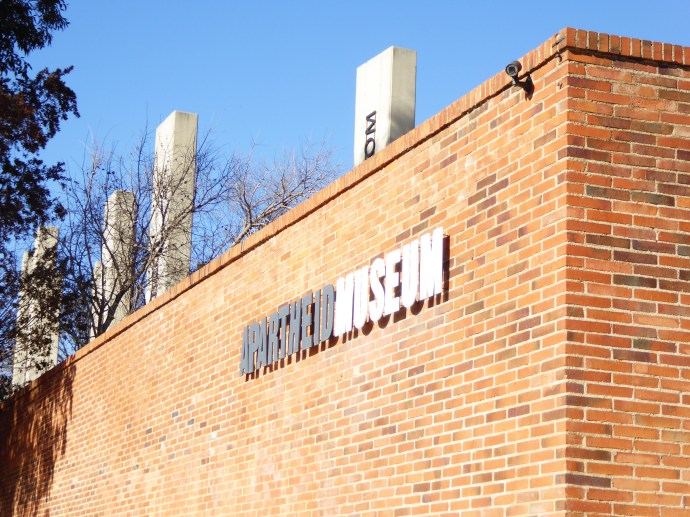
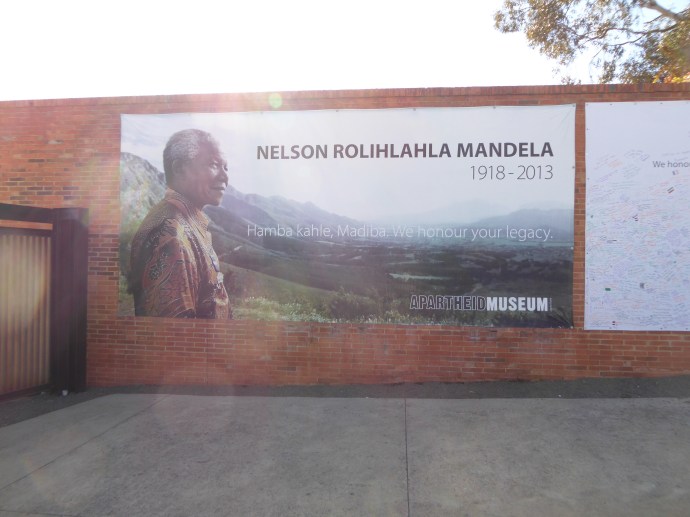
We then went to the Apartheid Museum. It was a beautiful building. There was a special exhibit about Nelson Mandela, commentating his 100th birthday. The main museum was well done with photos, videos and films. The written explanations were excellent. No photos were allowed there.
After a fantastic lunch at the Mad Giant Brewery and Urbanologi we had a free afternoon.
Dinner at Marble, another fantastic restaurant overlooking the city.
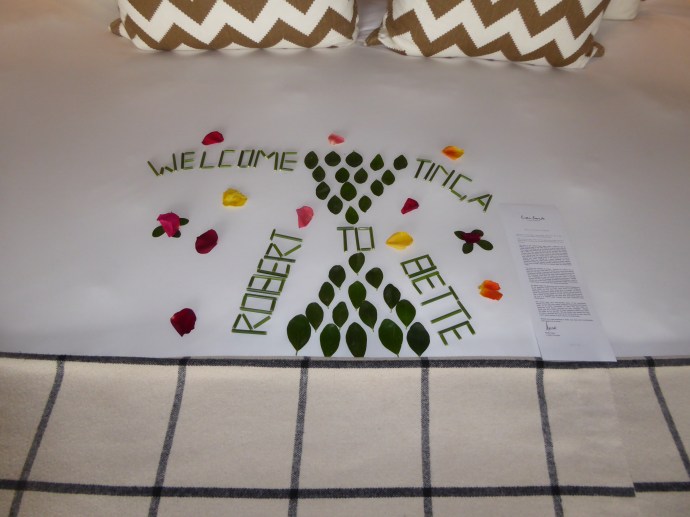
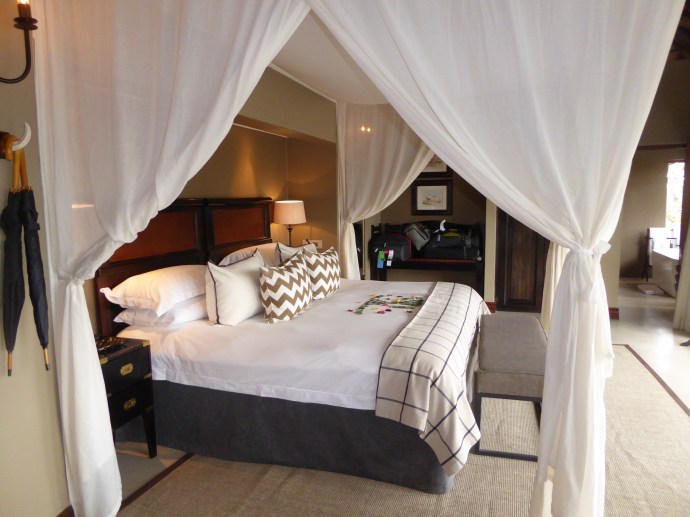
We flew from Cape Town to an airport just outside of Kruger National Park. We were told to limit our luggage weight to 44 pounds, but our tour manager was able to group check us in and weight was not an issue. The airport is at Skukusa. We boarded our safari jeeps for the 15 minute ride to our first lodge, Lion Sands. There were 2 different lodges, Tinga and Narina. Half the group was at one and the other half was at the other. This lodge bordered the Sabie River. We had lunch, and then went to our rooms to get ready for our first safari. Our driver/guide was Willie and our tracker was Lucas.
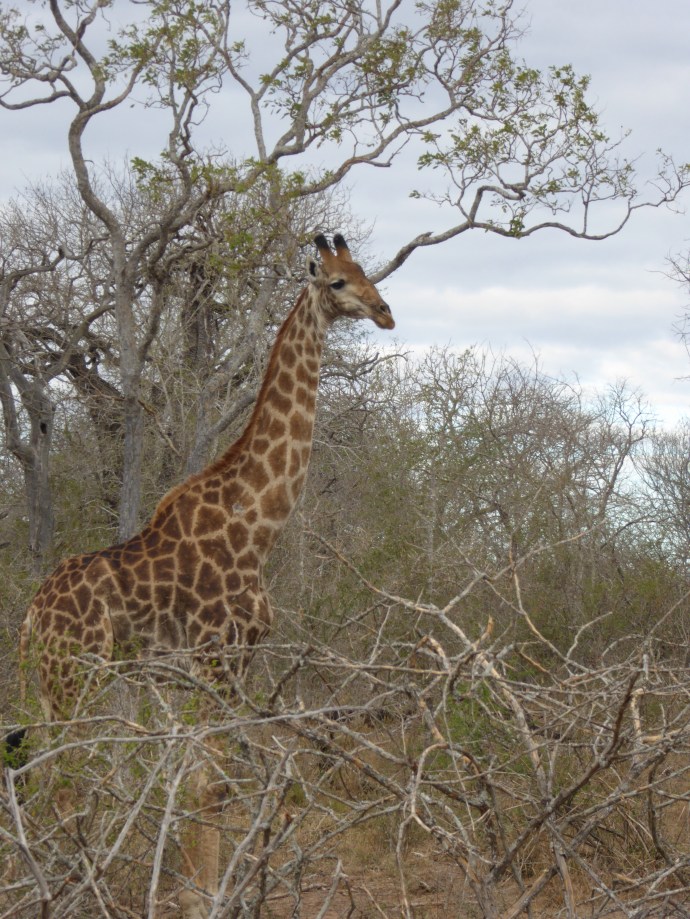
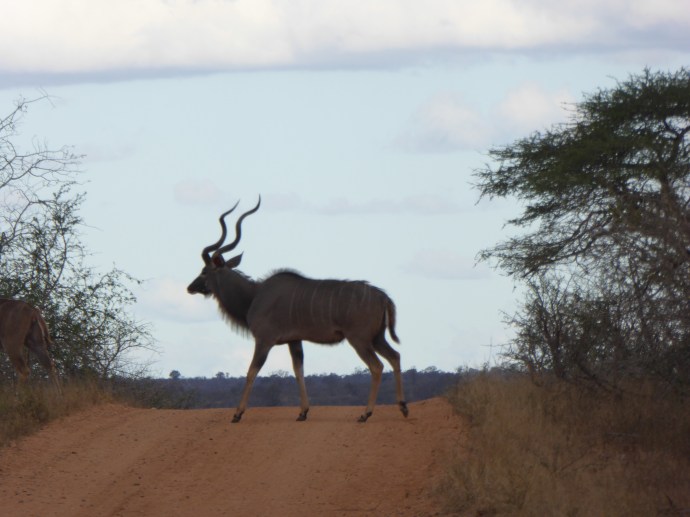
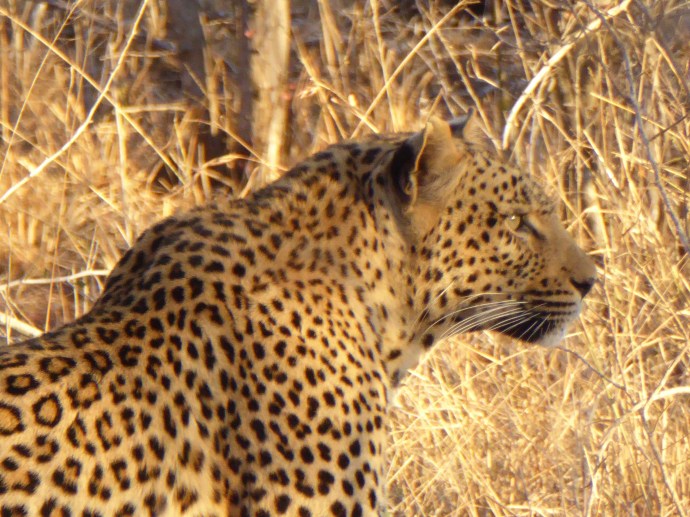
We were lucky to see many animals. Because it is hard to remember what we saw on each safari I will recap the 8 different drives we did. We saw many zebra 🦓, lots and lots of giraffe 🦒, some with babies. We saw a giant pool of hippos, which we had to walk in to see. We saw several white rhino 🦏, but no black rhino. We learned the way to tell them apart. We saw lots of impala, water buffalo, springbok, eland, ngala, water bucks and many other deer like animals that I unfortunately do not remember the names of. We saw leopards and lions. Amazing. We saw lots of amazing looking birds.
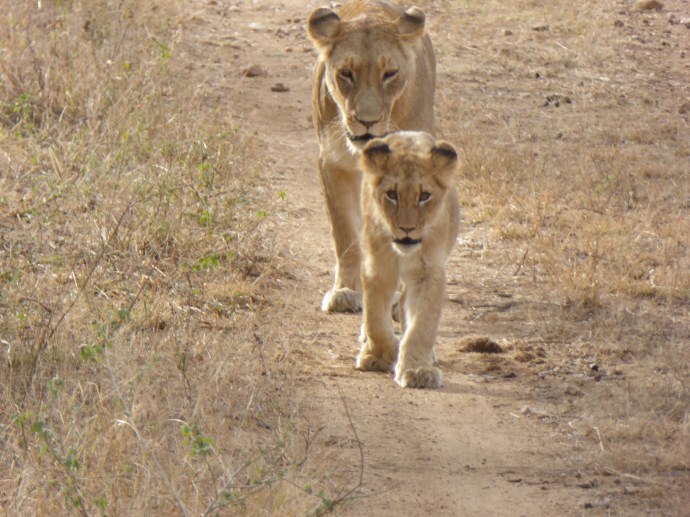
Here are some of the exciting/interesting things we did. We stopped in an area that has elephants. We sat and waited and they slowly approached us. Abby was nervous that they would get too close. We were able to follow a leopard as she hunted impala. We were able to go into the bush to actually follow the animals. We watched a herd of elephants grazing on a hillside and then coming down to head to a water hole. The adult elephants were able to walk down but the juveniles and babies ended up sliding down on their butts. We all got a good chuckle at that. We had been tracking Lions for several days. Then we got a radio call, lions! We rushed down the rough dirt road and there were 2 lions. They were hunting an injured baby water buffalo. We watched them sneak up on the buffalo and then they attacked. As soon as they attacked the entire herd turned and chased the lions off the calf. One of the buffalo hooked the lion with its horn and flung it up in the air. The lions rushed off and the buffalo surrounded the injured calf. Our guide said that the lions were circling to get another attack under way, but by this time night had fallen and we could not see. The next morning we saw that the calf was still alive and that the buffalo and lions had fought again. We tracked the lions for quite a while but did not see them again. One day we were riding down a road and a lioness and her cub were just walking along. The last safari ride was coming to an end when we stopped at a waterhole. Soon a herd of water buffalo came up and surrounded us as they got to the water. Then from the other direction another herd came rushing at full speed to the waterhole. There must have been almost 400 animals slurping up water.
After 2 days at Lion Sands lodge we were driven to Sabi Sabi Bush Lodge. This was another fabulous place. Each room here was also a small suite with outdoor showers, a living room and a bedroom. This lodge was more “hotel” like. Our dinners at both lodges were elegant either served in the dining area or in the lodges boma, an outdoor barbecue area with fire pits or other methods to keep us warm. At Sabi Sabi our driver/guide was Jabu and our tracker was Samson.
On each safari ride we either had coffee or tea (morning) with pastries or cocktails and hors d’oerves (evenings). Quite a treat.
A typical day was a wake up call at 6 AM. Coffee or tea and pastries and then off for a 3 hour safari. Back for breakfast and then to our rooms to shower and clean up. Before long it was time for lunch. Most days there was a lecture of some sort. Soon it was time for afternoon tea and then off to our afternoon safari at 3:30. After 3 hours we were back and it was cocktail time and then dinner and then off to bed. We had to be escorted to our rooms each night because there could be animals on the path. One night when we got to our room there was a big branch over the last bit of the walkway. Our guide moved it and we then saw a big hole in the wood – the work of an elephant. When Jen and Abby got to their room, there was the elephant and her baby munching away on tree branches. Sunny and Jacob woke to some “deposits”the next morning. The only one not hit that night was Michael.
We also got to try some unusual foods: crocodile, impala and ostrich.
Our last day in Cape Town had us finishing our city tour. We saw the Parliament area, St. George’s Cathedral, where Desmond Tutu was inaugurated as Archbishop, and other government areas. We also saw shanty towns still in existence since the end of the apartheid era. These areas first were the homes of the oppressed workers, then the homes of the blacks that were forced out of Cape Town. Sad.
Then we started down the eastern edge of the peninsula. We passed by cove after cove filled with small towns, beautiful beaches and interesting stories told by Gillian. We passed her town, which declared itself an independent republic, issued their own passport. People tried to travel on it because for years they could not travel to many places on their South African passports because of the apartheid rule.
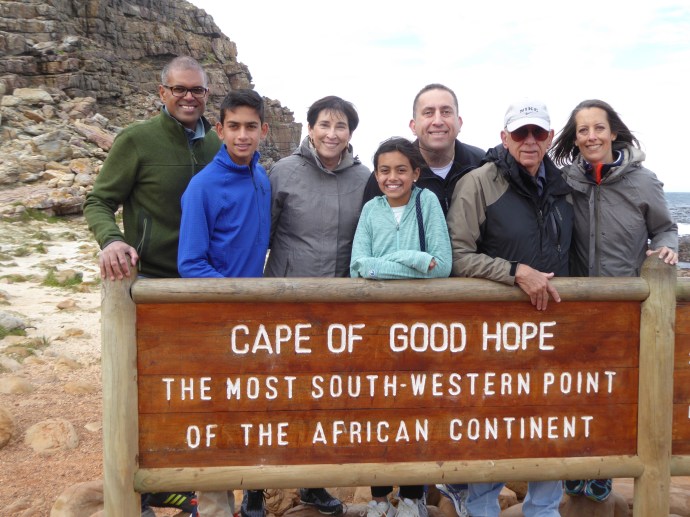
Our first stop was at the Cape of Good Hope, named by Benjamin Diaz. Unfortunately for him it was not a good luck place, his ship sank and he died. We walked along the coast and had the opportunity to hike to a small out cropping for better views. Most people think that this is the point where the Atlantic and Indian Oceans meet, but it is not. That spot is about 100 miles to the east of Cape Town.
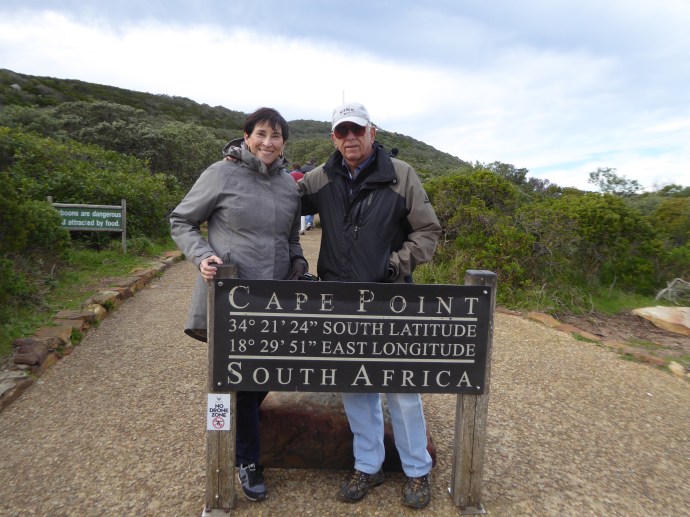
We then traveled on to Cape Point. We all hiked to the top to see the lighthouse and the beautiful views. We were able to take a funicular down to the parking lot. There were baboons in the area and one jumped into a car because the people had left the door open. Then as we were traveling to our lunch stop another group of baboons had ransacked the truck of some construction workers and had a shoe in his hand. Many of the baboons had babies that they were carrying.
After lunch we walked to Boulder Beach and saw the penguins. We all enjoyed seeing them waddle around and swim in the ocean. There were some juvenile birds there too. Each penguin has different spots on it belly, sort of like it being his fingerprint.
We returned to Cape Town and had dinner on our own at the One & Only Hotel’s restaurant, Reuben.
Tomorrow we fly to Kruger National Park and safari.
The first day we were in Cape Town, the famous mountain, Table Mountain was covered by clouds (“the tablecloth”). This day, July 15, we woke to bright sun, clear skies and no tablecloth. We were hustled off to Table Mountain and up we rode in the gondola to the top. The views were amazing. Our local guide was Gillian and she told us about what we were seeing, how the land was formed millions of years ago and some of the history of the area.
Before we actually left for our touring we had a guest lecturer, Ibrahim. He had lived through the apartheid years, watched his home be razed in District Six and now was a lecturer for tour groups and others. The story of apartheid is very sad, with some repercussions still visible. District Six was a melting pot before everyone was moved out to make it a white only area. It took 13 years to finally get everyone out at a cost of 15 billion Rand, but all the religious building are standing to this day.
After spending time at Table Mountain, Sunny, Jen, Jacob, Abby and Bob left to do a hike on Lions Head. It was a great hike, so they say, but very difficult using chains and ladders at some points to make the assent. It is higher then Table Mountain, which you use a gondola to get to the top.
Mike and Bette continued with the tour group, seeing some additional areas of Cape Town, before getting to the Kirstenbosch Gardens, located on the side of Table Mountain. We did a short walk through the gardens, seeing the national flower of South Africa, the King Protea. We had lunch in a restaurant, Mayo, in the gardens, having some traditional foods that included a spinach and potato dish and a pumpkin and peanut butter dish. There were 3 different tandoori type meat dishes. All of them were very good.
The gardens were endowed by Cecil Rhodes who made his wealth from diamonds. He was also the founder of the Rhodes scholars and named a country after himself, Rhodesia – now Zambia and Zimbabwe.
Bette went on to the Zeitz Museum – ultra modern art. The building was amazing – the art weird.
After a short rest back at the hotel we had a wine dinner at Constantina. Food was excellent, wine not so much to me.
We finally ended our day – tired but having seen and done so much.
Atop Table Mountain
At the gardens
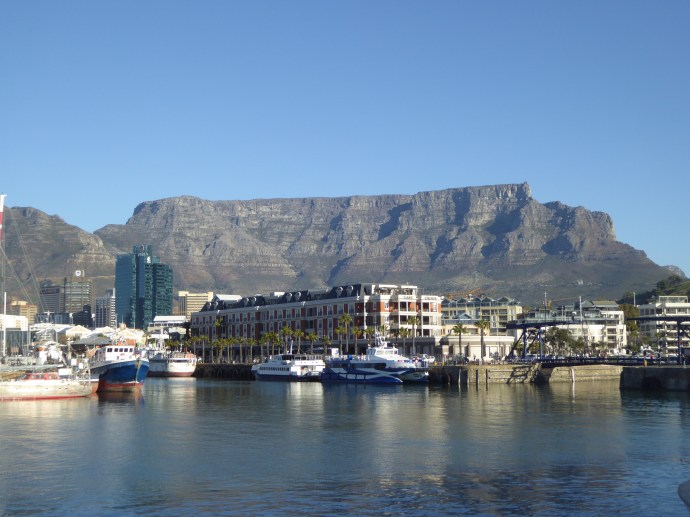
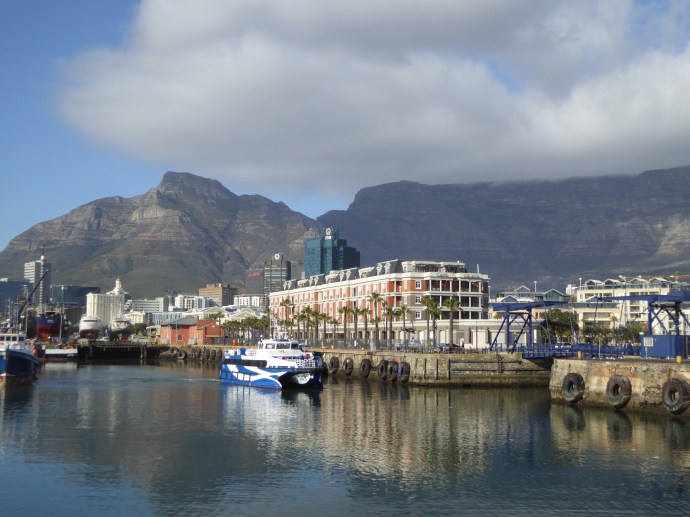
Table Mountain and Cape Grace Hotel on a beautiful clear day
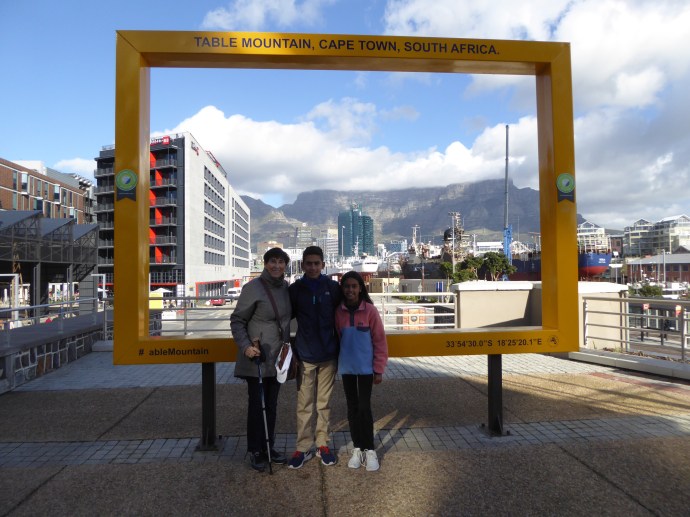
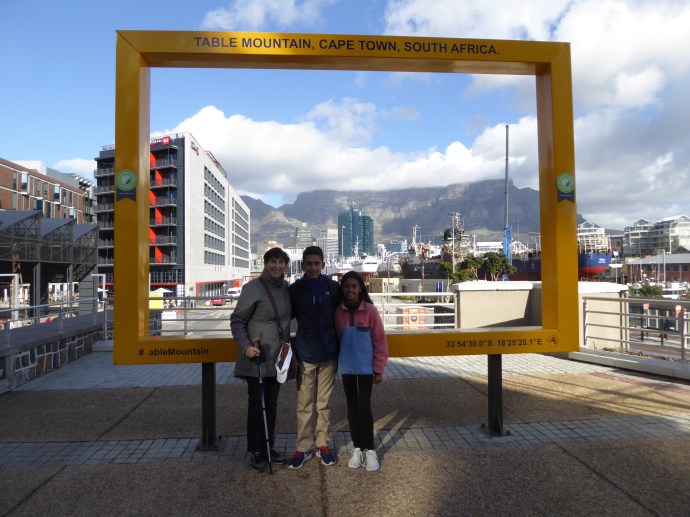
One of the many spots in Cape Town with a frame to pose in with Table Mountain in the background
(Wi-Fi keeping me from including photos – not great in the wild!)
After a good nights sleep we were ready to start out touring.
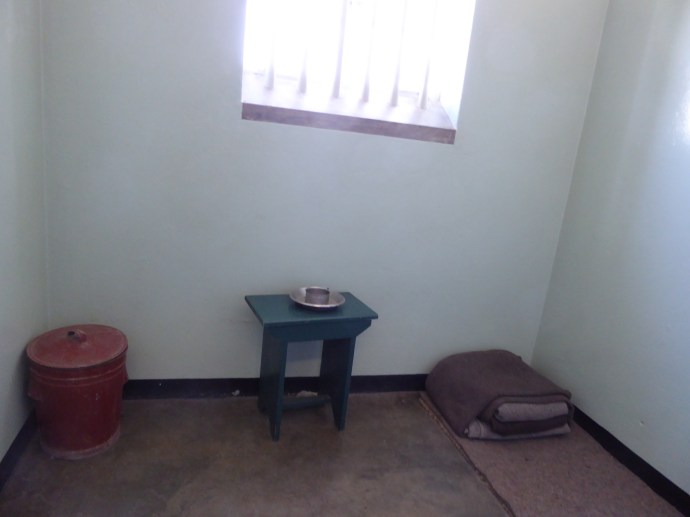
We had pre booked tickets for Robben Island where the political prisoners from the apartheid era had been held prisoner.
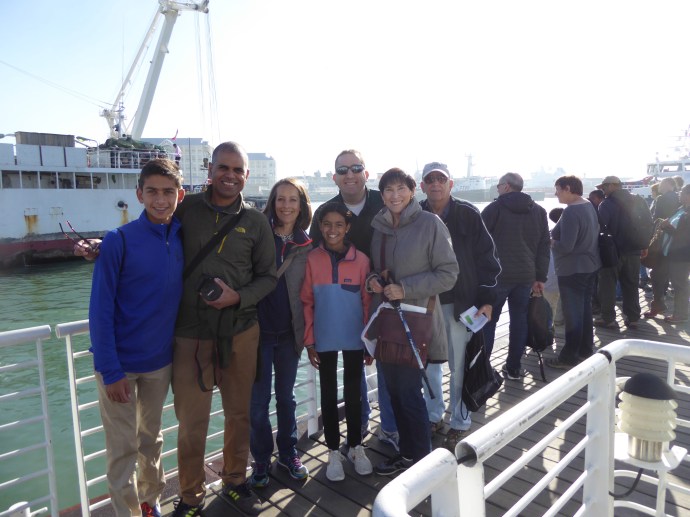
Robben Island has served as a prison for over 500 years. It also was a leper colony for many years. The political prisoners were held in a maximum security prison and the criminals were in a medium security prison on the island. The island is about 10 kilometers from Cape Town in Table Bay. We were transported by a ferry. Although the seas looked calm, it felt like we were on a roller coaster.
The political prisoners were only allowed 30 minute visits, twice a year with their families, and children had to be at least 18 to visit.
The political prisoners had to do hard labor, either working in the limestone quarry or harvesting kelp in the cold water of Table Bay.
In all the years there were only 4 escapes.
The most famous prisoner held there was Nelson Mandela. Our tour was led by a form inmate.
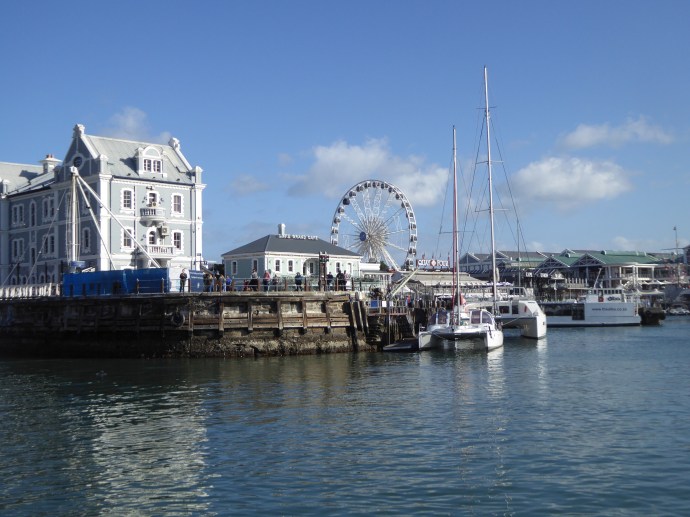
After our tour we walked around the Victoria and Alfred Waterfront.
We then met our tour group for drinks and dinner. Great start to our African adventure.
Cape Grace hotel with Table Mountain in the background




































Recent Comments